Why Eastern Highlands Coffee Still Delivers Classic African Brightness
You get that classic African brightness from Eastern Highlands coffee because high elevations slow bean development, boosting density and acidity. Volcanic soil adds potassium and magnesium, enhancing cup vibrancy and sweetness. Handpicking guarantees only ripe cherries go through washed or honey processing, preserving clarity and balance. Consistent cloud cover and afternoon shade support even ripening. These factors combine to deliver clean, tea-like acidity with citrus lift-traits you’ll see stay consistent across top lots.
Notable Insights
- High altitudes slow bean maturation, increasing density and enhancing vibrant, complex acidity characteristic of African coffees.
- Volcanic soils rich in potassium and magnesium support balanced nutrient uptake, boosting cup vibrancy and flavor clarity.
- Microclimates with afternoon shade and cloud cover optimize varietal performance, especially for citrus-forward SL28 and Arabica hybrids.
- Handpicking ensures only perfectly ripe cherries are processed, minimizing defects and preserving clean, bright flavor profiles.
- Traditional washed and honey processing methods maintain inherent sweetness and acidity, delivering the tea-like clarity prized in African coffees.
Where the Eastern Highlands Grow the Brightest Beans
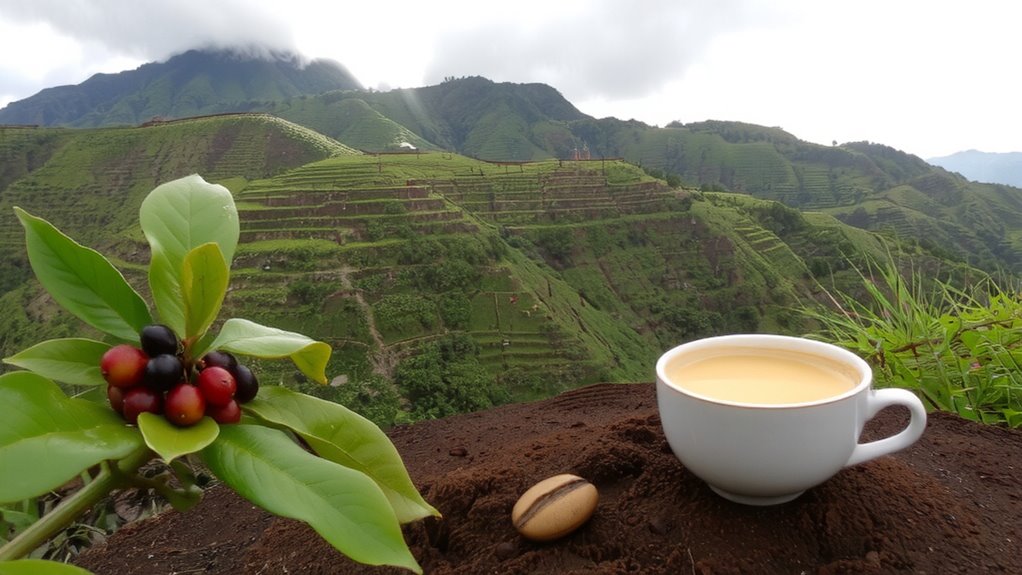
While altitude isn’t the only factor, it’s what gives Eastern Highlands coffee its standout brightness-beans grown at 1,200 to 1,800 meters above sea level tend to develop slower, leading to denser beans with more complex acidity. You’ll find the best results when farmers leverage microclimate influence, adjusting for temperature shifts and rainfall patterns that vary even within small regions. This means not just relying on elevation but matching conditions to the right bean varietal selection-like SL28 or Arabica hybrids known for sharp citrus notes. These varieties thrive when altitude pairs with consistent cloud cover and afternoon shade. If you’re sourcing beans, look for farms that document both varietal and microclimate data-they’re more likely to deliver stable, bright profiles. Don’t assume high altitude alone guarantees quality; without smart varietal choices and microclimate adaptation, even top-elevation beans can fall flat. Choose wisely for better clarity and cup consistency.
Why Volcanic Soil Creates Vibrant Coffee
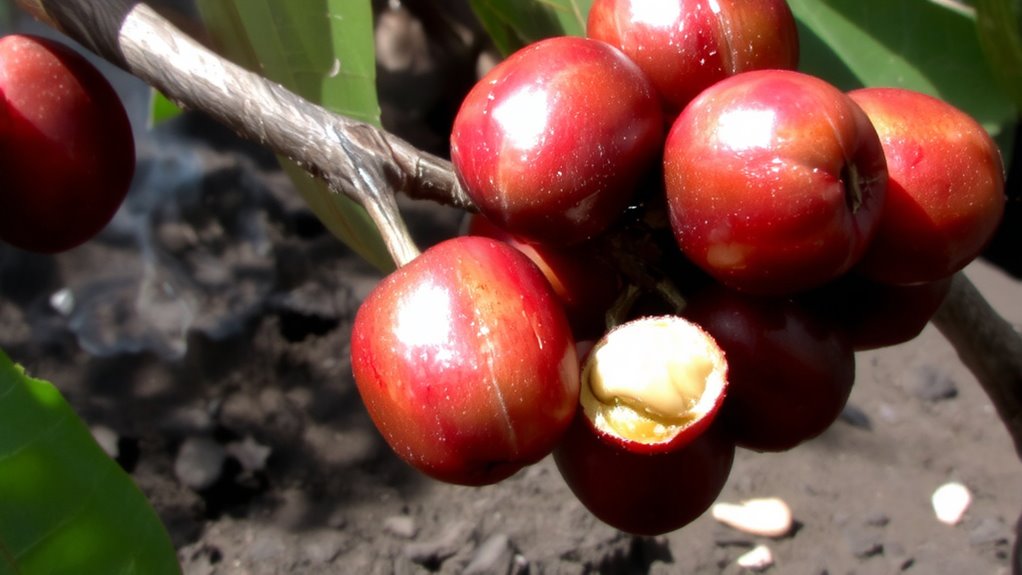
You’ll notice a difference in flavor when coffee’s grown in volcanic soil, and it’s not just hype-minerals like potassium and magnesium leach into the ground from decomposed basalt, giving plants access to nutrients that boost both yield and cup vibrancy. The mineral richness in volcanic earth directly influences bean development, supporting balanced acidity and complex notes you can taste in the final brew. Good soil drainage is another key benefit; it prevents waterlogging, which can stunt roots and dilute flavor. Instead, plants develop deep root systems, pulling trace elements steadily. This consistent uptake results in more uniform bean density, which matters when roasting-you get fewer underdeveloped or baked beans. Compared to clay-heavy or sandy soils, volcanic substrates offer a middle ground: enough retention to sustain plants during dry spells, but fast enough drainage to avoid rot. If you’re sourcing beans, look for farms on mountain slopes with visible basalt deposits-those conditions reliably support vibrant, resilient crops.
How High Altitude Intensifies Flavor
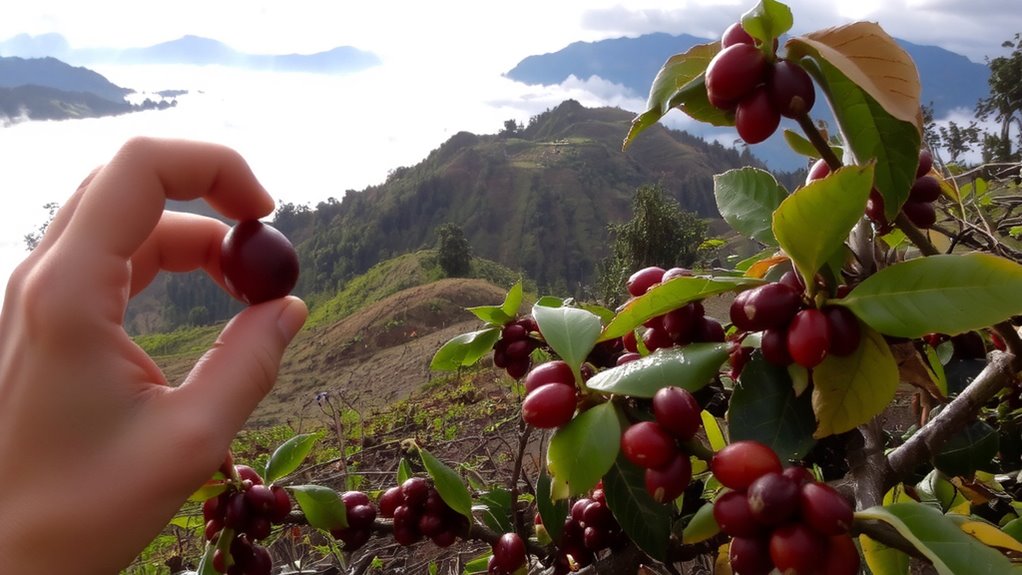
Growing coffee at high altitudes changes how the beans develop, and you can taste it. Cooler temperatures slow maturation, letting sugars build more gradually, which enhances acidity and complexity. This is where terroir influence really shows-you’re not just tasting the bean, but the elevation, soil, and air. Microclimate variation across the Eastern Highlands means neighboring farms can yield noticeably different profiles, even with the same varietal. Higher elevations typically mean harder, denser beans, which respond well to consistent roasting. If you’re roasting at home, expect a longer development time but better flavor retention. Light to medium roasts work best to preserve the bright, winey notes high altitude encourages. Don’t rush the process-dense beans need even heat. Equipment like the Hottop or Gene Cafe lets you adjust airflow and heat precisely, helping you highlight those altitude-driven qualities without scorching. It’s science and terrain working together.
How Handpicking Ripe Cherries Boosts Quality
Picking coffee cherries by hand guarantees only the ripest fruit makes it into your cup, and that precision pays off in quality. You get better bean selection this way, since workers can spot and choose only the cherries at peak ripeness timing. Machine harvesting collects everything-ripe, unripe, overripe-leading to inconsistent flavors and defects. Handpicking isn’t just tradition; it’s a practical step to guarantee uniformity and clean taste. Many small farms in the Eastern Highlands rely on it because it directly boosts cup quality. Though slower and more labor-intensive, the payoff is higher clarity and brightness in your brew. You’ll notice fewer off-notes and more balanced acidity. For roasters and brewers aiming for consistency, this level of control matters. Good bean selection starts long before roasting-it starts in the field, with timing and care.
Why Traditional Processing Preserves Complexity
While some modern methods speed up coffee processing, traditional techniques like washed, honey, and natural processing in the Eastern Highlands help retain the bean’s inherent complexity. You’ll notice brighter, more layered flavors because these methods control fermentation slowly and evenly. Sun drying is key-beans spread on raised beds absorb consistent heat, locking in acidity and sweetness. Unlike mechanical drying, it allows you to monitor moisture loss gradually, reducing defects. The region’s shade growing also plays a role; slower cherry ripening under tree cover builds denser beans with more nuanced profiles. Washed lots give you clean, tea-like clarity, while honey-processed beans balance sweetness and body. Natural processing, though riskier in humid conditions, can deliver intense fruit notes if managed well. You don’t need expensive gear-just airflow, patience, and attention. These low-tech steps, combined with high-altitude growing, are why Eastern Highlands beans still stand out for complexity without needing modern intervention.
On a final note
You get that classic African brightness in Eastern Highlands coffee because volcanic soil, high altitude, and careful handpicking work together. Washed processing keeps flavors clean and vibrant. If you want a bright, fruity cup with clarity, try beans from this region-look for notes of citrus and red berries. Use a pour-over or Aeropress to highlight those qualities, and grind fresh for best results.