How to Identify and Correct a Grind Size That’s Too Fine for Your Machine
If your coffee tastes bitter or muddy, and brew times are slow-like over 5 minutes for pour-over or espresso shots dragging past 30 seconds-your grind’s likely too fine. Water struggles to move through densely packed grounds, causing over-extraction. Adjust by turning your grinder one notch coarser: clockwise on flat burrs, higher numbers on conical. Use a burr grinder for consistency. If coffee turns weak, tweak temperature or dose instead. Keep refining until balanced-there’s more to get right with timing and grind match.
Notable Insights
- A bitter, harsh, or muddy taste often indicates over-extraction from a grind that’s too fine.
- Slow brew times-over 5 minutes for pour-over or espresso shots exceeding 30 seconds-signal a grind that’s too fine.
- Water struggling to flow through densely packed grounds suggests the grind size impedes proper extraction.
- Adjust to a coarser grind setting incrementally, matching the size to your brew method’s requirements.
- After coarsening, if coffee tastes weak, increase temperature or coffee dose instead of re-fining the grind.
Fix Grind Too Fine: Bitter Coffee?
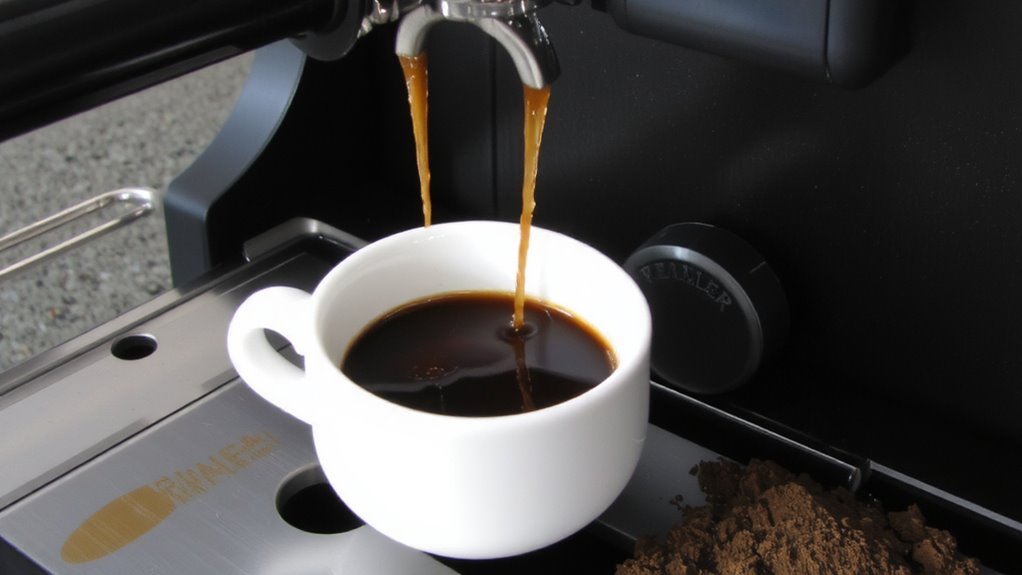
Why does your coffee taste bitter, even when you’re using fresh beans and clean water? Because your grind is likely too fine, leading to over-extraction. When grounds are too small, water struggles to move through them efficiently. Even with ideal water temperature-typically 195–205°F-this slows flow and extends brew time, pulling out excessive bitter compounds. For drip machines, over-extraction often happens in less than 3 minutes if the grind is overly fine. In espresso, shots may drip too slowly, exceeding 30 seconds. To fix it, adjust your grinder to a coarser setting. Start one notch at a time. Retaste and observe brew time. A proper grind balances extraction without extending contact time unnecessarily. Coarser particles also reduce clogging in filters and portafilters. Most home brewers perform best with medium to medium-coarse grinds. If bitterness persists without changes, revisit your water temperature-too hot worsens extraction-but adjust grind first. It’s the most direct fix. Choosing the right best coffee grinders for espresso can make it easier to achieve and maintain the ideal grind size.
Spot the Signs of a Grind Too Fine
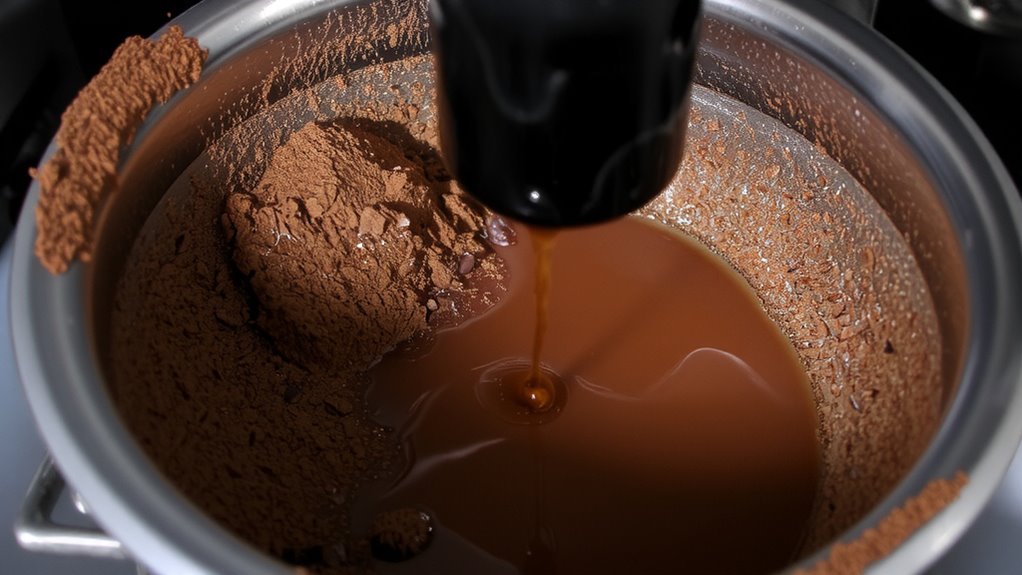
You’ve probably already noticed that bitter taste, the one that lingers too long and makes you second-guess your beans or brew method. That harshness is a classic sign your grind’s too fine, especially in drip or pour-over setups. Over-extraction pulls out unwanted compounds, dulling coffee clarity and wrecking flavor balance. Your cup may taste muddy or astringent, lacking the bright, clean notes you’d expect from a well-brewed roast. You might also see slow brew times-like five minutes or more for pour-over-indicating water struggles through dense grounds. Espresso with too fine a grind blows past ideal pressure, spitting sour shots or stalling pumps. Check the puck: if it’s mushy or cracks unevenly, the grind’s likely too fine. These signs point to one fix: coarser particles let water flow better, preserving sweetness and clarity. Pay attention to timing and taste-they’re your best tools. For pour-over specifically, using the right best coffee grinds can make a significant difference in extraction and flavor clarity.
Stop Over-Extraction: Use the Right Grind Size
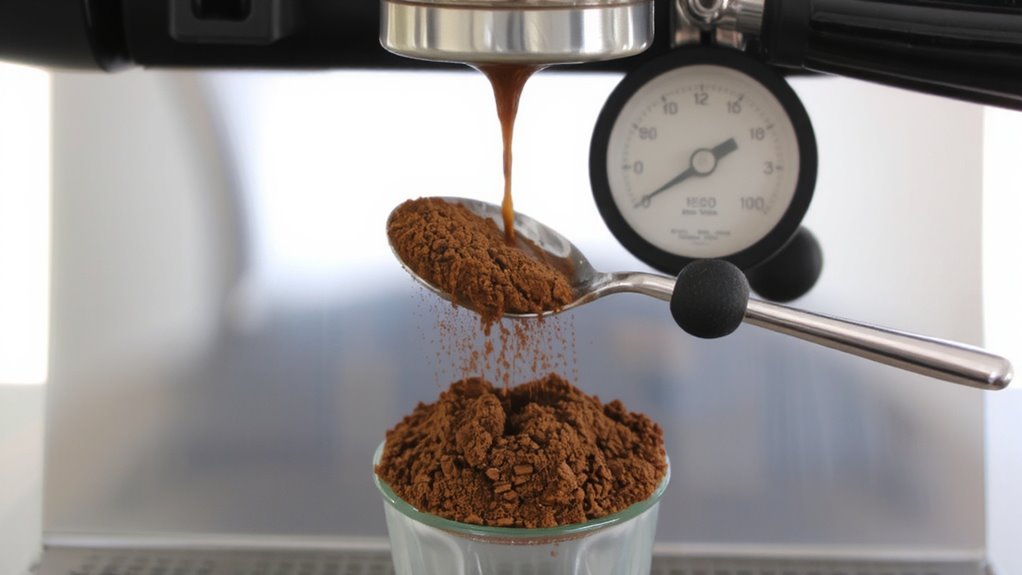
While finer grinds increase surface area and can boost extraction, they often lead to over-extraction if mismatched to your brew method-especially in drip or pour-over systems where water flow is critical. You’ll end up with bitter, harsh coffee because the water pulls too many compounds. High water pressure in espresso machines handles fine grinds well, but in low-pressure systems like drip brewers, the coffee grounds restrict flow too much. That extends brewing time unnaturally, compounding over-extraction. If your coffee takes longer than 4 minutes in a pour-over or drips slowly from a flat-bottom brewer, your grind is likely too fine. Correcting this isn’t about precision alone-it’s about matching grind size to your machine’s design. Use a consistent burr grinder and aim for a coarser, even particle size that lets water move freely, balancing extraction without dragging out brewing time. For optimal results, consider a quality burr grinder specifically designed for filter coffee brewing.
Adjust Your Grinder to a Coarser Setting
If your coffee tastes bitter or brews too slowly, it’s time to adjust your grinder to a coarser setting. This simple tweak can prevent over-extraction and improve flavor balance. Proper grinder calibration guarantees consistency, while correct burr alignment avoids uneven particles that hurt brew quality. Start by adjusting in small increments-many burr grinders have numbered settings for this reason.
| Grinder Type | Coarse Setting Example | Adjustment Tip |
|---|---|---|
| Flat Burr | Setting 8–10 | Turn dial clockwise |
| Conical Burr | Setting 5–7 | Increase number for coarser |
| Blade | Pulse less | Not ideal for precision |
| Manual | Widen gap | Check manufacturer guide |
Always recalibrate after changes and clean grounds buildup. Proper adjustment gives better control and clearer flavor.
Fix Weak Coffee After Going Coarser
Why does your coffee taste weak after switching to a coarser grind? Because the water moves through the grounds too quickly, under-extracting the coffee. This often shortens your brew time and reduces flavor. To fix it, first check your brew time-if it’s less than 20 seconds for espresso or under 3 minutes for pour-over, it’s too fast. You’ll need to adjust. Try increasing your water temperature slightly, from 195°F to 200–203°F, to improve extraction without changing the grind. Be careful though-too hot can burn the coffee. You can also adjust the dose: using a bit more coffee may help strengthen the flavor. Don’t jump back to a finer grind right away. Instead, tweak one variable at a time. Track each change. This way, you’ll maintain control and find a balanced cup that’s not thin or watery.
Dial In the Right Grind for Your Machine
Start by treating your grinder like the most important tool in your coffee setup-because it is. The right grind texture directly affects flavor, and matching it to your brewing method is essential. Too fine? You’ll get bitterness. Too coarse? It’ll taste weak. Dialing in means adjusting until you hit the sweet spot. Think of it like tuning an instrument-small turns make big differences.
| Brewing Method | Ideal Grind Texture |
|---|---|
| Espresso | Fine, like powdered sugar |
| Pour over | Medium-fine, like sand |
| French press | Coarse, like sea salt |
| Aeropress | Fine to medium |
| Cold brew | Coarse |
Adjust gradually, note changes, and taste every cup. Your machine depends on consistency, so take the time-you’ll taste the difference.
Keep Your Grind Consistent and Avoid Mistakes
Consistency is the foundation of great coffee, and your grinder has to deliver the same particle size every time. Without grind uniformity, you’ll face uneven extraction-some particles over-extract while others under-extract, leading to bitter or sour flavors. To avoid this, clean your grinder regularly and use high-quality burrs that resist heat buildup. Older or low-end grinders often develop calibration errors, shifting grind size without warning. Check your settings often, especially after changing beans. If shots start pulling too fast or slow, it might not be the beans-it could be your grinder drifting. Adjust in small increments and track results. For best results, consider a grinder with stepless adjustment, like the Baratza Forté or Niche Zero, which offer tighter tolerances and better long-term consistency. Stay vigilant-small mistakes add up.
On a final note
If your coffee tastes bitter or over-extracted, your grind is likely too fine. Adjust your grinder to a coarser setting-try the medium setting on a Baratza Encore for drip or a coarse setting for French press. If the brew becomes weak, tweak the dose or brew time slightly. Always adjust one variable at a time, and use consistent water temperature and fresh beans for accurate results.