Why Grind Size Adjustment Is Crucial When Using Lightly Roasted Heirloom Beans
You need to adjust your grind size with lightly roasted heirloom beans because they’re denser and hold more moisture, making them harder to extract. If your grind’s too coarse, the coffee tastes sour and weak. Too fine, and it turns bitter. A burr grinder gives you the control you need-aim for medium-fine with pour-over, finer for espresso. Small tweaks matter, especially with high-altitude beans like Ethiopian Yirgacheffe. Getting it right means brighter, cleaner flavors and better balance-there’s more to how timing and equipment shape that result.
Notable Insights
- Lightly roasted heirloom beans are denser, requiring precise grind size for optimal extraction.
- Small grind adjustments significantly impact flavor due to high bean density and moisture content.
- Incorrect grind size can exaggerate roast inconsistencies common in light roasts.
- Proper grind ensures balanced acidity and sweetness, preventing sour or bitter over-extraction.
- Burr grinders enable the precision needed to highlight delicate notes in light roast heirlooms.
Why Heirloom Light Roasts Demand Precise Grinding
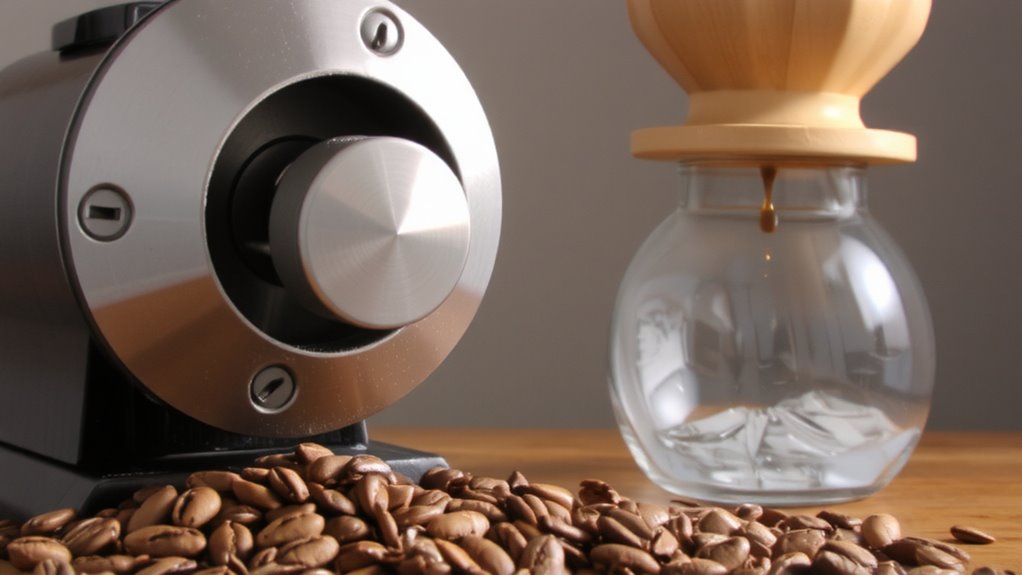
Choosing the right grind size for heirloom light roasts means starting with an understanding of their unique structure-lighter roasts retain more moisture and density, which affects how they respond to grinding. You need precision because even small deviations can lead to flavor degradation or highlight roast inconsistency, both common in light roasts due to uneven bean development. If your grind’s too coarse, you’ll under-extract-sour, weak coffee. Too fine, and bitterness from over-extraction takes over. Burr grinders give you far better control than blade types; models like the Baratza Encore or 1ZPresso JX-Pro let you make micro-adjustments that matter. You’re not just grinding coffee-you’re accessing clarity and acidity without amplifying flaws. Adjust in small increments, especially when switching batches, since heirloom varietals often vary crop to crop. Consistency in grind size helps counteract natural roast inconsistency, preserving intended notes instead of accelerating flavor degradation. For the best results, invest in one of the best mill grinders that offer the durability and adjustability needed for delicate light-roast profiles.
How Bean Density Changes Your Grind Settings
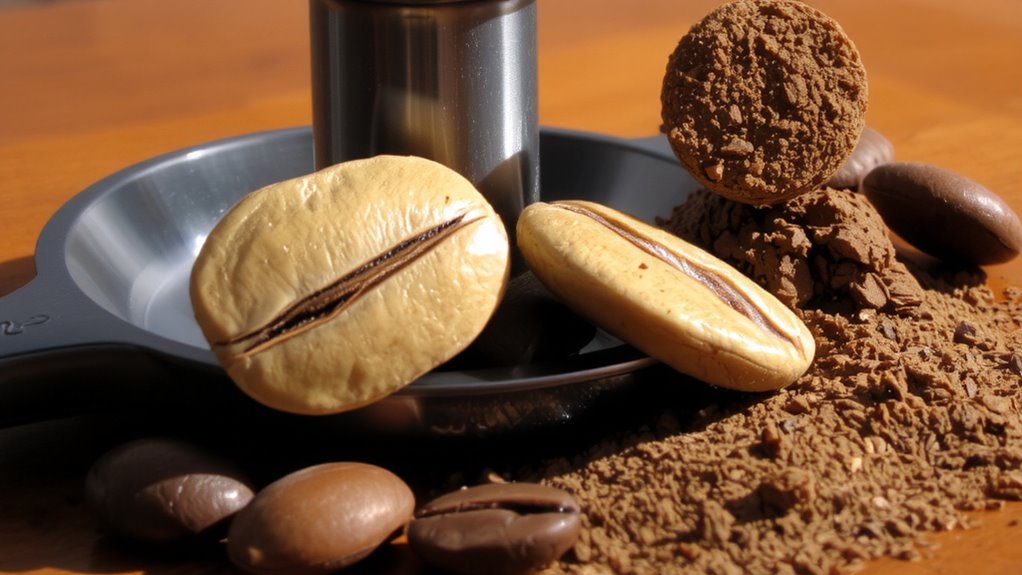
Light roast beans are denser than darker ones because they spend less time in the roaster, which means they don’t lose as much moisture or cellular structure. That density means you’ll need a finer grind than you might use for darker beans, even with the same brew method. Denser beans resist extraction, so a tighter grind helps water pull out flavor efficiently. But don’t adjust blindly-bean origin matters. High-altitude beans, like Ethiopian Yirgacheffe or Kenyan AA, are often denser due to slower growth, requiring finer settings. Fresh roast age also plays a role: beans just off the roaster can be more gas-rich, affecting flow, especially in espresso. Wait 4–7 days post-roast for peak stability. Always tweak your grind incrementally and note how origin and roast age respond. A good burr grinder makes these adjustments precise and repeatable, which is key for consistency. For the best results, consider investing in one of the top-rated espresso grinders based on expert reviews.
Best Grind Sizes for Pour-Over, French Press, and Espresso
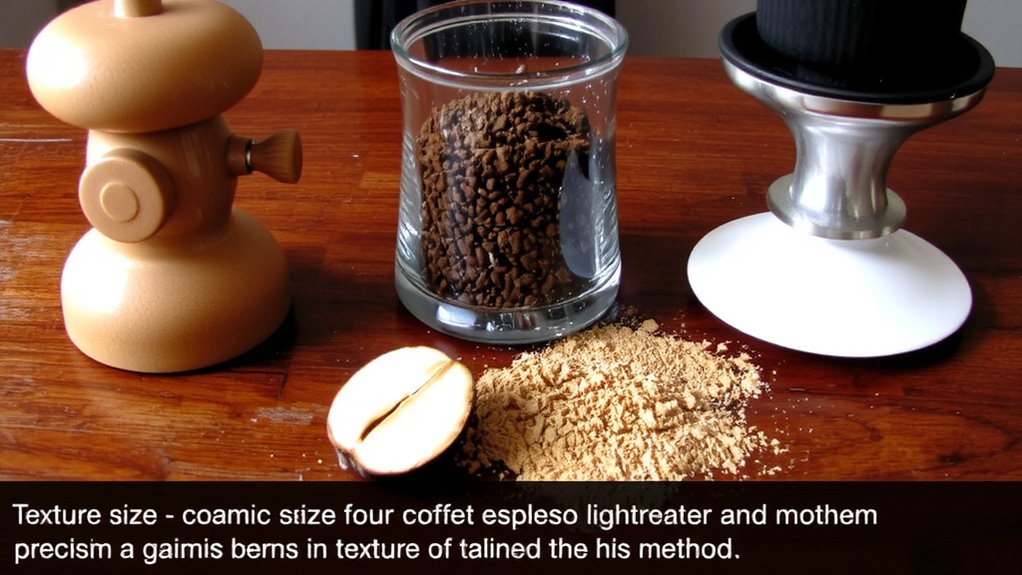
A well-dialed grind size can make or break your brew, especially with light roasts that demand more precision. The right setting helps extract a balanced flavor profile and highlights the bean’s natural complexity. Each brew method responds differently to grind size, so matching them correctly matters. For optimal pour-over results with lightly roasted beans, using a high-quality coffee grinder for pour-over brewing ensures consistent particle size and enhances flavor clarity.
| Brew Method | Best Grind Size |
|---|---|
| Pour-Over | Medium-fine (like sand) |
| French Press | Coarse (like sea salt) |
| Espresso | Fine (like powdered sugar) |
| Cold Brew | Coarse |
With pour-over, a medium-fine grind improves clarity and sweetness. French press needs coarse grinds to avoid sludge and over-extraction. Espresso requires fine grinds for proper resistance and a rich, concentrated shot. Choosing the correct grind size for your brew method guarantees you get the most out of your lightly roasted heirloom beans.
A Step-by-Step Guide to Dialing In Your Grind
How do you get the most out of your lightly roasted beans when brewing at home? Start by setting your grinder to a medium-fine setting if using a pour-over, then tweak from there. Always grind fresh-light roasts need precision, and burr wear affects consistency over time. If your shots or brews taste off, check for uneven particles, a sign your burrs may be dull. Adjust in small increments: finer for sourness, coarser if it’s too sharp. Use a scale and note each change. Grinders with good static control reduce clumping, giving you a more even extraction. Avoid blade grinders-they can’t deliver the uniformity light roasts demand. A quality burr grinder like a Baratza Encore or Fellow Ode keeps results stable. Clean your grinder monthly to preserve accuracy. Dialing in takes patience, but it’s the surest way to highlight the delicate notes in heirloom beans.
Fixing Sour Coffee From Under-Extracted Light Roasts
Why does your light roast coffee taste sour, like unripe fruit or sharp citrus? It’s likely under-extracted, meaning water pulled too few compounds due to a grind that’s too coarse. Light roasts need finer grinds for proper flavor development-their dense structure resists extraction. If you’re using a coarse setting, especially on a blade grinder, you’re probably missing sweetness and clarity. Adjust your burr grinder finer in small steps; this boosts contact time and improves extraction. Without enough extraction, acids dominate, creating an acidic imbalance that masks nuanced notes. You’ll notice better balance-less tartness, more floral or fruity clarity-once the grind improves. For pours, aim for table salt texture; for espresso, think powdered sugar. Monitor shot time or brew duration. Not all sourness is bad, but when it overwhelms, it’s a sign the grind’s off. Fix that, and you fix the coffee.
Fixing Bitterness in Over-Extracted Heirloom Beans
What makes your heirloom beans taste so bitter, like burnt walnut or dark chocolate gone harsh? You’re likely over-extracting. When your grind is too fine, water pulls out unwanted compounds, especially with light roasts that need more care. First, check your water temperature-above 205°F can scorch delicate notes. Lower it to between 195°F and 202°F to slow extraction. Next, shorten your brew time. For pourover, aim for 2:30 to 3:00 minutes; anything longer increases bitterness. Coarsening your grind is the fastest fix. Even one notch can reduce surface area and speed, balancing flavor. Don’t adjust grind and water temp at once-tweak one, then test. Bitterness isn’t a roast flaw-it’s a brew error. With precise changes, you regain clarity and sweetness.
Best Grinders for Consistent Light Roast Results
You’ve adjusted your water temperature and shortened brew time to tame bitterness, but if your grind size still varies from shot to shot or brew to brew, you’re fighting an uphill battle. Consistent light roast results demand precision grinders with excellent burr alignment and easy grinder calibration. Cheap bladed grinders create uneven particles, leading to sour and bitter notes. For light roasts, invest in a quality burr grinder that maintains uniformity.
| Grinder Model | Burr Alignment | Calibration Ease |
|---|---|---|
| Baratza Encore | Good | Easy |
| Fellow Ode Gen2 | Excellent | Moderate |
| Eureka Mignon Plus | Excellent | Easy |
| Timemore Phantom X | Good | Moderate |
Regular maintenance guarantees longevity and repeatability. Look for grinders with stepped or stepless adjustment based on your preferred brewing method. Stepless offers finer control, especially useful when dialing in delicate heirloom beans.
On a final note
You need the right grind size to access the best in light roast heirloom beans. They’re dense and roast unevenly, so your grinder must deliver consistency. Blade grinders won’t cut it-opt for a burr model like the Baratza Encore or Timemore C2. Adjust in small steps: finer for sourness, coarser if bitter. Always match grind size to your brew method-espresso needs fine, French press coarse. Dialing in takes patience, but pays off in flavor.