Unravel the Art of Turkish Coffee by Mastering Fine-Tuning Techniques
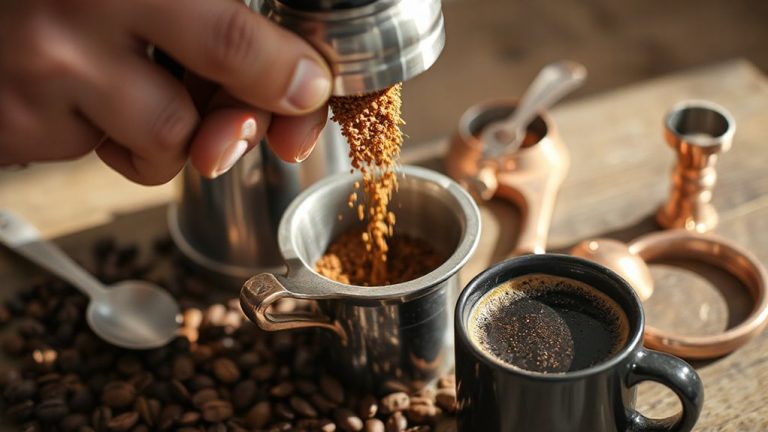
You need an ultra-fine grind, like powdered sugar, so use a burr grinder such as the Baratza Encore or 1ZPresso JX-Pro-skip blade grinders. Stick to 1.5 oz (45 ml) water per heaping teaspoon of fresh coffee. Heat gently on low, ideally with a gas flame, using a narrow-topped cezve to build foam without boiling over. Arabica beans from Ethiopia add brightness; Brazilian ones bring chocolatey depth. Add cardamom for aroma, serve in a fincan with water and Turkish delight, and you’ll start mastering the craft in no time.
Notable Insights
- Use an ultra-fine grind, similar to powdered sugar, achieved with a burr grinder for consistent texture.
- Stick to a 45 ml water to 7–8 gram coffee ratio for balanced strength and rich body.
- Apply low, steady heat to develop a rich foam without boiling over or creating bitterness.
- Brew for 3–4 minutes to preserve aroma and prevent over-extraction, especially with delicate Arabica beans.
- Enhance flavor with spices like cardamom and serve traditionally with water and Turkish delight.
Choose the Right Grind for Turkish Coffee
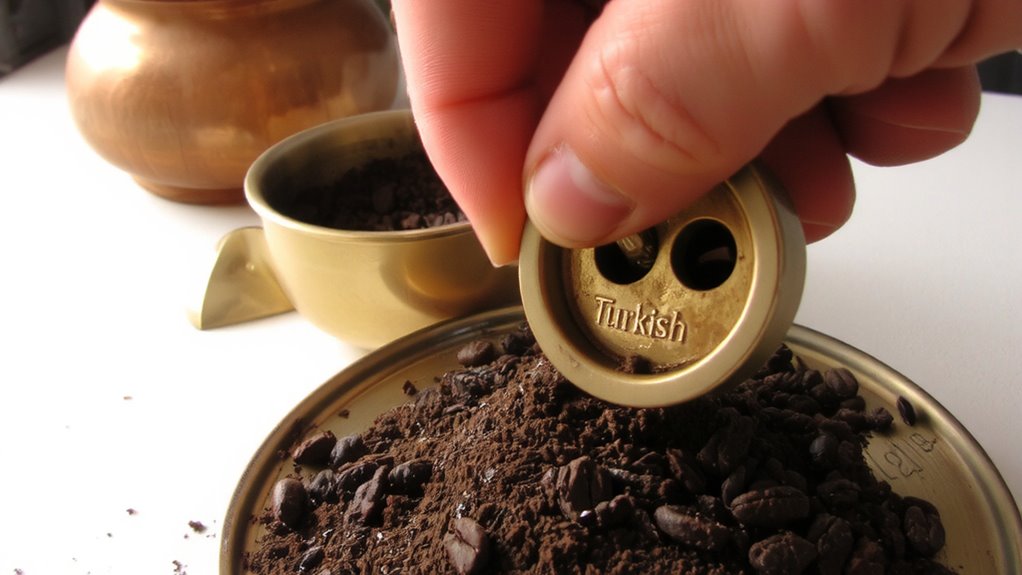
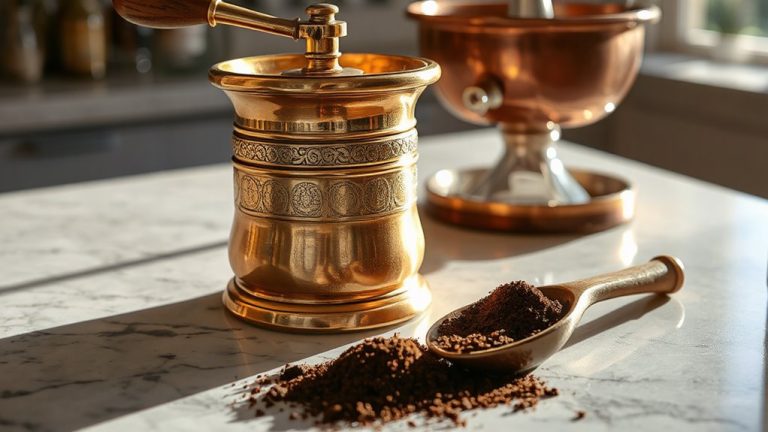
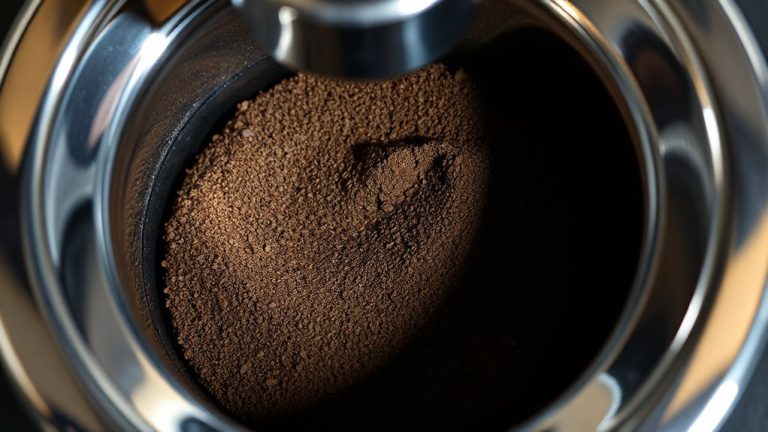
You’ll want a grind finer than espresso-think powdered sugar-for authentic Turkish coffee. This ultra-fine grind consistency guarantees the coffee dissolves fully during simmering, creating that signature rich body and foam. Any variation in fineness leads to sediment or weak flavor, so a burr grinder with fine particle control-like the Baratza Encore or 1ZPresso JX-Pro-is essential. Blade grinders often can’t achieve uniformity at this level, resulting in inconsistent extraction. For best results, use freshly roasted beans within 2–4 weeks of roast date. Bean freshness directly impacts aroma and flavor intensity, especially important when brewing without filtration. Arabica beans offer a smoother profile, while traditional blends may include robusta for boldness. Store beans in an airtight container, away from light and moisture. Always grind immediately before brewing to preserve volatile compounds. With the right grind consistency and fresh beans, your coffee will be balanced, aromatic, and true to tradition. Achieving the correct grind size for Turkish coffee ensures optimal extraction and authentic flavor.
Use the Perfect Water-to-Coffee Ratio
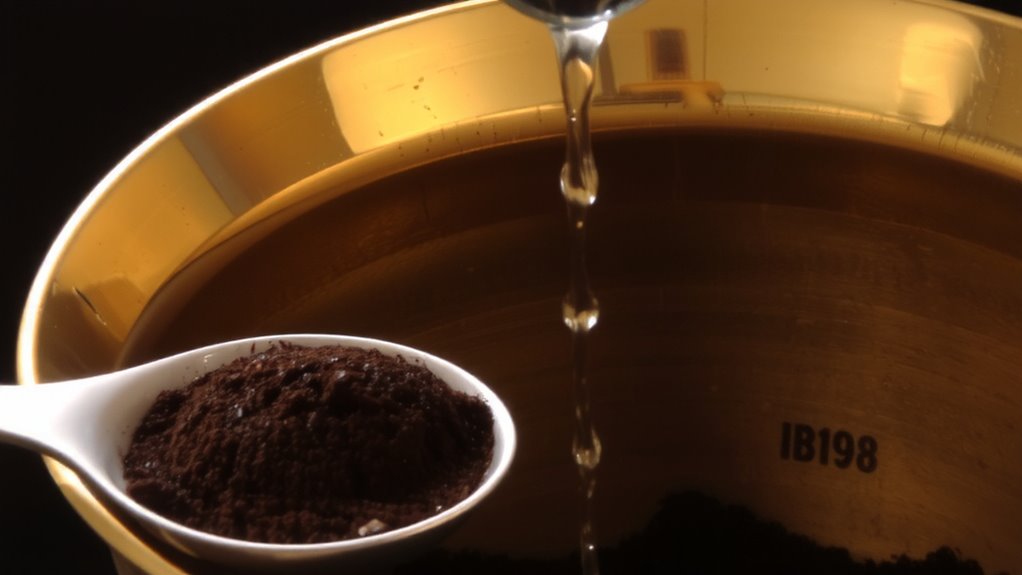
For every 1.5 ounces (or about 45 milliliters) of water, use one heaping teaspoon-roughly 7 to 8 grams-of finely ground coffee. This ratio guarantees balanced strength without over-extraction. Use room-temperature water to better control the heating process in your brewing vessel, typically a cezve or ibrik. Start with cold tap water, as it helps manage water temperature more evenly as it heats. The small size of the brewing vessel concentrates flavors and supports proper interaction between water, coffee, and heat. Avoid altering the ratio too much-extra coffee can lead to grittiness, while too little weakens the body. Stick to this standard unless adjusting for very strong or mild preference. Consistency here supports the next steps, especially foam development. Precision in this step sets the foundation for a clean, authentic cup.
Apply Low Heat to Build Rich Foam
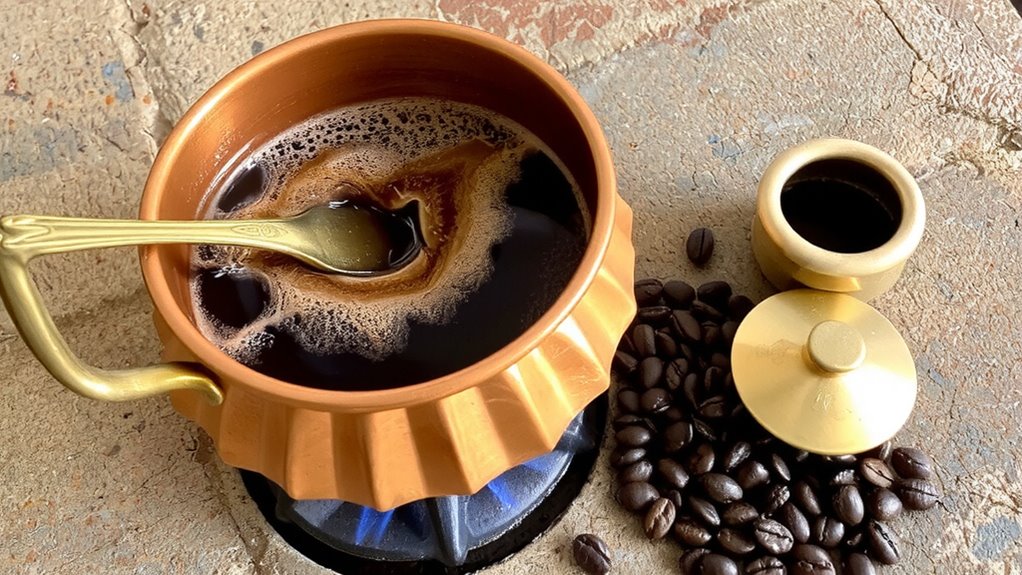
While foam is a hallmark of well-made Turkish coffee, achieving it depends on careful heat management. You need low, steady heat to develop rich foam without boiling over. Start with a cezve on low flame-gas burners offer better heat control than electric stoves. As the mixture warms, tiny bubbles form, building foam consistency slowly. Don’t rush it; high heat breaks down foam and leads to bitterness. Watch closely: the foam should swell smoothly, not erupt. Aluminum cezves conduct heat fast but are harder to manage; copper or brass versions provide more stable heat control. If foam collapses, it’s usually due to overheating or disturbing the brew. Let it rise naturally. Maintaining gentle heat guarantees a thick, velvety foam layer-the sign of a well-executed cup. This step sets the foundation for quality, making foam consistency a direct result of disciplined heat control.
Brew for Ideal Strength and Aroma
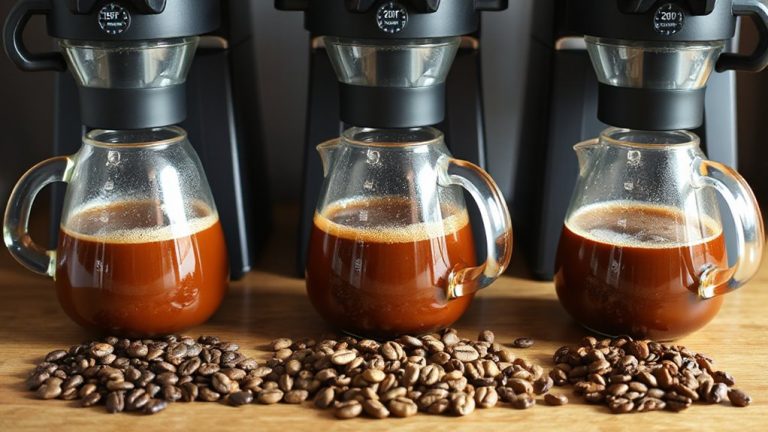
What makes one cup of Turkish coffee bold and aromatic while another falls flat? It often comes down to coffee origin and brewing time. You need finely ground beans suited for Turkish brewing-typically Arabica from regions like Ethiopia or Yemen deliver brighter, nuanced aromas, while Brazilian beans offer deeper, chocolatey notes. The origin affects flavor intensity and scent, so choose based on your taste. Keep heat low after foam forms and watch brewing time: 3–4 minutes is ideal. Going longer than 5 minutes risks over-extraction, bringing out bitterness instead of richness. Too short, and the coffee lacks depth. Use a cezve with a narrow top to concentrate aroma and allow controlled boiling. Stir once at the start, then let physics do the work. Track time precisely-consistency here guarantees repeatable strength and scent every time. For consistent results, consider using an electric Turkish coffee maker that automates heat control and brewing duration.
Enhance Turkish Coffee With Spices and Serving
You’ve nailed the brew time and chosen the right beans for a rich, aromatic base-now it’s time to shape the character of your Turkish coffee with spices and serving style. Spiced variations like cardamom, cinnamon, or cloves add depth and warmth; just a pinch per cup is enough-too much overwhelms the coffee’s natural notes. Cardamom pairs especially well with medium-roast beans, while cinnamon suits darker profiles. Always add spices during brewing to extract full flavor. For traditional serving, use small porcelain or handleless cups (fincan) to retain heat and highlight crema. Serve with a glass of cold water to cleanse the palate, and optionally, a piece of Turkish delight. This method respects authenticity and enhances sensory balance. Avoid paper filters or mugs-they disrupt both ritual and taste. Stick to copper ibriks and proper cups for best results.
On a final note
You’ve got the basics down: use a fine, powdery grind like Mehmet Efendi for proper extraction. Stick to a 1:10 coffee-to-water ratio in a cezve for balance. Heat slowly over low flame-this builds the rich foam key to authentic Turkish coffee. Don’t rush the brew; aim for just under boiling. Add cardamom if you like, but keep it optional. Serve with water, not sugar overload. This method gives consistent, aromatic results every time-no fancy gear needed, just care and patience.