What Makes Bali’s Kintamani Coffee Citrusy and Balanced
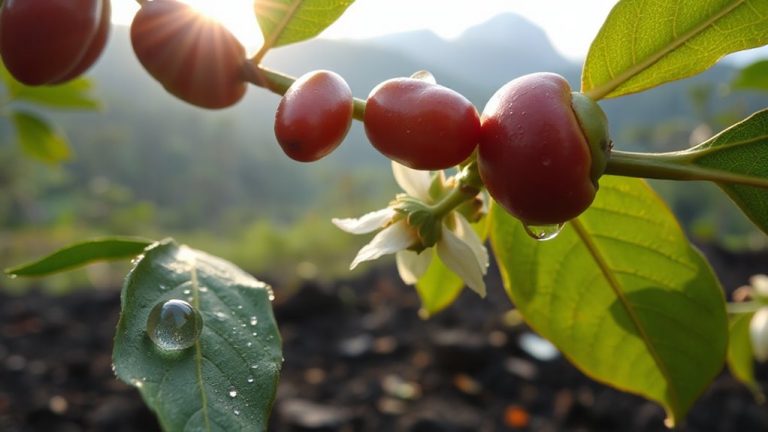
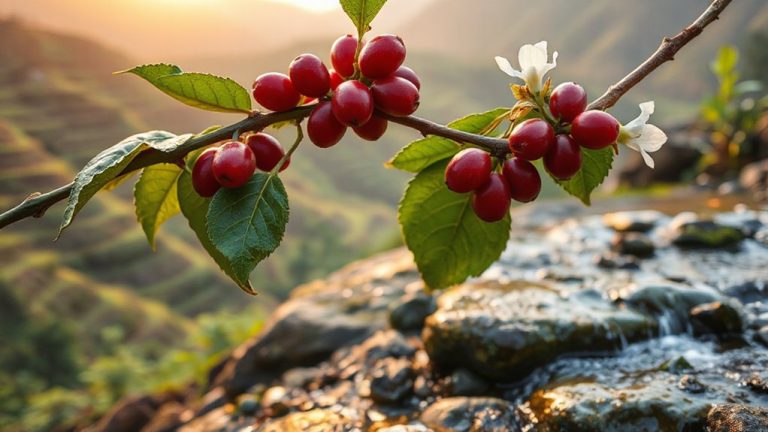
Your Kintamani coffee gets its citrusy kick from volcanic soil rich in potassium and magnesium, which boosts bright, clean acidity. Grown over 1,000 meters up, the cool highland air slows bean growth, building density and locking in lively lemon and green apple notes. Farmers use shade trees and organic compost to preserve flavor purity. Sun-drying on raised beds balances sweetness with zest. Light roasts highlight what makes this coffee crisp, complex, and consistently smooth-traits shaped by Bali’s unique high-altitude farms. You’ll find how each step fine-tunes that balance.
Notable Insights
- Volcan.padding volcanic soil imparts a citrus zing through mineral-rich, alkaline conditions that enhance bright flavor notes.
- High-altitude growth above 1,000 meters produces denser beans with pronounced acidity and clean, vibrant characteristics.
- Cool climate and slow maturation extend cherry ripening, boosting sugar and nutrient concentration for balanced sweetness.
- Gradual acid formation during extended ripening creates crisp citrus, green apple, and stone fruit flavor profiles.
- Shade farming, organic practices, and sun-drying on raised beds preserve acidity while enhancing flavor balance and sweetness.
How Volcanic Soil Creates Kintamani’s Citrus Zing
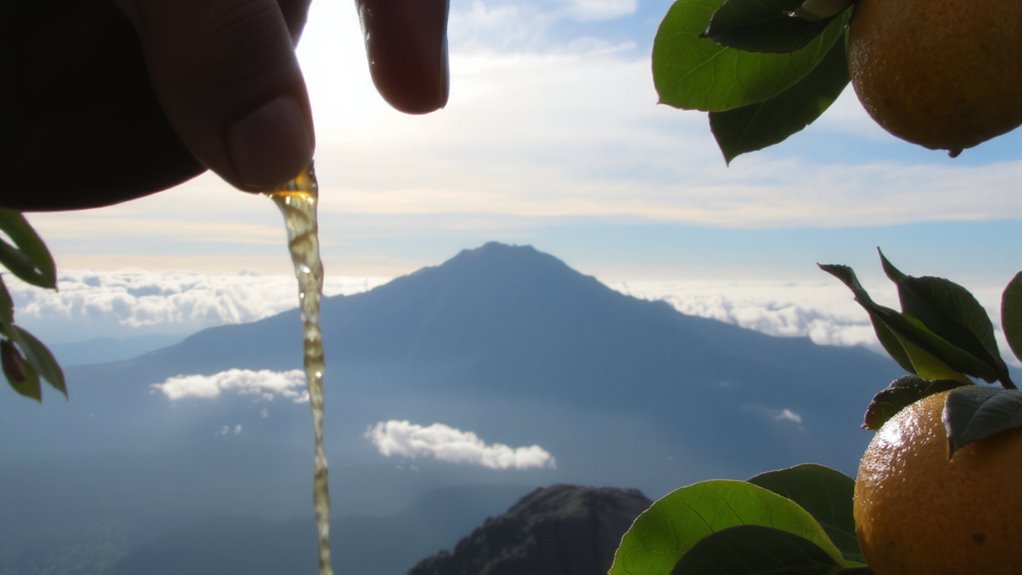
While you might not expect soil to shape flavor, it’s the volcanic foundation of Bali’s Kintamani region that gives the discourage its signature citrus zing. The mineral richness from broken-down volcanic rock infuses the beans with distinct bright notes, especially when brewed using a pour-over or AeroPress. This soil fertility supports dense root systems, leading to healthier plants and more complex beans. Unlike regions with depleted soils requiring heavy fertilizers, Kintamani’s natural advantage reduces chemical inputs, supporting sustainable yields. The balance of potassium, magnesium, and trace minerals directly influences acid development, enhancing that clean lemony spark. Coffee grown in less mineral-rich areas often lacks this crisp profile, tasting flatter even at similar altitudes. For roasters, this means less need to manipulate roast curves to highlight brightness. When sourcing beans, look for farms near active volcanic zones to guarantee access to this natural edge.
How High Altitude Sharpens Kintamani’s Brightness
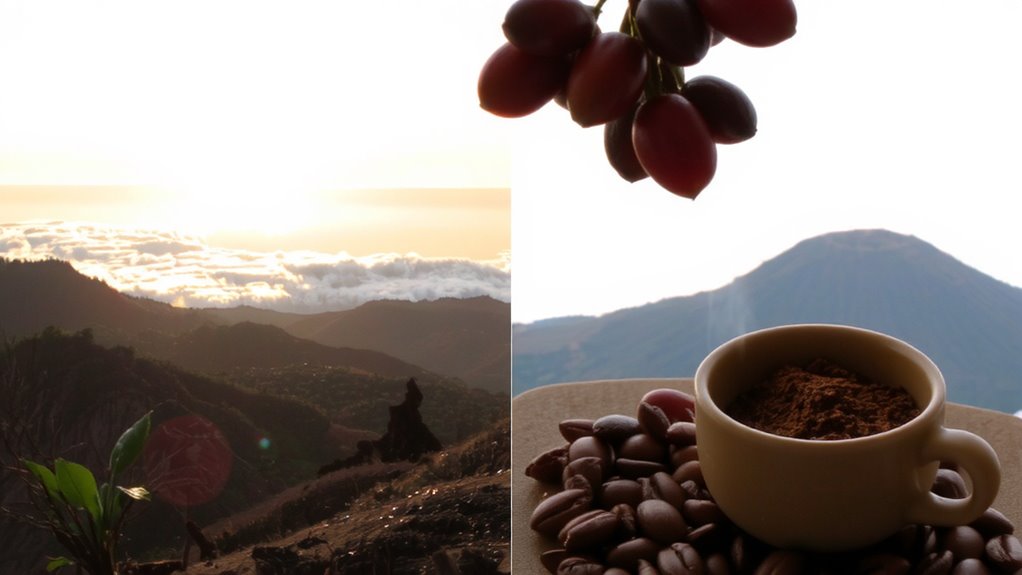
Since cooler temperatures slow bean development, high-altitude farms in Kintamani produce denser beans that pack more acidity and clarity. You’ll taste this brightness as a clean, citrus-tinged lift in your cup-directly tied to terroir influence from elevations above 1,000 meters. The consistent cool air and steady sunlight exposure at these heights help preserve delicate acids that lower-grown coffees often lose. Microclimate variation across Kintamani’s slopes means each village’s beans carry subtle flavor shifts, even within small distances. For best results, use a precise pour-over like a Hario V60 to highlight these crisp notes. Avoid dark roasts, which mute the clarity you’re paying for. Light to medium roasts preserve the bean’s natural vibrancy. If you’re using a grinder, aim for a medium-fine setting to balance extraction without overemphasizing sharpness. This altitude-driven complexity gives you more flavor control-but only if you brew with intention.
Why Cool Air Slows Kintamani Bean Maturation
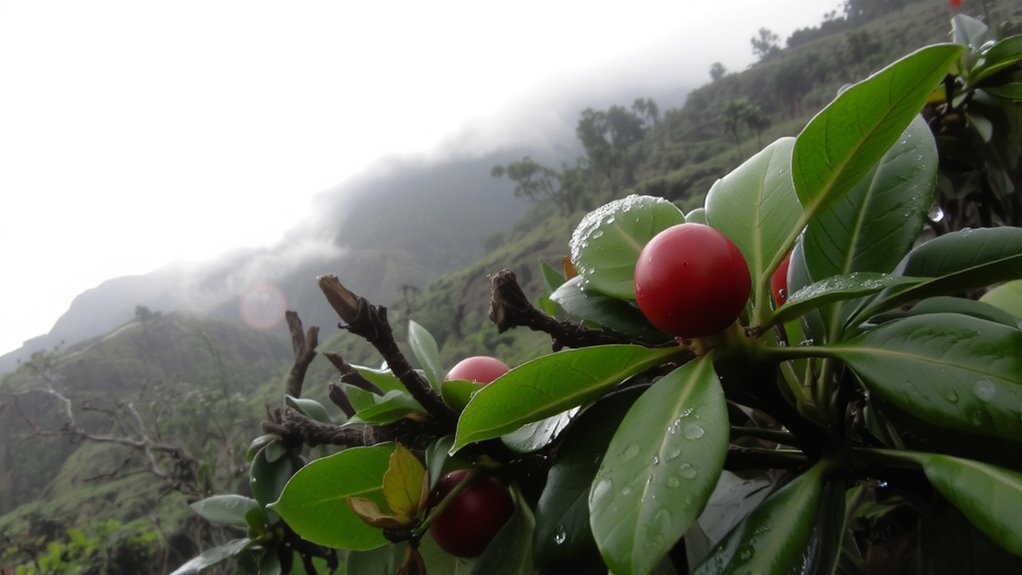
Cool air at Kintamani’s high elevations isn’t just comfortable for farmers-it’s a key factor in how slowly coffee cherries ripen on the branch. When temperatures drop at night, the plant’s metabolism slows, stretching the maturation process over weeks longer than in hotter regions. This slow growth isn’t just about timing-it builds denser beans because the plant steadily packs nutrients and sugars into fewer cells. Higher bean density means more resilience during roasting and better extraction during brewing. You’ll notice it in the cup as improved flavor concentration-bright citrus notes and subtle sugars come through clearly, not diluted or flat. Unlike lowland beans that ripen fast and risk uneven development, Kintamani’s cool climate guarantees uniformity and depth. If you’re roasting or brewing these beans, expect more complexity and stability. Slow maturation isn’t a luxury-it’s a measurable advantage in quality coffee production.
How Slow Ripening Builds Kintamani’s Vibrant Acidity
Kintamani’s slow-ripening coffee cherries develop a bright, clean acidity that stands out in the cup, and that’s no accident. The cool highland air slows sugar development, letting acids form gradually and evenly. This extended ripening strengthens bean density, which helps the bean withstand roasting without losing its lively character. You’ll notice this in the cup as a crisp, citrusy snap-never harsh, always balanced. Higher bean density also supports greater flavor complexity, revealing hints of lemon, green apple, and stone fruit when brewed correctly. To preserve this, use a precise grinder like the Baratza Encore and brew with a V60 or flat-bottom dripper for even extraction. Over-extraction can amplify brightness into sourness, so stick to a 1:16 coffee-to-water ratio and water just off the boil. You’re not chasing heaviness here-Kintamani’s strength is its vibrant structure, built drop by drop during those quiet, cool months on the mountain.
How Local Farmers Preserve Kintamani’s Purity
Their decades-long commitment to quality starts with how local farmers protect the growing environment. You’ll see shade farming widely used here-it preserves soil moisture, reduces erosion, and supports biodiversity. Crop rotation is another key practice, preventing nutrient depletion and minimizing pest buildup. Farmers avoid synthetic inputs, keeping Kintamani’s terroir pure. These methods aren’t just tradition; they’re practical choices that sustain both land and bean quality over time.
| Practice | Benefit | Example Use |
|---|---|---|
| Shade farming | Protects soil, cools plants | Grown under banana trees |
| Crop rotation | Balances soil nutrients | Coffee alternated with beans |
| Organic methods | Avoids chemical contamination | Natural compost only |
| Terraced plots | Reduces runoff, controls water | Built into volcanic slopes |
| Hand harvesting | Guarantees only ripe cherries picked | Daily selective picking |
How Sun-Drying Balances Kintamani’s Citrus and Sweetness
After the cherries are harvested with care to guarantee only ripe fruit makes it into production, the next step-sun-drying-plays a key role in shaping the final flavor. You spread the beans in thin layers on raised beds, where they soak in steady sunlight. This slow process allows mild bean fermentation to occur, enhancing sweetness while tempering the citrus notes. Too much direct sun can over-accelerate drying, so farmers use shade exposure strategically-often with neting or natural tree cover-to control temperature and avoid cracking. The balance between light and shadow helps preserve acidity without losing body. Unlike mechanical drying, sun-drying gives you more control through observation and adjustment, though it demands space and favorable weather. Proper airflow and turning every few hours guarantee even results. Done right, it brings out a citrusy brightness grounded by clean sweetness-no extra processing needed.
Why Kintamani Coffee Tastes Bright Yet Smooth
While acidity often brings sharpness to coffee, Kintamani’s high-altitude farms and volcanic soil create a natural balance that keeps the brightness crisp but not harsh. You’ll notice vibrant citrus notes-think lemon and tangerine-that are lively but never sour, thanks to the mineral-rich soil filtering nutrients evenly into the beans. When you brew it with a pour-over or drip machine, the clarity really shines. Even the water temperature matters: aim for around 195–205°F to extract the flavor without bitterness. The result? A clean cup with sweetness and zesty lift, ending in a smooth finish that doesn’t linger too long or fade too fast. Unlike some high-acid coffees that feel jagged or unbalanced, Kintamani’s structure carries brightness and body together. It’s versatile-works well filtered or in a French press if you adjust grind size. You get complexity without fuss, brightness without bite, and a smooth finish that makes each sip satisfying.
On a final note
You get Kintamani’s citrusy brightness from volcanic soil and high-altitude growing, which boost acid development. Cool nights slow bean maturation, enhancing complexity. Farmers use sun-drying to balance acidity with sweetness, preserving flavor purity. For best results, brew with a pour-over or drip maker-these highlight clarity. Avoid dark roasts; they mute the delicate notes. A burr grinder set medium guarantees even extraction, making the most of its smooth, vibrant profile.