The Impact of Grinder Calibration on Reproducibility of Grind Size
Your grinder’s calibration直接影响 grind size consistency, and without it, shots drift in taste and timing. Even small changes in burr alignment or wear-common in grinders like the Baratza Encore or Niche Zero-create fines and boulders, wrecking extraction. Static, humidity, and motor heat worsen daily drift. Calibrating resets the zero point, counters wear, and stabilizes particle size. That means sweeter shots, fewer adjustments, and real reproducibility. You’ll see why routine checks make all the difference.
Notable Insights
- Grinder calibration ensures consistent grind size by counteracting setting drift and burr misalignment over time.
- Worn or misaligned burrs produce uneven particles, reducing grind reproducibility and extraction consistency.
- Regular calibration minimizes fines and boulders, enhancing uniformity across successive grinds.
- Environmental factors like humidity and static affect grind behavior, making daily calibration essential for accuracy.
- Proper calibration maintains optimal particle size distribution, critical for repeatable espresso shots and flavor balance.
Signs Your Coffee Grinder Needs Calibration
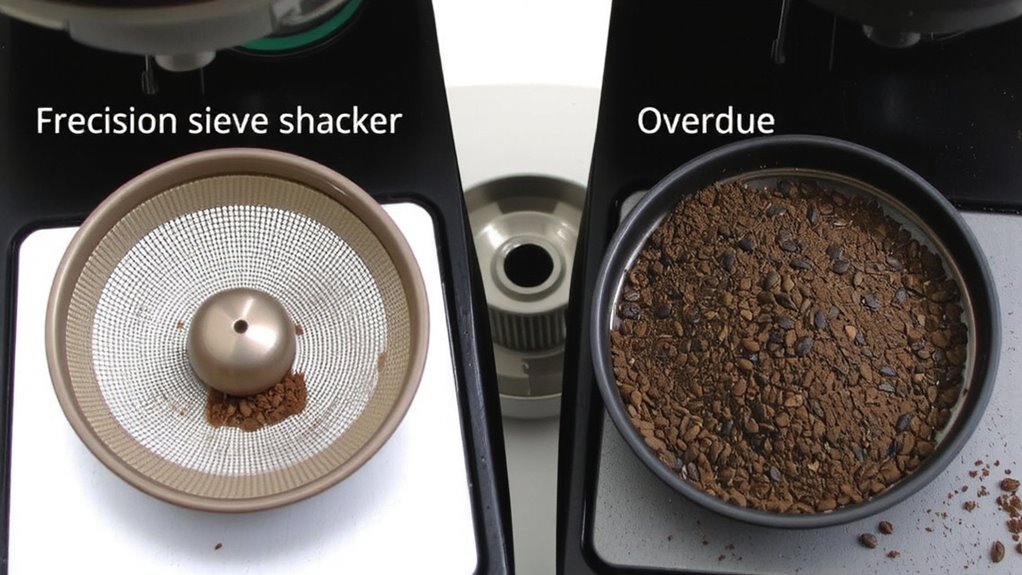
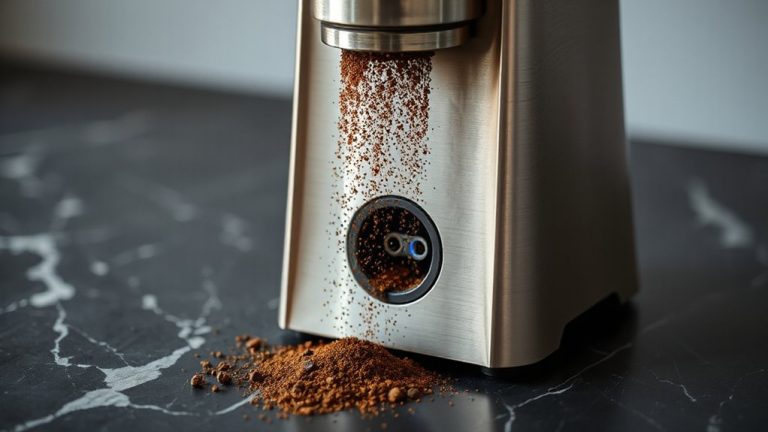
More than a few coffee lovers overlook the fact that their grinder’s settings can drift over time, leading to inconsistent results. As your grinder ages, wear on the burrs affects precision-older grinders, especially blade models or budget conicals, often lose calibration faster. You might notice more fines or boulders in your dose, a sign the grind size isn’t uniform. Static buildup worsens with dry beans or low humidity, causing grounds to cling and scatter, which throws off dosing accuracy. If you find yourself adjusting the setting more often than before, or shots pull too fast or too slow without changes in technique, calibration is likely needed. Grinder age, frequent use, and static buildup all contribute. Even high-end grinders like the Baratza Virtuoso or 1ZPresso models aren’t immune. Spot these signs early to maintain shot consistency and avoid wasted beans. For those seeking top-performing equipment, consider exploring the best espresso grinders based on expert testing and recommendations.
How to Calibrate Your Coffee Grinder in 5 Steps
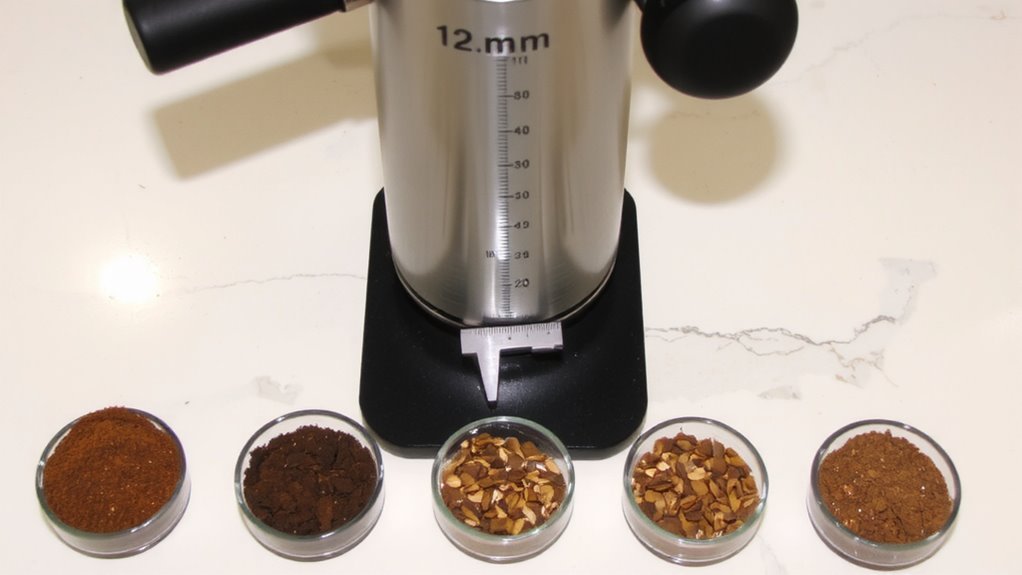
Think of your grinder like a precision instrument-over time, even the best models can drift out of alignment. Proper calibration guarantees consistent particle distribution, which directly affects extraction and shot quality. Step 1: Empty the hopper and grind chamber. Step 2: Set your grinder to its factory zero point, usually marked on the dial. Step 3: Use a small amount of coffee to test-grind and check the coarseness. Step 4: Adjust incrementally, noting changes in texture and brew time. Step 5: Verify consistency across multiple grinds. Regular grinder maintenance, like cleaning burrs and checking for buildup, supports accuracy. Avoid skipping steps-even minor misalignments skew results. While some grinders offer digital calibration, most require manual tweaks. Stay patient; small changes make big differences. This routine takes minutes but improves every shot. Treat it like tune-ups for a bike-necessary, quick, and effective. For optimal results with different brewing methods, consider choosing a grinder specifically designed for both espresso and pour-over.
Why Grinder Wear Affects Your Shots
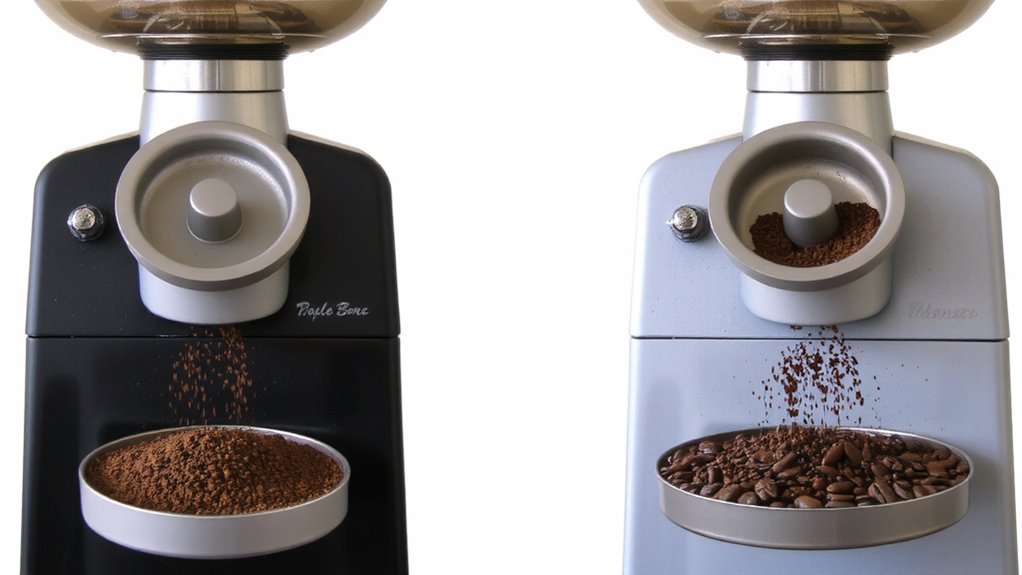
While your grinder may start with sharp, precise burrs, they gradually wear down with use, and that wear changes how your coffee extracts. As the burrs lose their sharpness, they tear rather than cut the coffee, creating uneven particles that lead to inconsistent extraction. This inconsistency affects shot flavor, often making it sour or bitter. Worn burrs also generate more friction, increasing grind temperature and potentially scorching the grounds before brewing. Misaligned burrs-common in older or heavily used grinders-worsen this by producing even more fines and boulders. Even if you don’t change your settings, your grind size shifts over time due to this wear. You might not notice at first, but your shots start pulling too fast or too slow. Regular inspection helps. Some grinders, like the Compak K6 or EK43, allow for burr replacement, extending life and performance. Maintaining proper burrs alignment and monitoring grind temperature is key to stable shots. Choosing one of the best mill grinders can help maintain consistency and reduce wear-related issues over time.
How Calibration Fixes Inconsistent Espresso
A well-calibrated grinder is the foundation of every consistent espresso shot. When you calibrate, you correct the grind size and alignment so each particle is nearly the same, improving grind uniformity. That consistency means water meets even resistance during extraction, preventing under or over-extraction. Without it, your shots might taste sour one day and bitter the next. Calibration also guarantees dosage accuracy-your dose in grams pours out the same every time, so your espresso isn’t thrown off by random clumps or fines. If your grinder’s blades are misaligned or the settings drift, even small changes mess up your shot time and flavor. Think of it like a scale that reads 18g when it’s actually 16g-your recipe fails. Fixing calibration gaps means better control, shot after shot, especially with finicky beans or high-pressure machines like the La Marzocco Linea.
Get Better Coffee: Calibrate Daily
You’ll get noticeably better coffee by calibrating your grinder daily, especially if you’re working with light roast or single-origin beans that demand precision. Humidity, bean density, and static buildup shift grind size overnight, wrecking your flavor balance and masking coffee freshness. A quick calibration-zeroing the burrs and testing a shot or pour-over-takes two minutes but stabilizes extraction. Without it, you risk under-extraction (sour, thin) or over-extraction (bitter, flat), both hiding the bean’s true character. Entry-level grinders like the Baratza Encore need it most, but even high-end models like the Niche Zero drift. Water exposure, bean oil buildup, and motor heat all contribute. Calibrating daily keeps particle size consistent, which preserves aroma and acidity. Skip it, and even fresh beans won’t taste right. For best results, use the same beans and dose, adjust for taste, and clean burrs weekly. It’s not fussy-it’s necessary.
On a final note
You should calibrate your grinder regularly to keep your coffee consistent. Over time, burrs wear down and settings drift, leading to uneven grinds and poor extraction. A quick daily check takes less than a minute but makes a real difference in shot quality. Use a reliable scale and grind timer to spot changes. Brands like Baratza and Mazzer offer easy calibration. Skipping this step risks sour or bitter espresso. Calibrate daily, especially with high-volume use, for repeatable results.