Understanding the Cup Defect Risks in Overbearing Catimor Coffee Plants
When Catimor plants overbear, they produce too many cherries, weakening bean density and sugar development. This leads to flat, sour, or musty flavors in the cup, even if processing and roasting are well done. Poor maturation also raises defect risks like woody notes from internal bean damage or fungal exposure. Pruning for balanced yields and using proper nutrition helps preserve quality. You’ll see better results when the plant isn’t overtaxed. There’s more to optimizing Catimor that can help you get the most out of each harvest.
Notable Insights
- Overbearing in Catimor plants reduces bean density, leading to uneven roasting and flat or papery cup notes.
- Excessive yields limit sugar development, resulting in underdeveloped, sour, or grassy flavor profiles despite ideal growing conditions.
- Nutrient competition from too many cherries diminishes flavor complexity, producing one-dimensional and hollow-tasting coffee.
- Overloaded branches stress the plant, increasing susceptibility to pests and fungi that introduce musty or woody off-flavors.
- Pruning and managed stress improve bean quality by concentrating nutrients and enhancing flavor development in overbearing Catimor plants.
What Causes Musty, Woody Flavors in Catimor Coffee?
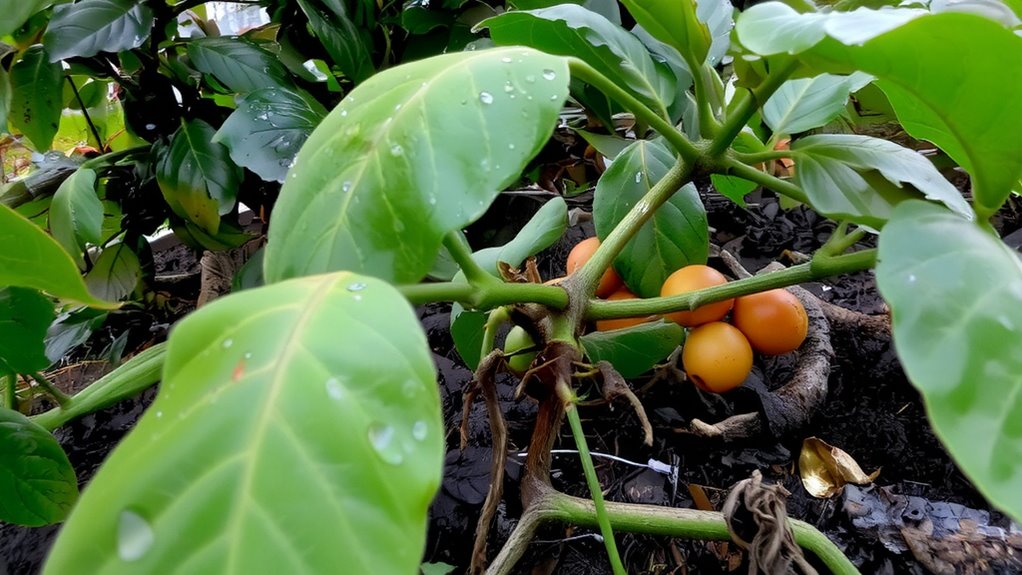
Why does your Catimor brew sometimes taste musty or woody? It’s likely due to pre-harvest issues like fungus exposure or pest infestation, both common in Catimor plants. Fungus exposure, especially from coffee rust or mold during damp growing periods, alters bean structure and flavor compounds. Even mild cases can introduce earthy off-notes. Pest infestation, such as from berry borers, damages beans internally, creating entry points for microbes and decay. These flaws often survive processing and roasting, emerging as musty, woody notes in your cup. You won’t fix this at the brew stage-prevention starts on the farm. Look for beans from farms using fungicide regimens or shade management to reduce moisture. Opt for producers who monitor pest traps and harvest promptly. Washing stations should sort out damaged beans. If you frequently pull woody shots, check your green bean source-not your grinder.
Why Overbearing Ruins Catimor’s Cup Quality
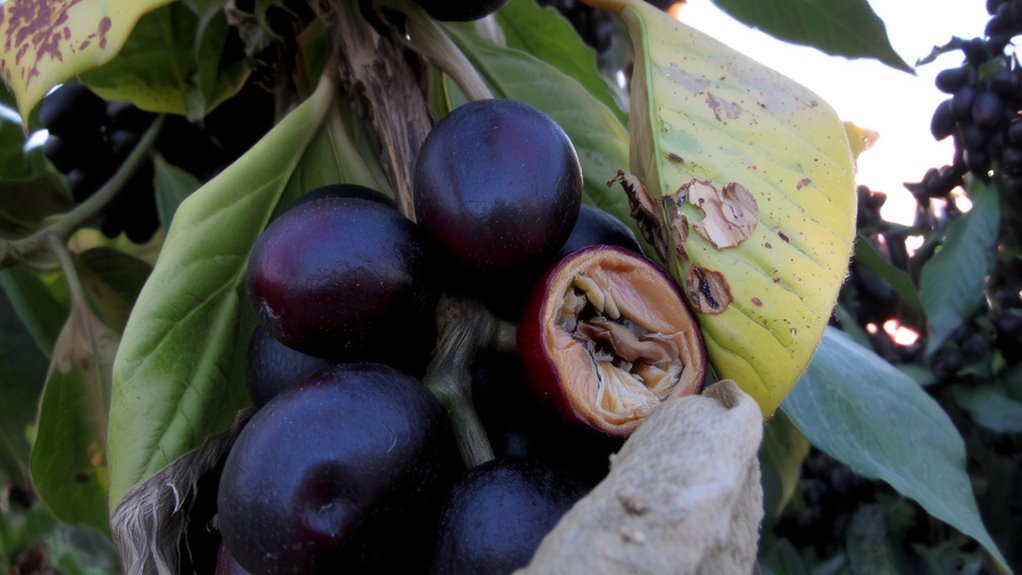
Yield pressure. You push your Catimor plants to produce more, but that comes at a cost. When they overbear, the beans don’t develop fully, and you lose bean density-critical for clean roasting and even extraction. Low-density beans roast unevenly, often highlighting flat or papery notes instead of the bright, structured profile you want. Plus, overproduction cuts flavor complexity. Instead of layered citrus, cocoa, or floral tones, you get one-dimensional cups, sometimes with hollow or sour edges. Catimor’s already limited cup quality worsens under stress, making it harder to stand out in specialty markets. You’re trading short-term volume for long-term value. If you’re aiming for quality-focused buyers or competition-grade lots, managing fruit load isn’t optional-it’s essential. Prune strategically, balance nutrition, and prioritize fewer, better beans. That’s how you protect bean density and preserve whatever flavor complexity Catimor can deliver.
How Overproduction Stalls Sugar Development in Beans
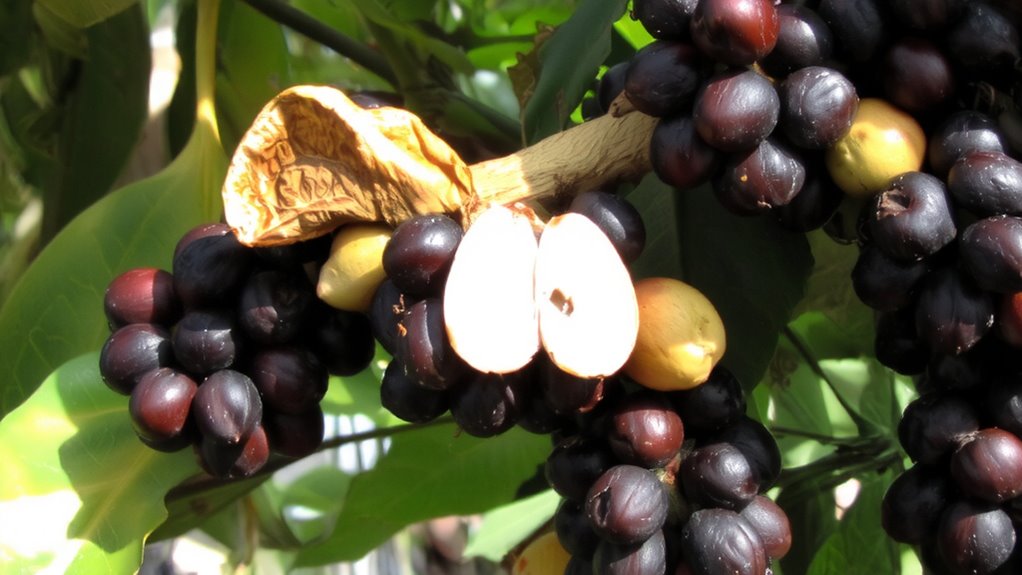
When your Catimor plants carry too many cherries, they struggle to channel enough energy into each bean, and that directly limits sugar development. The plant can’t sustain ideal ripening across so many fruits, leading to weak bean density and uneven maturation. You’re dealing with intense nutrient competition-each cherry pulls from the same pool of resources, leaving little for individual beans to build complex sugars. Under these conditions, even with ideal sun and water, the beans stay underdeveloped. Low sugar content means flat, sour, or grassy notes in the cup-not the balanced profile you want. High bean density usually signals good sugar storage, but overproduction dilutes that. You’ll need to limit yields through strategic pruning or harvest timing if you want better quality. It’s a trade-off: more cherries now or fewer, sweeter beans later. Your processing method won’t fix this imbalance-source quality starts in the field.
Watch for These Signs of Catimor Overyielding
How can you tell your Catimor plants are producing too much? Look for pale leaves and stunted growth-classic signs of nutrient depletion. When yields spike, the plant pulls more from the soil than it can replenish, especially nitrogen and potassium. You might also notice reduced root function and cracked soil around the base, indicating root stress from overexertion. Branches weighed down by excessive cherries can sag or snap, particularly after rain. Overloaded nodes often produce uneven or underdeveloped beans, a red flag for future cup defects. If flowering becomes erratic or new shoots appear weak, the plant is struggling to support its load. These symptoms mean your Catimor is overyielding and could compromise bean quality. Address it early with selective pruning, balanced fertilization, and maybe reduced irrigation to ease root stress and restore balance.
When Less Yield Means Higher Cup Scores
A balanced crop load often sets the stage for better cup quality, and that’s something worth aiming for in Catimor. When you let the plant produce too much, you’re not just adding beans-you’re risking flavor dilution and aroma degradation. With overbearing yields, sugars and acids spread thin across more fruit, weakening sweetness and complexity. You’ll notice flat profiles, muted aromas, and off-notes in the cup-even with good processing. But when you manage the plant for lower yields, the available nutrients concentrate, boosting clarity and intensity. Think of it like reducing a broth: less volume, more depth. Lower yields often mean denser beans, which respond better during roasting and extract more evenly. You’ll see brighter acids, stronger varietal traits, and cleaner finishes. It’s not about maximum output-it’s about ideal quality. You trade quantity for consistency, and that swap often pays off in higher cup scores and fewer defects down the line.
How to Prune and Manage Catimor for Better Flavor
Though Catimor’s reputation often leans toward high productivity rather than quality, you can shift the balance in favor of better flavor with targeted pruning and consistent management. Use selective pruning to remove weak or overcrowded branches, which improves air circulation and sunlight penetration-both critical for even bean development. Focus on maintaining a manageable plant height to encourage energy distribution into fewer, higher-quality cherries. Pair this with balanced nutrition, supplying moderate nitrogen and boosting potassium and magnesium to support bean maturity and sweetness. Over-fertilizing increases yield but risks dull, vegetal cup notes. Irrigate consistently during flowering and fruit set, but allow slight stress as cherries ripen to concentrate flavors. Avoid full-sun exposure; partial shade helps slow maturation, improving complexity. These steps won’t transform Catimor into Geisha, but they reduce cup defects and enhance clarity, sweetness, and body-practical gains for quality-focused producers.
On a final note
You can’t fix overbearing Catimor with better processing or roasting-yield directly hurts cup quality. When the plant produces too many beans, sugar development drops, increasing musty, woody flavors. Prune regularly to reduce node count and balance fruit load. Expect lower harvests, but cup scores often rise by 2–3 points. Pair this with consistent fermentation control and you’ll see clearer sweetness. It’s a trade-off: volume for quality-one high-end roasters accept.