Complete Guide to Cleaning a Coffee Machine’s Internal Water Lines
You should descale your coffee machine every 3 to 6 months, depending on use and water hardness. For light buildup, white vinegar works, but citric acid or a commercial descaler like Dezcal clears tougher scale and leaves less odor. Always unplug the machine, remove filters, and run the solution through the system, letting it sit 15–30 minutes before flushing with water. This keeps water flow strong and coffee tasting clean. The right method makes all the difference.
Notable Insights
- Descaling every 3 to 6 months removes mineral buildup in internal water lines, especially in hard water areas.
- Use descaling solutions like vinegar, citric acid, or commercial products designed for coffee machines.
- Run a descaling cycle by circulating the solution through the machine to dissolve calcium and magnesium deposits.
- Let the solution sit for 15–30 minutes to effectively break down scale in pipes and heating elements.
- Flush the system thoroughly with fresh water to remove residue and prevent odors or damage.
How Often Should You Descale Your Coffee Machine?
Every 3 to 6 months is the sweet spot for most people when it comes to descaling your coffee machine, but it really depends on how often you brew and the hardness of your water. If you use it daily, you’ll likely see mineral buildup faster, especially in areas with hard water. High water hardness means more calcium and magnesium in your supply, which over time deposits inside pipes and heating elements. That buildup slows brewing, reduces heat, and can eventually cause malfunctions. Machines in soft water areas may need descaling less-maybe once a year. But in hard water zones, every two months might be necessary. Check your machine’s indicator light if it has one, or watch for slower flow and weaker coffee. Regular descaling keeps performance steady and extends the machine’s life. It’s not glamorous, but it works. Using a Breville-approved descaler ensures optimal cleaning without damaging your machine’s internal components.
Choose: Natural or Commercial Descaler?
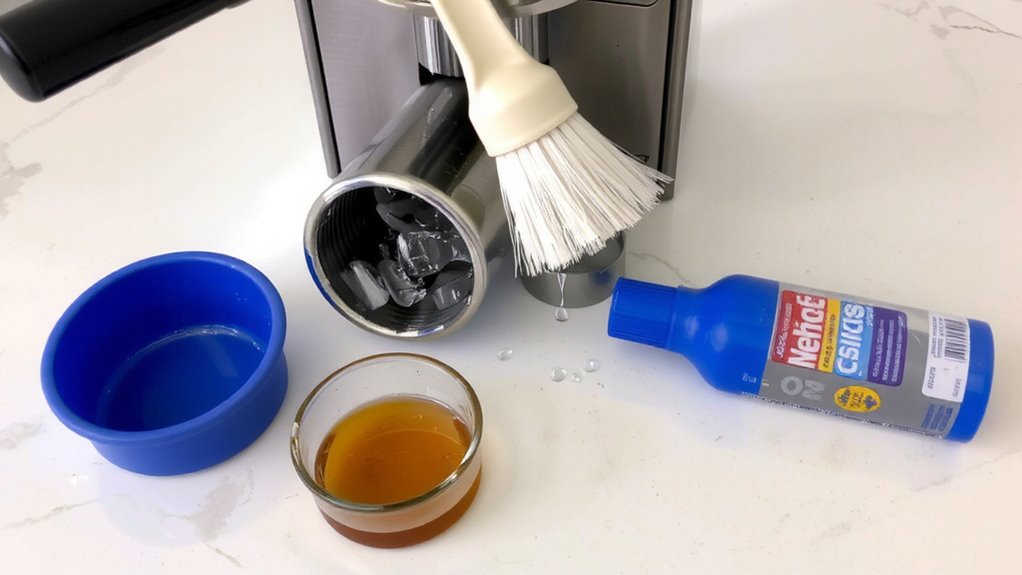
What’s really going on inside your coffee machine when you run a descaling cycle? Mineral deposits from hard water are being broken down and flushed out. You can use natural options like white vinegar, which offers affordable vinegar benefits and is readily available. It works well for light to moderate scale but may leave an odor and isn’t ideal for frequent use. Citric acid alternatives are stronger than vinegar, leave little to no smell, and are effective with less rinsing. They’re often found in powdered form and useful for espresso machines. Commercial descalers are specifically engineered for coffee equipment, work faster, and protect machine components better but cost more. They’re especially recommended for machines with metal boilers. Choosing depends on your water hardness, usage, and machine type. For most home users, citric acid alternatives strike the best balance of efficiency and safety. Some commercial products, like Best Nespresso Descalers, are optimized for speed and component protection in pod-based systems.
What You Need to Clean Your Machine
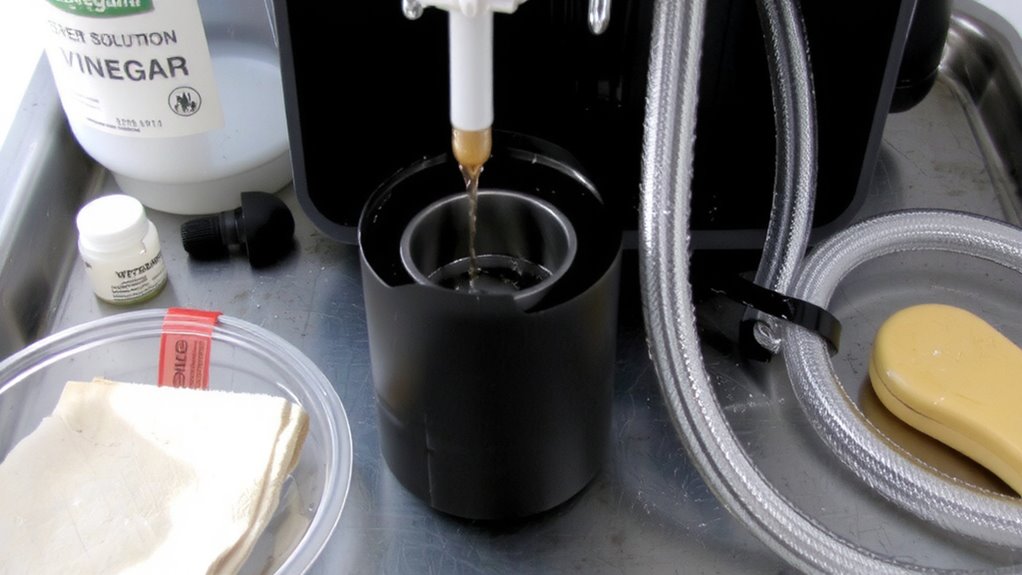
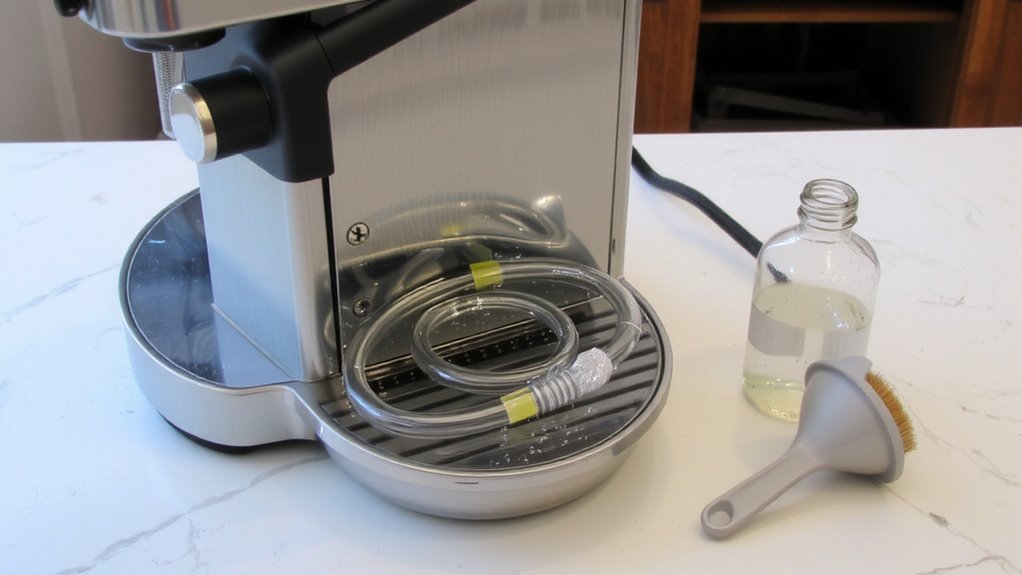
Gather your supplies before diving in-skipping this step risks incomplete cleaning or damage to your machine. You’ll need a descaler, either white vinegar or a commercial product like Dezcal or Urnex. If you choose vinegar, make certain it’s plain white vinegar, not flavored or diluted. Use distilled water when rinsing, since tap water can worsen mineral buildup due to poor water quality. You’ll also need a container large enough to catch runoff and a soft cloth for exterior wiping. Some machines include a cleaning brush or filter basket tool-use them if available. Always consult your machine’s manual; methods vary by brand. Never mix descaling agents unless specified. Poor water quality accelerates mineral buildup, so regular cleaning is critical even with filtered water. Having everything ready keeps the process efficient and prevents mid-cleaning delays that might harm your machine.
Descale Your Coffee Machine in 6 Steps
One effective way to maintain your coffee machine’s performance is by following a clear six-step descaling process, which removes mineral buildup from internal water lines. First, power off the machine and remove any water filters. Next, mix a descaling solution-like vinegar or a commercial cleaner-with water as directed. Pour the mixture into the water reservoir. Run a descaling cycle, letting the solution sit for 15–30 minutes to break down scale buildup. Then, flush the system with fresh water multiple times to restore clean water flow. Finally, wipe exterior surfaces and restart the machine. Regular descaling every 1–3 months prevents clogs and keeps water flow consistent. Machines in hard water areas need more frequent care. Skipping this step risks reduced efficiency and poor-tasting coffee. Always consult your model’s manual-some brands, like Breville or De’Longhi, have specific cycle instructions.
Fix Common Problems After Cleaning
Still getting odd flavors or weak brew after cleaning? It’s likely due to leftover residue, improper reassembly, or undetected mechanical issues. Check for leak detection around joints and seals-drips can disrupt water flow and pressure issues, leading to poor extraction. Also, make sure all components are securely fitted; even a slightly misaligned gasket can cause problems. Run a full brew cycle with just water to flush out any lingering cleaning solution.
| Problem | Possible Cause | Quick Fix |
|---|---|---|
| Weak coffee | Air pockets or low pressure | Descale again, check pump |
| Water leaks | Loose fittings or worn seal | Tighten or replace parts |
| No water flow | Clog or blockage | Inspect tubing, flush |
| Gurgling sounds | Air in lines | Run water cycle to prime |
| Inconsistent heat | Faulty thermostat | Test temperature, service if needed |
Why Clean Water Lines Prevent Bad Coffee
While great-tasting coffee starts with good beans, what happens inside your machine matters just as much-especially the condition of the internal water lines. If you don’t clean them regularly, mineral buildup from hard water clogs passages and reduces efficiency. This scale doesn’t just hurt performance-it traps old residue that leads to flavor contamination. Over time, your coffee tastes off, dull, or even slightly sour, not because your beans are bad, but because stale minerals and biofilm taint the water before it hits the grounds. You’re not just brewing coffee; you’re brewing whatever’s sitting in those pipes. Regular cleaning with a descaling solution removes mineral buildup and prevents gunk from accumulating. Machines like Keurig, De’Longhi, or Breville all suffer this issue. Skip maintenance, and even premium beans can’t save your cup. Clean lines mean pure, consistent flavor-every time.
On a final note
You should descale every 1–3 months, depending on use and water hardness. Both vinegar and commercial descalers work, but commercial options are often gentler on machines like Breville or De’Longhi. Follow the 6-step process carefully, and reassemble parts fully to avoid leaks. Clean water lines mean better-tasting espresso or drip coffee. Skipping maintenance hurts performance and shortens machine life. It’s simple upkeep with real results.