How to Roast Pacamara Beans to Highlight Their Juicy, Stone Fruit Characteristics
Start your roast at 410°F–420°F to match Pacamara’s density and protect its bright, juicy acidity. Extend the Maillard phase to 1.5–2.5 minutes to develop stone fruit depth without roastiness. Keep development short-18–22% of total time-and end 1:15–1:45 after first crack to preserve vibrancy. Aim for medium brown (Agtron 65–70) with no oil. Use steady heat and airflow on roasters like Probatino or Loring for consistency. You’ll find how small tweaks refine flavor even further.
Notable Insights
- Start roasting at 410°F–420°F to match Pacamara’s high density and preserve vibrant, juicy acidity.
- Extend the Maillard phase to 1.5–2.5 minutes to develop rich stone fruit flavors like peach and apricot.
- Limit development time to 18–22% of total roast to maintain bright acidity and prevent flat, cooked notes.
- Monitor first crack timing (5:30–6:30 minutes) and roast to medium brown (Agtron 65–70) for optimal sweetness.
- Apply balanced heat with steady airflow, ensuring a 90–120 second post-first crack development for maximum flavor clarity.
Use a High Charge Temp for Pacamara Brightness
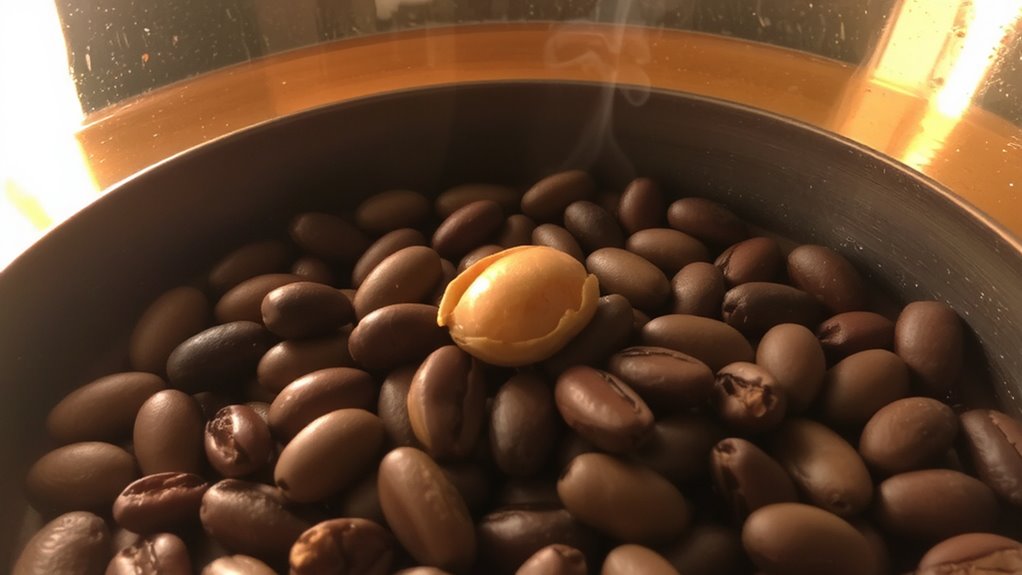
A high charge temperature helps preserve the bright, vibrant notes often found in Pacamara beans, especially those from washed or lighter processed lots. You’ll want to start around 410°F–420°F to match their high bean density, ensuring even heat penetration and better roast consistency. Dense beans like Pacamara can absorb more heat early without scorching, so don’t hesitate to push the initial charge. If you go too low, you risk baking the beans, leading to flat, dull flavors. Roasters like the Probatino or Loring Siventeen respond well to this approach, offering precise control. Avoid underdeveloped highs by monitoring your rate of rise-sharp drops can signal uneven roasting. This method works best with moisture levels between 10–12%. You’ll get cleaner acidity and pronounced sweetness, especially in the cup’s front end. Keep airflow stable from the start to support uniform development. For DIY roasters, using a high-powered heat gun for coffee roasting can effectively achieve these charge temperatures with proper temperature monitoring.
Lengthen Maillard for Stone Fruit Depth
If you’re aiming to draw out deeper stone fruit notes in Pacamara beans, extending the Maillard phase is a proven way to build complexity without sacrificing clarity. Aim for an extended browning period of 1.5 to 2.5 minutes, depending on your roaster’s power and bean density. This slower development encourages flavor maturation, enhancing notes like ripe peach, apricot, and plum without tipping into roastiness. On a Probat or Loring, you can control heat application steadily; on smaller electric roasters like the Behmor or Gene Café, modulating drum speed or heat in mid-roast helps avoid stalling. Too little Maillard time results in thin, greenish flavors, while overextending risks muddiness. The goal isn’t darkness-it’s depth. Monitor color change closely and pair time with stable temperature rise. A well-executed extended browning phase adds richness while keeping the varietal character intact.
Shorten Development to Preserve Juicy Acidity
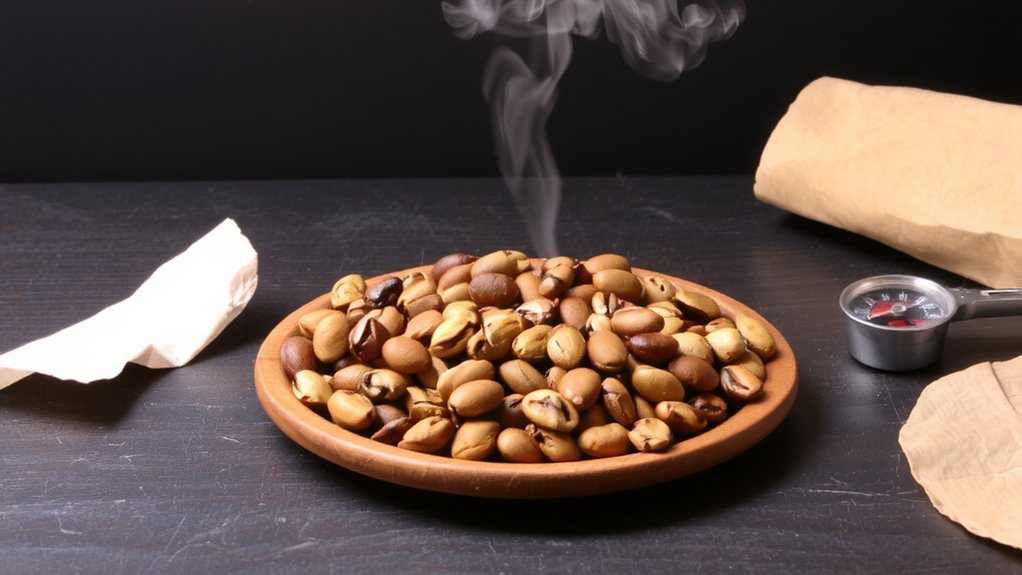
You’ve built depth with a longer Maillard phase, but now it’s time to lock in brightness-cutting development time after first crack helps retain the lively acidity Pacamaras are known for. Aim for a development ratio of 18–22% to preserve that juicy acidity without underdeveloping the bean. Going beyond 24% can mute the vibrant notes, turning bright stone fruit into flat, cooked flavors. You’ll want to end the roast shortly after first crack stabilizes-typically 1:15 to 1:45 depending on your roaster. This shorter finish sharpens the bright finish, emphasizing lime, peach, or apricot tones. Roasters like the Probatino or Loring S15 give precise control, making it easier to hit and repeat this window. Just don’t cut too short-under 1:10 risks baked, sour notes. Balancing speed and stability here is key to a clean, juicy acidity and crisp bright finish.
Monitor First Crack and Color for Perfect Finish
What does it take to nail the finish on Pacamara beans? You’ve shortened development-now it’s time to monitor first crack and color. Roast tracking helps you stay in sync with the bean’s progress. Listen closely: Pacamara’s first crack is your signal. It’s not just sound-it’s timing. Pair auditory cues with visual checks. The beans should hit a medium brown with a slight sheen, never oily. Use sensory analysis early and often. Sniff and note changes as color shifts. Stop the roast just after first crack peaks if you want vibrant, juicy notes. For beginners, using a coffee roasting machine can simplify tracking these critical stages.
| Stage | Target Indicator |
|---|---|
| Color | Medium brown (Agtron 65–70) |
| First Crack | Start to peak, not full drop |
| Surface | Dry to slight sheen, no oil |
| Roast Tracking | Log time-to-crack (typically 5:30–6:30) |
| Sensory Analysis | Sweet, stone fruit, low bitterness |
Balance Heat to Highlight Pacamara’s Sweetness
While roasting Pacamara beans, maintaining control over heat application is essential to bring out their natural sweetness. Their high bean density means they absorb heat slowly, so starting with a moderately high charge temperature helps promote even development. Too much heat too soon risks scorching the outside while leaving the center underdeveloped; too little leads to baked, flat flavors. Aim for a steady ramp rate through the mid-phase to preserve those juicy, stone fruit notes. Consistent airflow and burn control improve roast consistency, ensuring each batch tastes the same. Machines with responsive gas control, like a Loring or Probat, offer better precision than basic electric roasters. Always track your time between first crack and drop-keeping it between 90 and 120 seconds usually maximizes sweetness without tipping into bitterness. Adjust in small increments for best results.
On a final note
Roast Pacamara beans with a high charge temperature to lock in brightness, then extend the Maillard phase for deeper stone fruit notes. Keep development short to preserve juicy acidity, and pull just after first crack for maximum sweetness. Watch color-it should be even medium brown. Use a roaster with solid heat control, like a Probat or even a well-calibrated Behmor, to balance speed and flavor.