Step-by-Step Guide to Cleaning Manual Brewing Equipment (Pour-Over, French Press, AeroPress)
Rinse your pour-over, French press, or AeroPress right after each brew to prevent old oils from turning rancid. Use warm water and mild soap with a soft brush-avoid abrasives. Disassemble the French press fully and clean the mesh filter weekly. Descale monthly with vinegar or a dedicated cleaner if you have hard water. Dry all parts completely to avoid mold. For best flavor, deep clean with Cafiza or a 1:2 vinegar solution every few weeks-details on timing and troubleshooting follow.
Notable Insights
- Rinse all manual brewing equipment immediately after use to prevent oil buildup and residue drying.
- Disassemble French press components fully and clean each part with warm, soapy water and a soft brush.
- Use a mild dish soap and soft sponge to wash pour-over cones and carafes, avoiding abrasives.
- Deep clean AeroPress with warm water and coffee-specific cleaner every few weeks to remove oils.
- Descale mineral buildup monthly using a 1:2 vinegar-water solution or commercial descaler.
Why Clean Your Coffee Brewing Equipment?
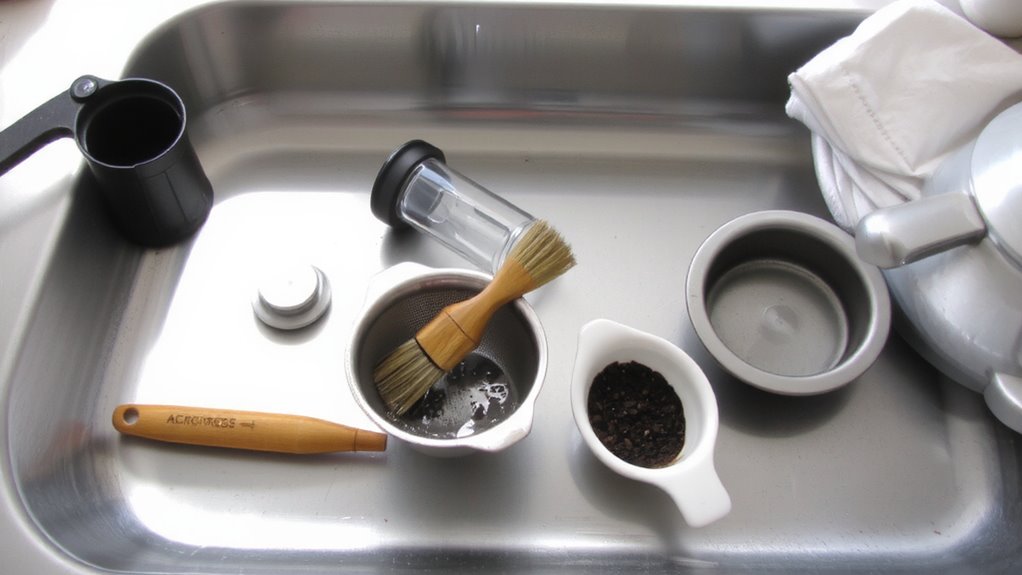
A buildup of oils, residue, and minerals is the quiet enemy of good coffee. You might not see it, but it clings to your pour-over brewer, French press, and AeroPress. These deposits interfere with coffee chemistry, disrupting how water extracts flavors from grounds. Over time, that leads to flavor degradation-your coffee tastes flat, bitter, or off, even if you’re using fresh beans. Residual oils go rancid, especially in metal filters or plunger screens, while mineral scale from hard water blocks proper water flow and temperature. That means uneven brewing and inconsistent results. Cleaning isn’t just about hygiene; it’s about accuracy in extraction. Without regular maintenance, you’re not brewing fresh coffee-you’re reheating yesterday’s mistakes. You’ll waste high-quality beans and precise recipes. Keep your gear clean, and you keep the chemistry honest. Flavor degradation stops when you do the work.
What Cleaning Supplies You Actually Need
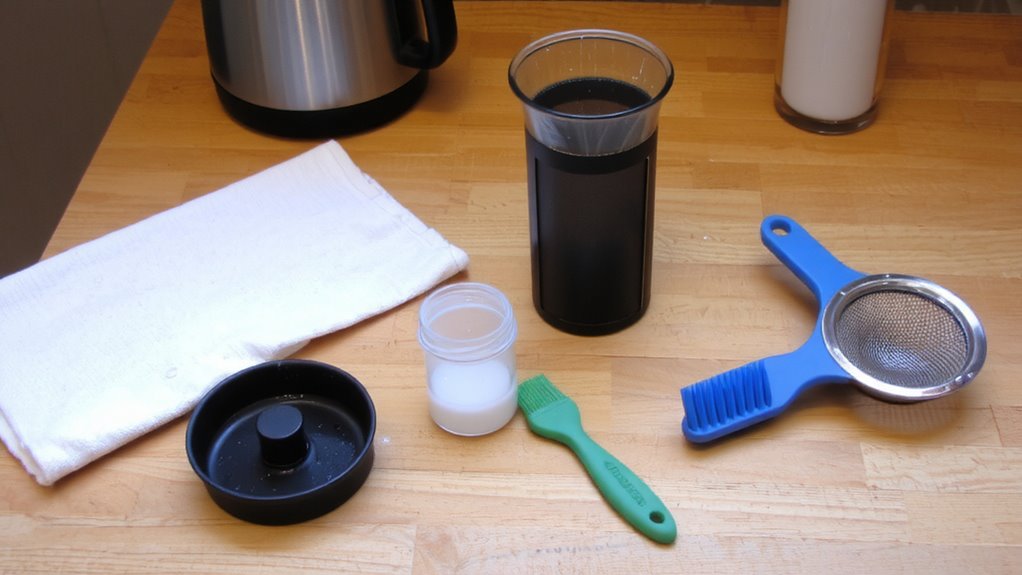
You’ve seen how leftover oils and mineral deposits mess with your coffee’s flavor, so it’s time to tackle what you actually need to clean your gear. For daily cleaning, all you really need is mild dish soap and warm water-these handle most coffee stains and residue. A soft brush or sponge works well for scrubbing, especially for mesh filters or carafes. For deeper maintenance, use a dedicated coffee cleaner like Cafiza or Puro Espresso to cut through stubborn oils and coffee stains. To fight mineral buildup from hard water, a monthly rinse with a 50/50 mix of white vinegar and water helps, or use a commercial descaler like Urnex. Avoid abrasive pads-they scratch surfaces and trap oils. A microfiber cloth is handy for drying. Skip scented soaps; they leave behind flavors. Having these supplies on hand keeps your equipment functioning and your coffee tasting clean, without overcomplicating the routine. A dedicated coffee grinder cleaning brush helps remove fine coffee grounds and oils from hard-to-reach areas in grinders.
Clean Your Pour-Over Setup in 5 Steps
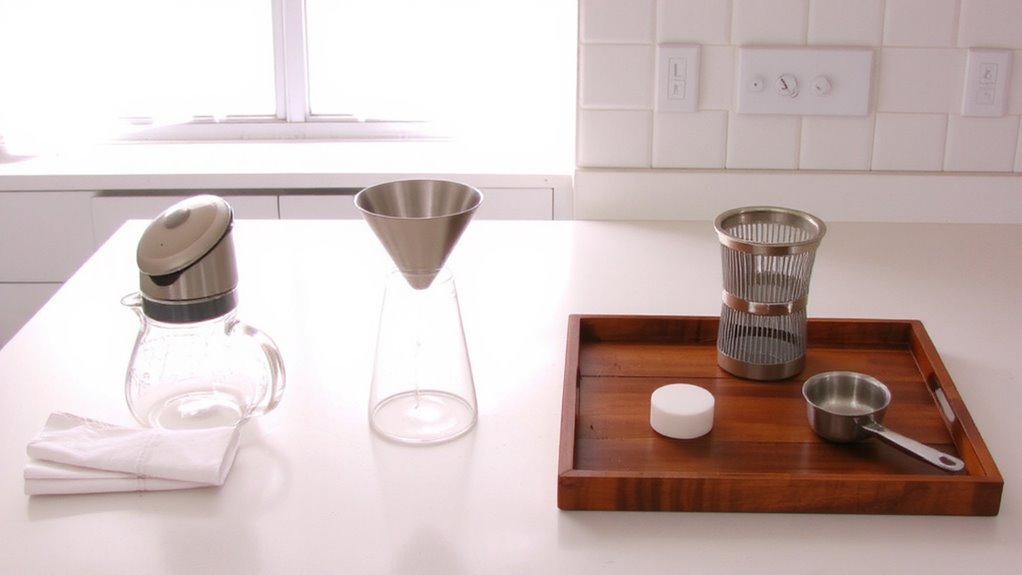
Clarity begins with a consistent routine, and keeping your pour-over setup clean is no exception. First, discard used grounds right after brewing-this stops stale oils from building up. Second, rinse the dripper and carafe with warm water to remove residue. Third, wash both parts with a drop of mild dish soap and a soft sponge; avoid abrasives that scratch surfaces. Fourth, sanitize monthly with a vinegar solution (1:2 vinegar to water) or use a dedicated coffee cleaner for better pour over maintenance. Finally, air-dry everything upside down on a rack to prevent water spots and support long-term brewing hygiene. Regular cleaning prevents off-flavors and mineral buildup, especially if you use hard water. Using gooseneck kettles? Wipe the spout too. This quick 5-step process keeps your equipment reliable and your coffee tasting fresh, batch after batch.
Scrub Your French Press the Right Way
While many overlook the mess left behind after pressing, cleaning your French press properly matters just as much as the brew itself. Start with a full French press disassembly-remove the piston, separate the mesh filter, and take off any rings or springs. Rinse parts immediately to prevent coffee oils from sticking. Use warm, soapy water and a soft brush to clean the carafe and metal components. Pay close attention to the filter layers, where residue builds up fast. For the glass carafe, apply gentle glass polishing techniques with a non-abrasive sponge to avoid scratches while removing stains. Avoid harsh scrubbers that could cloud or weaken the glass. Let all pieces air-dry completely before reassembling. Doing this daily prevents mold and lingering tastes. A clean French press isn’t just about looks-it guarantees your next cup is smooth, not bitter.
Keep Your AeroPress Fresh and Clean
Since the AeroPress relies on tight seals and consistent pressure for best extraction, keeping it clean guarantees both flavor integrity and long-term performance. Regular Aeropress maintenance prevents coffee oils from building up, which can compromise brewing hygiene and alter taste over time. After each use, disassemble the press, chamber, and cap, then rinse with warm water. For deeper cleaning, use a soft brush to reach crevices.
| Component | Cleaning Method | Frequency |
|---|---|---|
| Press seal | Rinse & inspect for wear | After each brew |
| Chamber | Brush with mild soap | Every 3-5 uses |
| Filter cap | Soak in vinegar solution | Weekly |
This routine keeps your gear in top shape, supports consistent brewing hygiene, and extends the life of your AeroPress.
How Often to Clean Each Coffee Maker?
You’ll typically want to clean your coffee maker based on how often you use it and the type of equipment you own, since buildup from coffee oils and mineral deposits can affect both taste and performance. For daily users, rinse your pour-over cone after each use and give it a thorough wash weekly, especially if your water quality is hard-mineral buildup can alter brewing temperature over time. Clean your French press after every use; the mesh filter traps oils that turn rancid. The AeroPress is low-maintenance-rinse after each brew, but a deep clean every few weeks is enough. If you brew less often, a quick rinse post-use and a full clean every few brews work. Always consider your water quality; poor water accelerates scaling and affects extraction, even at ideal brewing temperature. Regular cleaning keeps your gear reliable and your coffee tasting consistent.
Fix Coffee Residue, Cloudy Glass, and Odors
Regular cleaning helps prevent lingering coffee residue, cloudy glassware, and stale odors that can sneak into your brewing routine over time. If you see coffee stains building up, especially in carafes or French press beakers, scrub with a mix of baking soda and warm water-it’s gentle but effective. For stubborn residue, a vinegar solution (1:3 vinegar to water) works well, but don’t soak glass too long to avoid glass etching. Cloudy glass is often mineral buildup from hard water, not dirt-use a descaling solution weekly if needed. Always rinse thoroughly. To tackle odors, leave a paste of baking soda and water overnight, then wash clean. Avoid bleach or strong soaps-they linger and affect taste. With consistent care, your gear stays fresh, clear, and ready for a clean cup every time.
On a final note
Keep your gear clean to brew better coffee. Residue and oils degrade taste over time, so rinse after each use and deep clean regularly. Use simple tools: a soft brush, mild detergent, and occasional vinegar soaks. Pour-overs need attention at the filter base, French presses benefit from disassembled plungers, and AeroPress parts should air-dry fully. Glass stains? Try baking soda. Clean equipment means consistent, flavorful results-no guesswork, just better brews.