How Temperature Affects Cold Brew Flavor Development Across Various Materials
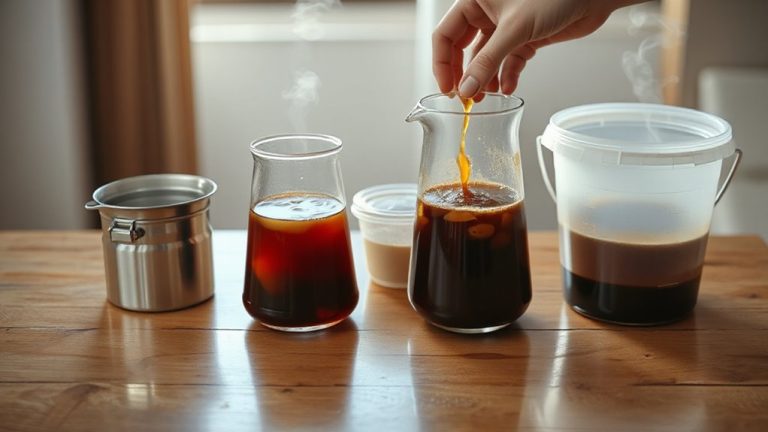
Cold brew needs stable, cool temps-ideally 35–45°F-to extract smooth, low-acid flavor over 12–24 hours. Glass keeps flavors pure but struggles with temp swings. Stainless steel holds cold better, especially insulated models like Takeya. Plastic may leach odors or degrade, especially in heat, though BPA-free versions help. In warm areas, stainless steel in a fridge or shaded spot works best. Your brew vessel affects taste-pick one that matches your environment and routine. Smart choices mean better, consistent cold brew every time.
Notable Insights
- Cold brewing at 60–70°F slows extraction, reducing acids and oils for a smoother, mellow flavor.
- Glass containers require stable, cool environments to maintain ideal steeping temperatures and prevent flavor imbalances.
- Stainless steel resists temperature fluctuations, preserving consistent extraction and minimizing bitterness.
- Plastic may leach chemicals or absorb odors, especially in heat, altering cold brew flavor over time.
- Higher ambient temperatures increase over-extraction and spoilage risk, particularly in non-insulated materials.
How Temperature Affects Cold Brew Extraction
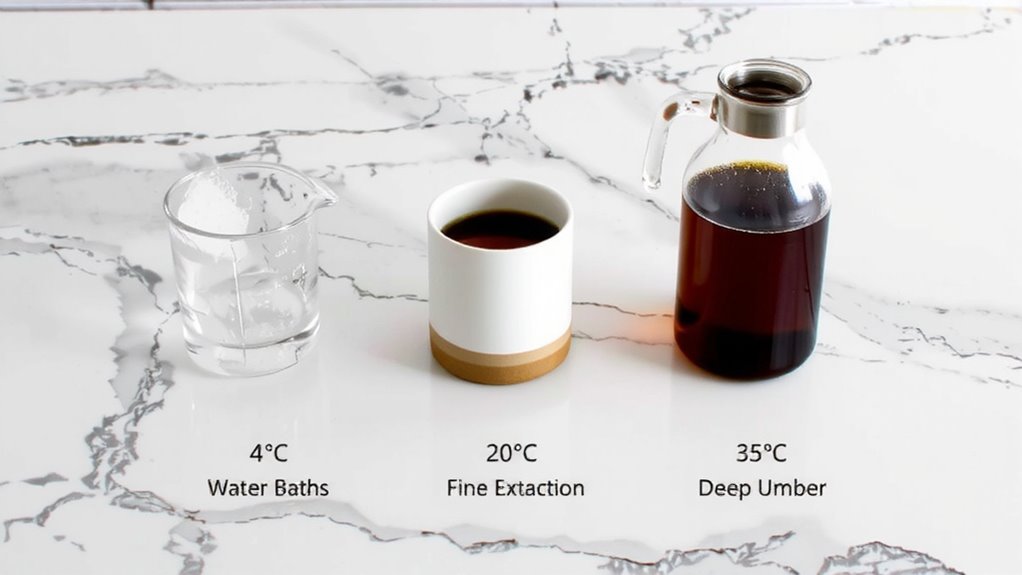
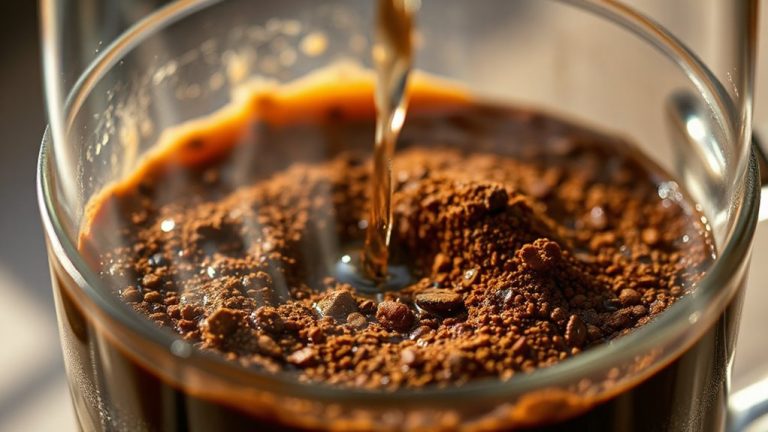
While hot brewing relies on high heat to pull flavors quickly from coffee grounds, cold brew takes a slower route, and temperature plays a key role in how compounds extract over time. You’re using room temp or cold water, so the extraction rate is much slower, usually taking 12–24 hours. This slow process pulls out fewer acids and oils, giving cold brew its smooth, mellow taste. But if steeped too long or at warmer temps, over-extraction can happen, raising bitterness and causing flavor degradation. Keeping the brew between 60–70°F (15–21°C) helps balance extraction while preserving desirable notes. Too cold, and extraction stalls; too warm, and you risk sour or flat flavors. Always monitor time and temp-consistent conditions mean more predictable results. A fridge or cool basement works best for stable, even extraction without spoilage or off-flavors. Using the right cold brew coffee maker can further optimize temperature stability and extraction efficiency.
Cold Brew in Glass vs Stainless Steel: Thermal Performance
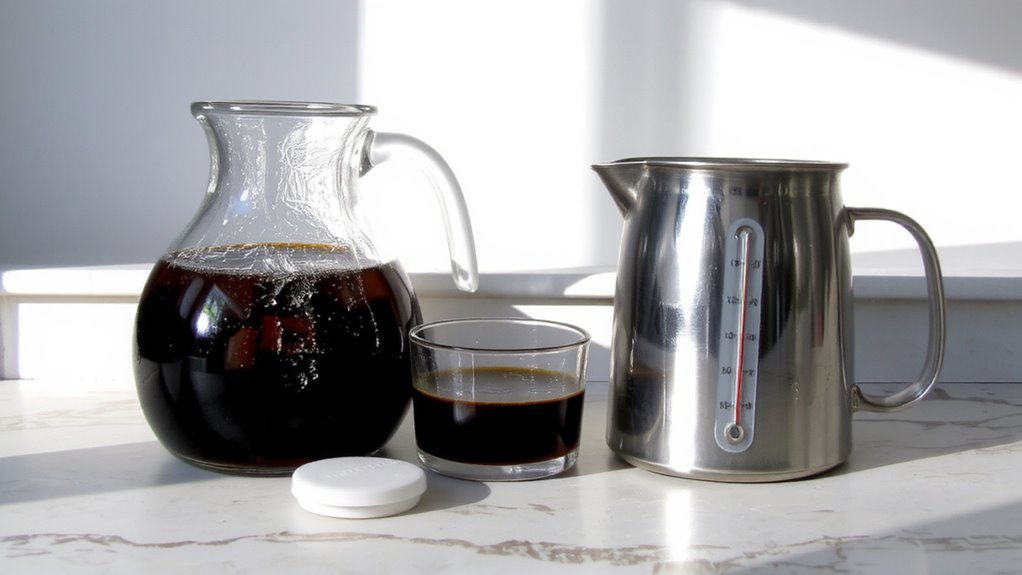
Since temperature stability matters for consistent cold brew, the container you use can make a real difference. Glass and stainless steel behave differently due to thermal conductivity and material reactivity. Glass insulates poorly, so it lets external temps shift your brew more. Stainless steel resists temperature swings better, keeping things stable. Neither reacts with coffee, so flavor stays clean-no metallic or chemical off-notes.
| Material | Thermal Conductivity | Temp Stability |
|---|---|---|
| Glass | Low | Poor |
| Stainless Steel | Moderate | Good |
| Ambient Air | Very Low | Poor |
| Insulated Steel | Very Low | Excellent |
Use stainless steel if you steep near windows or vents. Glass works fine in stable, cool spots-but avoid sunlight. Your brew’s evenness hinges on how well you manage these factors. Pick the container that matches your environment.
How Plastic Changes Cold Brew Flavor During Steeping
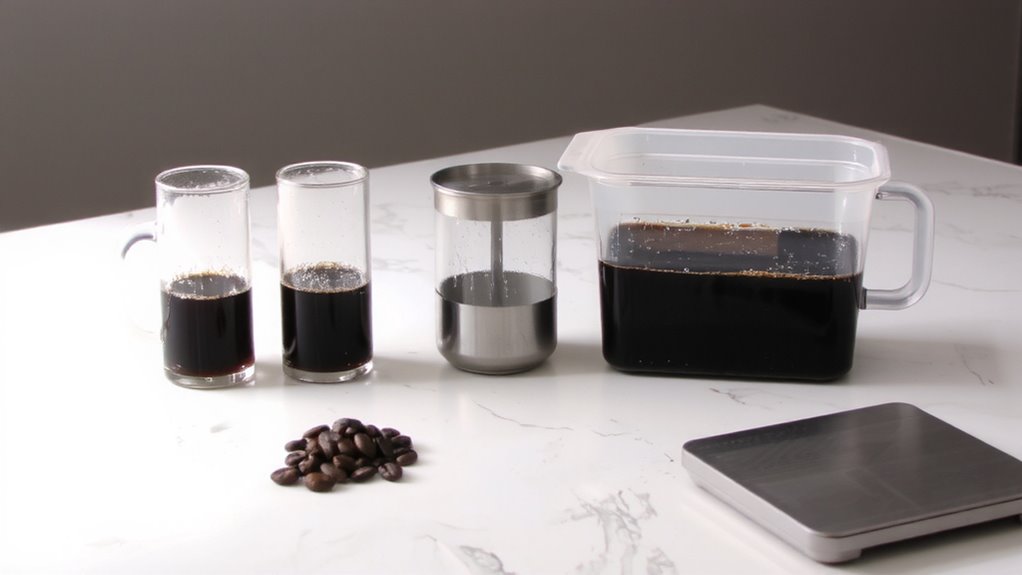
If you’re using a plastic container to steep cold brew, you might notice subtle shifts in flavor over time-especially if it’s a lower-grade plastic. Cheaper plastics can lead to flavor leaching, where the coffee absorbs unwanted chemical tastes from the container. Over repeated use, these materials are more prone to chemical degradation, particularly when exposed to slightly acidic coffee compounds. Even if the plastic looks intact, micro-scratches and wear can harbor residues that taint your brew. While BPA-free and food-grade plastics like those in some OXO or Takeya brewers are safer, they still don’t offer the inert stability of glass or stainless steel. If you do use plastic, hand wash it gently and replace it regularly. For best results and flavor accuracy, opt for non-reactive materials-but if convenience is key, high-quality plastic can work short-term as long as you monitor for off-flavors. A top-rated cold brew coffee pitcher can make a noticeable difference in both durability and taste preservation.
Brewing in Hot Climates: Material Challenges for Cold Brew
When temperatures soar, your cold brew setup faces extra stress-especially the container you’re using. In hot climates, material degradation becomes a real concern-plastics can warp, leach chemicals, or absorb odors faster, altering your brew’s quality. Glass withstands heat well but risks cracking from sudden temperature shifts. Stainless steel resists heat and UV exposure, making it a smarter pick for outdoor or sun-prone areas. Material choice isn’t just about flavor-it’s part of climate adaptation. If you’re brewing where it regularly hits 90°F or higher, consider insulated or shaded brewing stations to stabilize conditions. Even cold brew isn’t immune to its environment. Choosing durable, heat-resistant containers helps maintain consistency. Think long-term: a well-built system reduces waste and improves results. For hot regions, prioritize materials that support both safety and stability. You’ll get better cold brew with fewer risks.
Best Cold Brew Steeping Conditions by Brewer Material
Your brewer’s material shapes more than just its look-it直接影响 steeping performance and flavor stability. Material porosity and structural integrity directly impact how evenly your coffee steeps and how well the vessel resists temperature shifts. Glass and stainless steel maintain flavor neutrality, while plastic may absorb odors over time. For consistent cold brew, choose materials that balance durability with thermal response. Travel-friendly options like double-walled stainless steel containers help maintain cold temperatures even outside refrigeration.
| Material | Best Steeping Condition |
|---|---|
| Glass | 12–16 hrs, 35–40°F (refrigerator) |
| Stainless Steel | 12–24 hrs, 35–45°F |
| Plastic | 12 hrs, 35–40°F (avoid heat) |
| Ceramic | 12–18 hrs, stable 40°F |
| Porous Stone | Not recommended (high porosity) |
Choose based on your fridge space and routine. High structural integrity guarantees leaks stay low and brews stay clean.
Match Your Cold Brew Vessel to Climate and Taste?
Why does your cold brew taste sharper in summer than in winter? Warm ambient temperatures speed extraction, often leading to over-extracted, bitter notes-especially in conductive materials like metal or dark glass. Your vessel choice isn’t just about vessel aesthetics; it affects thermal stability. In hot climates, use insulated stainless steel or amber glass to limit heat absorption and slow extraction. Cooler regions? Ceramic or clear glass work fine and fit more easily into varied taste preference profiles, offering cleaner, brighter notes. Match material to your environment: stainless steel resists temperature swings but may dull subtler flavors, while glass offers visibility and neutrality at the cost of insulation. Consider both function and vessel aesthetics when choosing-after all, you’ll want a container that fits your kitchen and your routine. Your taste preference should guide material and design, ensuring consistent, enjoyable cold brew year-round.
On a final note
You get better cold brew control with insulated stainless steel in warm areas-it keeps temps steady and slows over-extraction. Glass works fine indoors where it’s cool but heats up fast in sunlight. Plastic may leach off-flavors, especially when warm, so avoid it in hot climates. For clean, consistent results, match your brewer to your environment: stainless steel for heat, glass for stable spaces. Always steep in the shade or fridge.