How to Clean and Maintain Your Coffee Refractometer for Accurate Readings
Wipe the prism right after each use with a soft, lint-free cloth dampened with distilled water-this stops coffee oils from building up. Use mild soap for sticky spots, then rinse well. Avoid tap water and paper towels to protect the lens. Calibrate before every use using distilled water to guarantee a 0.0% Brix reading at the right temperature. Store it upright in a case, away from heat and moisture. Keep hinges dry and clean weekly with a quick wipe or light alcohol rinse. Do this consistently, and you’ll get dependable results every time-knowing exactly how small adjustments affect your brew quality.
Notable Insights
- Clean the prism immediately after each use with a soft, lint-free cloth dampened with distilled water to prevent residue buildup.
- Use mild soap or diluted isopropyl alcohol for sticky residues, avoiding harsh chemicals that can damage optical surfaces.
- Rinse carefully with distilled water using a plastic dropper to prevent mineral deposits and avoid pooling liquid near prism edges.
- Perform weekly deep cleaning with warm soapy water and dry thoroughly, including hinges and seams, to maintain accuracy.
- Calibrate before each use with distilled water to ensure a 0.0% Brix reading at operating temperature for reliable results.
Clean the Prism After Every Use
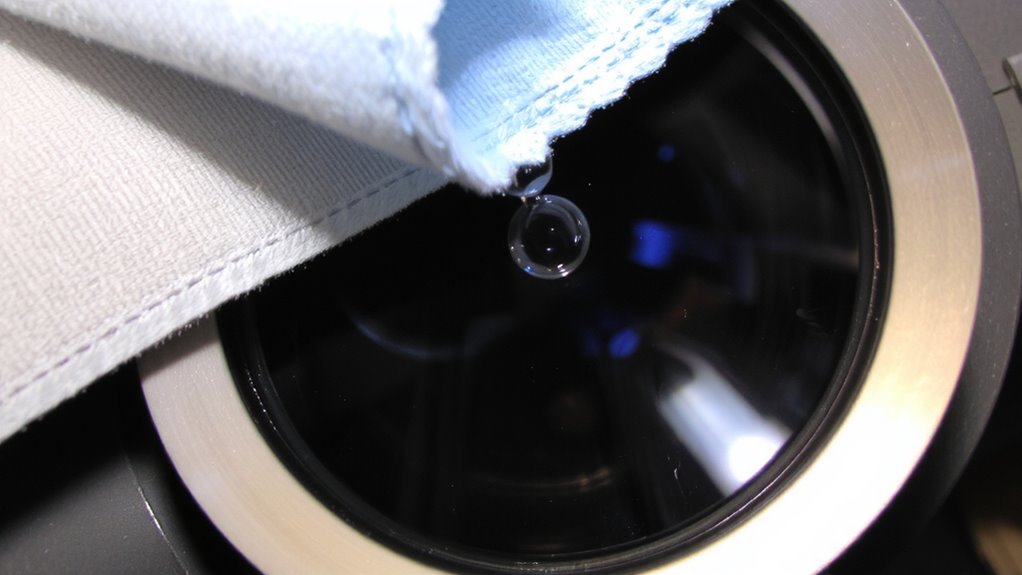
Always clean the prism right after using your refractometer-residue from coffee or calibration fluid can build up quickly and affect future readings. You’ll want to avoid residue buildup because it leads to inaccurate measurements and makes future cleaning harder. Wipe the surface gently with a soft, lint-free cloth dampened with distilled water. For sticky residue, a drop of mild soap helps, but rinse thoroughly. Don’t let liquid pool around the edges-this can contribute to prism fogging over time, especially if moisture gets into seams. Dry completely before closing the daylight plate. Skipping this step even once invites grime accumulation, which dulls the prism and promotes fogging. Consistent cleaning keeps optical clarity high and guarantees repeatable results. It’s a small habit with real impact on your brew analysis. Make it routine-your data depends on it.
What Supplies You’ll Need
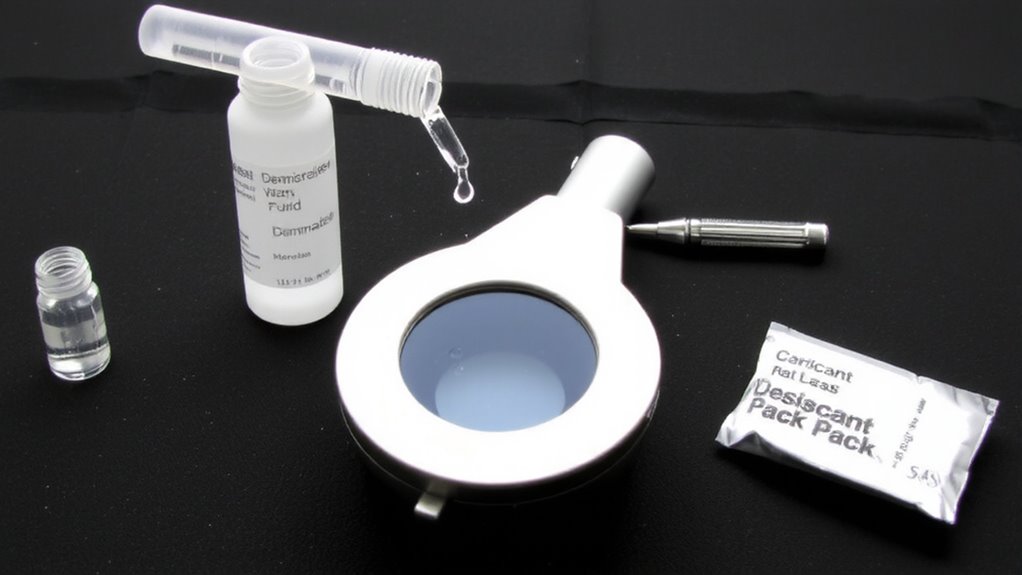
While you don’t need a full lab setup, having the right supplies on hand makes cleaning your refractometer quick and effective. You’ll need distilled water to rinse away coffee oils without leaving mineral spots. Use lint-free wipes-like microfiber cloths or lens tissues-to gently dry the prism surface and prevent scratches. A soft-bristled brush helps remove dried coffee stains without damaging the coating. A plastic dropper controls rinse water flow and reduces spill risk. Avoid tap water; it can cause prism fogging over time due to mineral deposits. Don’t use paper towels or harsh chemicals-they scratch the glass and distort readings. Keep a dedicated cleaning kit nearby so you’re not scrambling after each brew. These small steps preserve accuracy and extend your tool’s life without extra effort.
Deep Clean Your Coffee Refractometer Weekly
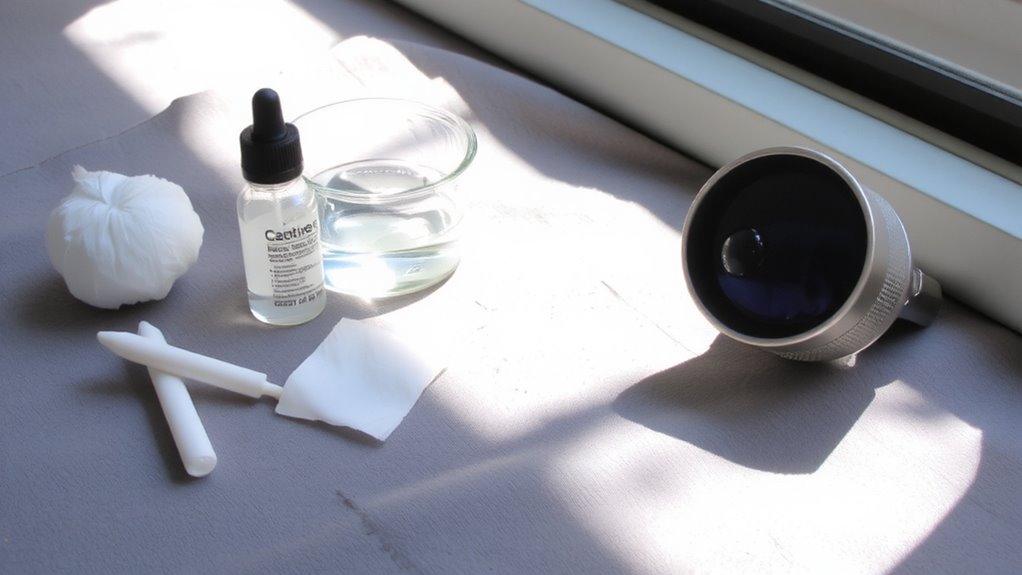
Once a week, take a few minutes to give your coffee refractometer a thorough cleaning to maintain accuracy and prevent residue buildup. Start by rinsing the prism with warm water to remove any leftover coffee oils. Then, use a soft microfiber cloth dampened with mild soapy water to gently wipe away coffee stains. Avoid paper towels or abrasive cloths-they can scratch the surface. For stubborn residue buildup, a drop of diluted isopropyl alcohol (70%) works well, but don’t soak the device. Dry the prism completely with a clean part of the cloth. Make sure no moisture remains around hinges or seams. This weekly routine keeps readings reliable and extends the device’s life. Skipping deep cleans leads to distorted results over time. Regular care matters-especially if you’re testing multiple brews daily.
Store to Prevent Dust and Damage
Your refractometer’s accuracy depends on more than just cleanings-it starts with proper storage. Leaving it exposed to dust or knocks can ruin its calibration and damage the prism. Always store it in a stable, dry place, away from temperature swings. A protective case is your best defense-it keeps dust out and shields delicate parts during transport or idle time. Proper storage isn’t just about safety; it maintains reading consistency over time. Avoid leaving it on countertops or in humid areas like near espresso machines.
| Feature | Benefit |
|---|---|
| Protective case | Blocks dust and impact |
| Cool, dry space | Prevents condensation |
| Upright position | Avoids prism scratches |
| Secure location | Reduces fall risk |
| Regular check | Guarantees case isn’t worn |
Use a padded case designed for refractometers-it’s a small investment for long-term accuracy.
Calibrate and Fix Inconsistent Readings
Even with careful storage, your refractometer can still give off readings if it’s not properly calibrated. That’s where refractometer calibration comes in-essential for reliable data. Before each use, calibrate with distilled water; it should read 0.0% Brix at your operating temperature. If it doesn’t, adjust using the calibration screw or software, depending on your model. Digital units like the VST or Atago PAL-1 require regular zero-checks, while analog models need more frequent tweaking. Skipping this step risks poor reading consistency, which skews your coffee strength and extraction calculations. Fluctuating results often trace back to calibration drift, not device failure. Always calibrate in a stable environment-sudden temp shifts affect accuracy. Doing this simple step guarantees you’re measuring coffee, not instrument error. Proper refractometer calibration takes seconds but makes the difference between trustworthy data and misleading noise. Keep it routine, and your readings will stay consistent and usable.
Why a Clean Refractometer Means Better Coffee
Dirt, oils, and old coffee residue aren’t just unsightly-they’re silent killers of accuracy. When left on your refractometer, these contaminants skew readings, leading you to misjudge extraction. That means your brewed coffee won’t reflect the real numbers, directly harming coffee quality. A dirty prism can show lower or higher Brix or TDS values than what’s actually in your cup, so your adjustments won’t fix real issues. Cleaning after every use isn’t overkill-it’s essential for flavor accuracy. Residue from a past roast, especially dark oily beans, can linger and mix with your next sample. Wipe the prism with a soft, lint-free cloth dampened with distilled water or lens cleaner made for optical tools. This simple step guarantees each reading is trustworthy. Consistent cleaning means consistent data, which means better control over your brewing variables and, in turn, superior flavor in every batch.
On a final note
Keep your refractometer clean and calibrated for reliable coffee readings. Wipe the prism after each use with a soft cloth, and do a weekly deep clean with mild soap and water. Store it in a protective case to avoid dust and damage. Calibrate regularly with distilled water to catch drift early. A well-maintained device gives consistent results, helping you dial in espresso shots more accurately than guesswork or taste alone.