How to Perfect Your Pour Over Coffee Technique Using Gooseneck Kettles and Bloom Time
Use a gooseneck kettle like the Fellow Stagg EKG or OXO Brew for precise, controlled pours that evenly saturate your grounds without disturbing the bed. Start with a 30–45 second bloom-45 seconds for light roasts, 30 for dark-to release CO₂ and guarantee even extraction. Keep water between 195°F and 205°F, pour in slow spirals, and aim for a total brew time of 2.5 to 3.5 minutes. Adjust grind size and pour speed if needed. You’ll find finer details make all the difference.
Notable Insights
- Use a gooseneck kettle for precise pouring to evenly saturate coffee grounds and prevent disturbing the bed.
- Bloom your coffee for 30–45 seconds to release trapped CO2 and ensure even extraction.
- Adjust bloom time: 45 seconds for light roasts, 30 seconds for dark roasts, based on degassing rate.
- Maintain water temperature between 195°F and 205°F to optimize extraction without scalding or underdevelopment.
- Pour in slow, steady spirals from center to edge, keeping water level just above the coffee bed.
How a Gooseneck Kettle Improves Pour Over Control
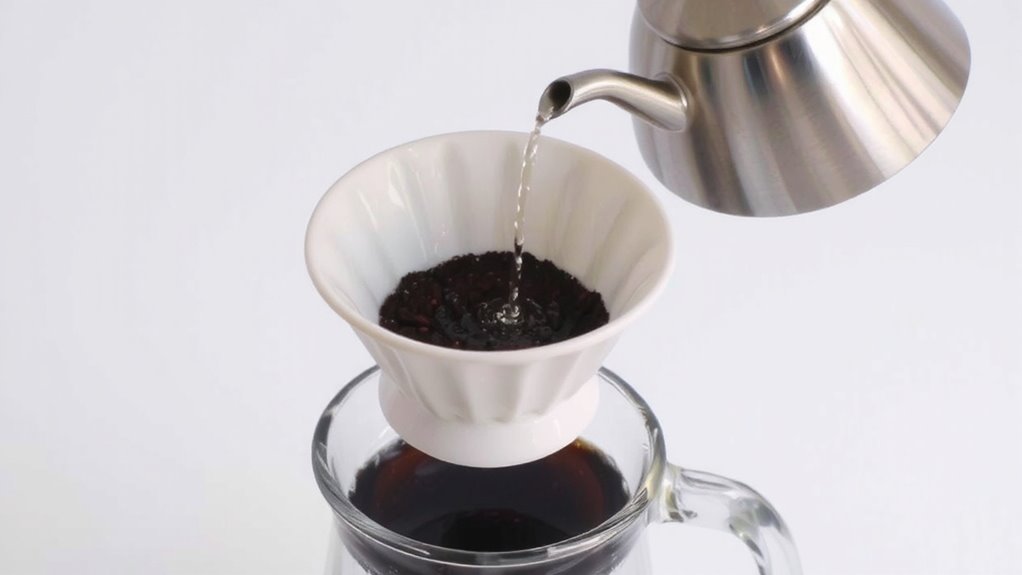
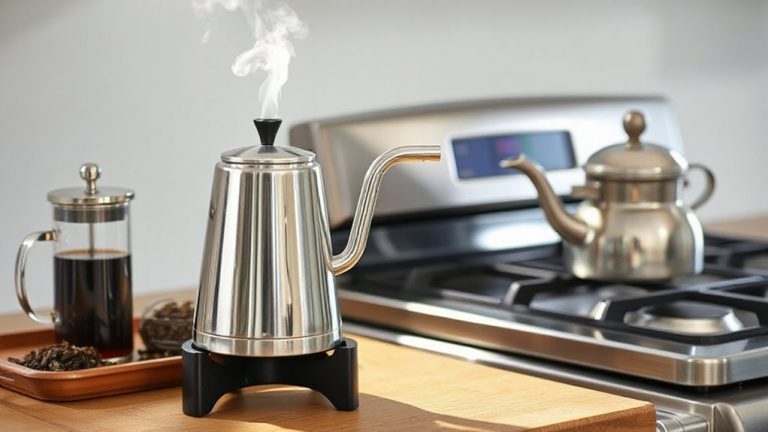
While you can brew pour over coffee with any kettle, using a gooseneck kettle gives you far better control over water flow and placement. Its slender, curved spout enables precision pouring, letting you saturate grounds evenly without disturbing the bed. This is key for balanced extraction, especially with methods like the V60 or Kalita Wave. Flow regulation is smoother thanks to the design’s resistance to sudden bursts, allowing a steady, manageable stream. Kettles like the Fellow Stagg EKG or Oxobrew offer adjustable temperature controls and comfortable grips, enhancing consistency. Regular kettles often pour too fast or in unpredictable directions, leading to channeling or uneven brews. With a gooseneck, you’re not just pouring-you’re guiding. It’s a small upgrade that directly impacts brew quality, especially if you’re serious about repeatability. While pricier and slower than standard kettles, the improvement in control justifies the cost for most pour over enthusiasts. For those looking to optimize their setup, checking out the best gooseneck kettles can help identify models designed specifically for precision pouring.
The Science Behind Coffee Blooming
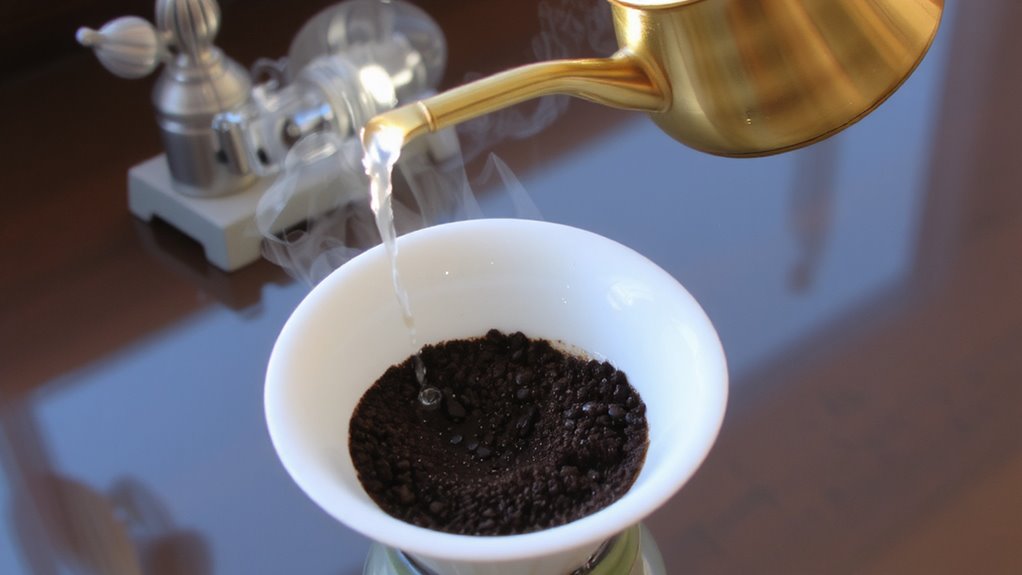
You’ve got your gooseneck kettle in hand, ready to pour with precision, but before you start the main brew, there’s a critical first step: blooming. Freshly ground coffee still contains trapped carbon dioxide from roasting, and bloom time allows this gas to escape. This initial pour triggers the degassing process, helping water penetrate grounds evenly during extraction.
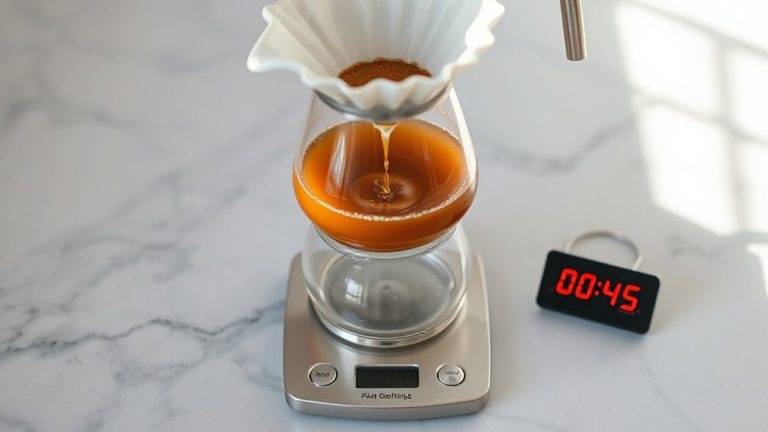
Without blooming, carbon dioxide release can disrupt water flow, leading to uneven brews and weaker flavor. A proper bloom takes about 30–45 seconds and improves clarity and balance.
| Roast Level | Degassing Speed | Bloom Duration |
|---|---|---|
| Light | Slow | 45 seconds |
| Medium | Moderate | 35 seconds |
| Dark | Fast | 30 seconds |
Letting coffee bloom guarantees better contact between water and grounds, especially with light roasts that retain more gas. Skip it, and you risk under-extraction-even with perfect pouring.
Water Temperature for Better Pour Over Extraction
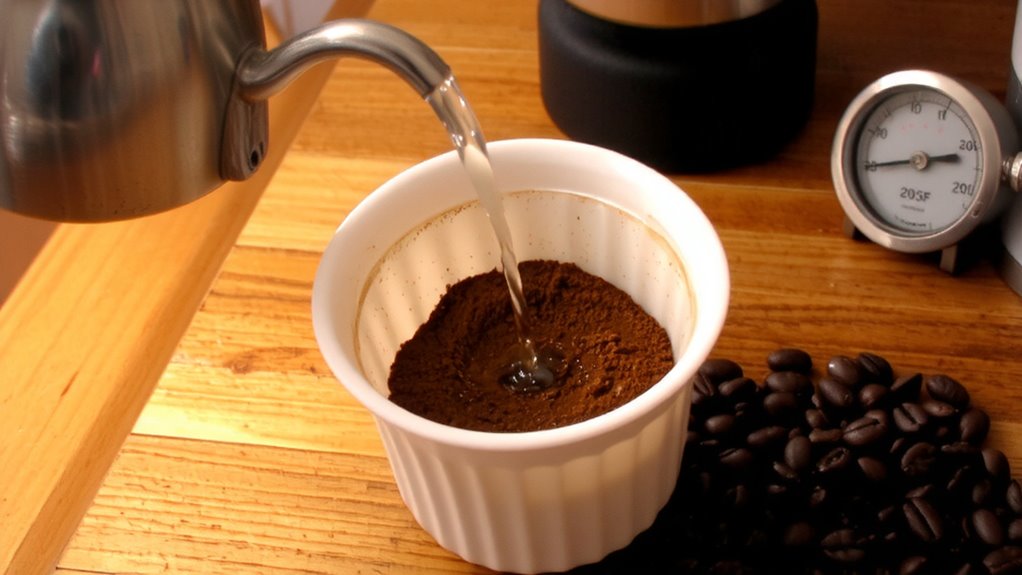
Getting the water temperature right can make or break your pour over. You’ll want water between 195°F and 205°F-just off the boil-for peak extraction. Too hot, and you risk scalding the grounds, leading to bitterness; too cool, and your coffee tastes flat or underdeveloped. This range works well with most beans and grind consistency, but you may need slight adjustments based on your roast level. Lighter roasts often need the higher end to extract fully. Water chemistry also plays a role-mineral content affects how temperature interacts with coffee. Soft water may require lower temps, while harder water can handle the upper range. Consistent grind size guarantees even extraction, so pair your temp control with a quality burr grinder. Gooseneck kettles help maintain precision, giving you control where it matters most. For best results, consider using one of the top-rated coffee brewing kettles designed specifically for pour over methods.
The Right Pour Over Pouring Technique
Now that you’ve got your water temperature dialed in-somewhere between 195°F and 205°F depending on roast and water profile-the next factor shaping your brew is how you pour. A gooseneck kettle gives you control over pour speed and precision, helping maintain even saturation. Consistent grind consistency guarantees uniform extraction-use a burr grinder to avoid fines or boulders. Your pour speed should be steady, not too fast or delayed, to match your brew time.
| Pour Phase | Target Pour Speed |
|---|---|
| Bloom | Slow, even saturation |
| Mid-brew | Moderate, spiral motion |
| Final pour | Smooth, controlled |
| Overall | Match 2.5–3.5 min total |
Keep the water just above the coffee bed, adjusting slightly based on roast. A stable technique balances flow with resistance from the bed, making grind consistency and pour speed critical for clarity and body. For optimal results, choose a burr grinder recommended for espresso and pour over applications.
Avoid These Common Pour Over Mistakes
While precision matters in pour over brewing, even small missteps can skew results despite proper gear and fresh beans. Using the wrong grind size is a frequent error-too fine and your brew time stretches, causing over-extraction and bitterness; too coarse and water rushes through, yielding weak, sour coffee. Aim for a consistency like table salt, especially with medium roasts. Uneven pouring leads to channeling, so maintain a steady, spiral motion from center to edge. Don’t skip blooming-letting coffee degas for 30–45 seconds guarantees better extraction. Watch brew time: most 12-ounce brews should finish between 2:30 and 3:30 minutes. Gooseneck kettles help control flow, but pouring too fast or too slow disrupts balance. Pre-wet your filter to avoid paper taste and stabilize temperature. Each variable affects the next, so adjust one thing at a time for consistent, better cups.
On a final note
You’ve got the tools and know-how: a gooseneck kettle gives precise control, bloom time releases gases for even extraction, and keeping water just under boiling (195–205°F) optimizes flavor. Use slow, steady pours in concentric circles. Avoid rushing or uneven saturation. These steps, combined, deliver a balanced, flavorful cup. Skip shortcuts-consistency matters more than speed. Practice beats perfection.