How to Choose the Right Descaling Solution for Your Coffee Machine Brand
Always check your coffee machine’s manual or manufacturer website before picking a descaler-Keurig, Jura, Breville, and De’Longhi often require brand-specific formulas to keep warranties valid. Use eco-friendly, non-corrosive descalers with citric or lactic acid, and avoid vinegar unless approved, as it can damage internals or leave odors. Match the solution to your system: pod machines need milder formulas, while superautomatics require balanced concentrations. Choosing right means safer, longer-lasting performance-and you’ll see which brands back their recommendations with results.
Notable Insights
- Match the descaler to your coffee machine brand for optimal performance and compatibility.
- Always follow manufacturer recommendations to maintain warranty and prevent damage.
- Choose a descaling formula aligned with your brewing system’s materials and components.
- Prefer commercial descalers over vinegar for safer, more effective, and odor-free results.
- Avoid descalers with harsh ingredients like chlorine or phosphates that risk corrosion and residue.
Choose the Right Descaler for Your Coffee Machine Brand
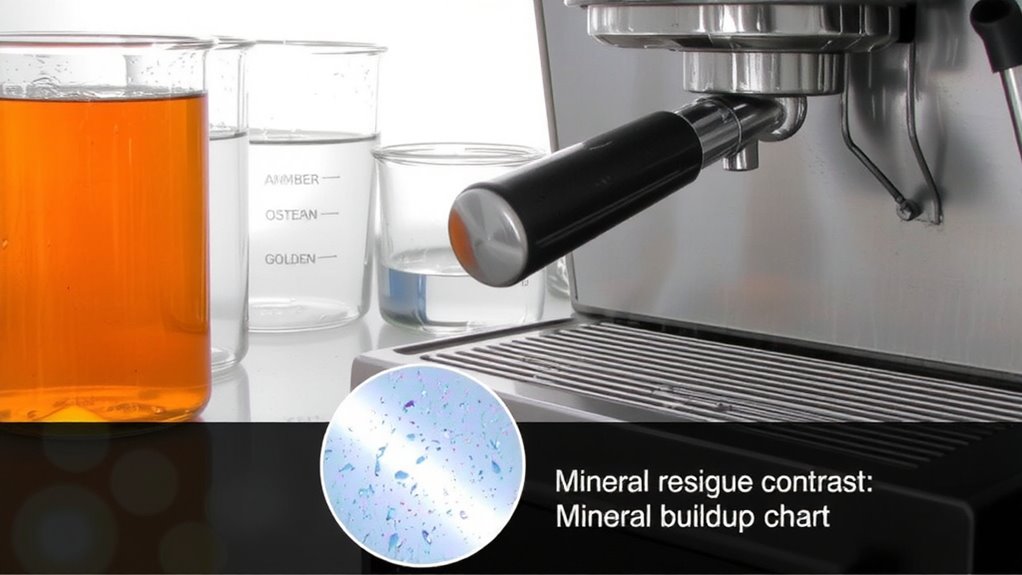
Not every descaler works well with all coffee machines, so match the product to your machine’s brand. Using the wrong formula can damage internal parts or void the warranty. For example, Keurig machines work best with their branded solution, while Jura recommends its own biodegradable tablets. Third-party options exist, but make sure they’re labeled as both eco friendly and cost effective. Some generic descalers use harsh chemicals that harm the environment or corrode metal components over time. Vinegar may seem cheap, but it’s not always safe for all models and can leave lingering odors. Citric-acid-based descalers offer a middle ground-gentler than limescale removers with strong acids, yet effective. Always verify compatibility, even if the bottle says “universal.” A proper match protects your machine, keeps it running efficiently, and reduces long-term maintenance costs. Breville users should consider using Best Descalers for Breville Machines to ensure optimal performance and longevity of their equipment.
Check Your Manufacturer’s Descaling Recommendations First
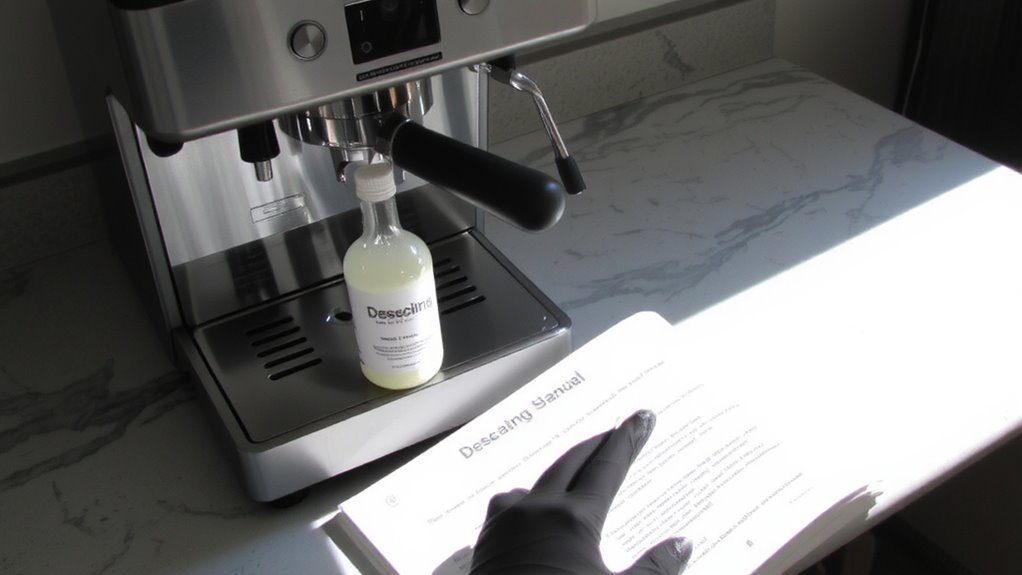
Before you pick any descaling solution, it’s smart to check your coffee machine’s manual or the manufacturer’s website for specific guidance-this small step can save you time, money, and potential damage. Many brands, like Breville or De’Longhi, recommend only approved solutions to keep your machine warranty valid. Using the wrong formula could void that coverage, leaving you on the hook for repairs. Always refer to your user manuals-they often list compatible descaling products or even brand-specific options. Some manufacturers design their machines to respond best to certain chemical compositions, so straying from their advice may reduce cleaning effectiveness or harm internal parts. Ignoring these recommendations might seem like a shortcut, but it risks long-term issues. Checking first takes two minutes and guarantees you’re using a solution that’s safe, effective, and aligned with your machine’s design.
Match Descaling Formulas to Your Brewing System
Your brewing system’s design plays a key role in determining the right descaling formula, so it’s worth taking a moment to match the solution to your machine type. Automatic espresso machines often require precise chemical compatibility with stainless steel and heating elements, so using the manufacturer’s recommended formula prevents damage. For pod-based systems like Nespresso or Keurig, a lower descaler concentration works well and reduces rinse time. Superautomatic models with integrated grinders need thorough cleaning, so a balanced concentration guarantees scale removal without harming internal parts. Always check if your machine needs a specific acid type-like citric, lactic, or sulfamic-since not all descalers are interchangeable. Using the wrong mix can lead to residue or corrosion, even if it claims to be universal. Matching your formula properly keeps your machine running efficiently and extends its life. For Nespresso users, choosing the right product can make a significant difference, and trying the best Nespresso descalers ensures optimal performance and longevity.
Vinegar vs. Commercial Descalers: What’s Safe for Your Machine?
While vinegar is a common household staple and often the go-to for DIY cleaning, it’s not always the best choice when descaling your coffee machine. Vinegar can cause unwanted chemical reactions with internal parts, especially in machines with metal components, and may leave behind odors that affect your coffee’s taste. Commercial descalers are formulated specifically to break down limescale without damaging seals or heating elements. Here’s a quick comparison:
| Factor | Vinegar | Commercial Descaler |
|---|---|---|
| Effectiveness | Moderate | High |
| Safety for machine | Risk of corrosion | Designed for safety |
| Smell after use | Strong, lingering | Minimal |
| Ease of rinse | Requires multiple cycles | Easy rinse |
| Natural alternatives | Yes | Some offer eco-friendly options |
Stick to natural alternatives only if your manufacturer approves. Otherwise, a proper descaler protects your machine and performance.
Avoid These Damaging Ingredients in Descalers
Not all descalers are created equal, and some contain ingredients that can harm your machine over time-even if they remove limescale quickly. You’ll want to avoid products with abrasive chemicals, as they can scratch internal parts and degrade seals or gaskets, especially in machines with stainless steel or plastic components. Harsh additives like chlorine or phosphates may boost cleaning power but can leave behind residues that affect taste and damage heating elements with repeated use. These substances also increase the risk of corrosion in sensitive parts. Instead, look for descalers labeled as non-corrosive and safe for frequent use. Citric acid–based formulas are often gentler while still effective. Always check your coffee machine manufacturer’s guidelines, as some brands explicitly warn against certain ingredients. Steering clear of abrasive chemicals and harsh additives helps protect your machine’s performance and extends its lifespan without sacrificing cleaning results.
Find the Best Descaling Solution for Your Brand
A good rule of thumb is to match your descaling solution with the brand and model of your coffee machine, since manufacturers often design their equipment to work best with specific formulas. Using your machine maker’s recommended solution-like De’Longhi’s, Saeco’s, or Gaggia’s proprietary descalers-ensures compatibility and maintains warranty coverage. These branded solutions are tested for both performance and safety. If you prefer alternatives, look for ones labeled for your brand’s technology. Some third-party options offer eco friendly options and better cost effectiveness, but verify they’re citric or lactic acid-based, not vinegar, which can harm seals. While generic descalers may save money upfront, they can risk damage if misused. Always confirm chemical safety for your machine type. Reading labels and consulting your manual helps avoid long-term issues. Stick to proven formulas that balance care, efficiency, and sustainability.
Build Your Machine’s Descaling Schedule
You’ve picked the right descaling solution for your machine, and now it’s time to set a routine that keeps it running cleanly. Descaling isn’t one-size-fits-all-your machine’s descale frequency depends on water hardness and how often you brew. Machines in hard water areas may need monthly descaling, while soft water lets you go longer. Check your manual: some brands like Breville recommend descaling every 3 months, while De’Longhi suggests every 6. Ignoring maintenance timing leads to clogs and poor extraction. Set calendar alerts or use machines with built-in reminders. If you pull more than 5 shots daily, increase descale frequency. Some solutions work faster-Citric acid needs 20 minutes soak time, while commercial brands like Urnex Dezcal act in 10. Stick to consistent maintenance timing to extend machine life and keep espresso quality steady. Skip it, and you’ll face repairs. Plan smart.
On a final note
Always check your coffee machine’s manual before choosing a descaler-some brands, like Saeco or Jura, require specific formulas. Vinegar can work but may damage seals or leave odors, while commercial descalers like Dezcal or Durgol are often safer and more effective. Avoid citric acid in sensitive machines unless approved. Match the solution to your system, follow a regular schedule, and you’ll extend your machine’s life and keep coffee tasting clean.