How Chile’s Juan Fernández Islands Attempt Coffee in Isolation
You’re growing coffee on Chile’s remote Juan Fernández Islands, hand-picking cherries and depulping them with manual tools due to no roads or power. Volcanic soil and cool, damp weather challenge yields, so farmers use composting and microshading to protect plants. Drying happens on raised beds, weather permitting, with care to prevent mold. Shipping to mainland Chile relies on infrequent boats and careful packaging to survive damp, bumpy transfers. You’re relying on direct sales and small-batch appeal to make isolation work-there’s more to how this fragile system holds on.
Notable Insights
- Coffee is grown manually on volcanic soil with composting to counter nutrient leaching in the absence of infrastructure.
- Farmers hand-pick cherries and use hand-cranked tools or fermentation to depulp, adapting to no grid power or machinery.
- Sun-drying on raised beds is used, but high humidity demands careful airflow to prevent mold during curing.
- Cool temperatures and marine fog limit arabica growth, requiring microshading and strategic elevation for sunlight capture.
- Coffee is shipped via infrequent cargo barges over 600 km of ocean, necessitating durable packaging and supply stockpiling.
Why Coffee Shouldn’t Grow on Juan Fernández
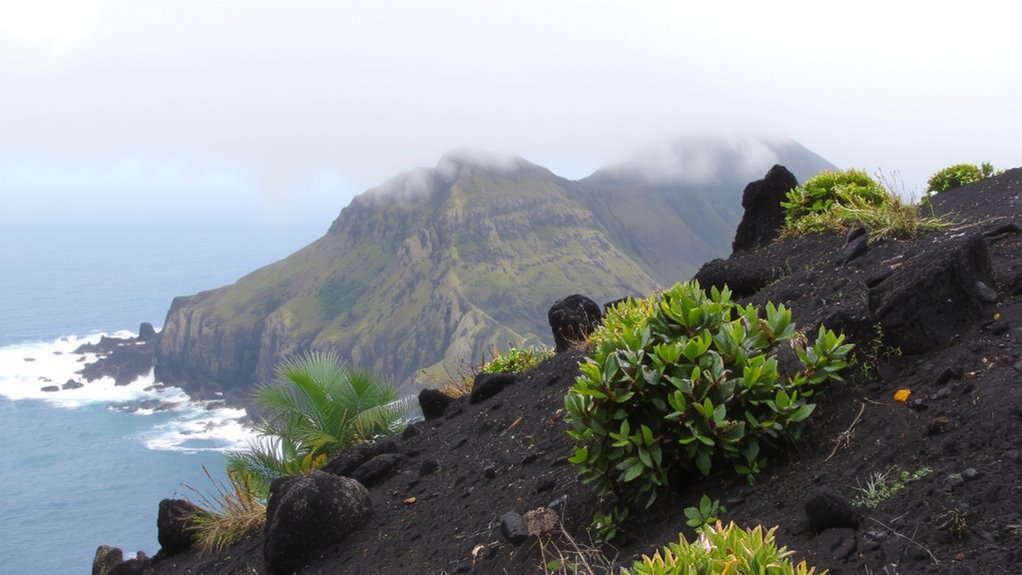
A remote archipelago 670 kilometers off Chile’s coast isn’t where you’d expect coffee to take root-yet that’s exactly why experts are skeptical. You’re dealing with extreme isolation, unpredictable weather, and terrain that resists traditional farming. The volcanic soil, while rich in minerals, drains quickly and demands constant monitoring. It can boost early growth, but it also increases the risk of nutrient leaching, especially with frequent rains. Then there’s the unique biodiversity-protected species and native plants that limit land use and prevent large-scale clearing. You can’t just bring in heavy machinery or reshape the landscape without ecological consequences. Growing coffee here defies standard practices found in Colombia or Ethiopia, where infrastructure and climate are more predictable. So if you attempt it, you’re working against geography, ecology, and logistics-all without room for error. The odds are stacked, and success hinges on precision, not luck.
How Farmers Grow Coffee Without Roads or Power
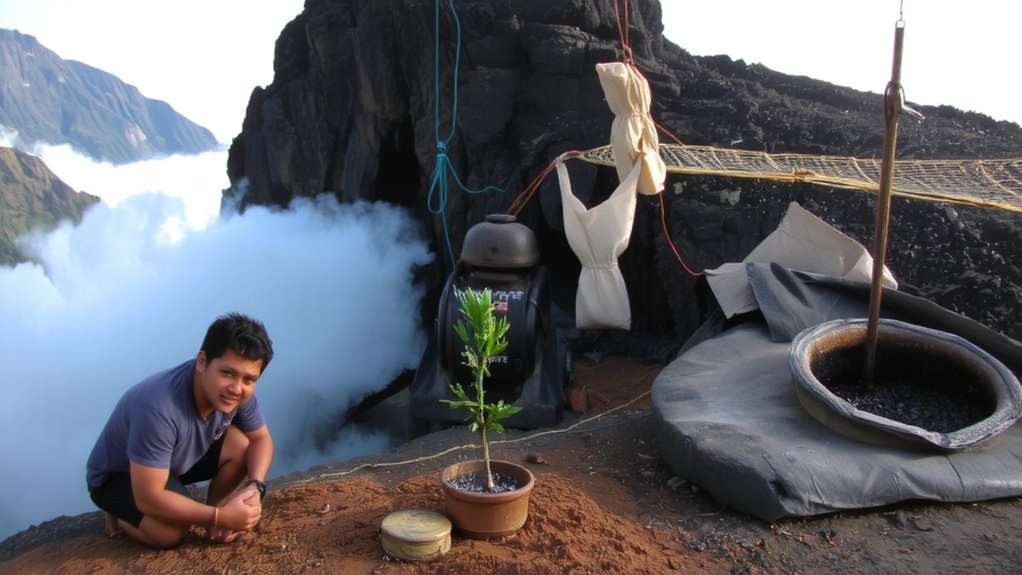
Even though you won’t find paved roads or a power grid on the Juan Fernández Islands, the farmers there still manage to grow and process coffee by relying on manual methods and simple tools. You’ll use hand-picked harvest techniques, selectively picking only ripe cherries to guarantee quality. Without machinery, depulping happens with hand-cranked, small-scale demucilagers or fermentation tanks. Drying is done on raised beds under sunlight, requiring constant monitoring to prevent mold. Access to consistent electricity means no mechanical dryers, so timing and weather play critical roles. Farmers maintain soil nutrients through composting coffee pulp and using organic matter, avoiding synthetic fertilizers. These practices preserve long-term soil health and support sustainable yields. While labor-intensive, these methods suit the island’s infrastructure limits. You’d find that such hands-on care enhances bean quality, despite the lack of modern amenities.
Why the Islands’ Climate Defies Coffee Farming
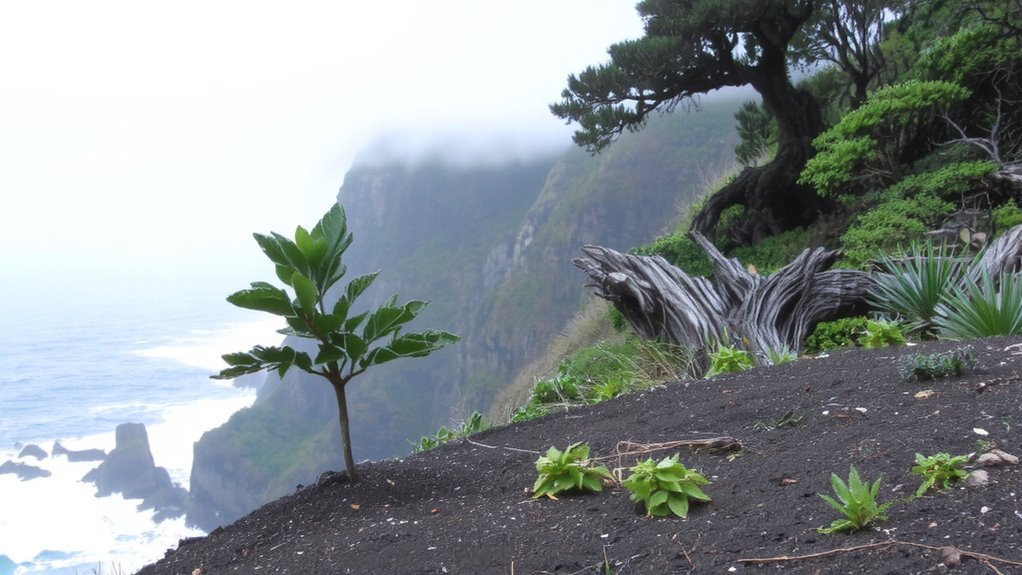
The island’s cool maritime climate works against coffee, making it a stubborn crop in these parts. You’re dealing with temps that hover too low for arabica’s liking, slowing bean development and risking underripening. The constant marine influence brings damp air and frequent fog, raising fungal risks like coffee leaf rust. While the volcanic soil here is rich in minerals and great for drainage, it can’t compensate for the chilling ocean breezes that stunt flowering. Humidity from the sea also complicates drying harvested cherries, often requiring sheltered, airflow-controlled spaces. Unlike tropical highlands with warm days and cool nights, this mix of coolness and moisture isn’t what coffee thrives on. You’d see better yields in drier, warmer zones with less salt air. Still, some farmers adapt with microshading and careful elevation placement, using the island’s natural terraces to catch rare sun. It’s a constant fight against the environment.
Shipping Coffee and Supplies Across 600 Km of Ocean
Getting coffee to and from the Juan Fernández Islands means crossing 600 km of open Pacific, a trip that’s slow, costly, and rarely reliable. You depend on infrequent cargo boats, and bad weather often delays departures or arrivals. Marine logistics here are tough-there’s no port, so goods move by small barge, increasing handling risks. Shipping coffee means careful packaging to survive humidity and rough transfers. Supplies coming in face the same hurdles, affecting everything from tools to roasting equipment. This isolation demands serious supply chain resilience. You can’t reorder quickly, so stockpiling key items is a must. Planning ahead beats emergency fixes. While air freight exists, it’s too expensive for bulk. You learn to work with schedules that don’t always align, relying on patience and redundancy. Success isn’t just growing coffee-it’s getting it out, consistently, against the odds.
Coffee as a Lifeline for Island Communities
Coffee isn’t just a crop here-it’s survival. You rely on it to build economic resilience in a place where outside work is scarce and supplies take days to arrive. Growing coffee gives islanders steady income, reducing dependence on unpredictable fishing or tourism. It’s not just about money-it’s about cultural preservation. Every harvest connects you to traditions passed down through generations, reinforcing identity despite isolation. You use hand-processing methods because large machinery isn’t practical or affordable. Simple pulping machines and sun-drying beds are common-low-cost, durable, and effective. While yields are small, quality is high, often used locally or sold directly to visitors. This model supports self-reliance and keeps knowledge alive. Coffee doesn’t just sustain your economy-it sustains your community’s spirit, offering stability against the odds.
Can Remote Island Coffee Survive in Global Markets?
How do you get your coffee noticed when you’re grown on a speck of land 670 kilometers off the Chilean coast? You focus on what big plantations can’t replicate: traceability, care, and story. Your beans are small-batch, hand-processed, and tied to sustainable tourism, where visitors see exactly how cherries become roast. This direct farm-to-cup model cuts out middlemen, raises value, and funds cultural preservation. But you face real hurdles-shipping is slow, equipment scarce, and scale nearly impossible. You’re not competing on price. You compete through authenticity, quality, and transparency. Buyers pay more if they trust the source. Partnerships with eco-lodges and guided farm tours reinforce that trust. You leverage Instagram over wholesalers, specialty roasters over supermarkets. Survival isn’t guaranteed, but with tight logistics, consistent processing, and global niche demand, remote coffee isn’t just possible-it’s gaining ground.
On a final note
You’ll need reliable gear to handle coffee production where power and roads are scarce. On Juan Fernández, farmers use manual pulpers and solar dryers because electricity is limited. These tools cut costs and work off-grid but take more labor. Shipping adds expense and delay-your supply chain must account for that. For consistent quality, you’ll have to prioritize durability over convenience, just like the islanders do.