Espresso Pressure Profiles: 2-4 to 9 Bars Explained
You can improve your espresso by adjusting pressure during the shot instead of sticking to a flat 9 bars. Starting with lower pressure, like 2–4 bars, helps water evenly soak the puck, reducing channeling and boosting sweetness-especially in dense or light roasts. Ramping up pressure gradually works better than an immediate spike, which can pull bitter notes. Machines like the Decent EP-5 let you fine-tune every stage, while models such as the Rocket R58 need modifications. Tapering pressure near the end preserves body and cuts bitterness. How you set the profile changes the flavor, and picking the right machine makes all the difference-your next shot could be cleaner, smoother, and more balanced.
Notable Insights
- Pressure profiles adjust extraction pressure dynamically, improving consistency and reducing channeling compared to fixed 9-bar pressure.
- Gradual ramp-up pressure promotes even saturation, enhancing sweetness and clarity while minimizing bitter over-extraction.
- Pre-infusion at 2–4 bars for 3–6 seconds helps dissolve sugars and prevents dry spots in the coffee puck.
- Tapering pressure mid-shot preserves sweetness and body by reducing extraction of harsh compounds from dense, fresh roasts.
- Machine type and pump design influence profile effectiveness, with advanced models like Decent EP-5 offering full real-time control.
What Are Espresso Pressure Profiles?
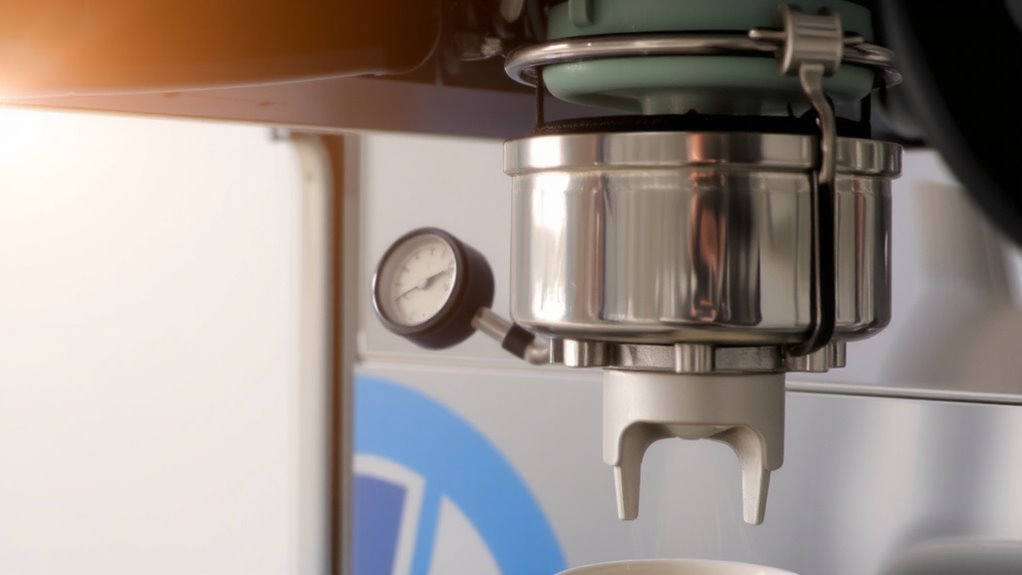
How do you get past flat, one-dimensional espresso shots? You start by understanding pressure profiles. Instead of pulling shots at a fixed 9 bars, modern machines let you adjust pressure over time. This control shapes pressure dynamics, helping you fine-tune how water moves through the puck. Ramps-gradually increasing pressure at the start-can reduce channeling, improving extraction consistency. Machines like the Slayer or Decent EP-5 let you program these profiles, giving you real-time feedback and control. Simpler machines, like some Lelit or Rocket models, offer pre-set variations. You’re not just changing flavor-you’re managing flow for even, repeatable results. While pros use this for competition-level precision, home baristas benefit too, especially with finicky beans. It’s not a magic fix, though. Dosing, grind, and tamping still matter. But with pressure profiles, you gain a practical tool to boost extraction consistency and explore complexity, shot after shot. For those exploring their options, reviewing the top picks & buying guide can help identify machines that support advanced pressure profiling.
How Pressure Changes Espresso Extraction and Flavor
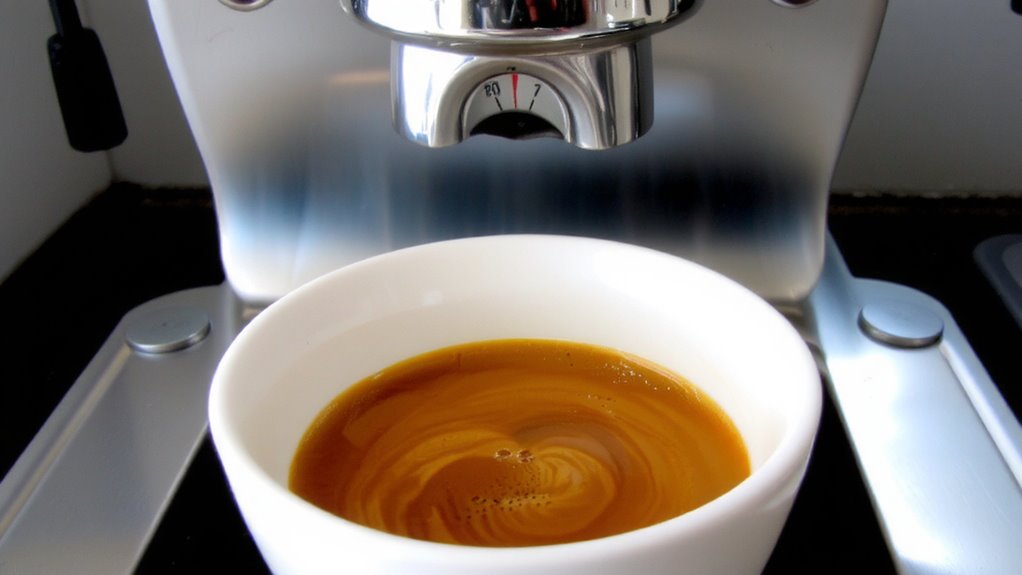
While pressure stays constant in traditional espresso machines, varying it during the shot can shift both extraction and flavor in noticeable ways. You’ll find that ramping pressure up or down alters how compounds pull from the coffee. Too much pressure too soon risks over-extracting bitter notes, especially with soft beans. Pressure stability matters-if your machine fluctuates unpredictably, you lose control over consistency. Machines like the Slayer or Decent Espresso let you shape pressure manually, helping fine-tune results. Lower initial pressure can ease water into the puck, promoting even saturation without channeling. This improves flavor balance, reducing harshness while preserving sweetness and body. But don’t assume variable pressure is always better; it adds complexity. For many, a stable 9 bars with good technique delivers reliable shots. You just need to match your approach to your gear and beans. Enthusiasts seeking precise thermal control may benefit from PID espresso machines, which enhance shot consistency through improved temperature stability.
Why Pre-Infusion Improves Sweetness and Clarity
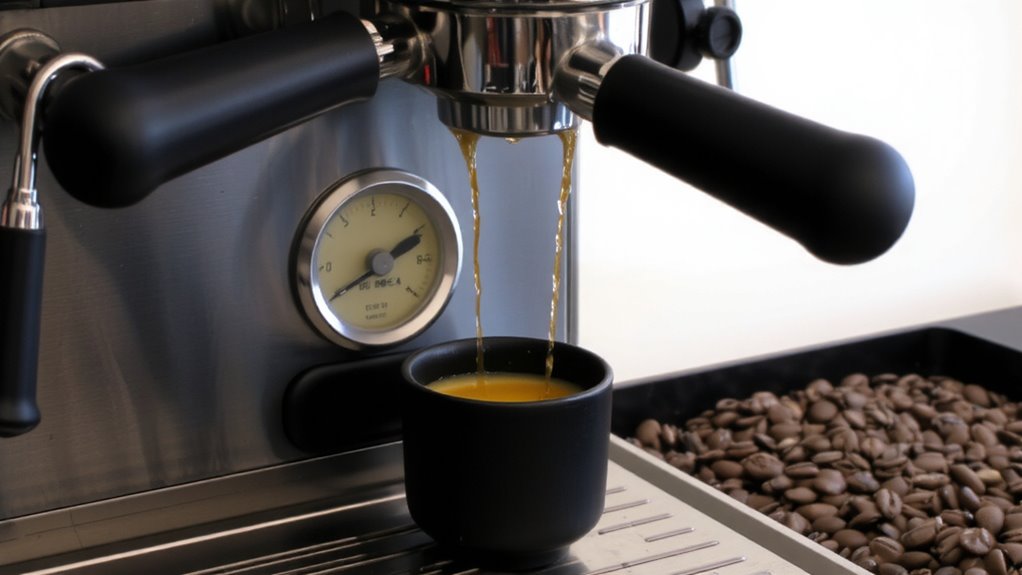
Since dry coffee pucks can crack or channel when hit with full pressure right away, starting with a gentler pre-infusion phase helps dissolve sugars more evenly and brings out cleaner, sweeter flavors. You’re giving the puck time to absorb water evenly, which improves water saturation before full pressure kicks in. Without it, dry spots stay under-extracted while others get overdone, leading to harsh or unbalanced shots. But with pre-infusion, you encourage even extraction across the puck. Machines like the Decent EP5 or Linea Mini let you adjust this phase precisely. It’s not magic-just better prep. Most of the time, 3–6 seconds at 2–4 bars works well for medium to dark roasts. Light roasts may need longer. Skip it, and you risk missing sweetness or clarity, especially on finicky beans. It’s a small step, but it makes a real difference in your cup. For those interested in exploring machines that support this feature, checking out the best espresso machines can help identify models with advanced pressure profiling capabilities.
Ramp-Up vs. Step: Mid-Shot Pressure Explained
If you’ve already dialed in pre-infusion, the next move is deciding how pressure climbs during the main phase-either ramping up slowly or hitting a set level immediately. Your choice shapes flow rate and extraction balance. A step profile hits target pressure fast, good for consistency with vibration pumps. Ramp-up builds gradually, often smoothing flow rate with lever or rotary pump type machines.
| Profile Type | Best With |
|---|---|
| Step | Vibration pumps, faster shots |
| Ramp-Up | Rotary pumps, uneven grinds |
Step profiles work well for beginners or tighter brew times. Ramp-up can reduce channeling, especially with finicky grinds. Your pump type influences which method performs better. Match the profile to your gear and bean for best results.
How Tapering Pressure Reduces Bitterness
As your espresso shot progresses past the midpoint, dropping the pressure gradually-known as tapering-can help avoid over-extracting the bitter compounds that emerge late in the pull. Pressure tapering reduces stress on the puck, slowing down extraction when solubles become harder to pull. This gives you better control over extraction balance, preserving sweetness while minimizing harshness. Instead of blasting the grounds with full pressure until the end, you ease off-typically from 9 bar to around 6 or 7-letting the shot finish cleanly. Many baristas find this method improves aftertaste and body without sacrificing intensity. You don’t need ultra-expensive gear, but consistent pump control helps. Pressure tapering works best with dense, fresh espresso blends, where extraction balance is easier to shape. If your shots taste astringent or drying near the end, tapering might be the fix.
Which Machines Let You Control Pressure Profiles?
You’ve seen how adjusting pressure during the shot can reduce bitterness and improve balance, especially by tapering pressure in the later stages. If you want control, consider machines built for it. The Decent Espresso EP-5 lets you fully customize pressure profiles in real time, using intuitive software-no mods needed. For popular models like the Rocket R58 or Linea Mini, you’ll need firmware modifications and sometimes custom hardware to enable pressure profiling. These upgrades can work well but may void warranties and require technical care. Entry-level machines rarely support profiling at all, limiting your options without significant tinkering. Higher-end commercial units, like some from Slayer or Bezzera, offer built-in profiling but at a steep cost. Your best bet for flexibility without deep technical work is starting with a machine designed for it, like the EP-5. Otherwise, expect trade-offs in cost, effort, and reliability when adding control through firmware modifications or custom hardware.
Fine-Tuning Pressure for Beans and Roasts
While no single pressure profile works perfectly for every coffee, you’ll get better results by matching the curve to your beans and roast level. Lighter roasts often benefit from a ramp-up profile, especially if they’re dense-high bean density resists extraction, so gradually increasing pressure helps avoid channeling. Darker roasts, which extract more easily, can handle full pressure early, but watch for bitterness. Freshly roasted beans (under 7 days) may need lower pre-infusion pressure due to off-gassing, while older beans (past 14–21 days) often respond well to higher, more consistent pressure despite staling. Adjust your profile based on roast age-it changes how water moves through the puck. Dense beans from high altitudes usually need more nuanced pressure curves than lower-density ones. Test with a 9-bar steady profile first, then tweak. Machines like the Slayer or Decent EP5 let you fine-tune these variables with precision.
On a final note
You can adjust pressure profiles to improve your espresso’s taste. Pre-infusion softens extraction, boosting sweetness. Ramping up slowly or using steps helps with balance, while tapering at the end cuts bitterness. Machines like the Decent DE1 or Slayer let you control this, but they take practice. Lower pressure often works better for light roasts; higher for dark. Test small changes to see what suits your beans.