Correcting Sourness in Drip Coffee by Slightly Coarsening Medium Grind
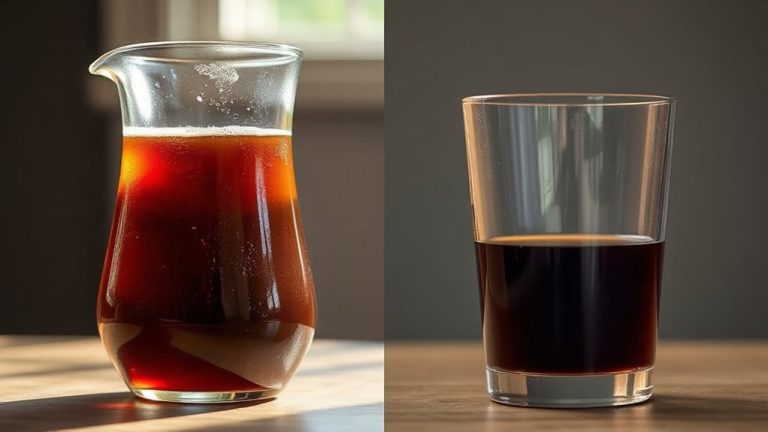
If your drip coffee tastes sour, try coarsening your grind slightly-from medium to medium-coarse, like sea salt. This slows extraction, helping pull more balanced flavors from fresh beans. Use freshly ground beans, ideally roasted within the last three weeks, and check that your brewer maintains 195–205°F. Pair this with filtered water and a 3–4 minute brew time. You’ll likely notice richer, less acidic results right away, especially with reliable gear like a Kalita Wave or Technivorm. Better control starts with these small tweaks.
Notable Insights
- Sourness in drip coffee often results from under-extraction, which can be corrected by slightly coarsening a medium grind.
- A coarser grind slows extraction, allowing more balanced flavor development and reducing sharp, acidic notes.
- Adjust the grinder in small increments-one notch at a time-to avoid over-correction and ensure precision.
- Use freshly roasted beans (within 2–3 weeks) to improve extraction and minimize sourness caused by stale coffee.
- Ensure water temperature is at least 195°F and brew time exceeds 3 minutes for optimal extraction balance.
Why Is My Drip Coffee Sour?
Why does your drip coffee taste sour? It’s likely under-extracted, meaning not enough flavor was pulled from the grounds. Freshness matters-check the roast date. Coffee roasted within the last two to three weeks tends to extract better; older beans lose gases that aid flavor release, skewing results. Your bean origin also plays a role. High-altitude beans, like Ethiopian or Kenyan varieties, naturally carry brighter, more acidic notes. If those flavors dominate, it’s not necessarily a flaw-it’s terroir. But when paired with a roast that’s too old or a grind too fine for your brewer, acidity turns sharp and sour. You might assume dark roasts fix this, but medium roasts, used correctly, balance brightness without burning. The real fix starts with fresh beans and proper timing. A burr grinder helps, but timing and bean origin matter just as much.
How a Coarser Grind Fixes Sour Coffee
If your coffee tastes sour, adjusting the grind size might be the simplest fix. When your grind is too fine, water extracts too much acidity too quickly, especially with medium-light roasts. By going slightly coarser, you slow down extraction, letting flavors develop more evenly. A coarser setting improves grind consistency, reducing the number of tiny particles that over-extract and contribute sharpness. Better particle distribution means fewer fines and boulders, leading to balanced flavor. Most drip brewers work best with a medium-coarse grind-think sea salt-to match their brew time and water flow. If your grinder’s blades or burrs produce uneven results, even small adjustments can help. You’re not changing the beans-you’re tuning how they interact with water. This fix costs nothing but a twist of the dial and pays off in smoother, less acidic coffee every morning. For even better results, consider using the best coffee grinds for pour-over to optimize extraction and flavor balance.
How to Adjust Your Grinder for Better Taste
Most grinders let you tweak the grind size with a simple turn of a dial, and getting it right can make a noticeable difference in flavor. If your coffee tastes sour, adjusting the setting slightly coarser often helps. Start with small changes-one notch at a time-then brew and assess. This process is part of regular grind calibration, ensuring your particles match your brew method. For consistent results, check your burr alignment, especially in older or high-use grinders, since misaligned burrs create uneven grounds that hurt extraction. Flat and conical burr grinders both need this maintenance. You won’t need tools for most models-just follow the manufacturer’s guide. Cleaning the burrs regularly also supports accurate calibration. While blade grinders are cheaper, they offer poor control and inconsistent results, making them less ideal for tuning flavor. A quality burr grinder gives you the precision needed for balanced coffee, cup after cup. For the best performance with filter coffee, consider starting with one of the top-rated models in expert grinder recommendations.
What to Check If Coffee Is Still Sour
You’ve adjusted your grinder and still have sour coffee? Don’t skip these key checks. Sourness often points to extraction issues beyond grind size. Water temperature matters-too low (below 195°F) under-extracts acids, giving that sharp, sour note. Most drip machines fail here, especially older models. Bean freshness is just as critical-stale beans lose sugars and compounds needed for balanced flavor, leaving sourness more pronounced. Grind just before brewing and buy beans roasted within the past three weeks. For pour-over methods, using a high-quality coffee grinder ensures uniform particle size, which improves extraction consistency.
| Factor | What to Check |
|---|---|
| Grind size | Even and consistent |
| Water temperature | 195–205°F |
| Bean freshness | Roasted <3 weeks ago |
| Brewer thermostat | Functioning properly |
| Storage | Airtight, dark, cool |
Brew Time & Water: Other Causes of Sourness
While grind size and water temperature play major roles, brew time and water quality are equally critical when tackling sourness in drip coffee. If your brew finishes too fast-under 3 minutes-under-extraction likely causes that sour taste. Extending contact time helps; try a coarser-to-medium grind or slowing the pour. But go too long, and bitterness creeps in. Water hardness matters too: soft water can make coffee taste flat and sour, while very hard water leads to scale and uneven brewing. Use filtered tap water or a balanced bottled option like Third Wave Water. Brewing altitude also changes things-higher elevations lower boiling point, reducing extraction. If you’re above 3,000 feet, increase water temp or brew time slightly. Don’t assume your machine hits ideal temps. A gooseneck kettle and a digital thermometer help maintain control. These tweaks, combined with proper grind, fix most sourness issues fast.
On a final note
If your drip coffee tastes sour, try a slightly coarser grind-it slows extraction and reduces acidity. Most medium grinds run too fine for standard drip brewers, leading to under-extraction. Adjust your burr grinder in small increments; Baratza or Fellow grinders offer precise settings. If sourness persists, check water temperature (aim for 195–205°F) and brew time (5–6 minutes). Balanced flavor comes from matching grind size, equipment, and water.