Using Pulse Pours to Control Effective Brew Time in Pour Over
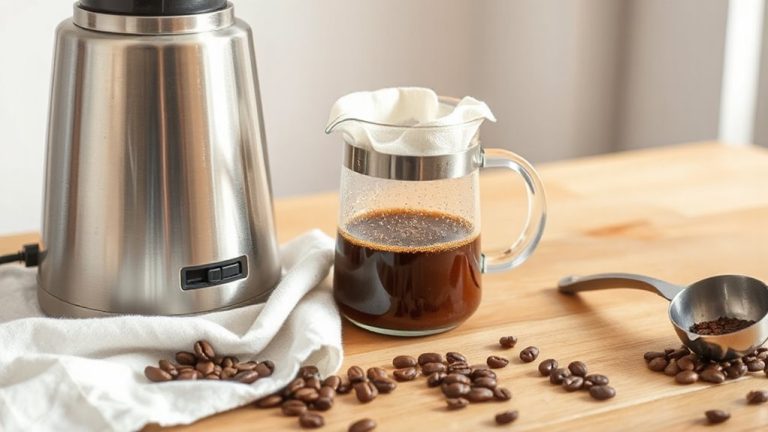
You control effective brew time in pour over by using pulse pours to manage how long water interacts with the coffee. Adding water in bursts lets you slow down extraction without overdoing it, especially with coarser grinds. Shorter pulses prevent clogging, while pauses let the bed stabilize. A gooseneck kettle helps you stay precise. Light roasts need longer pulses than dark-adjust timing based on roast. You’ll find your best flavor by fine-tuning each step.
Notable Insights
- Pulse pours regulate effective brew time by controlling water contact duration with timed additions and pauses.
- Adjusting pulse and rest intervals prevents under- or over-extraction caused by improper flow rates.
- Using shorter pulses with finer grinds minimizes clogging and bitter flavors during extraction.
- Matching pulse timing to roast level optimizes extraction: longer for light, shorter for dark roasts.
- Controlled pouring with a gooseneck kettle ensures even saturation and consistent drawdown between pulses.
What Is Effective Brew Time (And Why It Controls Your Coffee’s Taste)?
Ever wonder why your coffee tastes sharp one day and flat the next, even when you use the same beans and brew method? The answer often lies in effective brew time-the period water actually extracts flavor from coffee grounds. If water flows too fast, extraction falls short, leaving sour notes. Too slow, and bitterness creeps in. Water temperature plays a key role: too cool (below 195°F), and extraction stalls; too hot (above 205°F), and you risk burning delicate compounds. Coffee freshness matters just as much-stale beans release gases unevenly, disrupting flow and extraction. Freshly roasted coffee, used within 2–4 weeks, gives consistent, vibrant results. A gooseneck kettle helps control pour speed, while a scale and timer let you replicate ideal conditions. Match grind size to your target brew time-finer slows water, coarser speeds it. Control these factors, and you control flavor. For precise pour control, consider using a gooseneck kettle, a key tool among the best coffee brewing kettles.
Why Pulse Pours Give You Real Extraction Control
You already know that effective brew time shapes your coffee’s taste, but controlling it depends on how you apply water during brewing. Pulse pours give you that control by letting you manage saturation and flow. Instead of a continuous stream, you add water in timed bursts, pausing between them. This slows drainage, increasing contact time without over-extracting the surface. You can keep your preferred water temperature-say, 200°F-while adjusting pulses to fine-tune extraction. Coarser grind sizes benefit especially, as pulses prevent channeling and promote even saturation. With a finer grind, shorter pulses help avoid clogging and bitterness. Unlike full immersion or continuous pours, pulse pouring lets you respond to the bed’s behavior in real time. This method doesn’t replace proper grind size or water temperature-it works with them. That’s how you get consistent, balanced extraction cup after cup.
Step-by-Step: Brew Better With Pulse Pouring
How do you actually apply pulse pouring to improve your brew? Start by wetting the grounds evenly, then pause 30 seconds for bloom. Begin pulsing-pour small, controlled amounts of water, letting the bed drain slightly between each. This reduces water turbulence, helping maintain a stable filter flow and minimizing channeling. Too much agitation stirs fines, increasing grind retention and muddying your cup. Use a gooseneck kettle like the Brewista Artisan for precision. Pulse every 15–20 seconds, keeping water levels consistent. This method promotes even extraction without rushing. Smaller pulses work better with finer grinds; larger ones suit coarser settings. Avoid dumping water all at once-it overwhelms the bed, worsening retention and flow issues. Adjust pulse size based on your grinder’s consistency. With practice, you’ll balance saturation and drainage, improving clarity and control. For optimal results, choose a best gooseneck kettle that offers a narrow spout and precise temperature control.
Stop Over-Extraction: Master Timing and Flow
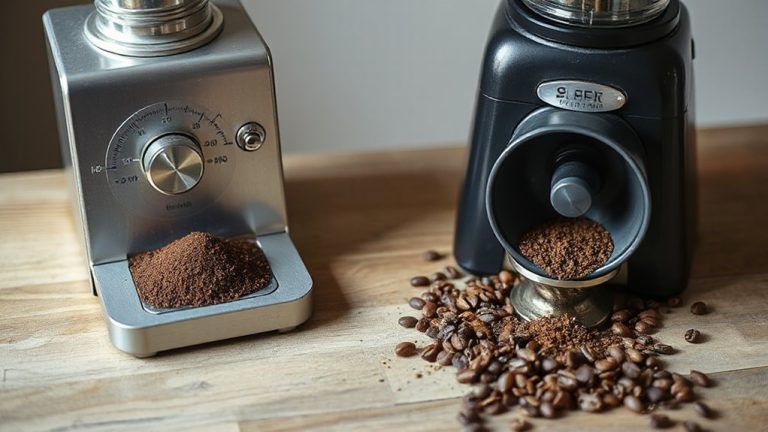
Why does your coffee sometimes taste sharp or overly bitter, even when using the same grind and recipe? You’re likely over-extracting, and timing or flow issues are probably to blame. When water moves too slowly or pools unevenly, it pulls out harsh compounds. To fix this, focus on brew symmetry-ensuring water contacts all grounds uniformly and exits at a steady pace. Uneven flow disrupts this balance, leading to channeling or stagnation. Flow calibration is key: adjust your pour speed and pause duration so water drains just before each pulse. A gooseneck kettle gives you control, while a consistent grind size keeps flow predictable. Don’t rush the process-let gravity do the work. If your drawdown takes more than 1:30 after each pulse, your grind may be too fine, or your pour too aggressive. Mastering these details keeps extraction even and flavor clean. Using a high-quality coffee grinder ensures uniform particle size, which is critical for balanced extraction in both pour-over and espresso.
Adjust Pulse Pours for Light, Medium, or Dark Roasts
Light, medium, and dark roasts respond differently to pulse pouring, so adjusting your technique for each is key to balanced extraction. Light roasts have higher bean density and need more pulses with slightly longer rests to improve water contact. Medium roasts balance density and roast maturity, working well with standard 45-second pulses and even saturation. Dark roasts are less dense and more mature, so they extract faster-fewer, shorter pulses prevent over-extraction.
| Roast Level | Pulse Duration | Rest Time |
|---|---|---|
| Light | 30-40 sec | 20-30 sec |
| Medium | 45 sec | 15 sec |
| Dark | 20-30 sec | 10 sec |
Adjust based on your brew time and flavor goals. Bean density affects how fast water moves through the bed, while roast maturity changes solubility. Use this table as a starting point, then tweak.
Fix Common Pulse Pour Mistakes
Ever wonder why your pulse pours sometimes lead to uneven extraction or off-flavors? It’s often due to improper timing between pours. Waiting too long lets the bed cool and stall, while rushing pulses causes over-extraction in some zones and under-extraction in others. You’ll also get uneven saturation if you dump water only in the center, leaving dry spots near the filter wall. Instead, use short, controlled pulses-about 30–40 seconds apart-and pour in expanding spirals to wet all grounds evenly. Make sure your gooseneck kettle delivers a steady, narrow stream; the Hario V60 Buono works well for precision. Pre-wet the filter thoroughly, and avoid letting the slurry fully drain between pulses. With consistent timing and even coverage, you’ll minimize mistakes and improve flavor clarity in every cup. Practice with filtered water and a gram scale for repeatable results.
On a final note
You now have more control over your brew. Pulse pouring lets you manage effective brew time, improving extraction. It works with light, medium, or dark roasts by adjusting pause length and pour size. Go too fast, and you risk under-extraction; too slow, and over-extraction sets in. Use a gooseneck kettle and timer for best results. With practice, pulse pouring becomes a reliable tool for consistent, balanced coffee.