Steam Wand Not Producing Dry Steam? Fix Boiler Pressure & Scale
Your espresso machine’s steam wand isn’t producing dry steam because mineral buildup, low boiler pressure, or clogged nozzles are blocking hot, consistent vapor. Over time, scale insulates heating elements, while un-purged water cools the steam. Models like the Rocket R58 suffer less from this due to better boilers. Purge before use, clean the tip weekly, and descale every 1–3 months. You’ll see how small fixes improve milk texturing fast.
Notable Insights
- Low boiler pressure below 1.2 bar produces wet, weak steam instead of dry, hot vapor.
- Clogged steam wand nozzles from milk residue or mineral buildup restrict steam flow and quality.
- Mineral scale on heating elements reduces boiler efficiency and steam dryness over time.
- Failing or underperforming heating elements prevent the boiler from reaching optimal steam temperature.
- Failure to purge the steam wand before use releases leftover water, causing damp steam.
Why Your Espresso Machine Isn’t Producing Dry Steam?
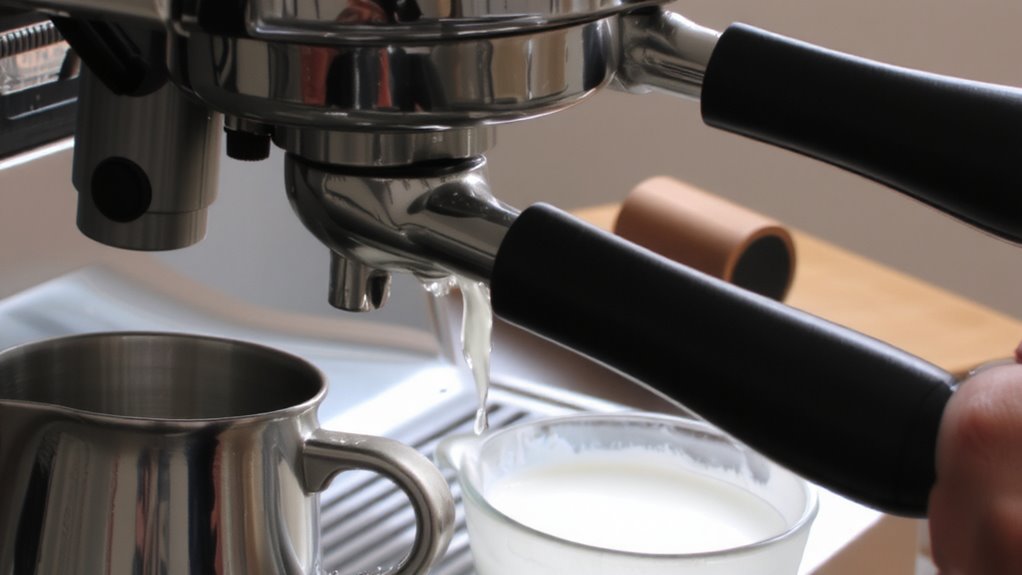
Why isn’t your espresso machine putting out dry, fluffy steam? Poor steam quality is often the culprit. If your steam wand releases wet or weak vapor, it can’t properly heat or aerate milk, ruining milk texture. Most home machines struggle with low pressure or clogged nozzles, especially if you don’t purge and clean the wand after each use. Check for blocked steam holes-use a pin to clear them. Also, make certain your boiler pressure is high enough; below 1.2 bar and you’ll get soggy steam. Machines like the Breville Bambino or Rocket Appartamento manage better steam quality thanks to stronger boilers and well-designed wands. But if your machine consistently produces damp steam, mineral buildup or a failing heating element could be the issue. Fix those, and you’ll improve both steam quality and your ability to create silky milk texture. Upgrading to one of the best frothing wands can also make a significant difference in milk texture and ease of use.
What Dry Steam Is and Why It Matters for Microfoam
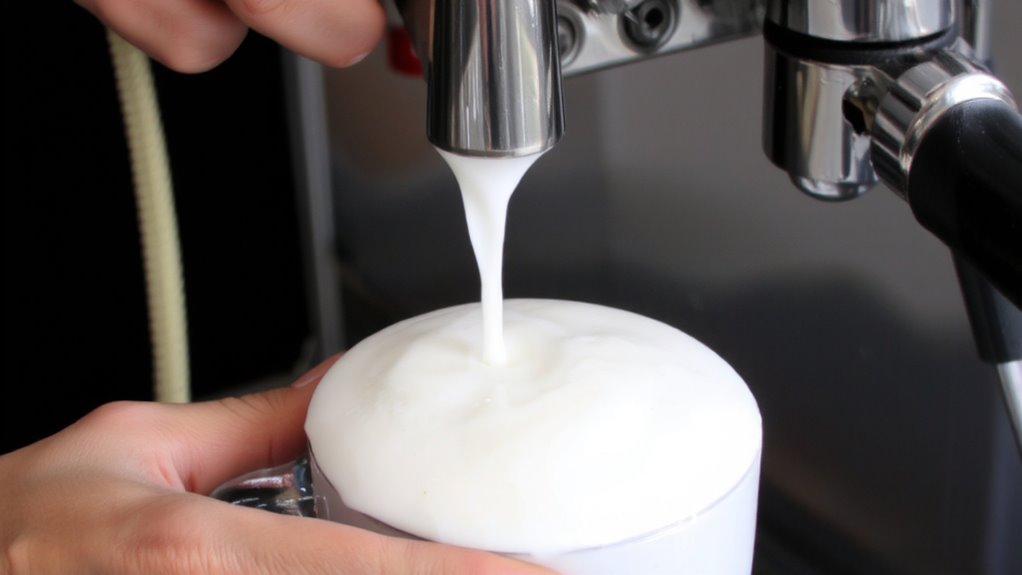
Dry steam is steam with most of the water vapor condensed into droplets before it exits the wand, resulting in a hot, invisible flow that feels sharp and consistent-not wet or sputtering. You need dry steam because it delivers better steam quality, which directly affects milk texture. Wet steam leaves droplets in the milk, cooling it and creating uneven foam. Dry steam, on the other hand, heats evenly and stretches milk properly, producing fine, silky microfoam. That’s essential for latte art and balanced mouthfeel. Machines with good boilers and heat management-like Rocket R58 or Lelit Anna-often produce drier steam. If your steam feels wet or sputters, your machine might not be reaching proper pressure or steam quality. Good steam gives control; poor steam makes texturing harder, no matter your technique. You want heat and power delivered cleanly-so the milk responds just right. Upgrading your equipment can make a significant difference, especially when investing in machines known for consistent performance and best latte-making gear for home baristas.
Purge Your Steam Wand Before Every Use
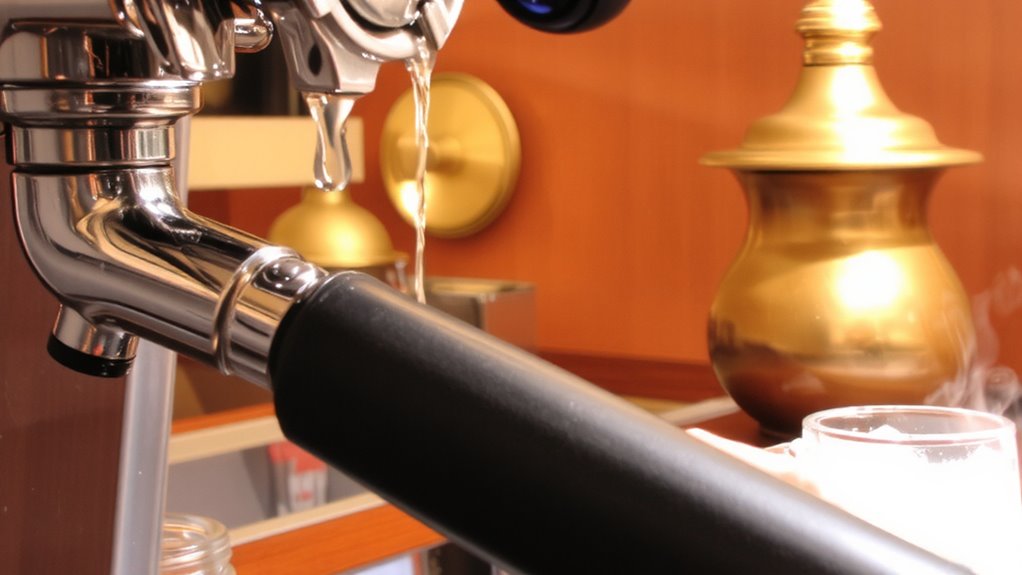
Always purge your steam wand before steaming milk-it only takes a few seconds but makes a real difference. Turning on the steam briefly clears any leftover water, ensuring you start with dry, hot steam. This step stabilizes steam temperature, which is critical for consistent microfoam. If you skip purging, cool water in the wand can lower the milk’s temperature too quickly, making it harder to reach the ideal range of 140–155°F. It also affects wand alignment, since residual drips can mislead your positioning at the milk’s surface. Proper wand alignment depends on a clean, dry tip entering the milk at the right angle. Purging resets the system, giving you control from the first second. Machines like the Lelit Mara or Rocket Appartamento respond better when purged, improving steam quality and texture. Make it a habit-every time.
Clear a Clogged Steam Tip in Seconds
If you notice weak or sputtering steam, a clogged tip is likely the culprit-mineral buildup from milk or hard water often blocks the small holes in the wand’s end. To fix it, power off the machine and let the wand cool slightly. Use a paperclip or a dedicated cleaning tool to gently poke out debris from each hole. Don’t force it-bending the holes can ruin tip alignment and weaken steam flow. Some machines have removable tips; unscrew it and soak in warm water or a water-vinegar mix for deeper cleaning. Reattach securely, making certain the tip is straight and aligned with the wand. Test with a quick purge: you should hear a strong, consistent hiss, not a sputter. Proper tip alignment guarantees even steam flow for better milk texturing. Clean the tip weekly to prevent future clogs. A well-maintained espresso setup also includes using a reliable knock box to streamline grounds disposal after each shot.
Fix Wet Steam Caused by Low Boiler Pressure
A steam wand that produces wet, spitting vapor instead of a dry, steady stream usually points to low boiler pressure, which can’t heat water to the right temperature for proper steaming. When your machine struggles to build enough steam, you’re likely dealing with low pressure-a common symptom of boiler issues. Most espresso machines need a boiler pressure around 1.0 to 1.4 bar for dry steam. If it’s below that, steam will be wet and weak. Check your machine’s pressure gauge, if it has one, or observe steam performance after a full heat-up. Persistent low pressure may mean a faulty pressurestat, a blocked overpressure valve, or scale buildup affecting boiler function. While some adjustments can be made at home, diagnosing deeper boiler issues often requires professional service, especially on commercial or dual-boiler units. Don’t ignore it-consistent low pressure harms milk texturing and machine longevity.
Descaling to Restore Strong, Dry Steam
Low boiler pressure often points to scale buildup inside the heating system, especially in regions with hard water. That gunk insulates heating elements, reducing heating efficiency and slowing recovery. As a result, your steam wand sputters wet, weak steam instead of the dry, powerful blast you need for good milk texturing. Regular descaling is essential boiler maintenance to prevent this. Use a food-safe descaling solution like Durgol or Urnex every 1–3 months, depending on water hardness and usage. Flush the boiler according to your machine’s manual-most dual-boiler models need full shutdowns, while heat exchangers require careful pump cycles. Skipping this leads to permanent damage and higher energy costs. Proper descaling restores heating efficiency, guarantees consistent steam pressure, and extends machine life. It’s not optional-it’s basic care. Do it routinely, and your espresso machine will deliver strong, dry steam every time.
On a final note
You’re not getting dry steam because of clogs, low boiler pressure, or mineral buildup. Always purge the wand first-just a few seconds makes a difference. Clear blocked steam tips with a needle or pin right away. If steam feels weak or wet, check boiler pressure; it should hit 1.0–1.3 bar. Descale regularly, especially with hard water. Machines like Rocket or Lelit respond fast to maintenance. Fix these, and you’ll get silky microfoam consistently.