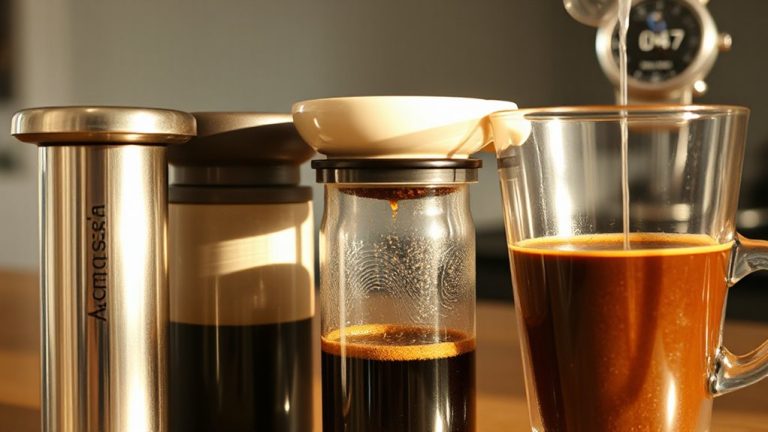
Controlling Sediment Build-Up in Pour Over Coffee for Optimal Flavor Development and Consistency
Use a burr grinder to get a consistent medium-fine grind, like fine sand, so fines don’t slip through and create sludge. Choose thick paper filters like Hario or Melita-they catch more sediment than thin or generic ones. Pour with a gooseneck kettle using slow, even spirals at 195–205°F to avoid stirring up grit. Rinse unbleached filters first and clean your brewer weekly. A proper setup keeps your coffee clear and balanced-and what you do next will tighten your results even more.
Notable Insights
- Use a burr grinder to achieve a consistent medium-fine grind, minimizing fines that contribute to sediment.
- Select high-quality paper filters like Hario or Melita to effectively trap coffee fines and reduce sludge.
- Maintain proper water temperature (195–205°F) to optimize extraction without forcing sediment through the filter.
- Employ a gooseneck kettle for controlled, slow pouring to prevent agitation and sediment buildup.
- Clean brewing equipment regularly to prevent oil and mineral buildup that can affect filtration and flavor.
Choose the Right Grind to Reduce Sediment
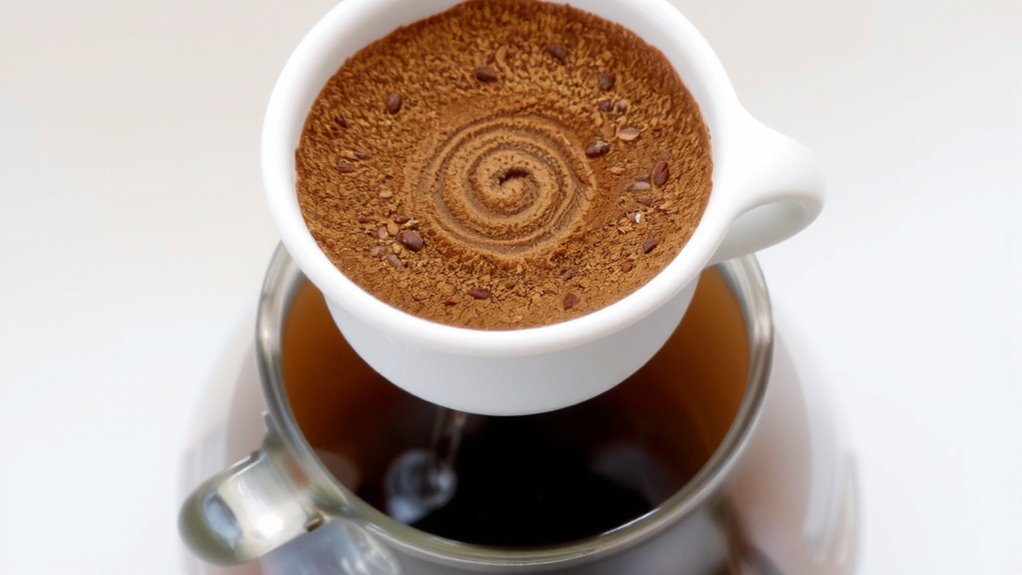
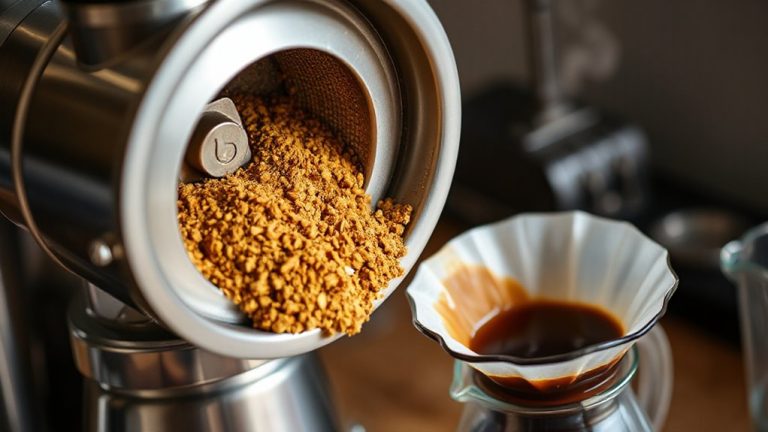
Grind size matters-a lot-when it comes to keeping sludge out of your cup. If your grounds are too fine, they slip through the filter and create sediment; too coarse, and your brew tastes weak. You need a consistent medium-fine grind that balances extraction and filtration. A burr grinder helps achieve even particle distribution, reducing fines that cause muck. Blade grinders often create uneven particles, increasing sludge risk. Grind calibration is key-adjust your grinder until the particles look like fine sand, not powder. For example, a Baratza Encore or 1Zpresso hand grinder lets you dial in precision. If you’re using a Kalita Wave, aim tighter; for a Chemex, go slightly coarser. Consistency beats brand-test, tweak, and stick to a setting that delivers clarity. Proper grind choice cuts sediment without slowing brew time. According to Wirecutter, the best coffee grinders deliver precise and uniform grinding essential for pour over clarity.
Pick a Paper Filter That Blocks Coffee Sludge
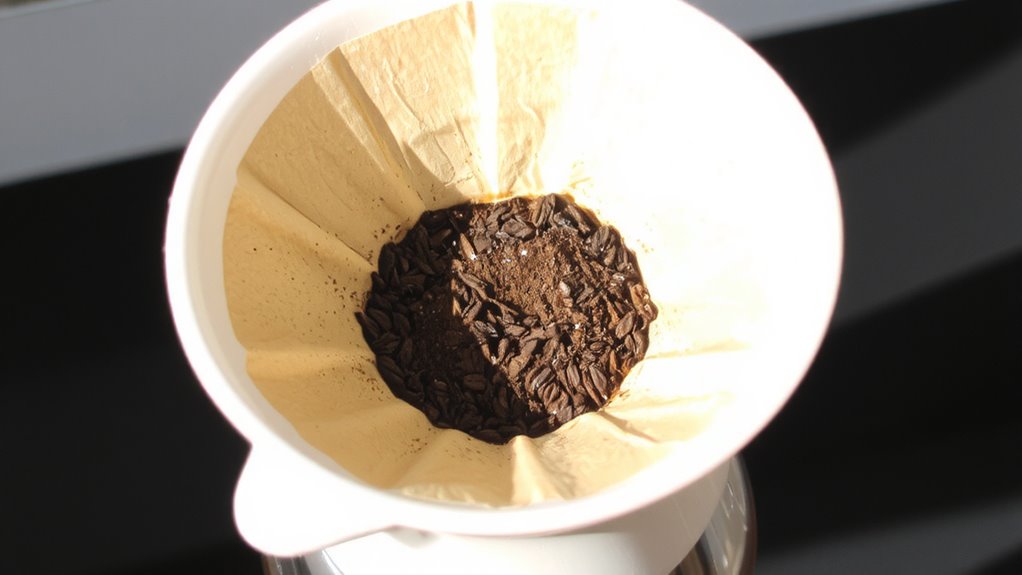
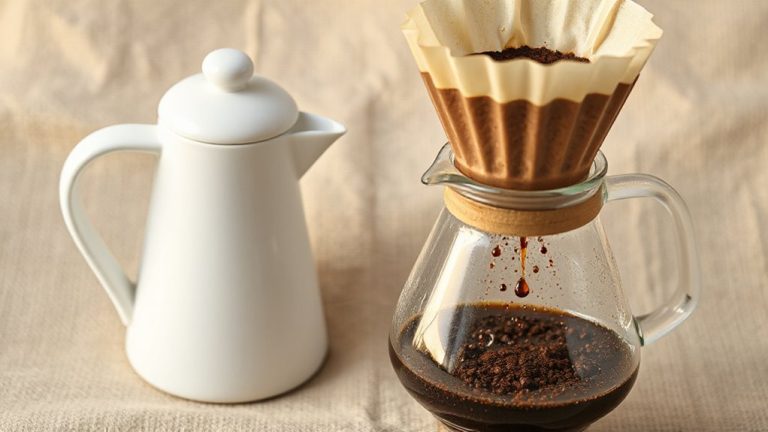
A good paper filter can make or break your pour over clarity, and not all filters are equal when it comes to blocking fine coffee sludge. The key lies in the filter material-thicker papers like those from Hario or Melita slow flow slightly but catch more fines, giving you a cleaner cup. Thinner filters, such as some generic brands, may let sludge pass through, adding grit. A quick brand comparison shows that Hario’s bleached filters offer consistency and high retention, while Cafés Richard unbleached filters are sturdy but can impart a slight papery taste if not rinsed well. Your brew method matters, too-v60’s ridged cone works best with crimped-edge papers designed to fit snugly. Always pre-rinse to remove loose fibers and warm your brewer. Choosing the right filter isn’t just about fit-it’s about how well the material filters out unwanted sediment without stalling your brew time. For those exploring other brewing systems, the Nespresso Vertuo line offers a convenient alternative through its brewing system.
Fix Your Pour Technique and Stop Grit
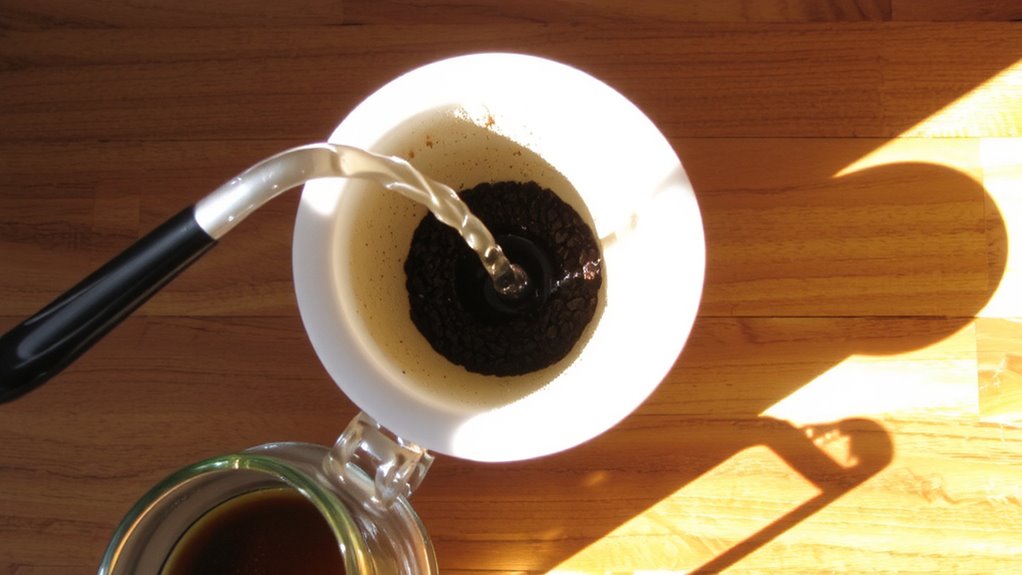
Why does your pour over sometimes end up with a gritty bottom? It’s often your pour technique-especially water temperature and pour speed. If water’s too cool, it can’t fully extract, leaving fines unsettled. Too hot, and it agitates the grounds, forcing sludge through the filter. Your pour speed matters just as much. A rushed pour stirs up sediment; too slow, and channeling occurs, reducing filtration. Keep it steady and controlled.
| Feeling | Cause | Fix |
|---|---|---|
| Frustration | Grit in every sip | Slow, even pour |
| Disappointment | Weak, uneven brew | Maintain 195–205°F |
| Satisfaction | Smooth, clean coffee | Consistent spiral pour |
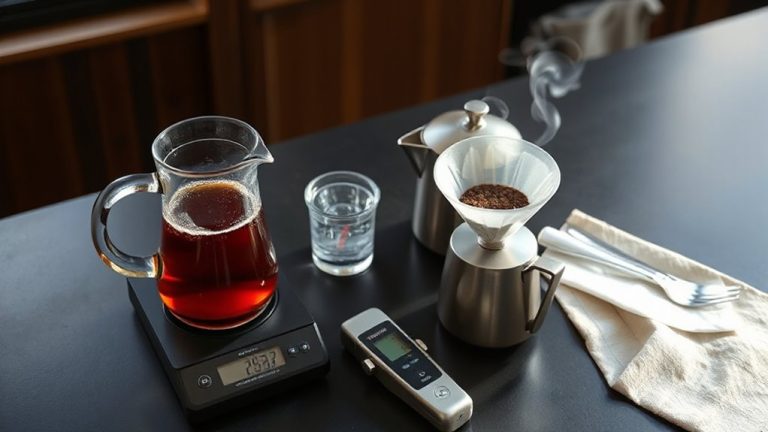
Use a gooseneck kettle to manage pour speed and stabilize water temperature. Your grind should be even, but your pour makes or breaks clarity. For precise control, consider a gooseneck kettle with temperature control to match your brewing needs.
Keep Your Brewer Clean for Cleaner Coffee
You’ve adjusted your pour and still get sludge in the cup-now it’s time to check your gear. Over time, coffee oils and mineral buildup clog your brewer’s surface and filter bed, disrupting water flow and trapping sediment. A clean brewer guarantees even saturation and consistent extraction. Rinse it after each use, and deep-clean weekly with warm water and a soft brush. If you use hard water, mineral deposits can worsen the issue-consider improving your water quality with a simple filter. Your brewing temperature might also drop if scale builds up in kettles or electric brewers, affecting extraction and clarity. Glass, ceramic, and plastic brewers all need regular care, though plastic retains odors more easily. Stained or cloudy surfaces aren’t just unsightly-they impact performance. Keeping your equipment clean isn’t just about looks; it supports better flow, stable brewing temperature, and cleaner cups.
Why Too-Fine Grinds Cause Sediment in Pour Over
When the grind size slips too far toward powder, it clogs the filter and overwhelms the brew, letting fine particles sneak into your cup. That’s sediment-unwanted grit that clouds your coffee and dulls the taste. A too-fine grind size slows water flow, which spikes the extraction rate and risks over-extracting bitter compounds. Meanwhile, tiny coffee particles bypass the filter entirely, especially with paper filters that aren’t tight enough, like some generic brands. Metal or cloth filters, while reusable, often allow more sediment if the grind isn’t adjusted. You’re better off using a burr grinder to maintain consistency and aim for a medium-fine setting-think kosher salt-for pour over. Coarser grinds reduce clogging and promote even extraction, keeping sediment low and flavor clean. Adjusting grind size is the fastest fix.
On a final note
You can reduce sediment in pour over coffee by using a medium-fine grind, like what you’d use for a Kalita Wave, and pairing it with a quality paper filter such as Hario’s #4. Adjust your pour to avoid aggressive agitation, and rinse filters first. Clean your brewer regularly to prevent buildup. Too-fine grinds clog filters and increase sludge, hurting clarity. Consistency comes from control-refine each step for cleaner, more balanced cups.