Complete Timeline of Natural (Dry) Coffee Processing From Tree to Dry Mill
You start by handpicking only ripe, deep red cherries, leaving unripe ones behind. Spread them thinly on raised beds or patios right after harvest. Turn them every few hours for even drying and mold prevention. Dry for 6–25 days until moisture hits 10–12%, using a meter like DPM for accuracy. Ideal weather is dry and sunny, around 25–30°C. Finally, use a huller like Engelsberg to remove husk and parchment, then sort by density. Natural processing boosts sweetness and body, but demands precise control. The full impact of each step reveals how small choices shape your cup’s final character.
Notable Insights
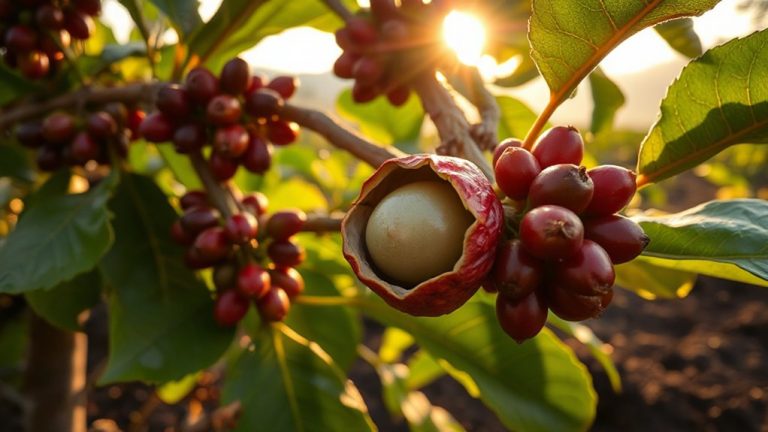
- Ripe coffee cherries are selectively handpicked, ensuring only red, mature fruit is harvested while green or yellow ones are left.
- Cherries are immediately spread in thin, even layers on raised beds or patios for sun-drying.
- Daily turning every 3–4 hours ensures uniform drying, prevents mold, and promotes consistent airflow.
- Drying lasts 10–25 days until beans reach 10–12% moisture, verified by bite test or digital meter.
- After drying, beans undergo dry milling to remove husk and parchment, followed by sorting for quality and uniformity.
How Coffee Cherries Are Handpicked at Peak Ripeness
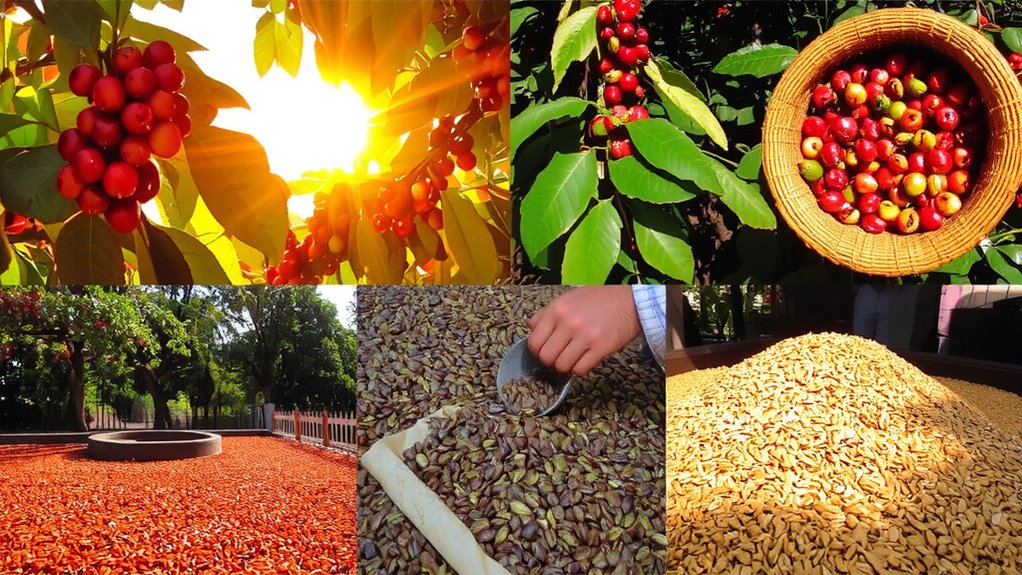
While timing and consistency matter most, handpicking coffee cherries at peak ripeness starts with recognizing the right color and texture-deep red and slightly give when gently squeezed. You rely on ripeness indicators like hue and softness, skipping green or yellow ones that aren’t ready. This is selective harvesting: you pick only the ripest cherries per branch, leaving others to mature for later passes. It’s labor-intensive but necessary for quality, as unripe or overripe fruit skews flavor. Machines can’t do this accurately, which is why small farms handpick each batch. You’ll revisit the same tree multiple times during harvest season, ensuring uniformity. Though slower, selective harvesting improves sweetness, acidity balance, and overall cup clarity. If you skip proper sorting now, defects appear later-no amount of processing fixes underripe beans. Your attention here directly impacts the final brew’s quality, making this step non-negotiable for specialty-grade coffee.
Spreading Cherries to Dry in the Sun
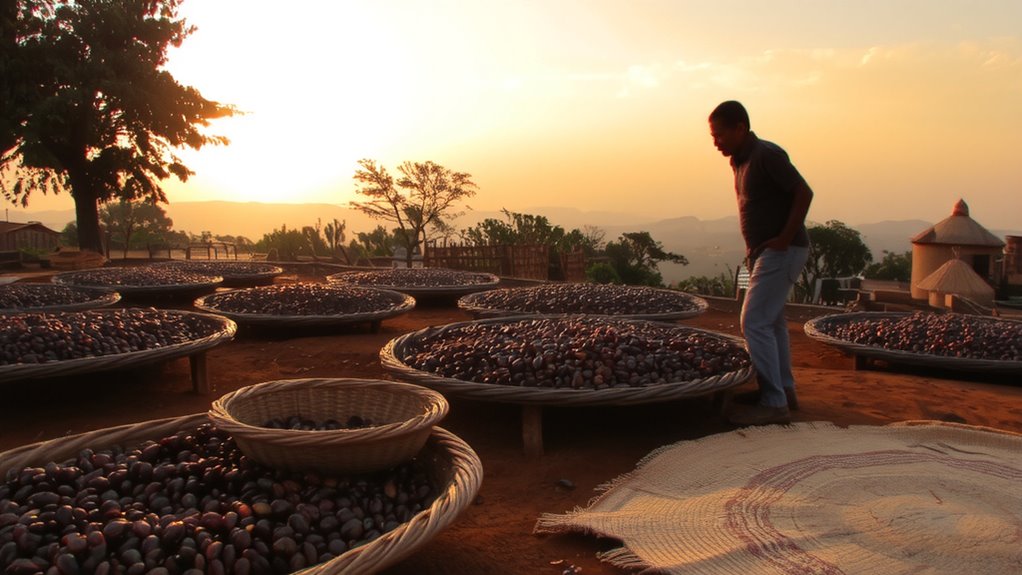
Sun-drying coffee cherries begins the moment they’re harvested, and timing is critical. You need to spread them thinly on raised beds or patios right away to start reducing moisture. Make sure the layer is even-too thick and drying duration increases, raising the risk of fermentation or mold. Sun exposure must be consistent; aim for 6 to 12 days depending on climate, with peak efficiency in dry, sunny conditions. Direct sunlight speeds drying but demands monitoring-intense heat can cook cherries too fast, damaging quality. You’ll find traditional patios work well in low-humidity zones, while raised African beds improve airflow in more humid areas. Spreading cherries properly ensures even dehydration, setting the foundation for stable, clean-tasting beans. You’re balancing drying duration and sun exposure to preserve sugar development without risking spoilage. It’s simple, but precision matters.
Why Daily Turning Prevents Mold and Ensures Even Drying
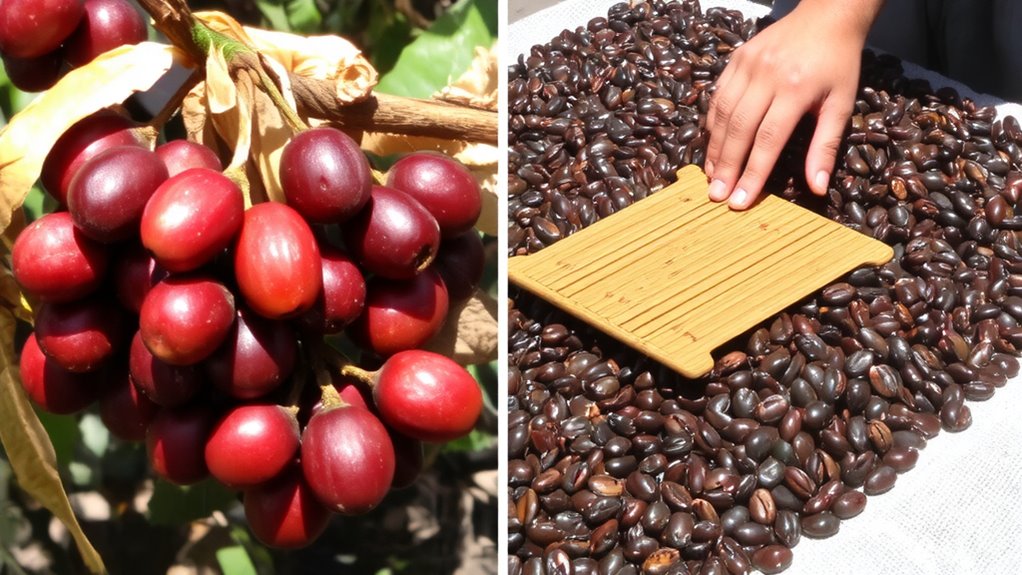
Turning the cherries every few hours might seem minor, but it’s one of the most effective ways to prevent mold and guarantee consistent drying. You’re directly supporting mold prevention by disrupting moisture buildup that fosters fungal growth, especially in humid conditions. Without turning, the bottom layer stays damp, creating hot spots for spoilage. Regular movement also improves drying consistency, ensuring all sides of the cherries are equally exposed to sun and airflow. It’s not just about flipping beans-it’s about control. Parchment can dry unevenly if neglected, leading to fermentation or over-drying on the edges. Using a rake or your hands every 3–4 hours keeps the process predictable. Some farmers use mechanical dryers for more stable conditions, but in patio or raised bed setups, your daily effort is key. Consistent turning means fewer defects and better cup quality-simple, manual, but essential.
When Is the Coffee Dry Enough? Target Moisture Explained
How do you know when coffee cherries are truly dry? You’re aiming for a target moisture of around 10–12%. Below that, beans become brittle; above it, mold and spoilage can develop during storage. The drying time varies-typically 10 to 25 days-depending on climate, altitude, and bed thickness. To check, you can bite a bean: it should crack sharply, not dent. For accuracy, though, use a moisture meter-digital ones like the DPM or GrainSafe give reliable readings without damaging beans. Don’t rely solely on feel or appearance; color and texture can deceive. Reaching the target moisture guarantees stability for hulling and export. If you stop drying too early, the beans risk fermentation during storage. Dry fully, test consistently, and record your drying time for future batches. This helps refine your process and maintain quality. For reliable results, consider using one of the best coffee bean moisture meters, such as the DPM 500-S, which is highly rated for its precision and ease of use.
How Dry, Sunny Weather Makes or Breaks Natural Processing
You’ve hit the right moisture level when the beans crack cleanly and your meter reads 10–12%, but getting there depends heavily on the weather you’re working with. Dry, sunny conditions give you consistent sun exposure, which is critical for controlling the drying rate. Too much humidity or cloud cover slows drying, raising the risk of mold or fermentation defects. Ideal conditions-clear skies, low humidity, steady 25–30°C (77–86°F) temperatures-let you dry cherries evenly over 10–20 days. Too much direct sun or high heat speeds up the drying rate too much, trapping moisture inside and causing uneven development. You’ll need to adjust bed depth or cover cherries during peak afternoon light. Inconsistent sun exposure leads to erratic drying, which can ruin flavor clarity. Monitoring both bean temperature and ambient conditions helps you respond before problems arise. Sun is your most powerful tool-but only if managed precisely.
Removing the Husk: What Happens in the Dry Mill
Once the beans reach the right moisture level, they’re ready for the dry mill, where the dried fruit and parchment layers get removed. You start with husk removal, using a hulling machine to crack off the outer layers without damaging the bean inside. Machines like the Engelsberg or Agate hullers are common-they’re durable and efficient for large batches. After husking, you move to bean separation, where screens and density tables sort beans by size and weight. This step catches defects and maintains uniformity. Some mills use gravity tables to improve accuracy, especially for specialty grades. Poor separation can leave pebbles or broken beans, affecting roast consistency. Always calibrate equipment regularly to maintain precision. Husk removal and bean separation aren’t flashy, but they’re essential for quality control. Skip proper setup, and even well-processed beans lose value.
Why Natural Processing Creates Sweeter, Fuller-Bodied Coffee
The dry mill finishes the job of cleaning and sorting the beans, but the flavor profile was already shaped long before that stage-starting when the coffee cherries were left to dry with the fruit still intact. You get sweeter, fuller-bodied coffee because sugars and compounds in the pulp slowly soak into the seed during drying. This extended fruit contact boosts fermentation complexity, especially if you monitor conditions like humidity and airflow. Thin layers on raised beds or patios help control this, avoiding over-fermentation or mold. The result? Enhanced flavor development: think ripe berry, chocolate, or tropical notes not typically found in washed coffees. Natural processing works best in dry, sunny climates-Ethiopia and Brazil use it widely. It needs space and patience, but when done right, you get a heavier mouthfeel and richer sweetness few other methods match.
On a final note
You’ve seen how natural processing shapes coffee from harvest to mill. When done right, sun-drying whole cherries boosts sweetness and body, but needs consistent heat and care. Daily turning prevents mold, and reaching 10–12% moisture is key. Dry climates, like in Ethiopia or Brazil, work best. After drying, the dry mill removes the husk. This method saves water and costs less than washed processing, but risks over-fermentation if not monitored.