Understanding the Role of Sediment in Enhancing Turkish Coffee Flavor Through Proper Brewing Techniques
You need that fine sediment at the bottom of your cup-it’s key to real Turkish coffee. Using an ultra-fine grind, like powdered sugar, and a cezve lets the grounds brew slowly, releasing oils and depth. Keep heat low and pull the pot just before boiling to let sediment settle right. Pour gently to keep it at the base. That even layer isn’t just tradition-it shows you got the grind, heat, and timing correct. There’s more to get right for consistent results every time.
Notable Insights
- Sediment in Turkish coffee enhances flavor by acting as a reservoir that releases oils and compounds during brewing.
- Ultra-fine grind size, like powdered sugar, is essential for forming the proper sediment layer.
- Brewing in a cezve allows controlled heat application, crucial for gradual sediment settling and flavor development.
- Removing the cezve just before boiling preserves sediment integrity and prevents bitterness.
- Serving without agitation lets sediment settle, ensuring a rich, full-bodied cup with balanced extraction.
Why Turkish Coffee Needs Its Signature Sediment
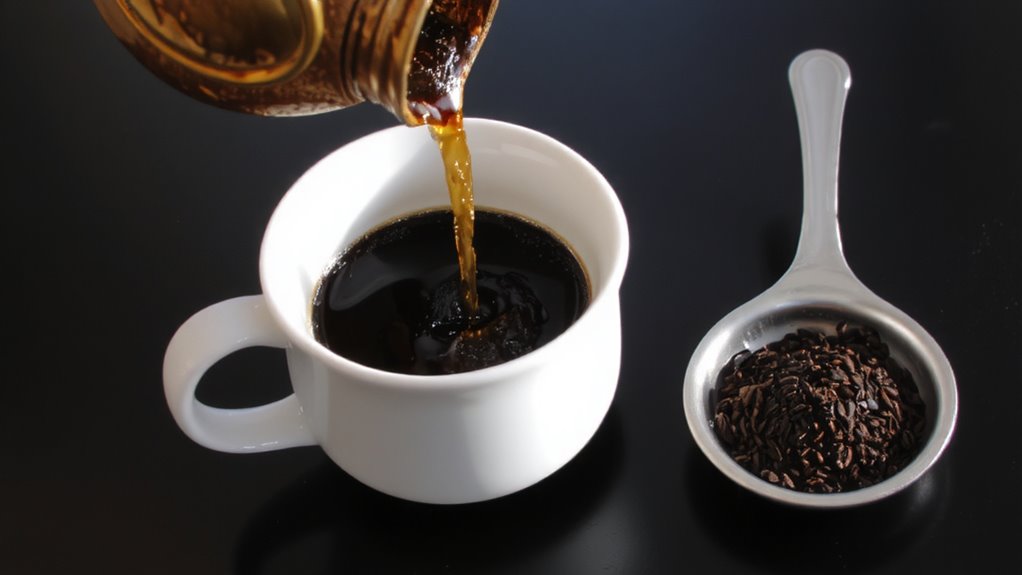
That fine, gritty layer at the bottom of your cup isn’t a flaw-it’s fundamental. You’re not just drinking coffee; you’re experiencing centuries of tradition. The sediment in Turkish coffee ties directly to its historical origins, rooted in Ottoman brewing methods from the 1500s. Unlike filtered coffee, this method retains all coffee particles, enhancing body and intensity. This unfiltered style carries deep cultural significance across the Middle East, Balkans, and North Africa, often served during social rituals or family gatherings. You’ll need a cezve (or ibrik) and beans ground superfine-finer than espresso-to achieve authentic results. Skipping the grind or filtering loses flavor and meaning. The sediment isn’t waste; it’s proof you’ve brewed it right. Respecting it means honoring both technique and tradition. Electric Turkish coffee makers can replicate this traditional brewing experience with modern convenience.
How an Ultra-Fine Grind Builds Rich Sediment
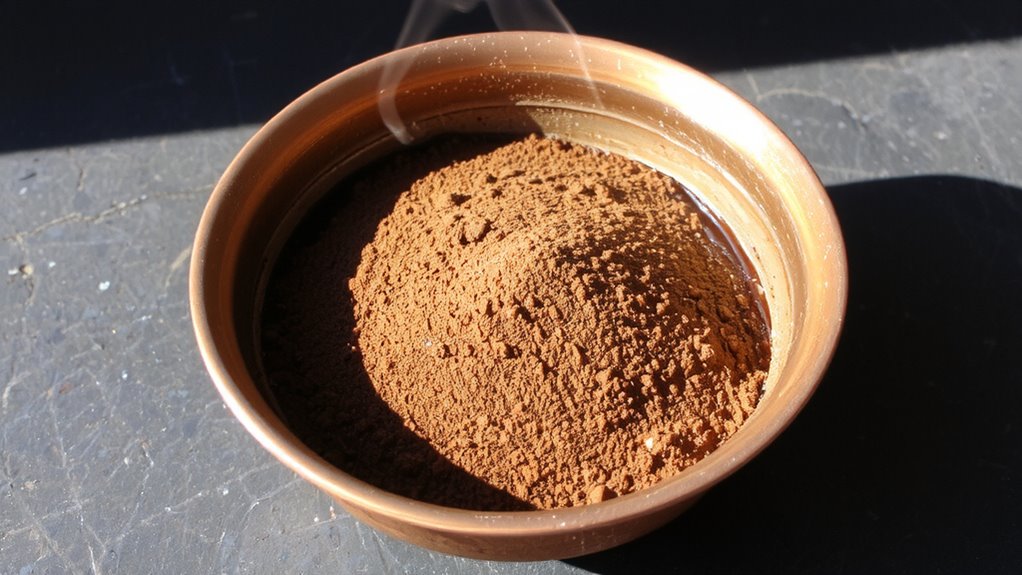
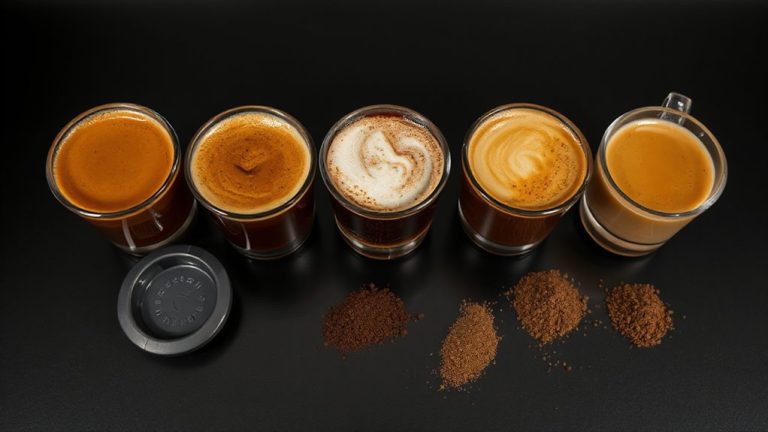
Ultra-fine grind size is the foundation of proper Turkish coffee sediment. When you use a burr grinder designed for Turkish coffee-like a hand mill or high-end electric model-you achieve the necessary grind consistency and particle uniformity. These fine particles, about as fine as powdered sugar, stay suspended during brewing and settle slowly, forming the rich layer at the cup’s bottom. Blade grinders often fail here, producing uneven results that disrupt sediment formation. Without consistent particle size, some bits dissolve too fast or don’t settle right, weakening texture and body. You need every particle to behave the same way, so uniformity matters. A proper grind guarantees the sludge layer builds correctly-dense, even, and stable. You’re not just making coffee; you’re engineering a physical structure. And without an ultra-fine, uniform grind, that structure fails. Invest in the right grinder-it makes all the difference. For optimal results, consider using a best coffee grinder that ensures precision and consistency with freshly roasted beans.
How Sediment Transfers Flavor During Brewing
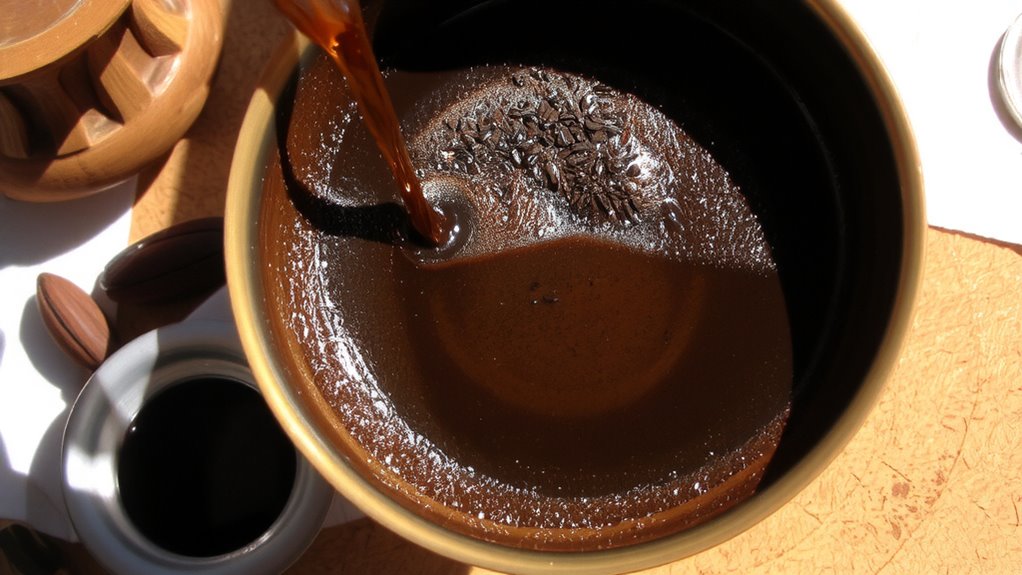
While the sediment in Turkish coffee might look like an unwanted byproduct, it’s actually central to how the drink develops its signature flavor. You see, as the coffee brews, tiny particles don’t just sink-they actively take part in chemical interaction with the hot water. This process allows flavor diffusion, where oils and compounds move from the grinds into your cup. The dense sediment acts like a flavor reservoir, slowly releasing complexity. Without it, you’d lose depth and richness.
| Stage | Process | Effect on Flavor |
|---|---|---|
| Wetting | Water contacts grinds | Begins extraction |
| Brewing | Heat drives diffusion | Enhances body |
| Settling | Sediment sinks | Concentrates taste |
| Serving | Residual interaction | Completes flavor development |
You’re not just drinking coffee-you’re experiencing ongoing flavor diffusion shaped by each sediment layer.
Why Heat Timing Matters for Sediment Formation
How soon should you remove the cezve from the heat to get that perfect layer of sediment? Right before it boils over-typically when the foam rises just below the rim. Pulling it at this moment guarantees the fine particles settle properly, creating a rich base. Your grind consistency must be ultra-fine, like powdered sugar, so the grounds don’t float but sink gradually after brewing. If you wait too long, the agitated boil disrupts sediment formation, muddying texture and over-extracting bitterness. The ideal brew duration is about 4 to 5 minutes total, depending on heat level. Too fast, and the coffee won’t develop full flavor; too slow, and sediment clumps unevenly. Consistent heat control, paired with proper grind size, directly shapes how well sediment forms. That settled layer isn’t just tradition-it’s proof of precise timing.
How to Pour Turkish Coffee Without Disturbing Sediment
You’ve timed the heat just right-foam rising to the edge, heat turned off before the boil-and now comes the final test: pouring without wrecking that carefully settled sediment. Your pouring technique is essential. Tilt the cezve slightly and pour slowly in a steady, thin stream. Let the coffee flow into the cup while leaving most sediment behind in the pot. Avoid shaking or swirling the cezve at the end, since that stirs up the grounds. Aim to serve each cup at the ideal serving temperature-hot but not scalding, around 160–170°F-to preserve flavor and prevent bitterness. Pouring too fast or waiting too long can disrupt sediment distribution. Use small porcelain or handleless cups; they help trap grounds at the bottom. With practice, your technique guarantees a clean, rich sip every time-no grit, just smooth, authentic taste from well-controlled brewing and precise execution.
What the Sediment Reveals About Your Brew’s Quality
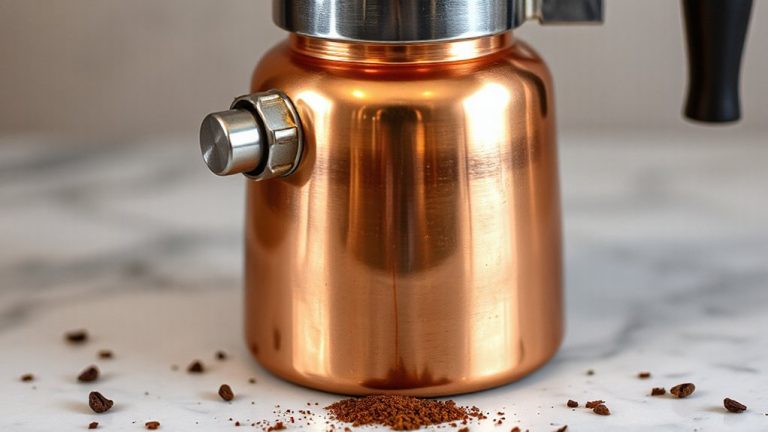
A thin, even layer of sediment at the bottom of your cup is a sign of a well-executed brew-too much grit means the grind was overly fine or the water boiled too hard, while almost no sediment suggests the coffee was under-extracted or poured too quickly. The sediment’s consistency can tell you about both coffee origin and roast level. Beans from Ethiopia, often lighter in roast, may leave a slightly finer sludge due to cell structure, while darker roasts from regions like Sumatra shed more oils, affecting settle. If your sediment is clumpy, the roast may have been uneven or the grind inconsistent. You’re aiming for clarity in flavor, not muddiness. A proper brew lets the origin character come through without harshness. Check your cezve material too-copper heats evenly, helping control extraction. Watch how the grounds settle; it’s a direct readout of your technique.
On a final note
You need that fine sediment for authentic Turkish coffee flavor, so use a burr grinder set to its finest setting-blade grinders work in a pinch but are less consistent. Brew slowly in a cezve over low heat to let sediment form properly. When pouring, stop before the sludge hits the cup. The settled layer tells you if the grind and heat were right-a sign of a well-made brew.