Cold Brew With Light Roast Beans: Achieving Brightness and Complexity
You can make bright, complex cold brew with light roast beans-it’s not just for dark roasts. Choose washed Ethiopian or Kenyan beans for clear citrus and floral notes. Use a coarse grind and a 1:8 coffee-to-water ratio by weight. Steep 12–16 hours in filtered water at room temp. A consistent burr grinder and non-reactive vessel help extract nuanced flavors without bitterness. Time and freshness matter most-try it with freshly roasted Yirgacheffe or Kenyan AA for best results. There’s more to optimizing clarity and lift in your brew.
Notable Insights
- Light roast preserves delicate origin flavors like citrus and berries, enhancing cold brew complexity.
- Bright acidity in light roast cold brew comes from beans with inherent vibrant profiles, not sourness.
- Use Ethiopian, Kenyan, or Colombian specialty beans for pronounced fruity and floral notes.
- Grind beans coarsely and use a 1:8 coffee-to-water ratio for balanced, smooth extraction.
- Steep 12–16 hours in filtered water at 60–70°F to maintain brightness without bitterness.
Why Light Roast Works for Cold Brew
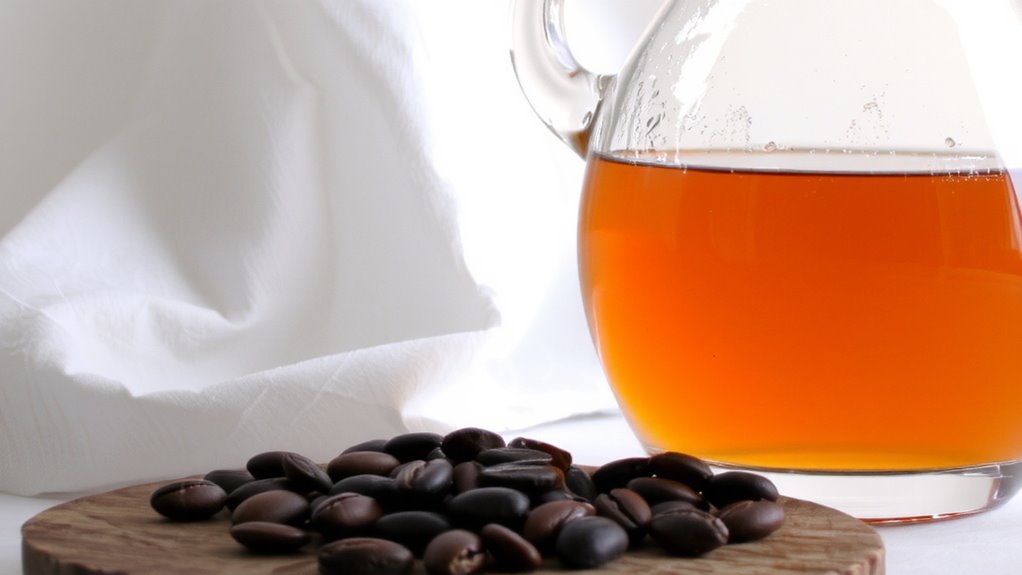
Why not try light roast for your cold brew? You’ll preserve more of the bean origin’s natural flavors, like citrus or berry notes, since the shorter roast time doesn’t overpower them. A light roast profile maintains higher acidity and aromatic complexity, which can shine in cold brew when extracted slowly over 12–24 hours. Unlike dark roasts that bring smoky or bitter tones, light roasts emphasize clarity and distinct characteristics from their growing region-think Ethiopian floral tones or bright Central American profiles. Just remember, lighter beans are denser, so you’ll need a consistent grinder, like a Baratza Encore, to achieve even particle size. Best coffee grinders for cold brew ensure optimal extraction by providing uniform grounds, preventing bitterness and under-extraction. If your grind’s too coarse, extraction suffers. Too fine, and it gets muddy. Start with a 1:8 coffee-to-water ratio, adjust to taste. Cold brew with light roast isn’t just smoother-it’s more expressive, if you get the basics right.
How Acidity Shapes Light Roast Cold Brew
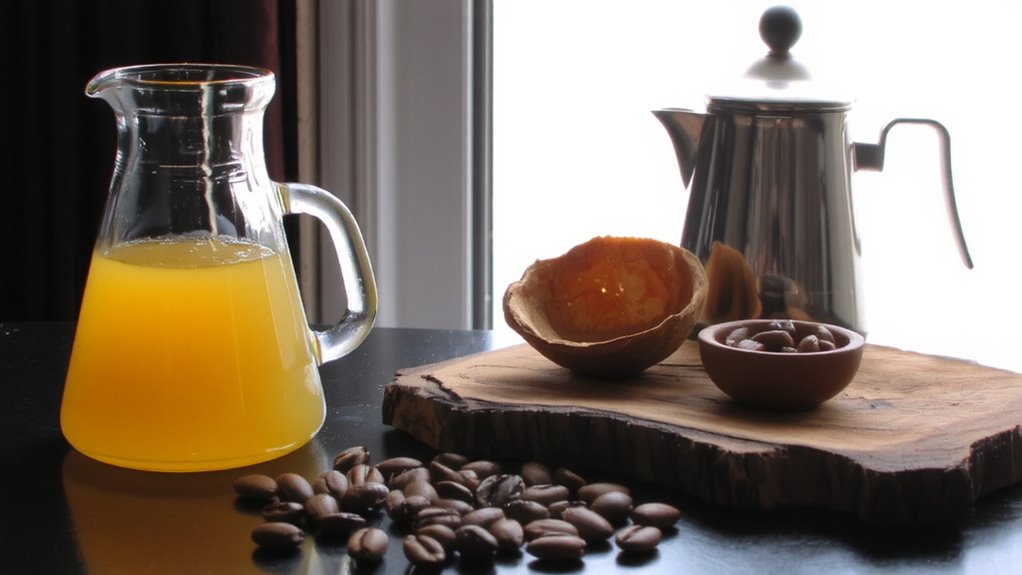
While cold brew is often associated with low acidity, using light roast beans introduces a brighter, more dynamic profile that can completely shift the drink’s character. You’ll notice more lift and clarity, especially when you steep these beans longer-14 to 18 hours works best. The lighter roast preserves delicate acids that bring out citrus notes, like lemon or grapefruit, without sourness. You’ll also pick up a subtle floral aroma, similar to jasmine or bergamot, especially with beans from East Africa. These characteristics balance the cold brew’s natural smoothness, giving you complexity without bitterness. Just be careful-too long a steep can dull those bright qualities. A coarse grind and filtered water help maintain clarity. This approach won’t give you a sour drink; instead, it adds dimension. If you prefer depth with brightness, light roast cold brew delivers. Try a washed Ethiopian or Kenyan bean to start. For consistent results, consider using an at-home cold brew maker designed to optimize extraction and clarity.
Best Beans for Bright, Fruity Cold Brew
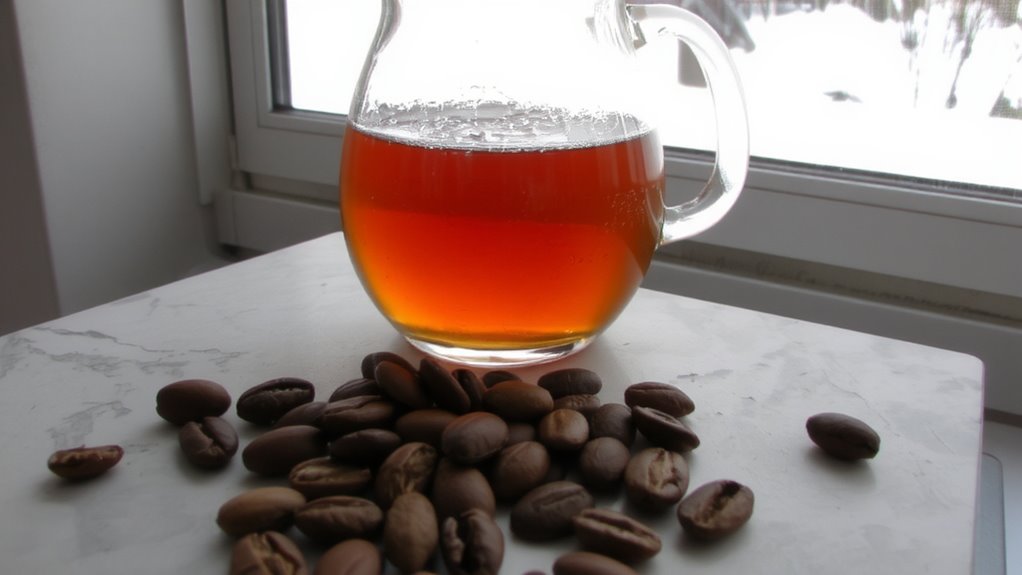
A light roast Ethiopian Yirgacheffe is your best bet for a bright, fruity cold brew, delivering crisp notes of blueberry, lemon, and bergamot that shine through the cold extraction process. The bean origin plays a key role-Ethiopian beans naturally carry floral and fruit-forward traits, and when paired with a light roast profile, those qualities are preserved instead of masked by deeper browning. For similar brightness, Kenyan AA offers structured acidity with hints of blackcurrant.
| Bean Origin | Roast Profile |
|---|---|
| Ethiopian Yirgacheffe | Light |
| Kenyan AA | Light to Medium-Light |
| Colombian Geisha | Light |
These beans work well because their delicate compounds extract cleanly over time. Always choose freshly roasted, specialty-grade beans within 3–6 weeks post-roast for peak clarity and flavor development in your cold brew. A well-chosen cold brew coffee maker can enhance the nuanced flavors of light roast beans by ensuring optimal steeping conditions.
Grind & Ratio for Smooth, Balanced Flavor
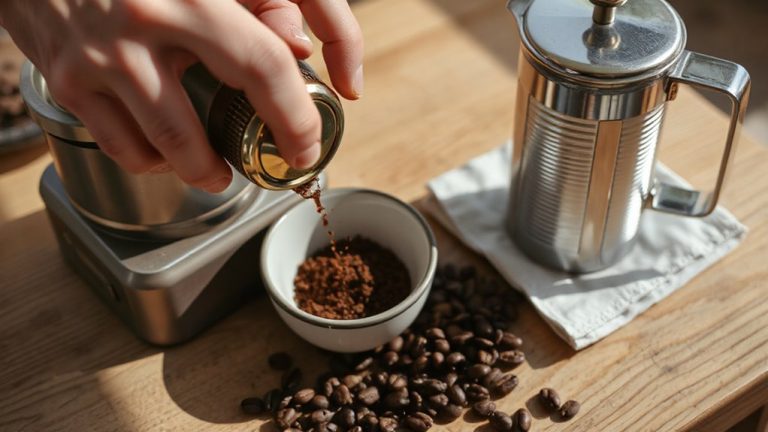
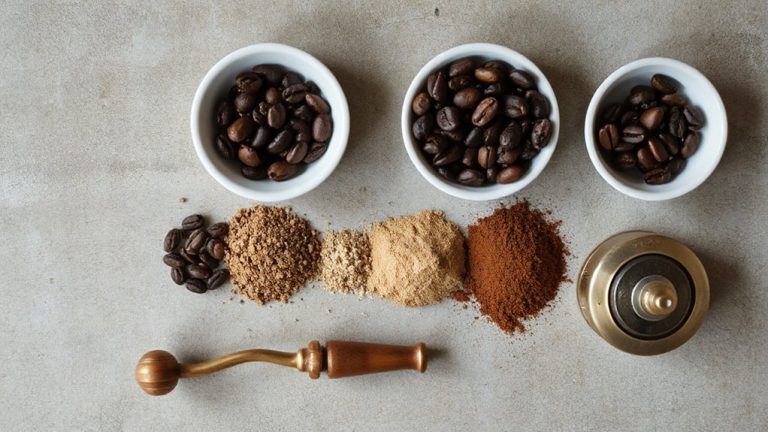
The grind size and coffee-to-water ratio are key to a smooth, balanced cold brew that highlights the bright, fruity notes of your light roast beans without tipping into bitterness or weakness. Use a coarse grind size-similar to breadcrumbs-to prevent over-extraction and sludge. A burr grinder gives you consistent particles, which is essential; blade grinders often create uneven results that can lead to uneven extraction. For the brew ratio, aim for 1:8 (by weight), like 100 grams of coffee to 800 grams of water. This ratio strengthens flavor without overwhelming clarity, letting the beans’ natural acidity and sweetness come through. If your brew tastes weak or sour, adjust to 1:7. If it’s too intense, go to 1:9. These tweaks keep your cold brew balanced and bright, especially important with light roasts.
Steeping Light Roast: Time and Temperature
Since light roast beans have higher acidity and more delicate flavor compounds than darker roasts, getting the steep time and temperature right is essential for a clean, vibrant cold brew. You’ll want to steep them for 12 to 16 hours-any longer and you risk over-extraction, which dulls their brightness. Keep the water temperature between 60–70°F (15–21°C); warmer water speeds up extraction but can pull out unwanted bitterness. Cold tap water works, but filtered water improves water quality and avoids off-flavors, especially in areas with hard or chlorinated water. Use a non-reactive brewing vessel like glass, food-grade plastic, or stainless steel to prevent flavor contamination. A sealed container also minimizes oxidation. Stir the grounds gently after adding water to guarantee even saturation. After steeping, strain thoroughly to avoid sediment and lingering bitterness.
Cold Brew Methods for Maximum Complexity
While standard immersion brewing works for most cold brew, you’ll want to explore other methods if you’re after more nuanced or layered flavors from light roast beans. Try the slow drip method using a tower system like the Yama or Oji-these promote cold brew clarity by filtering coffee gradually through ice-cold water, yielding a cleaner, brighter concentrate. This method enhances flavor layering, letting floral, citrus, and tea-like notes shine. Alternatively, a hybrid approach-steeping lightly ground beans for 8–12 hours, then gently filtering through a paper and metal combo (like a Kalita with a metal mesh underneath)-can balance body and complexity. Avoid overly fine grinds to prevent bitterness. Each method trades time or equipment for better control, so pick based on your gear and desired profile.
Why Your Light Roast Cold Brew Falls Flat
You’ve probably tried different methods to get more from your light roast cold brew, maybe even set up a slow drip tower or fine-tuned a hybrid steep-and-filter process. Still, your brew falls flat. One reason? Bean density. Light roasts are denser than dark roasts, making extraction harder during cold brewing’s low-temperature soak. If you don’t adjust grind size or steep time, you’ll under-extract, losing brightness and sweetness. Another factor: roast age. Light roasts need time post-roast for gases to dissipate; using them too soon-under 7–10 days off roast-leads to uneven extraction and sour, hollow flavors. Always check roast dates and aim to brew with beans 1–3 weeks post-roast. Use a finer grind than usual, but not dusty, and steep 18–24 hours. These tweaks help you pull out the complexity light roasts offer.
On a final note
You can achieve bright, complex cold brew with light roast beans by using a medium-coarse grind and a 1:8 coffee-to-water ratio. Steep for 14–18 hours in room-temperature water for balanced acidity. Try beans like Ethiopian Yirgacheffe or Costa Rican Geisha for fruity notes. A French press or mason jar works fine, but a Toddy system offers consistent results. Avoid over-steeping, which dulls flavor.