French Press Coffee for Sensitive Stomachs: Lowering Acidity Through Coarse Grind
You can make French press coffee easier on your stomach by using a coarse grind, which slows extraction and reduces acidic compounds. Stick to low-acid beans from Brazil or Sumatra, and brew with water around 200°F-not boiling-to avoid scalding. A 1:15 coffee-to-water ratio and 4-minute steep time help balance flavor without excess acidity. The metal filter preserves smooth oils, unlike paper filters. Try a Baratza Encore for consistent grinding. Better control means gentler coffee. More details can improve your brew even further.
Notable Insights
- A coarse grind slows extraction, reducing the release of acidic compounds in French press coffee.
- Brewing with water between 195–205°F prevents scalding and minimizes bitterness and acid over-extraction.
- Using low-acid beans from Brazil or Sumatra enhances smoothness and suits sensitive stomachs.
- A consistent 4-minute steep time with coarse grounds prevents over-extraction and controls acidity.
- Metal filters allow natural oils into the brew, creating a smoother, less acidic mouthfeel than paper-filter methods.
Why French Press Coffee Is Gentler on Sensitive Stomachs
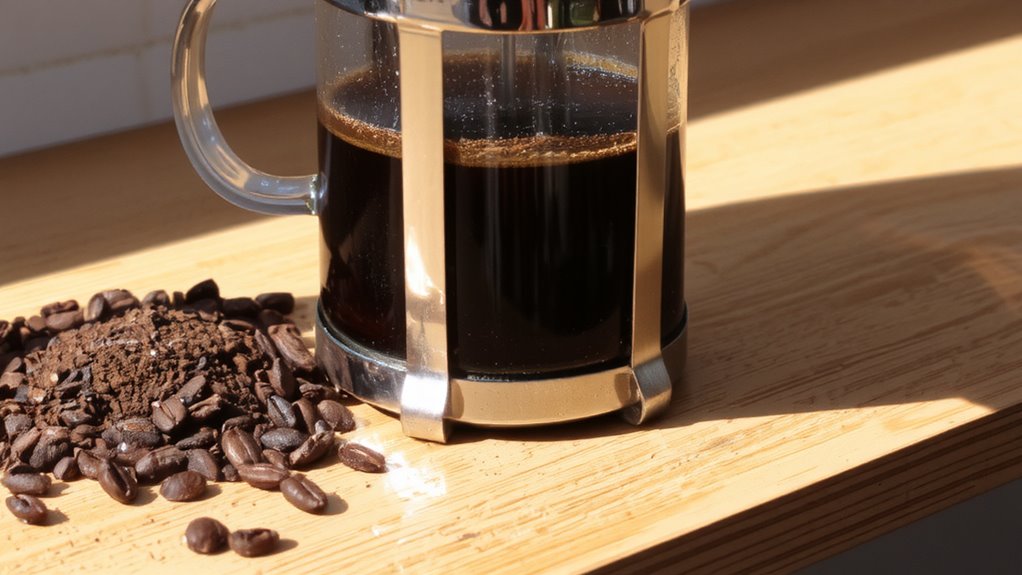
While some brewing methods can make coffee harsh on sensitive stomachs, French press coffee tends to be gentler, mainly because it skips paper filters. That means fewer bitter compounds and acids end up in your cup. You also have control over water temperature, which matters-aim for around 195–205°F to avoid over-extraction and excess acidity. Boiling water can scald the grounds, making coffee harsh, so let it sit 30 seconds off the boil. Bean origin plays a role too; beans from Brazil or Sumatra often have lower acidity compared to Kenyan or Ethiopian varieties. If you react to acidity, choose a dark roast from low-acid regions. The French press brings out body without amplifying stomach-irritating traits, especially when you tweak these factors. It’s not foolproof, but with the right beans and temp, it’s a reliable option. For those seeking optimal results, choosing one of the best French press picks can enhance both flavor and brewing consistency.
How Coarse Grind Helps Create Low-Acid French Press Coffee
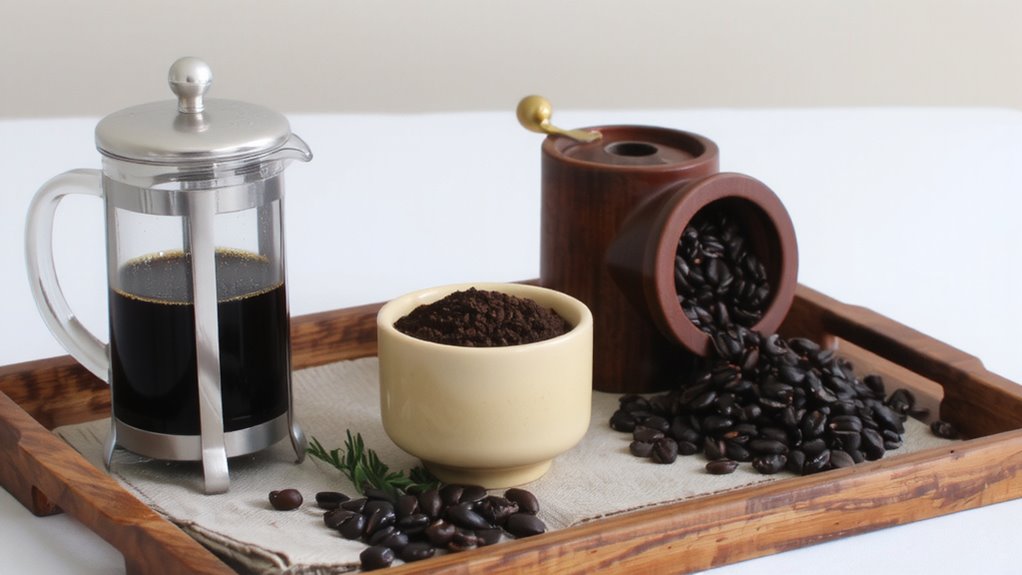
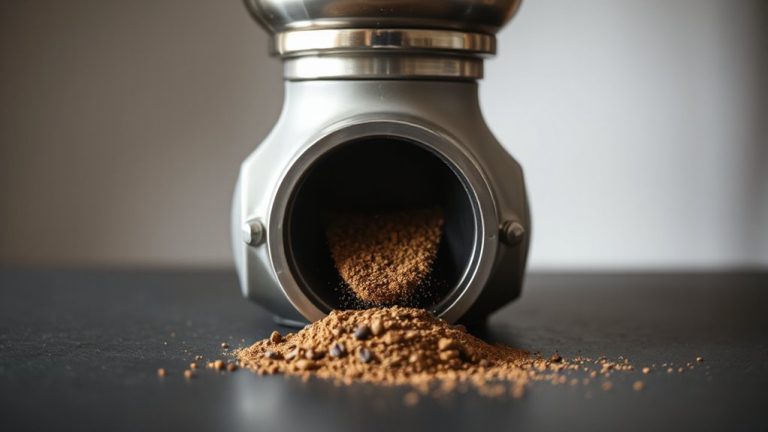
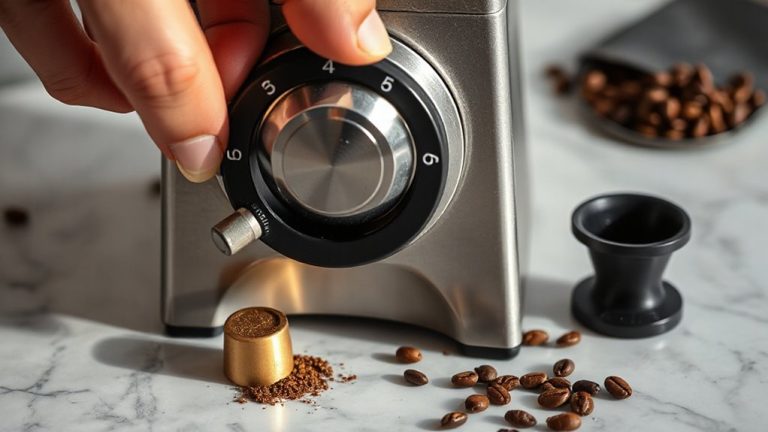
You’ve probably noticed smoother coffee when using a French press, and one key reason lies in the grind size. A coarse grind slows down extraction time, which helps limit the release of acidic compounds. When coffee grounds are too fine, they expose more surface area, speeding up extraction and pulling out more bitterness and acid-especially problematic for sensitive stomachs. With a French press, the typical steep time is around four minutes, and using a coarse grind balances that duration, preventing over-extraction. Think of it like steeping tea: longer time plus coarse particles means control. Brands like Baratza Encore let you adjust grind size precisely, helping you stay in that sweet spot. Going too coarse might under-extract and taste weak, while too fine spikes acidity. Aim for consistency-grounds should resemble sea salt. This simple tweak in grind size and extraction time is a proven way to lower acid levels without sacrificing flavor in your French press routine.
Why French Press Coffee Feels Less Acidic Than Drip
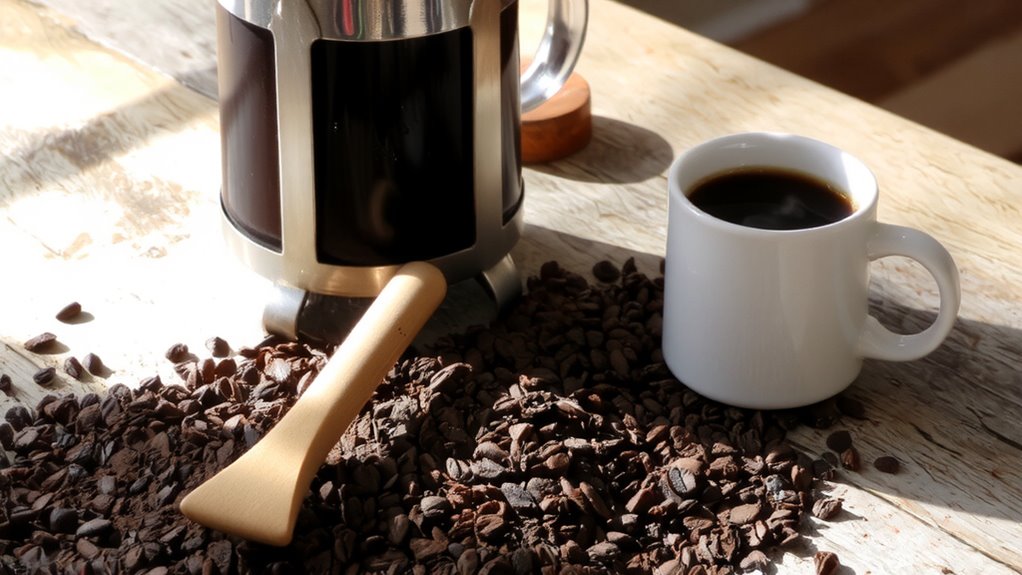
Why does French press coffee often feel gentler on the stomach than drip? It’s partly about control. With a French press, you’re using a lower water temperature-usually around 195–205°F-compared to drip machines that often hit boiling. That slight drop reduces the extraction of acidic compounds. Plus, your brewing time is longer, typically 4 minutes, allowing a more even draw of flavors without over-pulling harsh acids. Drip systems brew faster under pressure, which can heighten acidity. The metal filter in your French press also lets oils pass through, contributing to a rounded mouthfeel that seems less sharp. You’re not eliminating acid, but you’re balancing it better through method. If you have a sensitive stomach, these small shifts in water temperature and brewing time make a noticeable difference. It’s not magic-just physics and timing you can manage at home. For optimal results, use a coarse grind to prevent over-extraction and ensure a smoother, less acidic brew.
Best Low-Acid Beans for French Press
Since acidity in coffee depends heavily on bean origin and roast, choosing the right beans matters just as much as the brewing method when making French press coffee for sensitive stomachs. You’ll want naturally low-acid options like beans from Brazil, Sumatra, or Guatemala-these regions tend to produce smoother, earthier profiles. Avoid high-altitude African beans, which are often brighter and more acidic. Contrary to common dark roast myths, darker roasts aren’t always less acidic; while prolonged roasting can reduce chlorogenic acid, it may increase other compounds that irritate the stomach. Medium-dark roasts, like those used in Italian or French styles, often strike a better balance. Also, consider beans labeled “low-acid” from brands like Puroast or Tyler’s No_ACID. While cold brew benefits include lower acidity due to extended steeping, that method isn’t always ideal for French press timing or flavor preference. Stick to beans roasted specifically for smoothness, not just color.
How to Brew Smoother Coffee, Step by Step
A well-executed French press brew can deliver a smooth, full-bodied cup that’s easier on sensitive stomachs when you control the key variables. Start with coarsely ground, low-acid beans-like Colombian or Brazilian-to reduce irritation. Use water just off the boil, around 200°F, as too-hot water increases acidity, while too-cool water under-extracts. Pour steadily to saturate all grounds evenly. Stick to a 1:15 coffee-to-water ratio-say, 30 grams coffee to 450 grams water. Place the lid on top with the press up, and let it steep. Keep brew time to exactly 4 minutes; going longer increases bitterness and acidity. After time’s up, press gently but fully. Pour immediately to stop over-extraction. Don’t leave coffee sitting-this raises acidity. Pre-warming your French press helps maintain stable water temperature. Metal filters may allow more oils than paper, affecting smoothness. Choose based on preference.
On a final note
You’ll find French press coffee easier on a sensitive stomach because the coarse grind and full immersion reduce acidity. Opt for low-acid beans like Sumatra or cold-processed varieties. Use a consistent coarse grind-too fine increases bitterness. Steep for 4 minutes, then press slowly. This method gives a smoother cup than drip, especially with paper filters that strip oils. For best results, clean your press thoroughly after each use.