How Specific Grind Sizes Impact Espresso Crema Consistency Across Different Machines
Your grind size直接影响 crema consistency-too coarse and you get thin, pale foam; too fine and it turns bitter with patchy crema. Machines like the Breville Bambino need a fine but not powdery grind, while dual-boiler models handle slightly coarser settings. Burr grinders give even particles, unlike blade ones. Vibratory pumps often demand finer grinds than rotary. Heat stability and pressure profiles also shift ideal grind-match them for rich, lasting crema. See how small tweaks align with your machine’s design.
Notable Insights
- Grind size directly affects extraction time, with finer grinds slowing flow to produce richer, more stable crema on most machines.
- Coarse grinds cause fast extractions under 20 seconds, yielding thin, pale crema due to under-extraction across all machine types.
- Machine pump type influences optimal grind: vibratory pumps often need finer grinds to compensate for pressure drops affecting crema consistency.
- Temperature stability from dual boilers or PID controllers allows coarser grinds to perform consistently, enhancing crema durability and color.
- Pressure profiling requires precise grind adjustments; lower pre-infusion pressures need slightly finer grinds to maintain crema across sensitive light roasts.
How Grind Size Affects Espresso Crema
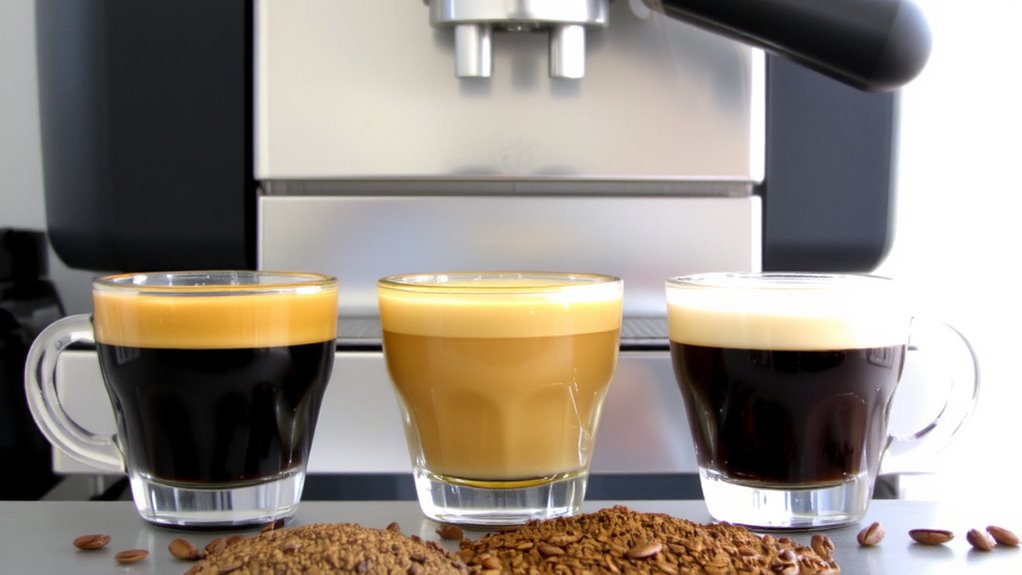
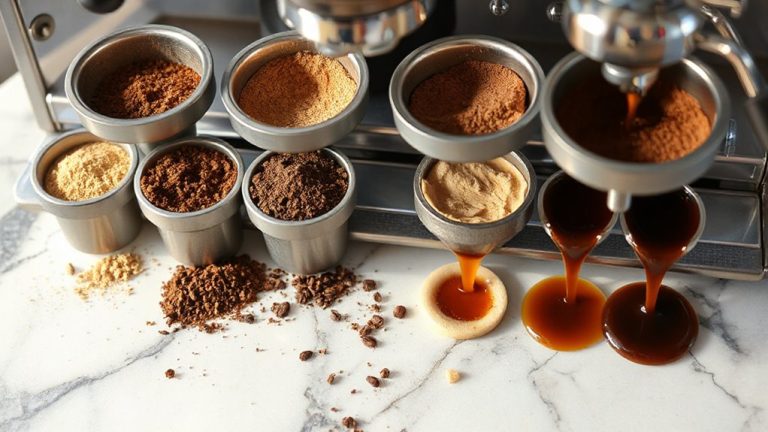
Crema-the golden layer atop a well-pulled shot-starts with grind size. If your grind’s too coarse, water rushes through, under-extracting and leaving thin, pale crema. Too fine, and the puck chokes, yielding bitter shots with patchy foam. You need balance. Grind uniformity matters because inconsistent particles lead to uneven extraction-fines over-extract while boulders under-extract. That hurts crema stability. A good burr grinder improves particle distribution, ensuring more even coffee granules. This promotes balanced pressure and smoother flow during the shot. For most home machines like the Breville Bambino or Gaggia Classic, a fine but not powdery setting works best. Avoid blade grinders-they produce erratic particle distribution, killing consistency. Dial in your grind slowly, adjusting in small shifts. Watch the shot time and crema texture. When it’s rich, honey-colored, and lasts over a minute, you’ve nailed it. Grind size isn’t just adjustment-it’s control. Investing in one of the best grinder brands can make a significant difference in achieving the precision needed for consistent espresso results.
Why Your Espresso Machine Changes the Ideal Grind
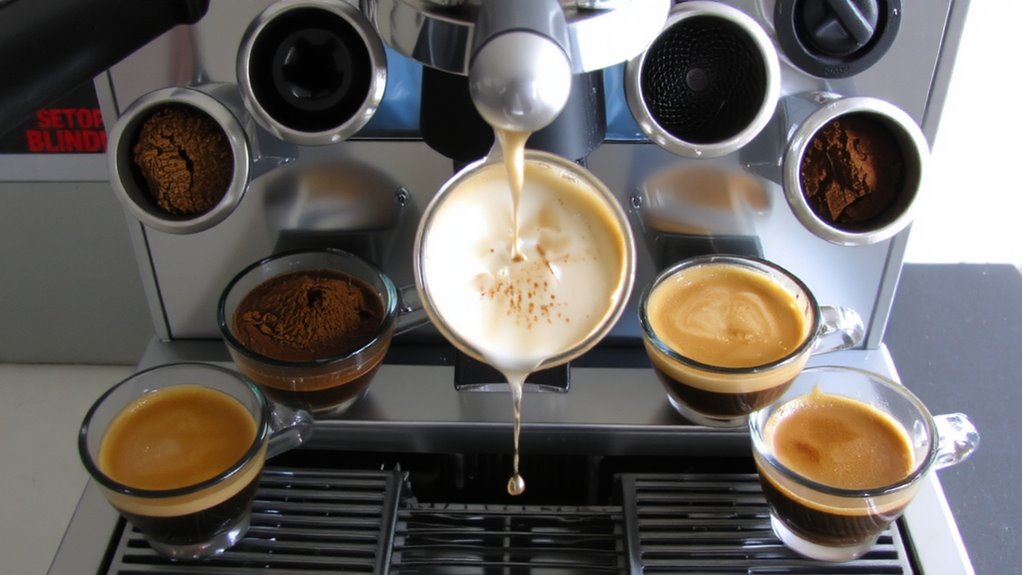
Why does the same grind setting give great results on one machine but fail on another? Because your machine’s design and pump type heavily influence how water moves through the coffee. A dual boiler with precise temperature control delivers consistent pressure, so you might use a slightly coarser grind. But with a vibratory pump machine, pressure can fluctuate, often requiring a finer grind to compensate. Machine design also affects heat stability-heat-exchange models maintain different temps than single boilers, changing extraction dynamics. Rotary pumps offer smoother pressure than vibratory ones, altering how water penetrates the puck. That means even with the same beans and grinder, you’ll likely need to adjust your grind. There’s no universal “perfect” setting-your machine’s hardware shapes what works. Ignoring these differences leads to uneven crema and off flavors. For optimal results, consider using a high-quality coffee bean grinder that ensures consistent particle size crucial for fresh, evenly extracted espresso.
How to Dial In Grind Size for Consistent Crema
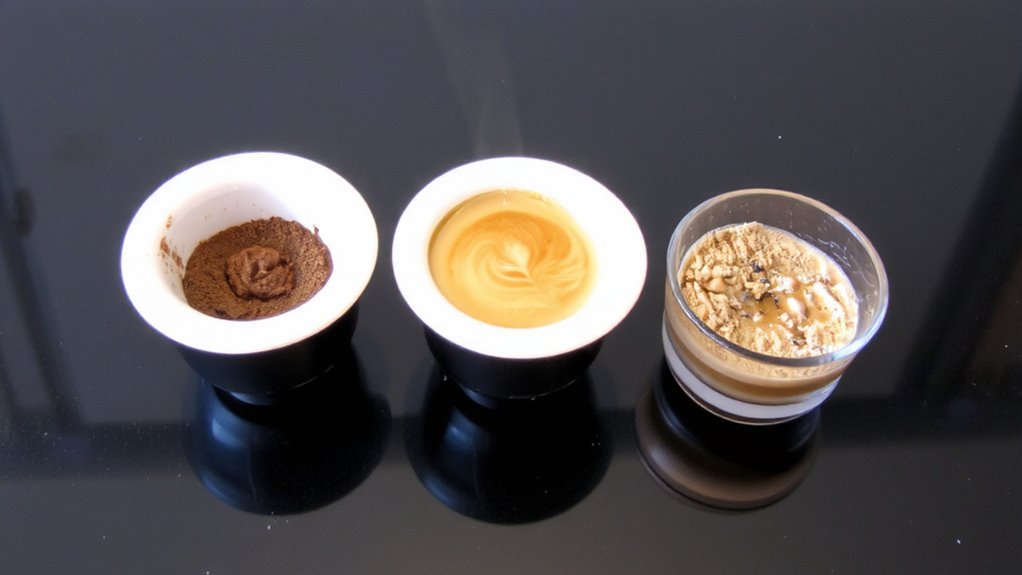
Getting consistent crema starts with adjusting your grind size to match your machine’s output and the coffee you’re using. Small tweaks matter-too fine and your shot stalls, too coarse and you lose crema. Always consider bean origin and roast date; dense beans from Ethiopia may need a finer grind than Brazilian ones. Freshness counts-ideal grind age is 5–10 days post-roast for balanced extraction.
| Grind Size | Pull Time (sec) | Crema Result |
|---|---|---|
| Too Coarse | <20 | Thin, pale, patchy |
| Slightly Coarse | 21–24 | Light, fading fast |
| Ideal | 25–30 | Rich, golden, stable |
| Slightly Fine | 31–35 | Dark, pockmarked |
| Too Fine | >36 | Bitter, oily, slow |
How Pressure Profiling Impacts Grind and Crema
You’ve tuned your grind size and hit the sweet spot for steady extraction and golden crema-now what happens if you change how hard the water pushes through that puck? Adjusting pressure profiling shifts pressure dynamics during the shot, directly affecting extraction timing and crema texture. Machines like the Decent DE1 or Flair Pro allow you to lower initial pressure for slower ramp-up, reducing channeling and improving consistency. Lower pre-infusion pressure helps delicate beans avoid over-extraction, while higher peak pressure can boost crema on denser roasts. But if pressure spikes too fast, even the best grind setting can under-extract or sour. You’ll need to tweak grind finer or coarser to match new pressure curves. Getting this balance right means clearer shots, better crema stability, and more control-especially with finicky beans or older machines lacking built-in profiling.
Why Temperature Stability Matters for Grind and Crema
Even with the perfect grind, inconsistent brew temperature can wreck your crema and throw off extraction. Fluctuations cause thermal shock, where sudden heat changes stress the coffee puck, leading to uneven water flow and sour or bitter shots. Stable temps guarantee the grind performs as intended, especially with fine espresso settings. If your machine heats up too fast or lacks a proper PID, you’re more likely to see brew head oxidation over time-metal fatigue that harms heat transfer and accuracy. Single-boiler home machines often struggle here, while dual-boiler or heat-exchange models like the Lelit Anna or Rocket R53 offer better stability. Without consistent heat, even freshly ground beans won’t save the shot. You’ll get weak crema-thin, pale, quick to dissolve. That’s not just bad timing; it’s flawed physics. Keep your machine warmed up with backflushes and avoid rapid consecutive pulls to minimize swings. Temperature stability isn’t luxury-it’s baseline for quality.
Fixing Common Grind Issues That Ruin Crema
When your crema turns out flat, patchy, or fades too fast, the problem often isn’t your beans or machine-it’s your grind. Inconsistent grind size or improper tamping pressure can wreck extraction. Too coarse, and you’ll get weak crema; too fine, and it over-extracts, turning bitter. Your water quality also plays a key role-hard water clogs grinders and alters extraction, while soft water under-expresses oils. Adjust your grinder settings in small increments and clean it weekly. Pair consistent tamping pressure with fresh beans and filtered water. Using a quiet coffee grinder can minimize vibration and heat, preserving grind consistency crucial for stable crema.
| Issue | Cause | Fix |
|---|---|---|
| Flat crema | Grind too coarse | Adjust finer; check burrs |
| Bitter shot | Grind too fine | Adjust coarser; recalibrate |
| Uneven extraction | Uneven tamping or water quality | Level dose; use filtered water |
On a final note
Your grind size directly shapes espresso crema-too coarse and you lose pressure, too fine and you choke the shot. Machines vary, so dial in using small adjustments: a good starting point is fine table salt. Portafilter machines need consistency; super-automatics handle it for you. Pressure and temperature stability matter-La Marzocco and Rocket models help there. Clean your grinder often, and always match grind to your machine’s specs for best results.