Why Your Espresso Machine Is Producing Water Instead of Coffee
Your espresso machine might be pumping water instead of coffee because you forgot to add grounds to the portafilter-common after cleaning or in rushed prep. A clogged basket or low pump pressure below 9 bars can also stop proper extraction, especially in models like the Breville BES870XL or Gaggia Classic. Check the water tank level and verify it’s seated right. If cleaning and checking these don’t fix it, deeper mechanical issues may be the cause.
Notable Insights
- A clogged group head restricts water flow through coffee grounds, resulting in hot water instead of espresso.
- No coffee in the portafilter causes the machine to dispense plain hot water during brewing.
- Clogged portafilter basket holes from compacted grounds block proper water flow and extraction.
- Insufficient pump pressure below 9 bars fails to extract espresso, producing only water.
- An empty or improperly seated water tank interrupts water supply, preventing coffee production.
Why Is Your Espresso Machine Pumping Water Instead of Coffee?
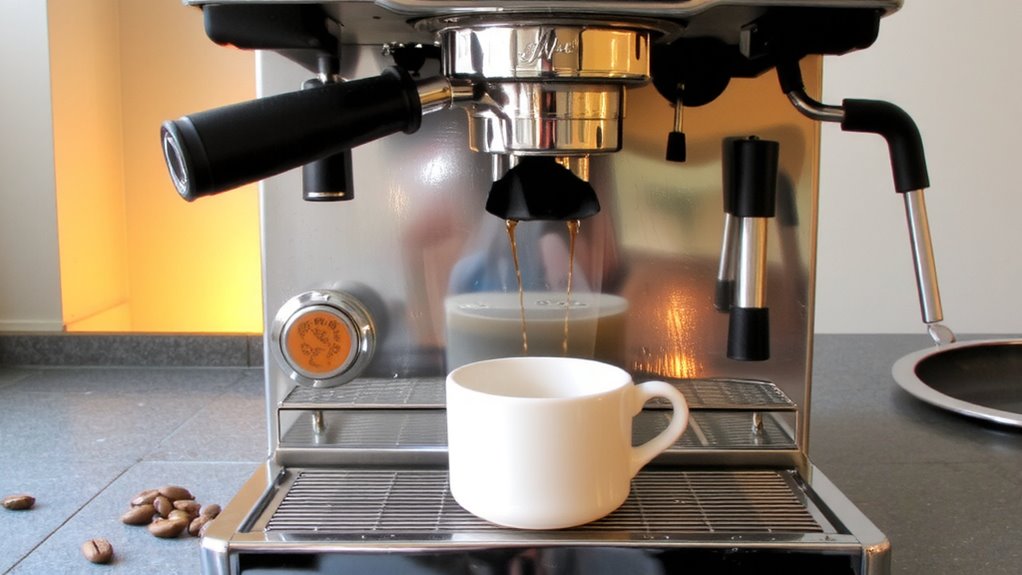
How is it possible that your espresso machine is pumping water instead of coffee? The issue often lies in the brewing mechanism. If it’s malfunctioning, the water flow won’t properly engage with coffee grounds, resulting in just hot water passing through. This can happen if the group head is clogged, the pump pressure is too low, or internal seals are worn. Machines like the Breville BES870XL or Gaggia Classic rely on precise water flow to extract espresso, and any disruption affects performance. You may hear the pump running, but without proper pressure-typically 9 bars-the brewing mechanism fails. Check for blockages in the portafilter or group head, and descale regularly to maintain consistent water flow. It’s also wise to inspect O-rings and gaskets over time. Don’t assume the machine is broken-many times, simple maintenance resolves it.
Did You Forget to Add Coffee to the Portafilter?
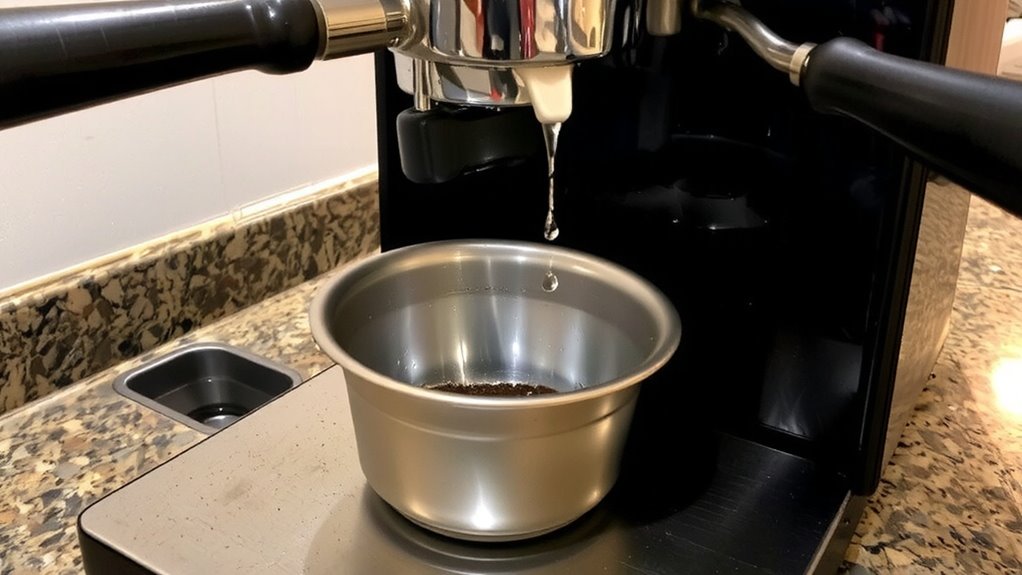
A missing ingredient-coffee-is often the simplest explanation when your espresso machine dispenses plain water. It might seem obvious, but it’s easy to pull a shot and realize you’ve forgotten grounds. Without coffee in the portafilter, water flows straight through the empty basket, producing hot water instead of espresso. This commonly happens during rushed morning routines or when resetting the machine after cleaning. To avoid this, always double-check the portafilter before locking it in. Upgrading to a high-quality portafilter can improve shot consistency, but even the best espresso portafilters won’t brew coffee without grounds.
| Step | Action | Mistake to Avoid |
|---|---|---|
| 1 | Fill portafilter | Leaving it empty |
| 2 | Tamp grounds | Skipping tamping |
| 3 | Lock into machine | Using forgotten grounds |
Even high-end machines can’t compensate for an empty basket. Build a habit of checking the portafilter every time-it takes two seconds and saves wasted water and beans.
Is a Clogged Portafilter Causing the Problem?
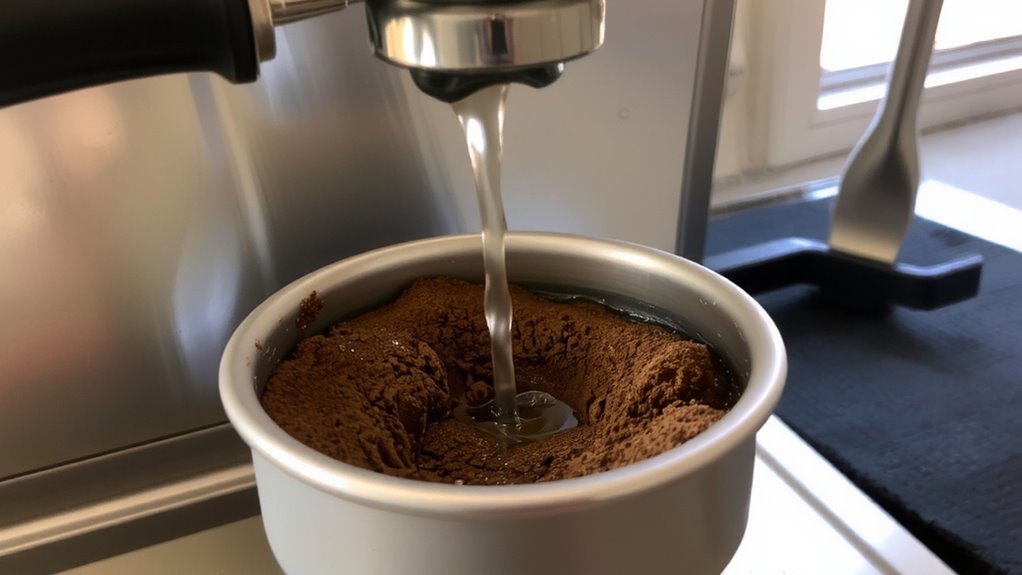
You’ve checked and confirmed coffee is in the portafilter, so the next thing to inspect is whether the portafilter itself is clogged. A portafilter jam can happen when coffee grounds compact too tightly or old residue builds up in the basket. This blockage stops water from flowing through properly, leading to plain water dripping out instead of espresso. A common cause is a grind mismatch-using a grind size too fine for your machine’s output. For example, a super fine grind meant for a high-end line might clog a budget pump machine. Try cleaning the portafilter with a brush and warm, soapy water, then inspect the basket holes. If they’re blocked, backflush if your machine allows it. Using the right grind for your equipment prevents clogs and guarantees consistent extraction. Upgrading to a high-quality best coffee portafilters can also improve flow stability and reduce clogging risks.
Is Your Machine Not Generating Enough Pressure?
Even if the portafilter is clean and properly loaded, weak pressure can still leave you with watery output instead of rich espresso. Your machine needs around 9 bars of pressure to extract properly. If it’s not reaching that, check the pressure gauge first-sometimes a pressure gauge malfunction gives false readings, making you think everything’s fine when it’s not. If the gauge seems accurate but pressure is still low, the issue might be pump failure. Over time, pumps wear out, especially in lower-end models like some Gaggia or De’Longhi units. A failing pump won’t build enough force, resulting in under-extracted, watery coffee. Listen for unusual noises; a weak or sputtering sound during extraction is a red flag. You can’t fix a dead pump yourself-replacement is the only real option. If you’re unsure, test with a known-good machine or consult a technician.
Is Your Water Tank Blocked or Empty?
Why isn’t your espresso machine pulling shots when you hit the brew button? It might not be a pressure issue-check your water tank first. An empty tank or blocked intake stops water flow, leaving you with air instead of espresso. Always verify the water level before starting. If it’s low, refill it with fresh, filtered water.
Also, inspect the tank seal. A worn or misaligned seal can cause leaks or disrupt water intake. Make sure the tank clicks securely into place-most machines won’t operate if the tank isn’t properly seated.
| Component | Status Needed | Common Issue |
|---|---|---|
| Water Level | Full or Adequate | Runs out mid-brew |
| Tank Seal | Intact & Seated | Cracked or misaligned |
| Tank Placement | Fully Inserted | Loose or tilted |
Even with power, no water means no shot.
When Should You Call a Repair Pro: or Just Buy a New One?
A machine that won’t pull a shot despite a full water tank and secure connections could point to deeper mechanical issues. If you’ve ruled out clogs and incorrect settings, problems like electrical failure or internal leaks may be to blame. Electrical failure often means the pump or heating element isn’t getting power-common in older machines. Internal leaks are harder to spot but may show as water pooling inside or under the unit. Both issues usually require disassembly and expertise. For machines under warranty, calling a repair pro makes sense. For older or budget models-like a five-year-old Mr. Coffee or basic De’Longhi-repair costs can exceed replacement value. New entry-level machines start around $100 and often outperform failing older ones. Weigh repair estimates against new model prices. If repairs are over half the cost of a new machine, just buy a new one.
On a final note
You’re likely getting water instead of espresso because the portafilter’s empty, clogged, or not locked in. Check if coffee’s loaded and finely ground. Make sure the filter basket’s clean and the portafilter’s secure. Low pressure or a blocked water tank can also stop extraction. Most home machines need regular backflushing and descaling. If basic fixes fail, consider repair costs vs. buying a new Breville or De’Longhi model, depending on your budget and use.