How Brazilian Plantations Revolutionized Global Coffee Supply Chains in the 1800s
You’re looking at how Brazil reshaped coffee supply in the 1800s by combining fertile volcanic soil, steady tropical weather, and vast plantations. Enslaved labor cut costs and boosted output, letting Brazil dominate global exports. Their high-volume, low-cost model undercut competitors and set prices worldwide. This scale created today’s commodity coffee system-cheap, widespread, but often unfair to growers. Alternatives like Stumptown or Onyx show there’s another way.
Notable Insights
- Brazilian plantations leveraged fertile volcanic soil and ideal climate to achieve unmatched coffee yields.
- Enslaved African labor enabled rapid expansion and low-cost production on vast coffee estates.
- Brazil’s export surge restructured global trade, dominating supply and lowering coffee prices.
- Massive scale allowed Brazil to control global pricing and shift supply chains to volume-based models.
- Colonial-era systems prioritizing efficiency over equity still influence commodity coffee markets today.
How Brazil’s Geography Fueled Coffee Dominance
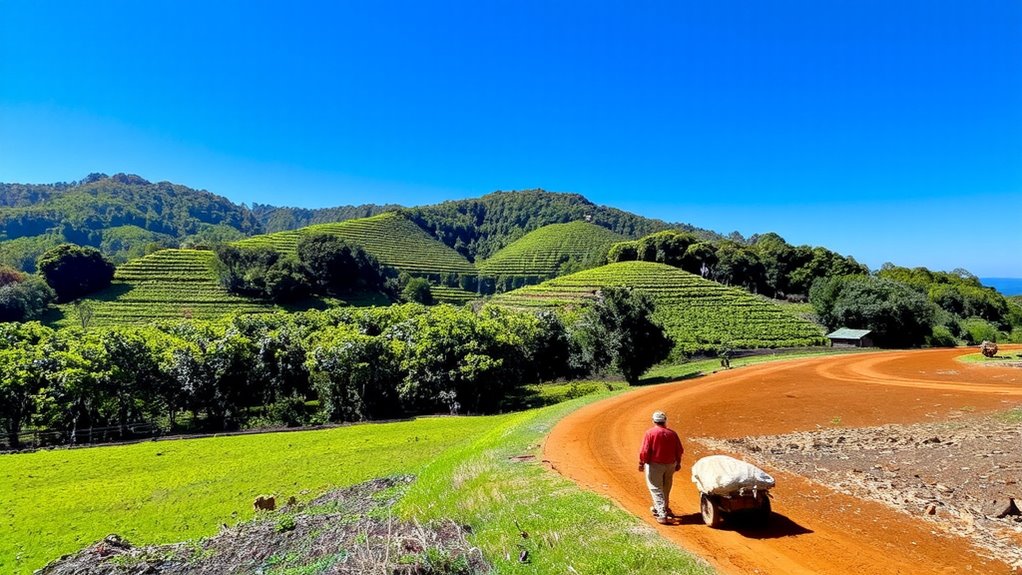
Brazil’s dominance in 19th-century coffee began with its geography-you won’t get rich growing coffee just anywhere, and Brazil’s terrain gave it a natural edge. The country’s southeastern regions offered ideal conditions: a tropical climate with wet and dry seasons closely aligned with coffee’s growth cycle. You need steady temperatures and consistent rainfall, both of which this region reliably provided. More importantly, large tracts of land had volcanic soil-rich in nutrients and excellent for drainage, just what coffee plants need to thrive. Unlike rocky or compacted soils, these fertile lowlands allowed deep root development and reduced the need for early soil amendments. Other regions may have one factor, but Brazil had the combo: volcanic soil, tropical climate, and vast, arable land. That meant higher yields per acre and more predictable harvests. If you’re evaluating where coffee grows best, Brazil’s geography made it a low-risk, high-output choice-even with basic farming tools. No wonder it became the go-to source.
How Slavery Built Brazil’s Coffee Empire
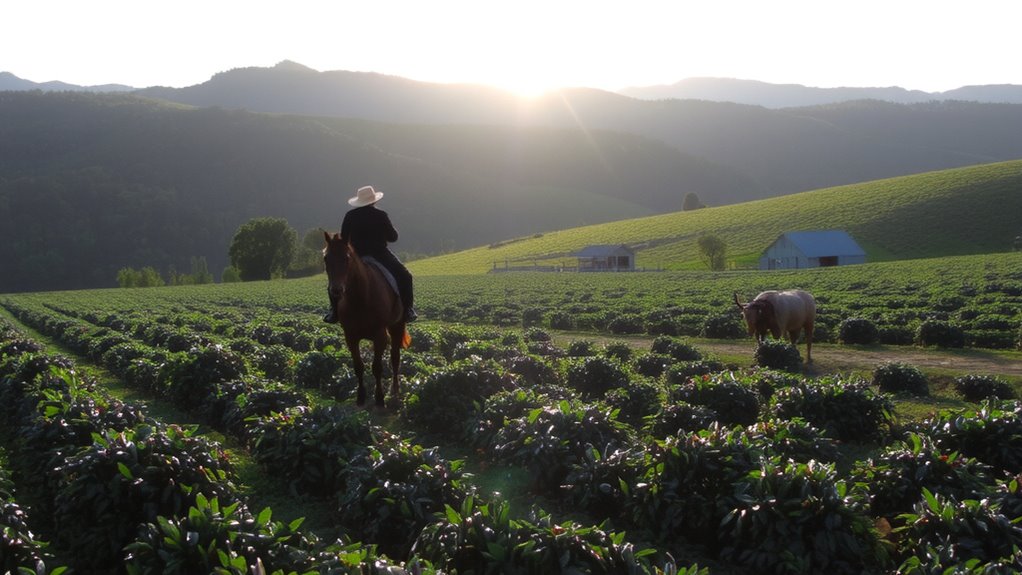
You had the land and the climate, but growing coffee at the scale Brazil did in the 1800s took more than good soil and steady rain-it took forced labor on a massive scale. Enslaved Africans were the backbone of the plantation economy, clearing dense forests, planting seedlings, and harvesting beans under grueling conditions. By 1850, over 1.5 million enslaved people worked Brazil’s coffee zones, primarily in the southeast. Their labor wasn’t incidental-it was central to output levels that met rising global demand. The plantation economy relied on this forced labor to keep costs low and production high, fueling rapid expansion. Unlike smallholder farms, large estates maximized control and efficiency, but only because coercion replaced wages. Without this system, Brazil couldn’t have scaled so quickly or dominated supply chains. The infrastructure, land use, and export capacity all grew around this grim foundation. Forced labor wasn’t a side effect of success-it built the empire.
Brazil’s Coffee Exports and Global Demand
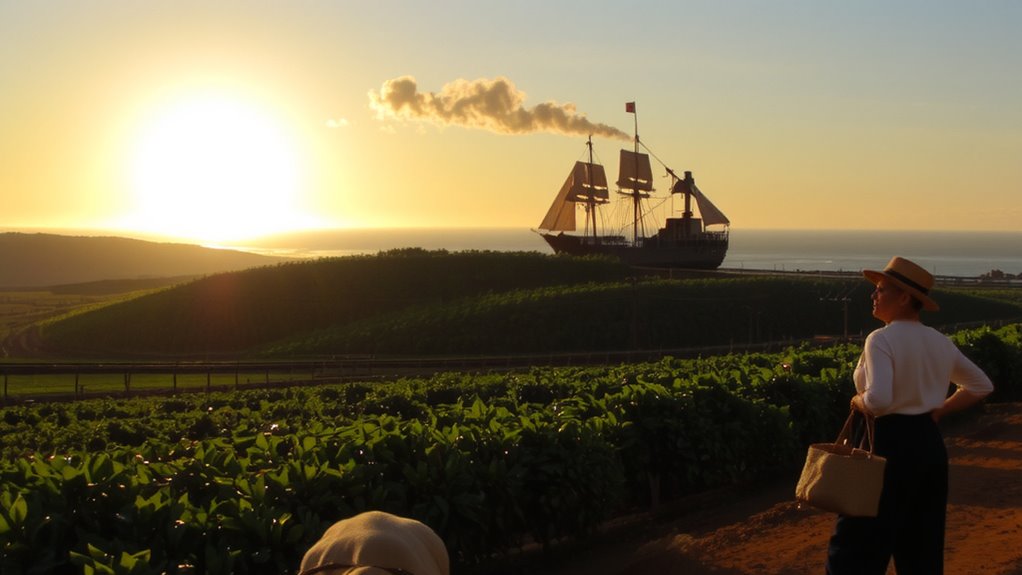
While global demand for coffee was rising in the 1800s, Brazil’s ability to supply it at scale reshaped trade routes and consumption habits worldwide. You relied on steady shipments from Brazilian ports to keep cafes and homes stocked. As exports surged, other nations adjusted coffee tariffs to protect local markets or secure favorable pricing. Brazil, in turn, used trade diplomacy to negotiate access and maintain competitive edges. These efforts guaranteed consistent flow to Europe and North America, where demand only grew. You’d notice the impact in pricing-Brazil’s volume helped lower costs, making daily coffee more accessible. But shifts in policy or diplomatic tensions could disrupt supply, so buyers diversified sources when possible. Still, Brazilian beans became the baseline for global trade, setting quality and volume standards others followed. Trade wasn’t just about goods-it was about leverage, access, and strategy. You learned to watch political moves as closely as crop yields.
Brazil’s Takeover of World Coffee Markets
Though coffee had long been cultivated in smaller regions like the Caribbean and Indonesia, it was Brazil’s aggressive expansion in the 19th century that truly shifted control of global supply into South American hands. You saw production explode as plantations leveraged vast land and labor to dominate output. This scale gave Brazil coffee independence-no longer relying on others, it set prices and rhythms for the global market. As you watch supply dynamics, that shift weakened competitors, especially in places like Java and the French West Indies. With lower production costs, Brazil undercut others, intensifying market competition but also squeezing out smaller growers. You’re left with a system favoring volume and efficiency over specialty traits. The result? A commodity-driven model still shaping how beans are priced and traded today. You need to understand this base layer to grasp modern sourcing. Brazil didn’t just join the market-it reshaped it.
Brazil’s Legacy in Global Supply Chains
Because Brazil scaled coffee production on an unprecedented level in the 1800s, you’re now dealing with supply chains built for volume, not nuance. This shift entrenched colonial trade patterns that prioritized low costs and high output, shaping how coffee moves from farm to cup even today. You’ll notice this in bulk purchasing models and commodity-grade beans dominating supermarket shelves-often cheap, but inconsistent in quality. These systems also widened economic inequality, leaving small growers underpaid while large distributors profit. If you’re buying standard pre-ground coffee, you’re likely supporting that legacy. For better fairness and flavor, look for direct-trade brands like Stumptown or Onyx, which pay farmers more and offer traceability. You don’t need fancy gear to brew well, but choosing ethically sourced beans makes a tangible difference. Your brewing method won’t fix unjust systems-your purchasing choice can.
On a final note
You see how Brazil’s vast land and forced labor system scaled coffee production in the 1800s, reshaping global supply. That output still influences today’s market stability and pricing. For brewing, this means consistent access to affordable beans-like washed Santos or dried-in-the-hull Naturals. If you use a French press, these dense beans deliver body; for pour-over, medium grinds highlight balanced notes. Choose gear that handles uniform roasts, like Behmor or Fellow, to make the most of supply-chain reliability.