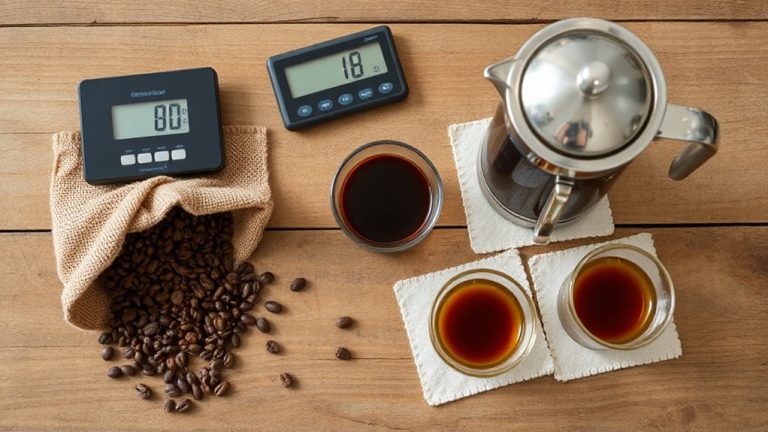
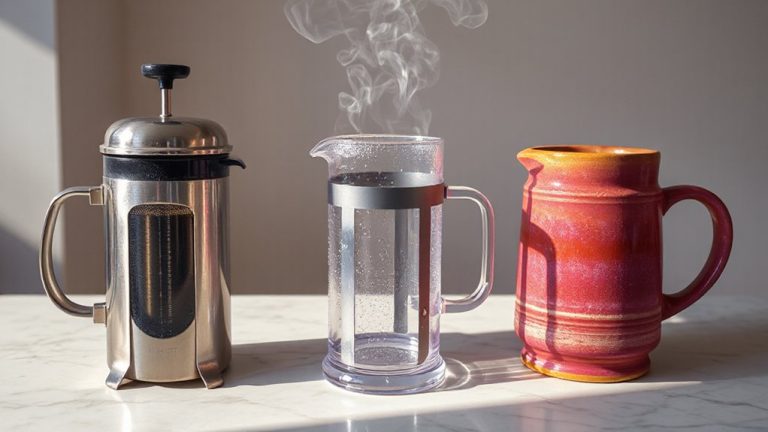
Enhancing Cold Brew Flavor Development Through Controlled Steeping Times and Temperature Adjustments
You control cold brew flavor by adjusting steep time and temperature. Steep 12–16 hours at room temperature for faster, bolder results, or 16–20 hours in the fridge for smoother, cleaner taste. Longer steeping increases strength but risks bitterness, especially with light roasts. Use a coarse grind and paper filter to reduce grit and over-extraction. Keep your brew consistent by tracking time and fridge temp. The right balance sharpens flavor-small tweaks make a noticeable difference.
Notable Insights
- Steep cold brew for 12–16 hours at room temperature or 16–20 hours in the refrigerator for balanced flavor and smoothness.
- Use a coarse grind to prevent over-extraction and ensure cleaner, grit-free coffee.
- Refrigerated steeping yields a cleaner, more rounded flavor; room temperature speeds extraction but may increase acidity.
- Avoid steeping beyond 24 hours to prevent excessive bitterness, especially with lighter roasts.
- Maintain a stable refrigeration temperature (35°F–40°F) and use paper filters for optimal clarity and flavor consistency.
Control Flavor With Cold Brew Steep Time
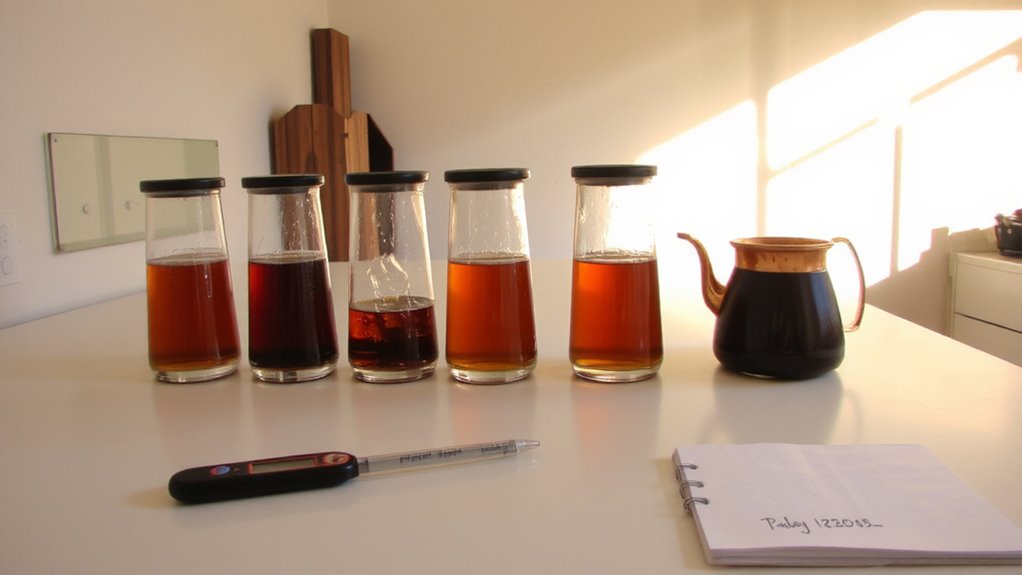
While you might be tempted to let your cold brew steep overnight for maximum strength, the truth is that steep time has a direct impact on flavor-too short and it’s weak, too long and it turns bitter. For ideal flavor balance, aim for 12 to 16 hours in the refrigerator using a coarse grind. This range extracts enough compounds to develop richness without pulling out harsh notes. You’ll also get better aroma intensity, especially with freshly ground beans from a burr grinder like the Baratza Encore. Going beyond 18 hours often increases bitterness, particularly with lighter roasts. If you prefer smoother, nuanced notes, stick to the shorter end of the range. Using airtight jars, such as mason jars or OXO’s Cold Brew Maker, helps maintain consistency. Adjust steep time in two-hour increments to fine-tune results based on your taste and bean type. A well-chosen cold brew coffee steeper can significantly improve extraction consistency and ease of use.
Speed up Extraction With Room Temperature Steeping
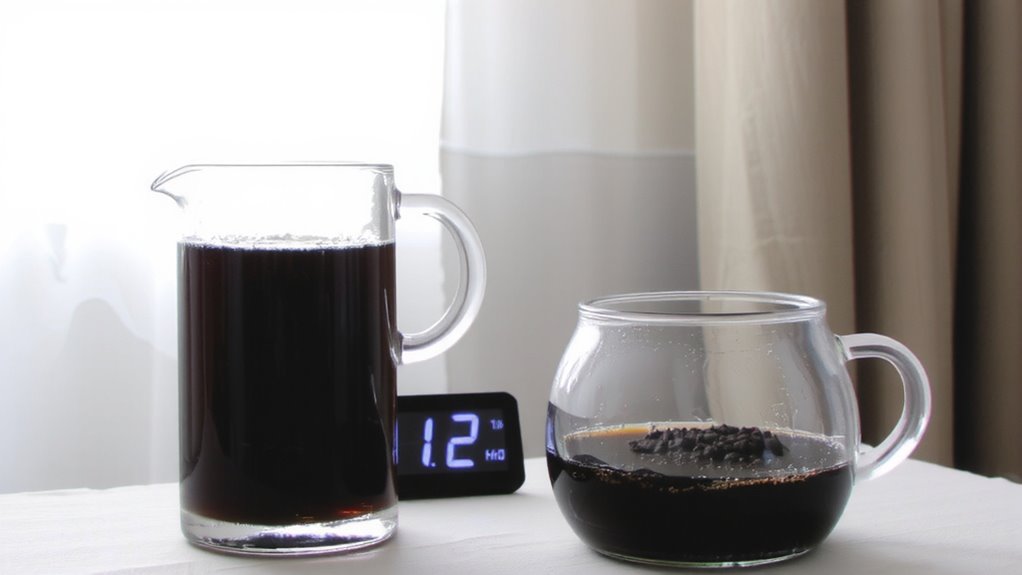
If you’re looking to brew cold brew faster without sacrificing too much quality, steeping at room temperature instead of in the fridge can cut extraction time nearly in half. That’s because temperature is a key factor in extraction speed factors-warmer water moves compounds out of coffee grounds more quickly. Room temperature benefits include faster results, often ready in 8–12 hours instead of 16–24. Just keep in mind that higher ambient heat can lead to more acidity or off-flavors if left too long. Use filtered water and a coarse grind to help balance flavor. A sealed mason jar or French press works fine. Stir once at the start, then let it sit in a cool, dark spot away from direct sunlight to avoid overheating. While not ideal for ultra-smooth profiles, room temperature steeping is practical when you’re short on time but still want rich, concentrated results without extra gear. For better control and consistency, consider using one of the best cold brew coffee drippers designed specifically for optimized steeping conditions.
Try 8, 16, or 24 Hours: What Changes in Your Cup?
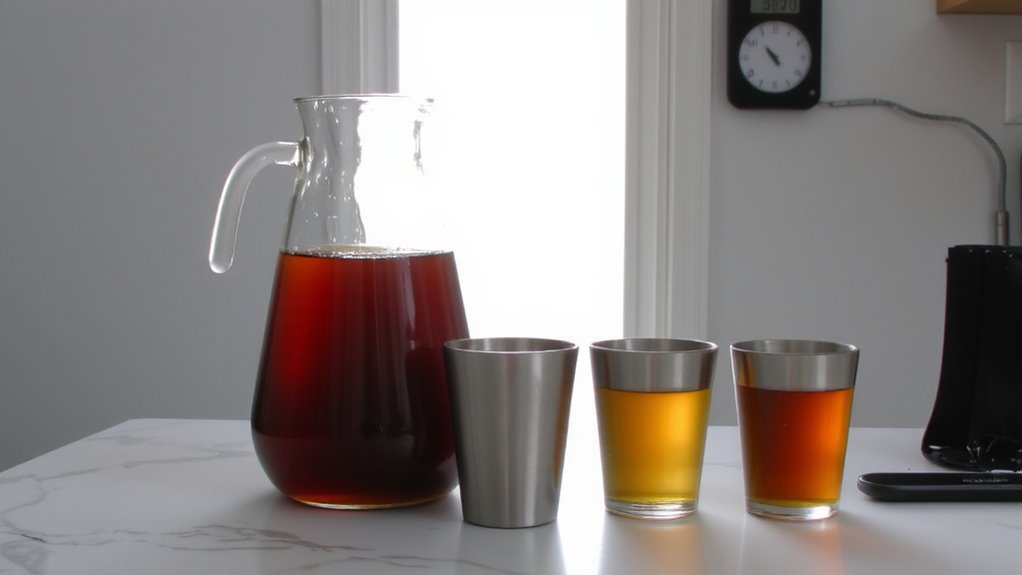
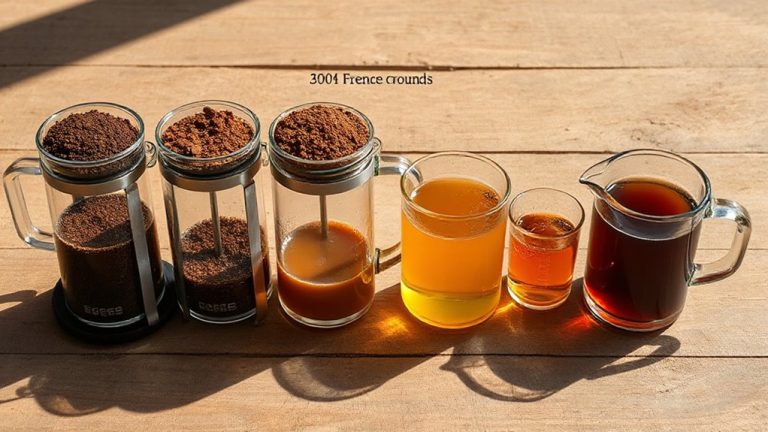
Brewing for 8, 16, or 24 hours makes a noticeable difference in strength, smoothness, and bitterness. At 8 hours, your cold brew is lighter with mild flavor evolution and lower aroma intensity-ideal if you prefer a subtle, less concentrated cup. Extending to 16 hours strikes a balance, extracting more complexity and body while keeping bitterness in check for most palates. By 24 hours, you’ll get full extraction with bold strength and deep flavor evolution, but risk over-extraction, especially with fine grounds. Aroma intensity peaks around this mark, though it can turn harsh if beans aren’t fresh or ratios aren’t precise. Use a coarse grind and 1:8 coffee-to-water ratio as a baseline. Stick to 16 hours for consistency, or experiment between 8 and 24 to match your taste. Each increment changes your cup-test them side by side. For best results, start with the Perfect Cold Brew Ratio to ensure balanced extraction throughout all steeping durations.
Refrigerator vs. Countertop: Which Cold Brew Method Wins?
You’ve already explored how steep time affects your cold brew’s strength and smoothness, but where you let it steep matters just as much. Steeping on the countertop at room temperature speeds up extraction, boosting flavor intensity faster-ideal if you’re short on time. However, warmer conditions may raise sediment levels, leading to a grittier cup. The refrigerator slows extraction, producing a cleaner, more rounded flavor with noticeably lower sediment levels. It takes longer, usually 16–24 hours, but you gain better control. For minimal cloudiness and consistent results, refrigeration wins. If you prefer bold flavor intensity quickly and don’t mind filtering thoroughly, countertop steeping works. Use an airtight container either way, and always refrigerate your brew post-steep. Your method shapes clarity and strength-choose based on your taste and time.
Reduce Bitterness by Adjusting Steep Duration
Though longer steep times can deepen flavor, leaving your cold brew to extract for too long often pulls out excessive bitter compounds, especially with room-temperature methods. Your steep duration directly impacts flavor balance-aim for 12 to 16 hours at room temperature or 16 to 20 hours in the fridge. Beyond that, you risk over-extraction, which adds harsh notes without increasing richness. If you’re using coarser grounds or lower temps, you can stretch the time slightly, but exceeding 24 hours usually backfires. Shorter steeps yield brighter, smoother coffee, while longer ones can muddy the profile. Adjusting your steep duration is one of the easiest ways to fine-tune taste without changing gear. For best results, stick to tested ranges and tweak in two-hour increments. It’s a simple fix that keeps bitterness in check and helps maintain a clean, balanced cup every time.
Optimize Taste With Grind Size and Filtration
Getting the steep time right helps control bitterness, but grind size and filtration play just as big a role in shaping your cold brew’s final taste. For smooth, balanced results, aim for coarse grind consistency-fine particles increase grit and over-extraction, even with ideal steeping. A burr grinder delivers more uniform results than a blade grinder, improving overall extraction. Paired with proper grind size, effective filtration removes unwanted sediment and oils. Filtration efficiency impacts clarity and mouthfeel: paper filters trap the most fines, while metal or cloth are reusable but allow more sediment.
| Method | Grind Size | Filtration Efficiency |
|---|---|---|
| French Press | Coarse | Low |
| Paper Drip | Medium-Coarse | High |
| Cold Brew Bag | Coarse | Medium |
Choose gear that matches your flavor goals.
Track Time and Temperature for Better Cold Brew Every Time
When brewing cold brew, keeping time and temperature in check is just as critical as choosing the right beans or grind size. Steeping too long or using warm water can over-extract, leading to bitter flavor notes, while under-steeping produces weak, sour results. Aim for 12–24 hours in a sealed brewing vessel, depending on your bean roast and desired strength. Maintain a stable temperature between 35°F and 40°F (2°C–4°C)-refrigeration works best. Room temperature extraction speeds up the process but increases the risk of off-flavors. Use a timer and thermometer to track each batch, adjusting time based on grind and bean origin. Consistent tracking helps replicate success and refine your method. Even small shifts in time or temperature can sharpen flavor notes. With the right control, your brewing vessel becomes a precision tool for repeatable, smooth cold brew.
On a final note
You can control cold brew flavor by adjusting steep time and temperature. Shorter, room-temperature steeps (8–16 hours) extract faster but may raise bitterness; colder, longer soaks (16–24 hours in the fridge) yield smoother results. Try a medium grind with a French press or immersion brewer, then filter through a paper cone to reduce sediment. Track your variables-small tweaks improve consistency. Ultimately, your taste and schedule decide the best method.