The Impact of Water Quality on Cold Brew Flavor Intensity: A Comprehensive Guide
Your cold brew’s flavor hinges on water quality-tap water with chlorine or off-minerals leads to bitter or flat results. Filtered water removes impurities, while ideal mineral levels (50–100 ppm) boost sweetness and body. Aim for a pH between 6.5 and 7.5 to avoid sour or dull notes. Hard water over-extracts; soft or distilled under-extracts. Try Third Wave Water or a reverse osmosis system with re-mineralization for consistent, clean flavor. The right water setup makes all the difference-better results start here.
Notable Insights
- Water quality significantly affects cold brew flavor due to its high water content and long extraction time.
- Chlorine and impurities in tap water can overpower delicate coffee notes and create off-flavors.
- Balanced minerals like calcium and magnesium enhance extraction, sweetness, and body in cold brew.
- Water pH between 6.5 and 7.5 optimizes flavor balance, avoiding sour or dull taste profiles.
- Filtered water with adjusted mineral content delivers consistent, clean, and intense cold brew flavor.
Why Water Quality Impacts Cold Brew Taste
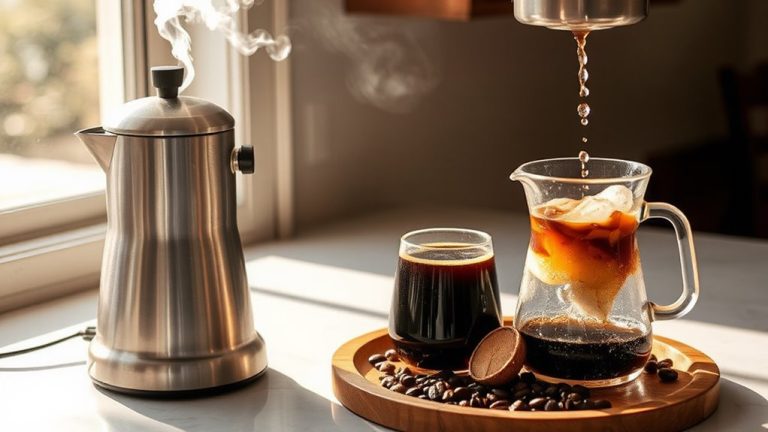
Even though cold brew spends hours steeping in water, you might overlook just how much the water itself shapes the final taste-after all, it makes up over 90% of your drink. Since cold brew relies on long extraction, both water temperature and brewing time directly affect flavor clarity and strength. Cold water slows extraction, so impurities or off-flavors in your water become more pronounced over extended steeping. Using filtered water helps avoid chlorine or metallic notes that tap water sometimes carries. While room-temperature water works, most brewers recommend starting with cold, filtered water to maintain consistency. Brewing time usually ranges from 12 to 24 hours; beyond that, even clean water can pull unwanted bitterness. If your cold brew tastes flat or sharp, check your water first-it’s not just a solvent, it’s a key ingredient. Always treat it like you would the coffee itself. For optimal results, consider using best coffee brewing water to enhance clarity and balance in your cold brew.
What Minerals Do to Your Cold Brew
You already know clean water matters, but it’s not just about removing bad stuff-what’s actually in your water plays a direct role in how your cold brew turns out. Water hardness and mineral balance influence extraction, affecting both strength and flavor clarity. Too many minerals, like calcium and magnesium, can make your brew bitter or over-extracted, especially with longer steep times. Too few, and your coffee tastes flat or weak. A balanced profile enhances body and sweetness without harshness. For best results, aim for moderate water hardness and a stable mineral balance-brands like Third Wave Water offer tailored mineral packets for this. Choosing the right mineral composition can make a significant difference in achieving optimal flavor extraction.
Find the Best pH for Balanced Flavor
Why does your cold brew sometimes taste sharp or dull, even when using the same beans and brew time? The answer often lies in your water’s pH. For balanced flavor, aim for a slightly acidic to neutral pH between 6.5 and 7.5. Water outside this range can over-extract or under-extract your coffee, leading to sour or flat results. Unlike hot brewing, cold brew uses room-temperature water, so pH plays a bigger role over long brewing times-usually 12 to 24 hours. If your water’s too alkaline, your brew may taste dull; if too acidic, it can taste sharp. You can test pH easily with strips or a digital meter. Bottled spring water often falls in the ideal range, while tap water varies. Adjusting pH with drops is possible, but risky-small changes have big effects. Keep water temperature and brewing time constant, then tweak pH to refine taste.
Hard vs. Soft Water: Which Ruins Cold Brew?
What difference does your water’s mineral content really make in cold brew? A lot, actually. High water hardness means excess calcium and magnesium, which can over-extract bitter compounds, making your cold brew harsh or astringent. On the other hand, soft water lacks minerals, leading to flat, underdeveloped flavor due to poor extraction. You need a balanced mineral balance-around 50–100 ppm total hardness-to extract sweetness and complexity without bitterness. Brands like Third Wave Water offer mineral packets tailored for cold brew, while common options like Brita-filtered tap water often reduce chlorine but don’t fully correct mineral imbalance. Distilled water alone isn’t ideal either; it pulls too little. For consistent results, use filtered water with added minerals to hit the sweet spot. Your brew’s clarity and taste depend on it. Using a coffee maker for hard water can help maintain optimal mineral balance during brewing.
Test Your Tap Water for Brewing Quality
How good is your tap water really when it comes to brewing cold brew? Your water source directly impacts flavor and can affect how well your brewing equipment performs over time. Before you brew, test your tap water to check mineral content and pH. High chlorine or metal levels dull coffee’s brightness and may leave residue on equipment. Consider using a simple at-home test kit or send a sample to a local lab for accurate readings.
| Factor | Why It Matters |
|---|---|
| Hardness | Affects extraction; too high causes bitterness |
| Chlorine | Masks subtle flavors in coffee |
| pH Level | Balanced pH (6.5–7.5) improves taste |
| Sediment | Clogs brewing equipment over time |
Knowing your water’s profile helps you get consistent cold brew and protect your gear.
Choose the Right Filter for Great Cold Brew
After testing your tap water and knowing its mineral balance, chlorine levels, and pH, the next practical step is making sure that water is properly filtered before brewing. Not all filter types work the same, so match your choice to your water profile and brewing equipment. Basic carbon filters, like Brita or Pur, reduce chlorine and some metals but don’t fully adjust mineral content-fine if your tap water is already decent. For harder water or more control, consider reverse osmosis (RO) systems, which strip nearly all minerals; you’ll need to re-mineralize afterward. Countertop filters or under-sink RO units can integrate well with your setup, depending on space and budget. Always clean your filter regularly to avoid contaminating your water. Using the right filter consistently guarantees cleaner taste and protects your brewing equipment from scale buildup, especially in cold brew makers or immersion brewers.
Make Perfect Cold Brew Water at Home
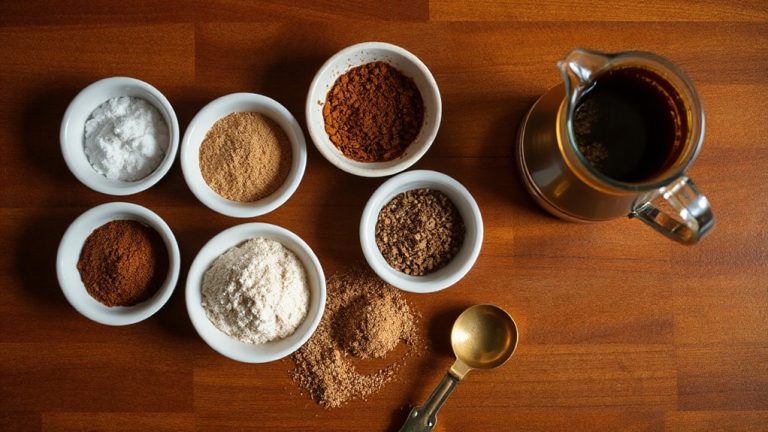
If your tap water passes the basic quality checks but still needs refining for cold brew, you can easily make ideal brewing water at home with a mix of filtration and mineral adjustment. Use a carbon filter to remove chlorine, then add minerals back in controlled amounts to improve extraction. Proper water composition enhances flavor clarity and balances acidity. Water temperature and brewing time interact closely with mineral content-softer water may require slightly longer brewing time, while harder water can over-extract if left too long. Keep water temperature stable (preferably between 15–20°C) to guarantee consistent results. Below is a simple guide:
| Mineral Component | Target Level (ppm) |
|---|---|
| Calcium | 50–75 |
| Magnesium | 10–30 |
| Total Alkalinity | 50–100 |
| Total Dissolved Solids | 120–180 |
On a final note
You’ve seen how water shapes cold brew’s flavor. Minerals like calcium and magnesium boost extraction, but too much leads to bitterness. Aim for balanced, slightly soft water with a pH near 7. Hard tap water can ruin clarity, while overly soft or distilled water makes weak coffee. Test your supply and use a solid filter-like a Brita or TDS meter-to improve results. For full control, mix distilled with a pinch of baking soda and Epsom salt. Your gear matters, but water quality decides the taste.