The Haitian Legacy of Coffee Farming After Revolutionary Independence
You turned coffee into freedom, replacing plantations with small farms where autonomy and sustainability shaped every harvest. Using simple tools like machetes and mortar and pestle, you processed beans without fuel or mills, relying on tradition and resilience. Coffee became Haiti’s economic backbone, funding independence with over 60% of state revenue by 1825. Debt and isolation later weakened production, but now, farmers blend heirloom Arabica, shade-grown practices, and traceable lots to reclaim global standing-your story evolves with every bean.
Notable Insights
- After independence, Haitian coffee farming shifted from forced plantation labor to autonomous smallholder cultivation.
- Coffee became a symbol of resistance, enabling former slaves to reclaim land and economic self-determination.
- By the 1820s, coffee provided over 60% of Haiti’s export revenue, sustaining the new nation’s economy.
- French reparations and global isolation crippled investment, infrastructure, and market access for coffee farmers.
- Today’s revival emphasizes sustainable, shade-grown Arabica, blending tradition with quality for specialty markets.
How the Haitian Revolution Transformed Coffee Farming
Before the Haitian Revolution, coffee farming was built on forced labor, with vast plantations run for profit by French colonists. After independence, you saw a radical shift: formerly enslaved people rejected large plantations in favor of small plots they controlled. Land ownership moved from colonial elites to free farmers, reshaping the entire system. This change gave rise to farming autonomy, where growers chose what to plant, how to harvest, and when to sell. Without centralized control, output declined at first, but methods became more sustainable. Unlike plantation models focused on export speed, smallholders prioritized resilience. You’d see families using hand tools, not machinery, adapting techniques to local conditions. This wasn’t inefficient-it was intentional. Decentralized land ownership meant less vulnerability to market shocks. Coffee remained crucial, but now served local needs first. The revolution didn’t just change rulers-it redefined who benefited from the land and how coffee was grown.
How Formerly Enslaved Farmers Built Coffee as Resistance
While coffee had once been grown under brutal forced labor, you’d now see formerly enslaved farmers using the crop as a tool of resistance, turning cultivation into an act of self-determination. This shift wasn’t just economic-it was about cultural resilience and land sovereignty. By growing coffee on plots they owned or collectively managed, farmers rejected plantation systems and reclaimed autonomy. Unlike export-focused estates, smallholders used simple tools and traditional methods that required minimal capital but maximized independence.
| Tool | Use | Benefit |
|---|---|---|
| Machete | Harvesting beans | Durable, low-cost, versatile |
| Winnowing tray | Separating chaff | Lightweight, easy to repair |
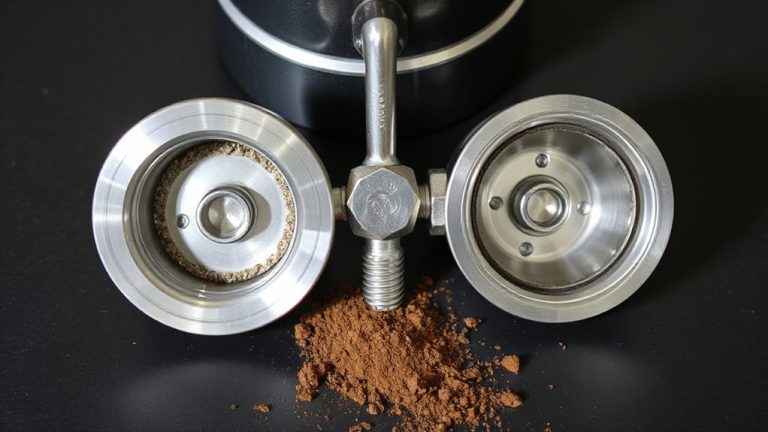
| Mortar & pestle | Initial bean processing | Requires no fuel, reliable |
These methods supported sustainable production while affirming identity and control over land.
How Coffee Secured Haiti’s Economic Survival After Independence
When Haiti won independence in 1804, you’d find coffee quickly stepping into the role of economic lifeline, not by accident but by necessity. With plantations abandoned and international trade cut off, smallholder farmers turned to coffee because it grew well on mountainous terrain and required minimal infrastructure. Coffee exports became the backbone of national revenue, flowing to Europe and North America by the early 1800s. You could rely on coffee bushes to produce for decades with little input, making them ideal for decentralized farming. This crop fostered economic resilience, letting Haiti survive despite isolation. Unlike sugar, coffee didn’t need large mills or heavy labor, so it suited the new land distribution model. Farmers used simple processing-washing, drying, hulling by hand-but still met export standards. By 1825, over 60% of state income came from coffee. You’d see its role not as a luxury crop but as a practical tool for sovereignty and survival.
How Debt and Isolation Undermined Haiti’s Coffee Economy
Although Haiti’s coffee economy looked strong in the early 19th century, it soon buckled under the weight of crushing debt and global isolation. You inherited a country forced to pay foreign debt to France, draining resources needed for growth. That payment, demanded for recognition, ate into funds that could’ve boosted farming tools, infrastructure, or market access. Trade isolation followed-other nations feared encouraging another slave revolt, so they blocked Haitian goods. Without steady export channels, coffee sat unsold, farms declined, and quality dipped. You couldn’t compete when markets finally opened. Unlike Colombian or Ethiopian producers, you lacked support systems-cooperatives, transport, or credit. Even with rich volcanic soil and ideal elevation, global exclusion and forced payments crippled production. The coffee was there, the skill present-but without access and capital, the system failed. Debt and isolation didn’t just slow progress; they dismantled it piece by piece.
How Today’s Haitian Coffee Revives a Legacy of Pride
Haiti’s coffee story isn’t just surviving the weight of its past-it’s reshaping it. You see it in the hands of farmers who now blend tradition with modern know-how. This is cultural revival in action: growers reclaiming heirloom Arabica varieties, once prized globally, while strengthening community cooperatives. Sustainable practices are key-shade-grown plots protect soil, reduce erosion, and preserve biodiversity. Many farms avoid synthetic inputs, opting for organic compost and natural pest control. These methods boost bean quality and long-term yields. For roasters and brewers, Haitian coffee offers a clean, bright cup with notes of citrus and nuts-ideal for pour-over or French press. Unlike mass-market blends, it’s produced in small batches, often traceable to specific highland regions like Haut-Artibonite. You’re not just buying beans-you’re supporting resilience. When you choose Haitian coffee, you anchor pride in every practical step, from harvest to cup.
On a final note
You can brew Haitian coffee like any medium roast, using a pour-over or drip machine for balanced flavor. Light roasts work well with a Chemex to highlight fruity notes, while darker roasts suit French presses. Use fresh, cold water and grind beans just before brewing. A burr grinder gives even results. Haitian beans often have chocolate and nutty tones-pair with simple gear to appreciate their depth without overcomplication.