How to Measure Total Dissolved Solids (TDS) for Consistent Coffee Brewing Results
Use a calibrated digital TDS meter like the HM-TDS-3 or Apera AI202 to check your water’s mineral content before brewing. Rinse the probe with distilled water first, then dip it in your water source. Wait for a stable reading-ideally between 75–250 ppm for coffee. Cheap meters can drift, so calibrate regularly with a standard solution. This guarantees consistent extraction and better flavor control every time you brew. There’s more to optimizing your water than just TDS alone.
Notable Insights
- Use a calibrated digital TDS meter, like the HM-TDS-3 or Apera AI202, for accurate water mineral measurement.
- Rinse the meter’s probe with distilled water before testing to avoid contamination and ensure precise readings.
- Calibrate your TDS meter regularly using a standard calibration solution to maintain long-term accuracy.
- Measure brewing water TDS to stay within the ideal 75–250 ppm range for balanced coffee extraction.
- Take 2–3 averaged readings and avoid smart kettle displays, as dedicated meters provide superior precision.
Is Your Water Ruining Your Coffee?
Ever wonder why your coffee doesn’t taste like the rich, balanced brew you get at a specialty café, even when using the same beans? Your water source might be the culprit. Tap water varies widely in mineral content, and that directly impacts extraction. Too little mineral balance, like in overly filtered or softened water, leads to flat, under-extracted coffee. Too many minerals, especially calcium and magnesium, can cause over-extraction and equipment scale. Ideal brewing water has a precise mineral balance-around 150 ppm total dissolved solids (TDS)-to support flavor without damaging gear. Brands like Third Wave Water offer mineral packets tailored for coffee, while re-mineralizing filters like the HomeWater BOTA restore balance to reverse osmosis water. Testing your water’s TDS with a simple meter helps guarantee consistency. You can’t control the beans alone-your water source is just as critical.
How TDS Changes Coffee Flavor
While you might not taste the minerals directly, they’re pulling the strings behind your coffee’s flavor, and TDS levels play a key role in how those compounds extract. If your water’s TDS is too low, under-extraction happens-your coffee tastes sour and weak. Too high, and over-extraction takes over, bringing out bitterness. The TDS impact on extraction directly affects flavor balance, making it essential to find a middle ground. Most experts recommend 75–250 ppm TDS in brewing water for balanced results. Bottled spring water often hits this range, while distilled (near 0 ppm) or hard tap water (over 300 ppm) can skew flavor. You don’t need lab gear to notice the difference-just brew side by side. Proper TDS doesn’t guarantee great coffee, but it sets the stage for consistent, balanced cups every time.
How to Measure TDS at Home
How do you know if your water’s TDS is in the sweet spot for brewing? You need reliable measurement tools. The most common option is a digital TDS meter, which is affordable and easy to use-just dip it into your water or brew and read the display. For decent TDS accuracy, go for a reputable model like the HM-TDS-3 or Apera Instruments AI202, which offer consistent readings within ±2%. While cheaper meters exist, they often lack calibration options and drift over time, hurting accuracy. Always rinse the probe with distilled water and calibrate regularly using a TDS standard solution. Avoid using conductivity measurements from smart kettles or water filters-they’re convenient but less precise. For repeatable results, measure at the same temperature, since TDS values can fluctuate with heat. With the right tools and care, you’ll have a solid baseline to improve your coffee’s consistency.
What Your TDS Reading Means
Why does your TDS reading matter when brewing coffee? It tells you how much coffee has dissolved into your brew, which directly affects strength and flavor. A higher TDS means a stronger, more concentrated cup, while lower readings suggest a weaker result. But your measurement is only useful if it’s reliable. TDS accuracy depends on a well-calibrated meter and consistent technique. Even small errors-like residue on the sensor or inconsistent temperature-can lead to measurement variability. That’s why you should rinse your meter between readings and test multiple times. Don’t rely on a single number. Instead, use the average of two or three tests. Cheap meters can drift, so consider a trusted model like the HM Digital TDS-3 if you want consistency. Your TDS reading isn’t absolute truth-it’s a tool, and how you use it matters.
Ideal TDS for Pour Over, Espresso & More
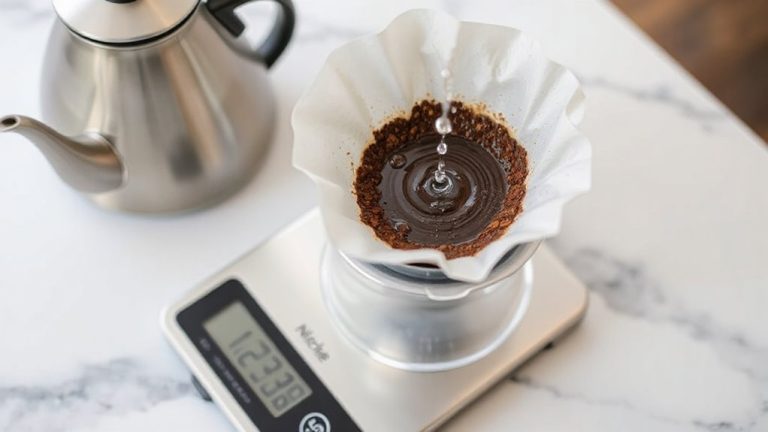
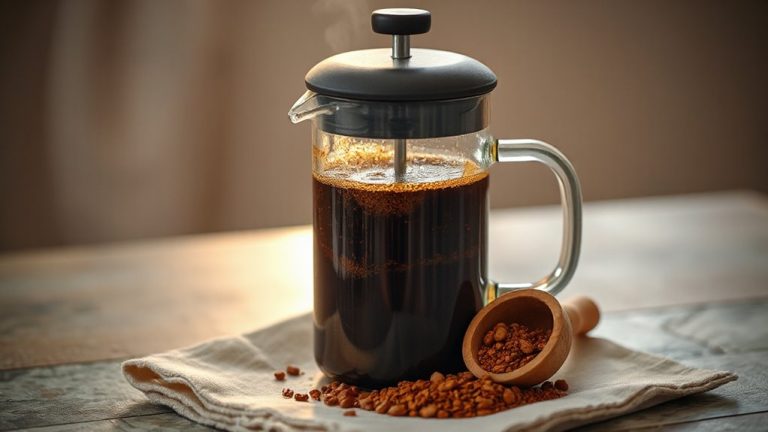
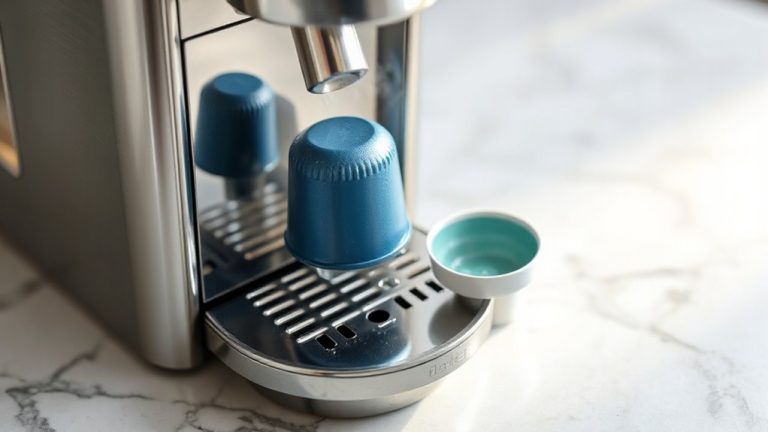
Though brewing methods vary, each has a typical TDS range that delivers balanced flavor. For pour over, aim for 1.3–1.5% TDS-this sweet spot guarantees pour over precision, highlighting clarity and acidity without tipping into bitterness. A gooseneck kettle and medium-fine grind help hit that consistently. Espresso extraction, on the other hand, runs stronger, usually between 8–12% TDS, because of high pressure and short contact time. You’ll need fresh, evenly ground beans and a calibrated machine to stay in range. Immersion methods like French press typically land around 1.2–1.5%, similar to pour over but with more body. Keep in mind, these ranges assume proper water quality and grind size. Measuring TDS with a reliable meter, like the Hanna or Myron L, lets you tweak variables with confidence. It’s not just about strength-it’s about balance.
Fix Water That’s Too Hard or Too Soft
Ever wonder why your espresso lacks sweetness or your pour over tastes flat? It’s likely your water. If your water’s too hard, high mineral content blocks coffee’s flavors. Too soft, and there’s not enough to extract the good stuff. Both mess with water hardness, which directly affects extraction. You need balanced water. The Specialty Coffee Association recommends 50–175 ppm TDS and a specific mineral balance-mostly calcium and magnesium-for best results. You’ve got options. Use third-party blends like Third Wave Water or Peak Design Water packets. Or install a reverse osmosis (RO) system and re-mineralize with additives like Alkaline Buffer. Distilled water alone won’t work-zero minerals kills extraction. Aim for consistency. Test your water with a TDS meter, adjust, and log what works. Balanced water means better coffee-every time.
On a final note
Your water’s TDS affects coffee taste more than you think. Too high, and your brew tastes harsh; too low, and it’s flat. Use a $20-30 TDS meter to check levels. Aim for 75–250 ppm, depending on method-pour over likes mid-range, espresso can handle slightly higher. If your tap water’s off, try Third Wave Water or a countertop filter. Consistent TDS means consistent flavor. Test, adjust, and repeat.