Malaysian Ipoh White Coffee: The Unique Charcoal-Roasting Technique
You get Ipoh white coffee’s smooth, light color and milder taste not from milk or pale beans, but from fast charcoal-roasting Robusta beans with palm oil. Hardwood charcoal heats a wok evenly, expanding beans in 8–10 minutes while palm oil prevents scorching and cuts bitterness. This method gives less burnt flavor than dark roasts, yet builds rich aroma. It’s a practical, high-heat technique honed in kopitiams for consistent, quick brewing-ideal if you value boldness without harshness. More nuances of this craft are worth exploring.
Notable Insights
- Ipoh White Coffee is uniquely roasted using palm oil instead of sugar, yielding a lighter color and smoother taste.
- The charcoal-roasting process uses hardwood lump charcoal and a wok-like pan for even, high-heat roasting.
- Constant stirring over charcoal prevents scorching and ensures uniform bean expansion during the 8–10 minute roast.
- Far-infrared heat from charcoal enhances bean development, contributing to a milder flavor with less bitterness.
- Palm oil aids heat conduction and protects beans during roasting, a traditional practice deeply rooted in Ipoh’s coffee culture.
What Makes Ipoh White Coffee Different?
While most coffees rely on dark roasting to develop flavor, Ipoh white coffee stands apart because it’s roasted with palm oil instead of sugar, giving it a lighter color and smoother taste. You’ll notice less bitterness and a milder profile, ideal if you prefer a gentler cup. The beans used are typically Robusta, chosen for their hardiness and strong flavor-key for withstanding palm oil roasting. This method ties directly to bean origin, as locally sourced Malaysian beans are standard, supporting regional farming. Beyond flavor, this brew carries cultural significance; it’s a point of pride in Ipoh, often served sweetened with condensed milk in kopitiams. The practice reflects Chinese-Malaysian traditions, passed down through generations. When brewing at home, use a traditional sock filter for authenticity, though a French press works in a pinch. It’s not just coffee-it’s heritage in a cup.
How Is Ipoh White Coffee Charcoal-Roasted?
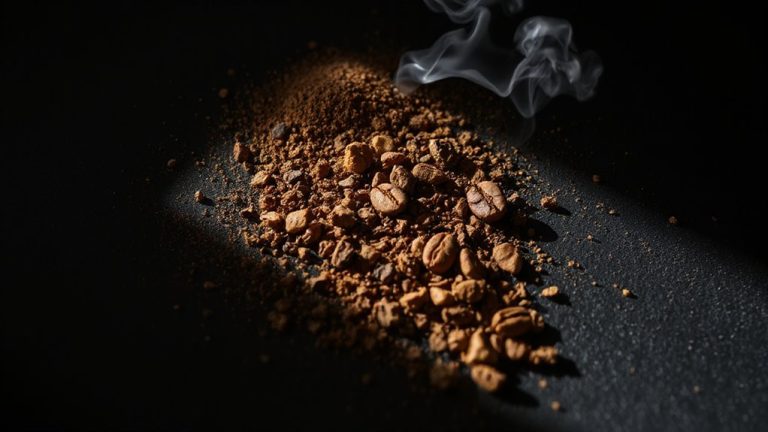
You already know Ipoh white coffee skips sugar in the roast for a smoother, lighter profile, but the real magic starts with heat-and that’s where charcoal roasting comes in. Local roasters use hardwood lump charcoal, which burns hotter and more evenly than gas or electric methods. The beans are spread over a wok-like pan heated by the charcoal fire, stirring constantly to avoid scorching. Charcoal chemistry plays a key role-natural combustion produces far-infrared heat, enhancing bean expansion without burning the surface. This method demands skill, as roasting duration is shorter than conventional techniques, typically 8–10 minutes. Too long, and the beans darken, losing the signature mildness. The result is a consistent, aromatic roast with balanced acidity. While harder to control than electric roasters, the charcoal method remains preferred for authenticity and thermal efficiency in small-batch production.
Why Does Ipoh White Coffee Use Palm Oil?
A small amount of palm oil is added during the roasting process of Ipoh white coffee, and it’s not for flavor-it’s for function. You’ll find it helps the beans roast evenly by conducting heat consistently across each batch. This practice stems from historical context; decades ago, local roasters in Malaysia used what was readily available, and palm oil was both affordable and effective. Over time, it became embedded in regional practices, especially in Ipoh, where consistency and tradition matter. The oil also prevents over-charring during the fast charcoal roast, protecting the beans’ subtle sweetness. While some modern roasters experiment with alternatives, palm oil remains standard for authenticity and performance. You don’t taste it in the final brew-it’s purely functional. If you’re replicating this method at home, use unrefined palm oil sparingly; too much can create smoke or residue. It’s a small step, but key for staying true to the technique.
How Does Roast Level Affect Ipoh White Coffee?
Roast level plays a defining role in shaping the character of Ipoh white coffee, building on the palm oil-assisted roasting method already discussed. You’ll find that a light roast preserves more of the bean’s original flavors, yielding a brighter, slightly tangy cup with subtle nutty notes. It’s less common in traditional Ipoh white coffee but offers clarity and acidity if you prefer milder profiles. In contrast, a dark roast-more typical-brings out deep caramelized sweetness and a smooth, almost syrupy body thanks to extended charcoal roasting. The dark roast also reduces bitterness, thanks to palm oil moderating heat and promoting even charring. While a light roast may appeal to purists, a dark roast delivers the signature richness and aromatic depth most associate with authentic Ipoh style. Your choice depends on taste and tradition, but dark roast remains the standard for a reason.
How Is Ipoh White Coffee Brewed Today?
How do you get that smooth, aromatic cup of Ipoh white coffee today? You start by choosing the right brewing methods and serving styles that highlight its unique profile. Most cafes use drip, pour-over, or traditional sock filters-simple tools that preserve flavor. Instant mixes are common at home for convenience, though they lack depth. For authenticity, baristas steam or froth milk to complement the coffee’s mild roast.
| Brewing Method | Best For | Serving Style |
|---|---|---|
| Sock filter | Rich, full body | Hot, with condensed milk |
| Drip coffee | Clean taste | Black or with sugar |
| Pour-over | Bright notes | Hot, with evaporated milk |
| French press | Bold intensity | Iced, with milk |
| Instant mix | Speed | Hot or iced, sweetened |
Each method shapes taste-choose based on your time and preference.
On a final note
You get a smoother, lighter roast by using palm oil and charcoal, which defines Ipoh white coffee. It’s less bitter than dark-roasted alternatives like espresso. For authenticity, brew it using a traditional sock filter or drip bag-both affordable and effective. While machines offer consistency, these manual methods preserve flavor nuances. Use medium-hot water to avoid scalding the delicate beans. This approach balances tradition and practicality without requiring expensive gear.