How Various Container Materials Influence Espresso Extraction Speeds and Tastes
Your espresso’s taste and extraction depend on how well the material holds heat. Ceramic keeps temps steady, reducing under- or over-extraction. Stainless steel transfers heat fast and stays clean, great for consistent shots. Glass cools too quickly, risking sour, uneven pulls. Plastic leaches heat, hurting extraction. For best results, use ceramic or steel. You’ll see how small changes in gear shape your espresso experience in clear, measurable ways.
Notable Insights
- Ceramic components maintain stable temperatures, promoting even extraction and preserving the coffee’s natural flavor profile.
- Stainless steel heats quickly and resists thermal shock, supporting consistent extraction with minimal flavor interference.
- Glass containers lose heat rapidly, increasing the risk of under-extraction and producing sour, uneven-tasting espresso.
- Plastic and resin parts cool shots quickly, reducing extraction efficiency and increasing the likelihood of weak, underdeveloped flavors.
- Cup material affects serving temperature and flavor perception, with ceramic retaining heat better and enhancing taste longevity.
Why Espresso Cup Material Matters
Your espresso’s temperature and flavor start shifting the moment it hits the cup, and the material of that cup plays a bigger role than most realize. Ceramic retains heat well and delivers a neutral taste, making it a reliable choice for consistent results. Glass looks sleek and highlights crema, boosting cup aesthetics, but cools too fast. Porcelain feels premium and holds heat slightly better than ceramic, often used in cafes to enhance brand perception. Stainless steel is durable and great for travel, though it can subtly alter flavor. Plastic’s lightweight and cheap, but it scratches easily and affects taste over time. Thicker walls insulate better, but add bulk. Your choice impacts both experience and execution. For home use, ceramic or porcelain offers the best balance. In high-end environments, cup aesthetics and brand perception often favor porcelain or custom-glazed ceramics. Pick based on use, not just looks-function should drive form.
How Heat Conductivity Changes Extraction
While the portafilter and brew group get most of the attention, the material your portafilter basket is made from can subtly influence extraction due to differences in heat conductivity. If the basket heats up too quickly or too slowly, it impacts thermal diffusion-the way heat spreads through the puck during brewing. Uneven heating can create hot spots or cool zones, hurting extraction uniformity. For example, copper baskets conduct heat rapidly, promoting even temperature distribution but requiring precise timing. Polymer or plastic-coated baskets insulate more, slowing heat transfer and potentially leading to under-extraction if the shot runs too cool. You’ll need to adjust grind size or pre-infusion length depending on the material. While the effect isn’t drastic, consistent thermal behavior helps lock in repeatable shots. Match your basket material to your machine’s thermal stability for best results.
Stainless Steel: Fast Heat Transfer, Clean Flavor
Since stainless steel transfers heat quickly and evenly, it helps maintain a stable temperature during the shot, which supports consistent extraction. You’ll notice less variance in brew temperature, especially during back-to-back pulls, because it resists thermal shock better than glass or ceramic. That makes it ideal for high-volume use or busy home baristas. Unlike reactive metals, food-grade stainless steel won’t leach a metallic aftertaste into your espresso, preserving clean, true flavor notes. It’s durable, lightweight, and resists corrosion from water and coffee oils. While it doesn’t hold heat as long as ceramic, its rapid response to temperature changes gives you more control during setup. Use a double-walled portafilter if you want insulation without sacrificing steel’s quick heating. Just make sure your machine’s group head is properly preheated-stainless steel cools fast if not. Overall, it’s a practical, reliable choice when speed and flavor clarity matter most.
Ceramic: Stable Heat for Balanced Espresso
Because ceramic heats slowly and retains warmth longer than metal, it provides steady thermal stability once up to temperature, helping your espresso extract evenly shot after shot. You’ll notice fewer temperature swings during brewing, which supports consistent results, especially during back-to-back pulls. Ceramic also offers excellent flavor neutrality-unlike some metals, it won’t interact with coffee compounds or leave aftertastes. That means the espresso tastes like the beans, not the machine. While ceramic takes longer to heat up than stainless steel, its ability to hold heat reduces fluctuations that can lead to under- or over-extraction. It’s ideal for home baristas who value precision and balance. Just remember, ceramic is more fragile than metal, so handle with care. If you’re using a machine with a ceramic-lined group head or portafilter, keep it seasoned with regular use. This material won’t cool your puck too fast, giving you a smoother, more rounded shot every time.
Glass: Fast Heat Loss and Extraction Risks
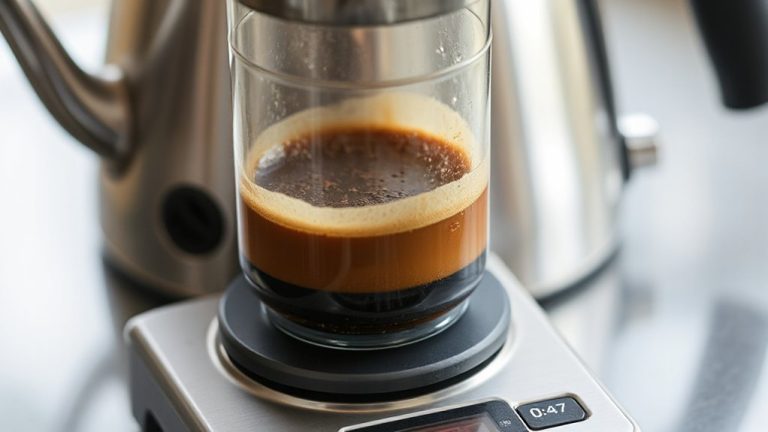
Glass group heads or portafilters are rare in espresso machines, and for good reason-glass loses heat fast. This rapid cooling can trigger thermal degradation during extraction, especially in longer shots. You’ll likely notice extraction inconsistency, with sour or uneven flavors creeping in. While glass looks sleek, it’s impractical for temperature stability. Even preheating only helps so much, since glass doesn’t retain heat like metal or ceramic.
| Feature | Glass |
|---|---|
| Heat Retention | Poor |
| Risk of Thermal Degradation | High |
| Extraction Consistency | Low |
| Durability | Fragile |
You’re better off avoiding glass in critical extraction parts. Stick to materials that stabilize temperature-your espresso will taste cleaner and more balanced. If you do use glass, double-check your water temperature and keep shots short to reduce risk.
Plastic and Resin: Poor Heat Retention, Lightweight Trade-Offs
While lightweight and often found in entry-level machines, plastic and resin components in portafilters or handles come with clear drawbacks-especially when heat retention matters. You’ll notice these materials cool down fast, pulling heat from your shot and risking under-extraction. That means uneven pulls and less flavor in the cup. Material durability is also a concern; plastic can crack under stress or warp with repeated heat exposure. Resin fares slightly better but still falls short compared to metal. On the plus side, both offer flavor neutrality-neither imparts tastes into your espresso. Still, their poor thermal performance usually outweighs this benefit. If you’re upgrading or serious about consistency, replacing plastic parts with stainless steel is a practical move. For home use or occasional espresso, they might suffice-but know the trade-offs. Lightweight convenience comes at the cost of control.
Pairing Cup Materials With Espresso Types
What difference does your cup actually make when pulling a shot? More than you might think. Cup weight affects temperature stability-thicker ceramic or porcelain holds heat better, ideal for slower-drinking espressos like a lungo. Lighter cups, like tempered glass or thin porcelain, cool faster, which can mute flavors in dense rists or traditional shots. Your cup’s material finish also plays a role: a glazed ceramic interior resists staining and eases cleaning, while a matte finish may retain oils over time, altering taste. For bright, acidic single-origin espressos, a smooth, non-reactive finish preserves clarity. With darker roasts, heavier cups help maintain warmth without scalding. Stainless steel? Great for insulation but can dull aroma. Match your cup not just to roast or brew style, but to how you experience the drink-immediately or over minutes. Cup weight and material finish aren’t small details-they’re part of extraction’s final stage.
On a final note
Your cup choice affects how fast espresso extracts and how it tastes. Stainless steel cools quickly but gives a clean flavor. Ceramic holds heat steady, helping balanced shots. Glass loses heat too fast, risking under-extraction. Plastic and resin are light but don’t retain heat well. Match darker roasts with ceramic for stability, or use steel for faster cooling when needed. Pick based on heat control, not looks.