Achieving Balanced Flavor in Percolators Using Coarse Ground Coffee
You’ll get smoother coffee using coarse ground beans in your percolator. The large particles slow extraction during repeated water cycles, preventing bitterness from over-extraction. Fine grounds expose too much surface area, especially with near-boiling temperatures. Stick to coarse, French press–style grinds and medium to dark roasts like Colombian or Sumatran Arabica. Brew for 7–10 minutes on medium heat. There’s more to optimizing flavor, depending on your setup and preferences.
Notable Insights
- Use coarse ground coffee to slow extraction and prevent bitterness during repeated water cycling.
- Choose medium to dark roast Arabica beans for better balance under prolonged percolation heat.
- Grind size should resemble sea salt to minimize over-extraction and filter clogging in percolators.
- Brew for 7–10 minutes at 200–205°F to achieve optimal flavor without excessive bitterness.
- Maintain steady percolation with cold, filtered water to ensure even extraction and clean taste.
Why Coarse Coffee Prevents Bitter Percolator Brews
Bitter officers in your percolator brew isn’t just annoying-it’s usually a sign something’s off with your grind size. Using a coarse grind helps prevent over-extraction, which often occurs when grounds are too fine. Percolators rely on repeated cycling of hot water through the coffee, and if the particles are small, they release too many bitter compounds over time. Water temperature in percolators typically stays high, around 200–205°F, which increases extraction efficiency. Without the right grind, that heat pulls out harsh flavors fast. You also can’t adjust brew time easily on most models-it’s built into the cycle. A coarse grind, similar to sea salt, slows extraction, balancing flavor. Brands like Braun or Farberware cycle every 30–45 seconds, so coarse grounds help maintain equilibrium. You’ll get cleaner, smoother results without changing equipment. It’s a simple fix that works. For those interested in selecting the right equipment, checking the Best Percolator Coffee Picks can guide you toward models optimized for balanced brewing.
How Percolators Work (And Why Grind Size Matters)
While you might think percolators just boil coffee, they actually work by cycling hot water through the grounds in a continuous loop, and that process is why grind size plays such a critical role. During the brew cycle, water is heated in the lower chamber, rises through the central tube, then trickles over the coffee bed. This cycle repeats, extracting flavor with each pass. If the grind is too fine, over-extraction happens fast, releasing bitter compounds because small particles expose too much surface area. The consistent water temperature-often near boiling-intensifies this effect. A coarse grind slows extraction, letting you get more even flavor over multiple cycles without harshness. That’s why matching grind size to the percolator’s repeating cycle matters: it controls how quickly flavors come out. Using the right grind helps maintain balance, especially during longer brew cycles where heat and repetition can easily tip toward bitterness if the coffee particles are too small. For optimal results, consider using one of the best ground coffees specifically suited for percolators, as best ground coffee options are often pre-ground to the ideal coarseness for this brewing method.
What Grind Size Is Best for a Percolator?
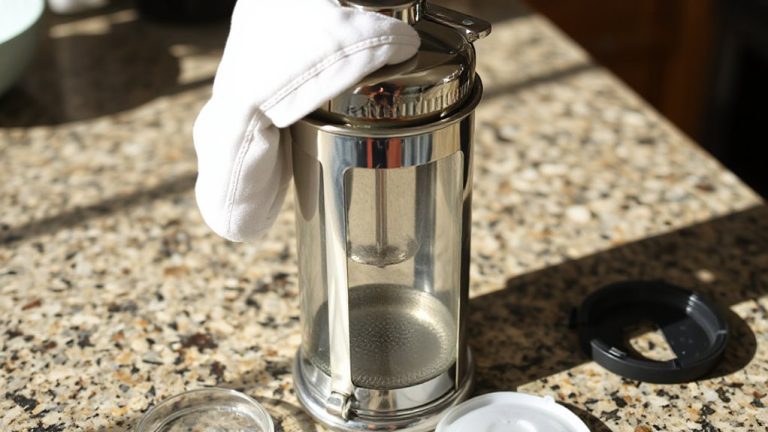
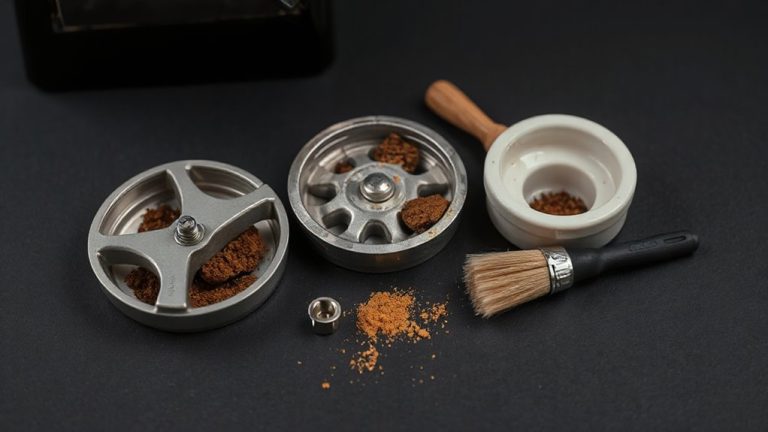
You’ve seen how the repeated cycling of water through the grounds affects flavor, and that the grind size plays a big role in keeping things in check. For percolators, you’ll want a coarse grind-think cold brew or French press grounds. This size prevents over-extraction during the multiple passes of hot water, reducing bitterness. Finer grinds clog the filter or slip through, muddying your brew. A consistent coarse grind guarantees even flow and cleaner results. While cold brew uses coarse grounds for long steeping, percolators rely on heat and circulation-so precision matters. French press and percolator grinds are similar, but percolation’s pressure demands uniformity to avoid channeling. Blade grinders often create uneven particles; a burr grinder works better. If you’re using pre-ground coffee, check the label for “coarse” or “French press” settings. That’ll get you closest to ideal for your percolator. Matching grind to brew method makes all the difference. The best French presses in 2024 feature improved filtration systems that work optimally with coarse ground coffee.
Best Coffee Beans for Smooth Percolator Brewing
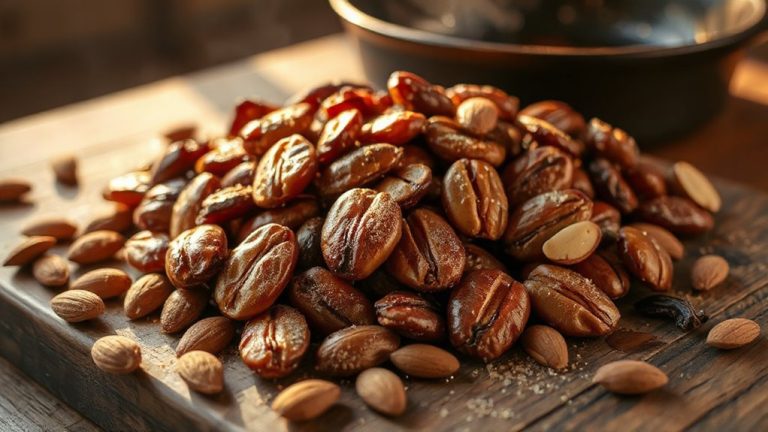
Because percolators repeatedly cycle hot water through the coffee grounds, choosing the right beans can make a real difference in smoothing out your final cup. You’ll want to prioritize Arabica varietals for their naturally lower acidity and balanced flavor. Pair them with appropriate roast profiles-medium to dark roasts tend to hold up better under prolonged extraction, reducing bitterness while enhancing body. Light roasts may become overly sharp due to the percolation process.
| Bean Type | Recommended Roast Profile |
|---|---|
| Colombian Arabica | Medium-Dark |
| Ethiopian Arabica | Medium |
| Sumatran Arabica | Dark |
| Guatemalan Arabica | Medium-Dark |
| Costa Rican Arabica | Medium |
These combinations help you achieve a smoother, more consistent brew without harsh notes. Stick with fresh, high-quality Arabica beans and match the roast profile to your taste and brewing time.
Brewing With Coarse Coffee: Step by Step
Coarse coffee grounds are your best bet for clean, balanced results in a percolator, especially after picking the right beans and roast to match the brew method. Start by measuring one tablespoon of coarse grounds per cup of water-similar to what you’d use in a French press. Place the grounds in the percolator basket without tamping. Add cold, filtered water to the reservoir, matching your desired cup count. Assemble the percolator and set it on the stove or plug it in if electric. Heat on medium until you hear the characteristic bubbling percolation, then maintain a steady, gentle cycle for 7–10 minutes. Avoid over-perking, which can lead to bitterness. While coarse grind helps avoid over-extraction, it’s not ideal for cold brewing, where time demands finer particles. The percolator’s repeated cycling mimics French press steeping but with added heat and circulation, enhancing body without silt.
Fixing Sour or Bitter Percolator Coffee
What went wrong when your percolator brew tastes off? If it’s sour, your coffee likely under-extracted-water temperature too low or brew time too short. Most percolators need water near boiling, around 200–205°F, to extract properly. If you’re brewing below that, flavor compounds don’t dissolve well, leaving sharp, acidic notes. Bitter coffee, on the other hand, usually means over-extraction from too long a brew time or water too hot for too long. For coarse grounds, aim for a brew time of 7–10 minutes. Going beyond that, especially with continuous cycling, pulls out harsh compounds. Adjust by shortening the cycle or using a heat setting that maintains ideal water temperature without scalding. Always check your percolator’s heat source-stovetop models vary more than electric. Small tweaks in time and temp make a real difference.
Boost Clarity and Aroma in Your Brew
A clean, bright cup with distinct aromas starts with a few smart choices after you’ve nailed down extraction. Use freshly ground coarse beans-this reduces sediment and over-extraction, both of which cloud flavor. Rinse your filter if using a paper one; it cuts paper taste and improves clarity. Let water cool slightly before pouring-just off-boil (around 200°F)-to avoid scalding the grounds and muting aroma. Stir gently during brewing to guarantee even saturation. For deeper insight, try flavor profiling: brew the same beans via percolator and cold brew to compare aroma intensity and clarity. You’ll notice percolators highlight brighter notes when optimized. Avoid reboiling coffee, as it dulls aroma fast. Use a glass carafe to preserve scent until serving. These steps won’t turn your percolator into a pour-over, but they’ll sharpen its strengths and make each cup more aromatic and defined.
On a final note
You’ll get a smoother, more balanced cup from your percolator by using coarse-ground coffee-this slows extraction and cuts bitterness. Stick to medium-dark roasts like Colombian or Sumatran for best results. Brew with fresh, cold water and avoid overheating by removing the pot from heat as soon as it starts perking. If your coffee tastes sour, extend brew time slightly; if bitter, use coarser grounds next time.