The Importance of Cleaning Grinder Burrs Before Re-Dialing Grind Settings
You’re wasting time adjusting your grind if you don’t clean the burrs first. Old grounds and oily residue trap stale coffee, skewing flavor and throwing off consistency. Dark roasts gunk up faster, messing with particle size and extraction. Even small buildups make your settings unreliable. Clean burrs mean your adjustments actually do what they should. For accurate, repeatable results-especially switching beans or chasing a better shot-start fresh. The difference in clarity and balance might surprise you.
Notable Insights
- Old grinds trapped in burrs alter flavor and compromise grind consistency, leading to inaccurate re-dialing of settings.
- Oily residue from dark roasts clumps fine particles and dulls burrs, reducing grinding precision and flavor accuracy.
- Stale, oxidized coffee remnants mix with fresh grounds, skewing extraction and masking true taste during adjustments.
- Static and adhesion retain particles in burr teeth, causing uneven distribution and flawed grind size calibration.
- Cleaning burrs before re-dialing ensures changes reflect actual settings, not interference from accumulated residue.
Why Old Grinds Ruin Your Grind Settings
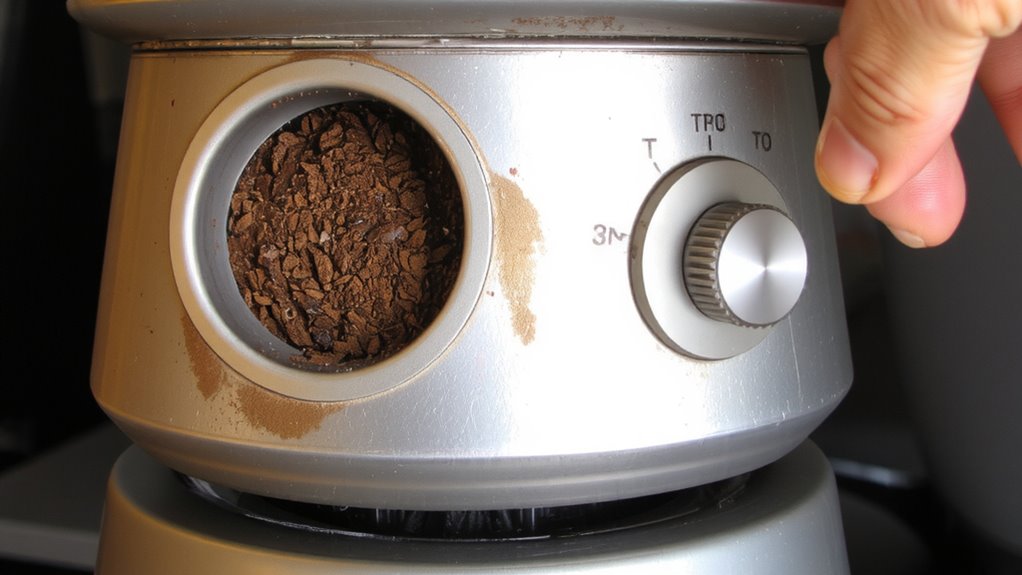
Ever wonder why your coffee suddenly tastes off even when you haven’t changed your settings? Old grinds trapped in your burrs are likely to blame. Over time, coffee particles stick to burr surfaces due to static buildup and particle adhesion, especially in dry beans or low-humidity environments. These residual grounds slowly leak into new batches, skewing flavor with stale, oxidized notes. Even if you clean the hopper and chute, hidden pockets between the burr teeth remain. That means each grind includes a mix of fresh and old coffee, making it impossible to dial in accurately. The inconsistency affects extraction, leading to sour or bitter results. Brushing after use helps, but a thorough cleaning every few weeks is necessary. Stainless steel burrs may hold more static than ceramic, so grounding the grinder or using anti-static tools can reduce this issue. Keep it clean-your taste buds will notice. For best results, consider choosing one of the top picks based on performance and ease of maintenance.
How Oily Residue Wrecks Grind Consistency
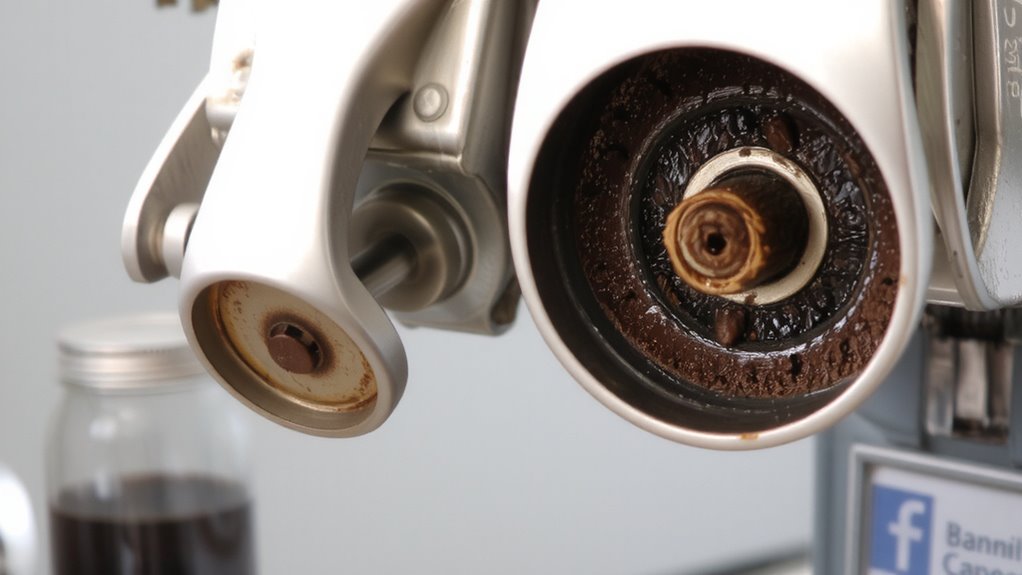
While fresh coffee beans naturally release oils during roasting, those oils can build up on grinder burrs over time, especially with darker roasts. That oil buildup acts like glue, trapping fine particles and creating clumps that throw off grind consistency. You’ll end up with uneven particle sizes, which messes with extraction-some bits over-extract, others under-extract. This leads directly to flavor degradation, stripping your espresso or pour-over of clarity and balance. Oily residue also dulls burrs faster, reducing efficiency and precision. Light roasts produce less oil, so they’re less prone to this issue, but if you regularly grind dark roasts, oil buildup becomes a real problem. Wiping burrs weekly with a dry brush isn’t enough-sticky oils need a proper clean. Left unchecked, you’re not just wasting beans, you’re masking the coffee’s true profile with rancid, stale notes. Using a dedicated cleaning brush can significantly improve the effectiveness of your maintenance routine.
When to Clean Burrs Before Adjusting
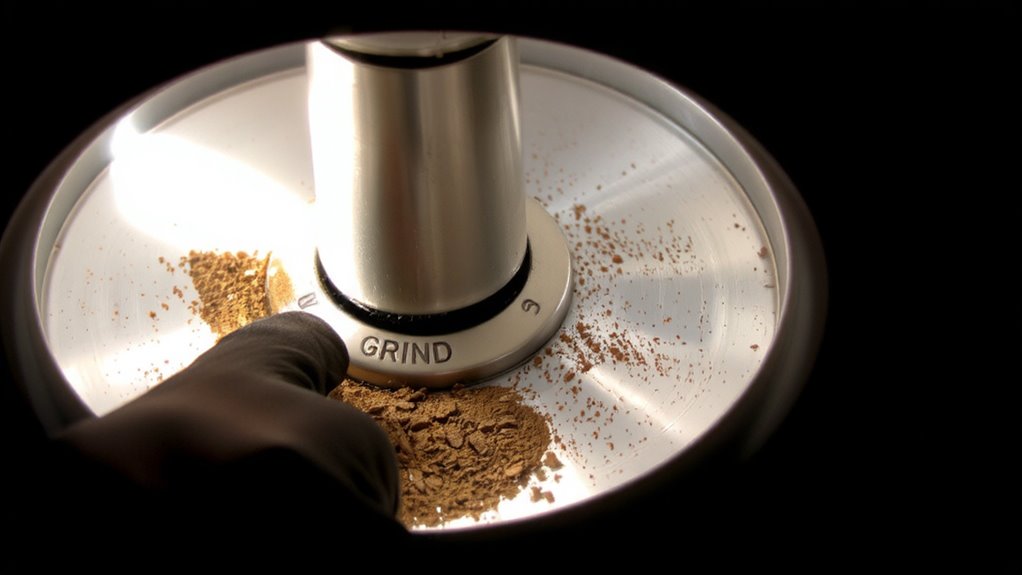
You won’t get accurate grind adjustments if your burrs are caked with old coffee oil. That’s why proper grinder maintenance is essential before re-dialing your settings. Residue buildup throws off calibration accuracy, leading to uneven particle size and inconsistent brews. You should clean your burrs whenever you notice grind changes aren’t producing expected results-even after precise tweaks. It’s also smart to clean them before switching beans, especially from a dark, oily roast to a lighter, drier one. Daily grinder users should clean burrs weekly; less frequent users can do it monthly. Neglecting this step means you’re adjusting based on compromised equipment, which defeats the purpose of fine-tuning. Cleaning guarantees your adjustments reflect actual setting changes, not hidden resistance from gunked-up parts. For calibration accuracy and better-tasting coffee, don’t skip this step. Proper grinder maintenance saves time and improves results in the long run. Choosing the right best mill grinders can also impact how easily you maintain clean, precise burrs.
How to Clean Grinder Burrs Fast
A quick burr cleaning keeps your grinder running accurately without eating up your morning routine. Start by powering off and unplugging your grinder-safety first. Most models allow easy burrs disassembly with a twist or screw release; check your manual for specifics. Remove the outer burr, then the inner one, and tap out loose grounds over a trash can. Use a soft brush for the chamber and a stiffer brush for the burrs themselves-this is where proper brush techniques matter. Angle the bristles into the grooves to clear trapped oils and fines. Avoid water unless the manufacturer says it’s safe. Reassemble carefully, guaranteeing burrs are aligned and snug. Done right, this process takes under five minutes and maintains grind consistency. For frequent users, doing this weekly prevents buildup that throws off calibration. It’s simple upkeep that guarantees your adjustments actually work.
Clean Burrs Improve Espresso & Pour-Over
Since clean burrs grind more consistently, you’ll notice better results in both espresso and pour-over brewing. Old coffee oils and fine particles build up over time, leading to uneven grinding and clumping. This causes flavor degradation because stale residues mix with fresh grounds, muddying the taste. You’ll also experience aroma loss, as trapped odors dull the vibrant notes your beans should deliver. With clean burrs, each grind is fresh and precise, letting you extract the true profile of your coffee. For espresso, this means better puck consistency and even extraction. In pour-over, it guarantees balanced water flow and clarity in the cup. Cleaning burrs every few weeks-or more if you use oily beans-keeps performance high. It’s a small step that makes a real difference. Skip it, and you’re chasing settings that won’t behave.
On a final note
You should clean grinder burrs before re-dialing because old grounds and oily residue throw off grind consistency. Builds-up coffee gunk clogs the burrs, making your espresso or pour-over uneven. For best results, clean every 1–2 weeks if you use oily beans, or monthly for dry roasts. Brush out debris daily, and use a grinder cleaner like Grindz monthly. Clean burrs mean accurate settings, better extraction, and more reliable brews. It’s a fast win for better coffee.