How to Choose a Machine With Optimal Grind Retention Management
Pick a grinder like the Niche Zero or Koanzume K3 with minimal grind retention to avoid wasting coffee and losing dose accuracy. Look for a short grind path that moves grounds quickly from burr to catch bin, reducing static and leftover residue. Choose one with tool-free burr access for fast cleaning and fewer missed maintenance steps. Use a sealed, magnetic grounds catcher to prevent spills. Test retention yourself by weighing input versus output-you’ll see how much gets lost, and uncover which models truly perform best over time.
Notable Insights
- Choose grinders with minimal grind retention to prevent waste and ensure accurate dosing.
- Opt for a short grind path design to reduce leftover grounds and improve consistency.
- Select models with tool-free burr access for easy cleaning and reduced contamination risk.
- Use sealed grounds catchers with magnetic or silicone seals to prevent spills and retention.
- Test retention by weighing input versus output to verify high yield (95%+) in real-world use.
Choose a Grinder With Minimal Grind Retention
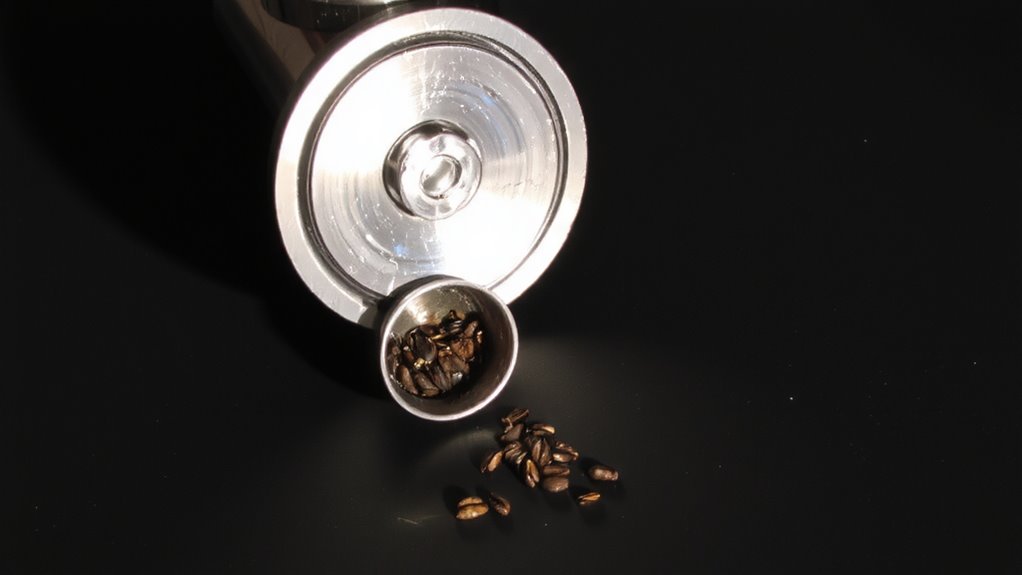
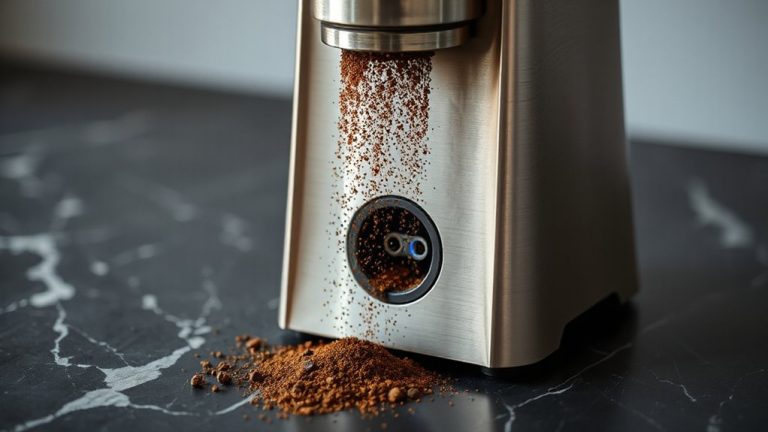
A good number of grinders out there waste more grounds than you’d think-sometimes up to a full dose’s worth-due to poor retention design. You’ll want to choose a grinder with minimal grind retention so every bit of your dose ends up in the portafilter, not stuck in burr chambers or hiding in the walls. Low retention means better dose accuracy and less waste, especially important with expensive beans. Look for designs that prioritize a direct path from burr to exit-this helps with both grind consistency and static control. Grinders like the Niche Zero or Koanzume K3 address this with tight tolerances and anti-static coatings. Poor static control leads to clumping and messy spills, hurting consistency. While no grinder eliminates retention completely, models with thoughtful engineering reduce it markedly. Avoid units where grounds stick even after tapping. Your espresso-and wallet-will thank you. Among the top manual options, the best manual espresso grinders excel in precision and retention management.
Minimize Residue With a Short Grind Path
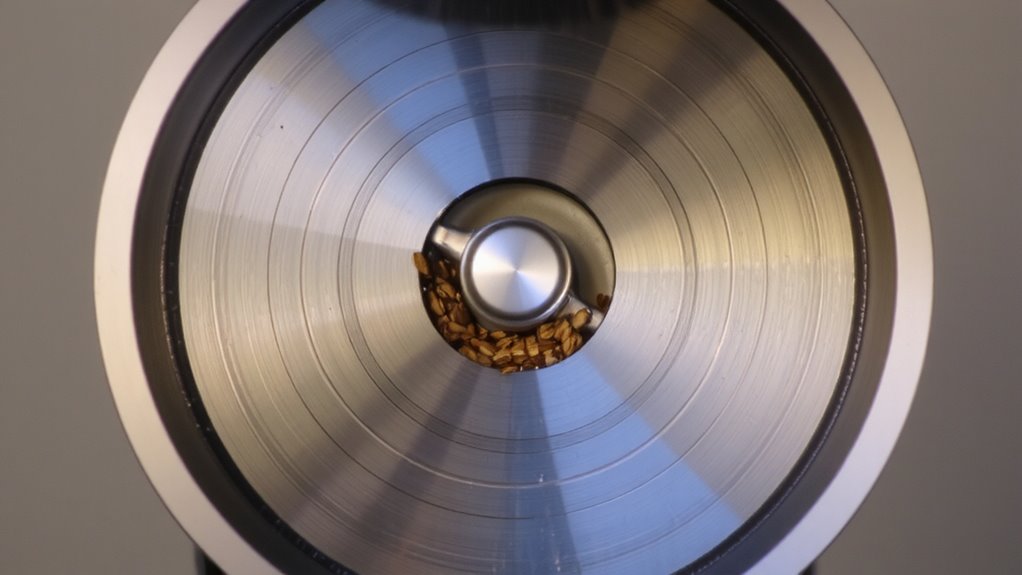
Since every gram counts when dialing in your espresso, you’ll want a grinder with a short grind path to cut down on residual grounds left behind after grinding. A shorter path means fewer grounds stick to internal surfaces, improving dose accuracy and reducing waste between shots. This design also supports better grind consistency since coffee flows directly from burr to portafilter with minimal contact points. Look for grinders like the Niche Zero or F64, which use compact chambers and efficient chutes to limit retention. Effective static control is essential-without it, even a short path can clog with clingy grounds, especially in dry beans. Some models use anti-static coatings or charge-dissipating materials to combat this. While a short grind path won’t fix poor calibration, it does make tuning easier and more predictable. You’ll notice faster changes when adjusting settings, since old grounds clear out quickly. For those seeking top-performing options, consider checking the best coffee and espresso grinders to find models renowned for low retention and precision.
Clean Burrs Fast With Tool-Free Access
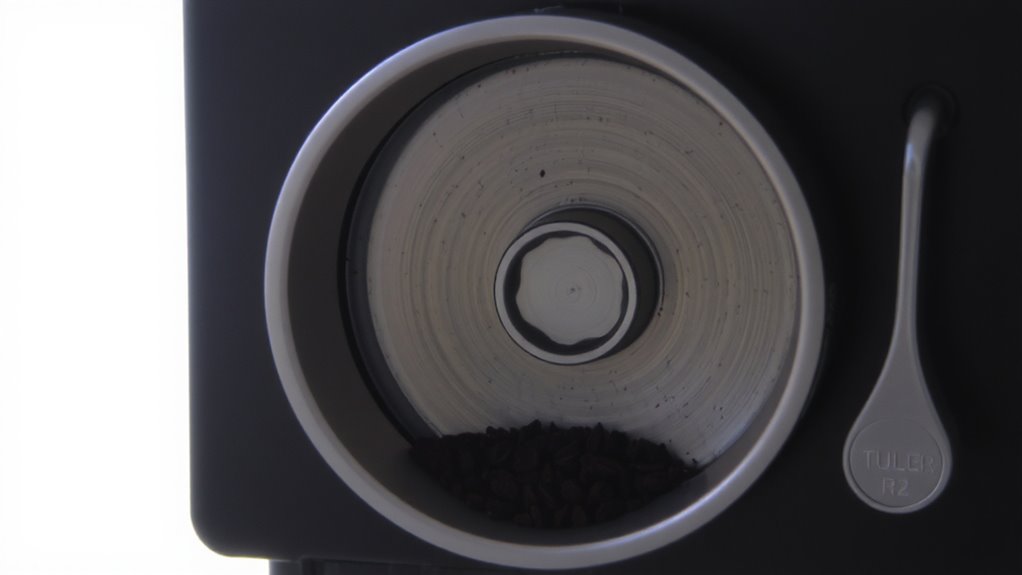
Getting to the burrs quickly matters when you’re changing beans, dialing in, or doing routine maintenance-so choose a grinder that lets you access and clean the burrs without tools. Models like the Niche Zero, Monarch, and F64 offer tool free cleaning, letting you remove the burr carrier with just a twist or lever flip. This speeds up burr maintenance and reduces the chance of leftover grounds affecting your next brew. Grinders requiring screws or special tools slow you down and risk stripped threads or lost parts. With tool free cleaning, you can wipe away coffee dust daily and check for wear regularly, keeping flavors crisp. It’s a small feature that makes a real difference in consistency and long-term performance. For anyone serious about freshness and precision, easy access isn’t optional-it’s essential for effective burr maintenance.
Use Grounds Catchers That Seal Without Spills
You’ve cleaned the burrs and confirmed no old grounds are lurking inside-now it’s time to think about where the fresh ones go. A grounds catcher that seals properly keeps your setup clean and minimizes retention. Look for models with sealed containment, like the Niche Zero or the DF64 with a magnetic catch bin, which lock in grounds without gaps. This design guarantees spill prevention during removal, especially vital if you’re grinding multiple doses or moving the grinder. Flexible silicone flaps or magnetic lids create a tight seal, stopping stray particles from scattering. Avoid open bins or loose-fitting containers-they might seem convenient, but they increase mess and retention risks. Sealed containment isn’t just about cleanliness; it directly impacts consistency. With effective spill prevention, you maintain accurate dosing and reduce waste. It’s a small feature with real daily impact-choose smart.
Test Retention Using Weighed Yield and User Benchmarks
A simple way to measure grind retention is by comparing the weight of coffee you put into the grinder with the amount you collect in the catch bin. If you grind 20 grams and only get 18.5 grams out, that missing 1.5 grams is retained-likely stuck in burrs, chute, or housing. Do this test a few times and average the results to gauge consistency. Lower retention means less waste and better flavor accuracy, since old grounds won’t mix into your next dose. Machines like the Niche Zero or Kohei Zero excel here, thanks to low-static designs and accessible burrs. Poor grind consistency or high retention skews extraction, making shots taste off or uneven. Check user benchmarks online-real-world data often reveals issues lab specs miss. Look for grinders where 95%+ of input weight ends up in the bin. That kind of yield supports precision, especially for espresso, where flavor accuracy matters most.
On a final note
You want a grinder that keeps retention low so your coffee stays fresh. Pick one with a short grind path, like the Compak K3, to reduce leftover grounds. Make sure you can clean the burrs quickly without tools. Use a sealed grounds catcher to prevent spills. Test retention by weighing what you put in versus what you get out. Compare models objectively-less waste means better dose consistency and flavor.