How to Choose an Espresso Machine With Optimal Auto-Start Features
Look for espresso machines with full power scheduling, not just basic timers-models like the Gaggia Accademia or Breville Dual Boiler let you set exact brew times and auto-start the full cycle. Make certain it has a built-in grinder for consistent results, since pre-ground coffee can mess with extraction. Wi-Fi control on machines like De’Longhi Magnifica lets you start brewing from bed. Watch standby energy use; smart plugs help cut waste. High-end models offer more automation, but check app reliability. You’ll want to weigh convenience against energy and setup needs.
Notable Insights
- Choose models with full power scheduling for automatic startup and shutdown at set times.
- Ensure the machine supports automated brewing cycles to deliver consistent espresso each morning.
- Opt for Wi-Fi-enabled machines with smartphone apps for remote activation and preheating.
- Use built-in or high-quality external grinders to maintain grind consistency for reliable auto-start performance.
- Minimize energy use by selecting models with low standby consumption or using smart plugs for scheduling.
Essential Auto-Start Features to Check Before Buying
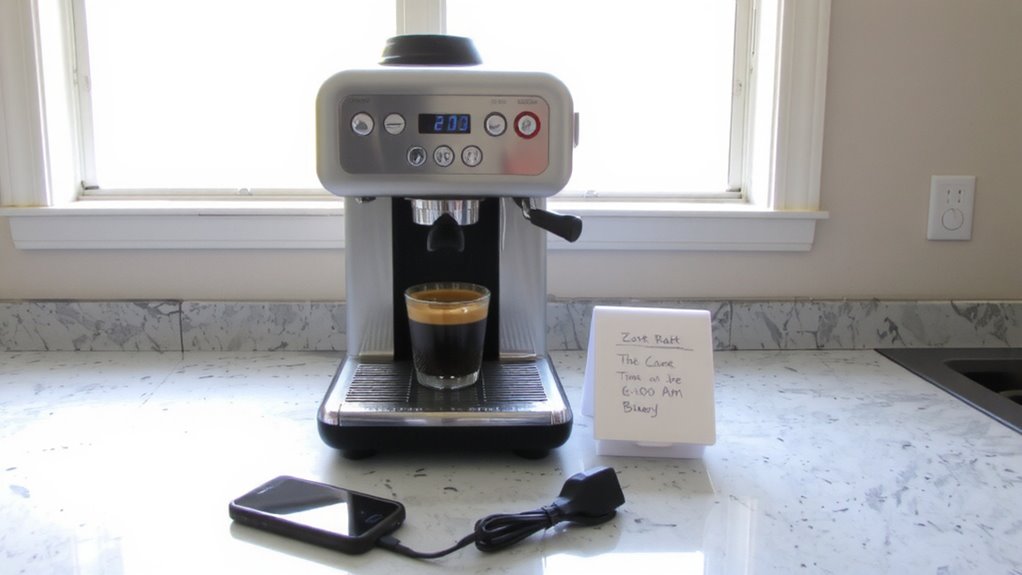
Ever wonder how much time you could save each morning with the right espresso machine? Timer presets let you program exact brew times so your machine fires up just before you wake. It’s especially useful if your mornings are tight or unpredictable. Machines like the Breville Barista Express include customizable start times, reducing wait. Power scheduling goes further, allowing the machine to power down after use and reboot automatically-cutting energy waste. Not all models have both features, so check specs carefully. Cheaper machines may offer basic on/off timers, while high-end ones like the Gaggia Accademia include advanced power scheduling. If you value efficiency, these functions matter. But if you’re hands-on or brew irregularly, they might be overkill. Weigh your routine before deciding-automatic doesn’t always mean better for you. For more insights on machines that excel in timed brewing, check out the best timed coffee makers for morning convenience.
Set It and Forget It: Program Your Morning Brew
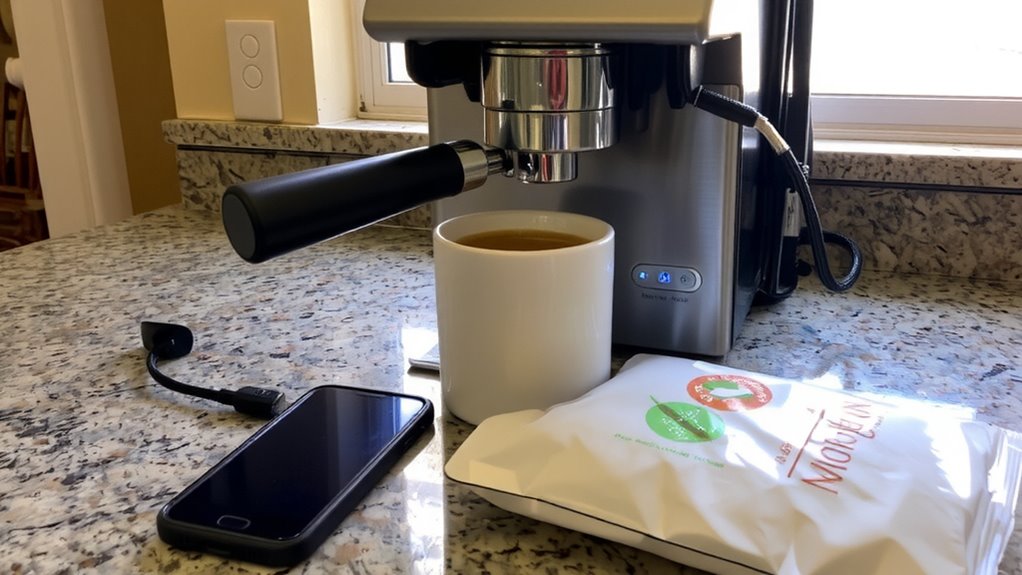
You’re already familiar with timer presets and power scheduling, but now let’s talk about how those features come together to simplify your morning routine. With the right espresso machine, you can program it the night before to heat up and brew automatically-no waiting, no extra steps. This “set it and forget it” function guarantees your coffee starts the moment you want it, delivering consistent brewing consistency day after day. Machines like the Breville Dual Boiler or De’Longhi Magnifica allow precise scheduling, so water temperature and pressure stabilize before extraction. That’s key for repeatable quality. While some basic models only power on at a set time, advanced ones begin the full brewing cycle. Just load the portafilter or beans beforehand. It won’t replace fresh grinding each morning, but it gets you closer to barista-level results with minimal effort. Ideal if your time is tight but standards aren’t.
Start Brewing From Bed With Smartphone Control
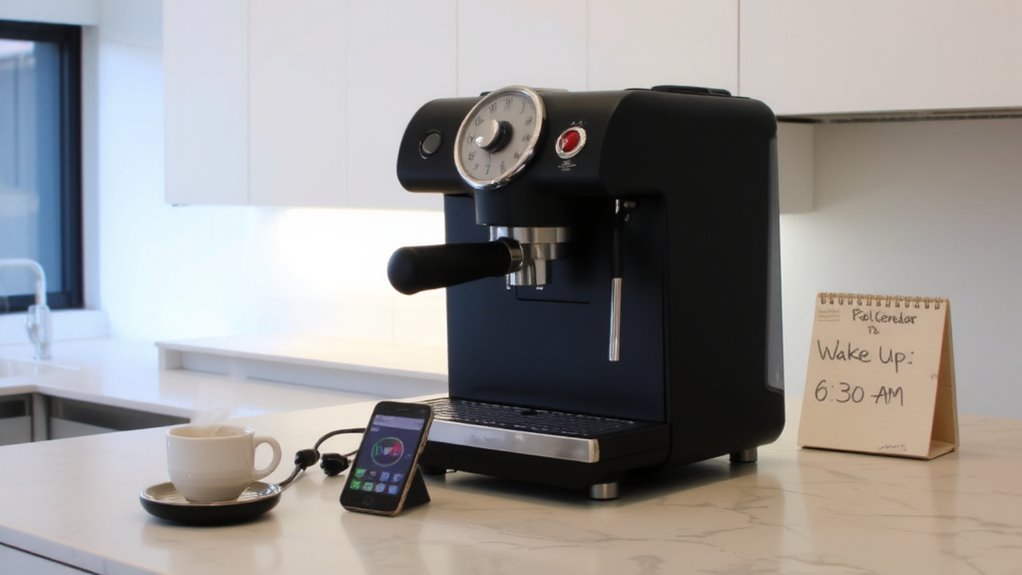
What if you could start your morning espresso with a tap on your phone while still in bed? With smartphone-controlled espresso machines, that’s possible. Brands like Breville and De’Longhi offer models featuring remote activation through dedicated apps, letting you begin brewing from anywhere with Wi-Fi. This adds serious morning convenience-no waiting around after you wake up. You can trigger the brew process, heat the milk frother, or preheat the cup while handling other tasks. Just make certain your machine connects reliably to your network, as spotty Wi-Fi can disrupt remote activation. Some apps even send alerts when brewing finishes, so you know exactly when to get up. While setup takes a few minutes initially, the payoff is consistent, hands-free starts. Choose a model with strong app support and firmware updates to avoid glitches. It’s not magic-just smart engineering making your routine smoother. For those seeking versatility beyond espresso, consider exploring the best smart coffee machines for your kitchen, including smart coffee machines that offer similar connectivity features.
Will Using Pre-Ground Coffee Break Auto-Start Convenience?
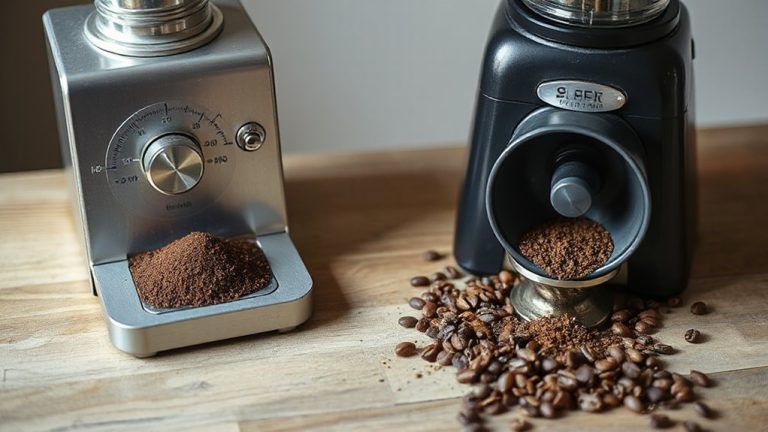
Could your choice of coffee grind affect how well your machine’s auto-start works? Yes-especially if you’re using pre-ground coffee. Auto-start features rely on precise machine calibration, and inconsistent grind size disrupts this balance. Freshly ground beans offer better grind consistency, helping maintain the timing and pressure the machine expects. Pre-ground may clog or flow too quickly, leading to weak or over-extracted shots-even if brewing starts on time. Upgrading to one of the best coffee grinders for espresso and pour-over ensures optimal grind consistency for seamless auto-start performance.
| Factor | Fresh Ground | Pre-Ground |
|---|---|---|
| Grind Consistency | High | Variable |
| Machine Calibration | Reliable | Often thrown off |
You’ll get more reliable auto-start results with a built-in grinder. If you stick with pre-ground, expect to adjust settings often-and don’t be surprised when results lack punch.
Does Auto-Start Waste Energy? What the Specs Don’t Tell You
Ever wonder how much electricity your espresso machine actually uses when left on standby for auto-start? While manufacturers don’t always disclose full energy consumption details, most modern machines use low-wattage standby modes-typically between 1 to 5 watts. That adds up to roughly 1–4 kWh per month, which isn’t much on your bill. Still, if you’re not using auto-start daily, that energy adds up unnecessarily. Some models, like the Breville Barista Express, draw more in standby than basic models like the De’Longhi EC155. You can reduce waste by scheduling auto-start only on weekdays or using a smart plug. Keep in mind: convenience shouldn’t override common sense. If you’re away for days, turn it off completely. Standby modes help, but they’re not zero-cost. Think about your routine-matching energy use to actual need saves power without sacrificing your morning espresso.
Auto-Start Espresso Machines: Best Features by Price Range
How much convenience are you really getting from an auto-start espresso machine-and at what cost? In the budget range ($200–$400), models like the Gaggia Classic Pro offer basic auto-start but limited energy efficiency and no built-in water filter, so you’ll need to monitor water quality yourself. Mid-range machines ($400–$800), such as the Breville Duo Temp Pro, add programmable timers, better insulation for energy efficiency, and integrated water filters that improve extraction and machine longevity. At the high end ($800+), brands like Rocket Appartamento deliver precise auto-heat functions, excellent energy efficiency through dual boilers, and optional external filtration systems that guarantee peak water quality. You’re paying for reliability and smarter automation. If you value consistent morning shots with minimal effort, investing more brings real benefits-but only if your water source and usage justify it.
On a final note
You’ll want an espresso machine with reliable auto-start, letting you set brew times in advance-like the Breville Bambino Auto, which heats quickly and pairs well with whole bean use. Pre-ground can work, but freshness drops. Smart models like the De’Longhi Magnifica allow phone start, saving time. Just unplug occasionally to cut standby power. Match features to your routine without overpaying.