What Makes Luapula Valley Coffee a Sweet, Nutty Surprise
You’re tasting Luapula Valley’s sweet, nutty surprise because high elevation, volcanic soil, and alluvial deposits rich in potassium and magnesium boost sugar development and bean density. Consistent rainfall and shade from native trees slow cherry ripening, deepening flavor. Wet processing with short fermentation preserves clarity, giving you notes of caramel and roasted almond. Humidity and careful hand-harvesting guarantee even, clean beans that roast evenly. You’ll find it smoother than many African coffees-especially if you prefer less acidity. There’s more behind how each factor sharpens that clean, balanced finish.
Notable Insights
- High elevation and volcanic soils enhance bean density and sugar development for a naturally sweet profile.
- Consistent rainfall and long drying periods preserve sugars and deepen nutty, caramelized flavors.
- Alluvial soils rich in minerals like potassium and magnesium promote balanced bean development and flavor expression.
- Shade growing under native trees slows cherry maturation, boosting complexity and nutty sweetness.
- Hand harvesting and precise wet processing ensure uniformity, clean acidity, and notes of almond and citrus.
Why Luapula Valley Coffee Tastes Sweeter and Nuttier
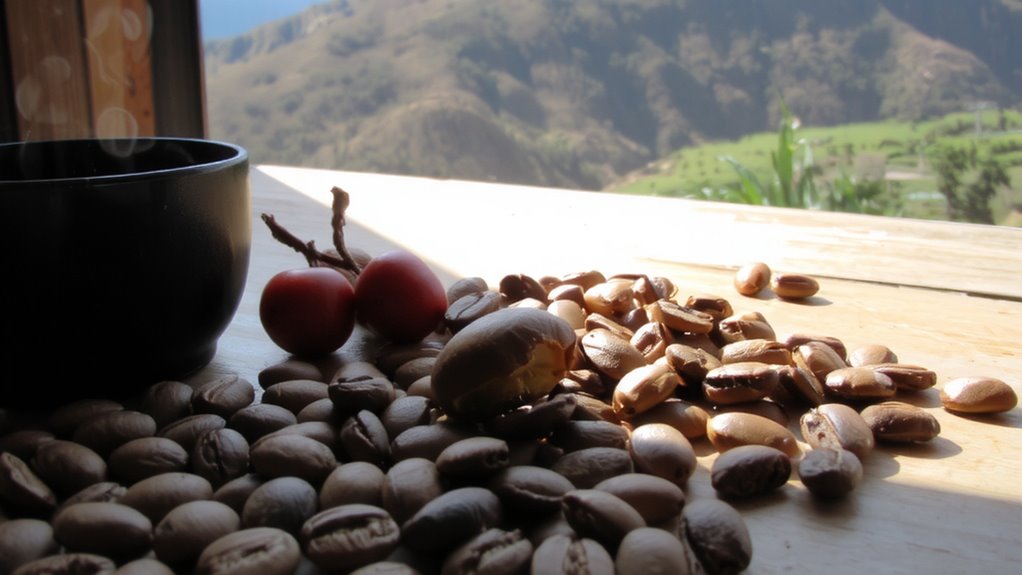
While the region’s high elevation and volcanic soil play a role, it’s the combination of consistent rainfall and long, sun-drenched drying periods that really sets Luapula Valley coffee apart. You’ll notice the sweetness and nutty depth in every cup, shaped by natural factors like bean genetics and environment. These conditions slow bean development, increasing sugar retention, which directly impacts flavor chemistry. The beans, often heirloom Arabica varieties, carry genetic traits that favor balanced acidity and rich body. When roasted lightly to medium, these traits shine-try a flame-touched drum roast to enhance nuttiness without bitterness. Compare this to faster, high-heat roasts, which can mask subtle notes. Grind fresh and use a pour-over or cone filter for clarity. Storing beans in an airtight container away from light preserves the delicate compounds. You’re not just tasting terroir-you’re experiencing a precise interplay of bean genetics and flavor chemistry, refined by nature and method.
How Alluvial Soils Enhance Luapula Coffee’s Flavor
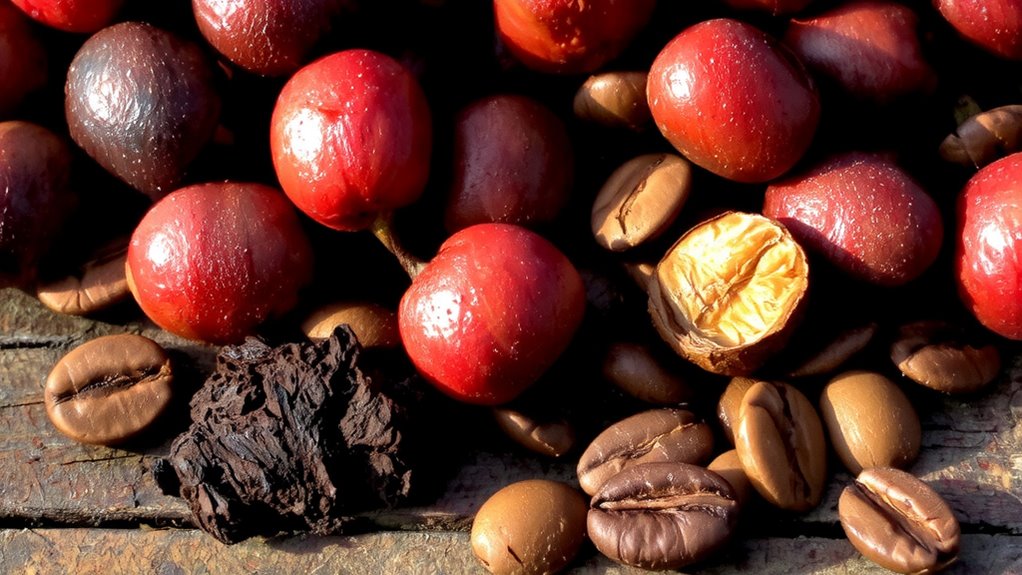
You already know the sweetness and nuttiness in Luapula Valley coffee come from elevation, sun exposure, and slow drying. But it’s the alluvial soils that give it that extra lift. These soils, deposited by seasonal floods from the Luapula River, have a unique soil composition rich in organic matter and fine sediments. More importantly, they offer consistent mineral richness-potassium, magnesium, and phosphorus-that coffee roots absorb efficiently. This direct nutrient access boosts bean density and sugar development, enhancing flavor without extra effort on your part. Unlike rocky or clay-heavy soils elsewhere, alluvial types drain well but retain enough moisture to support steady growth. The result? Beans that roast evenly and express those signature sweet, nutty notes you expect. If you’re comparing growing regions, prioritize alluvial zones for more predictable, complex cups. It’s not magic-just smart geology meeting good farming.
Humidity’s Hidden Role in Growing Smooth African Coffee
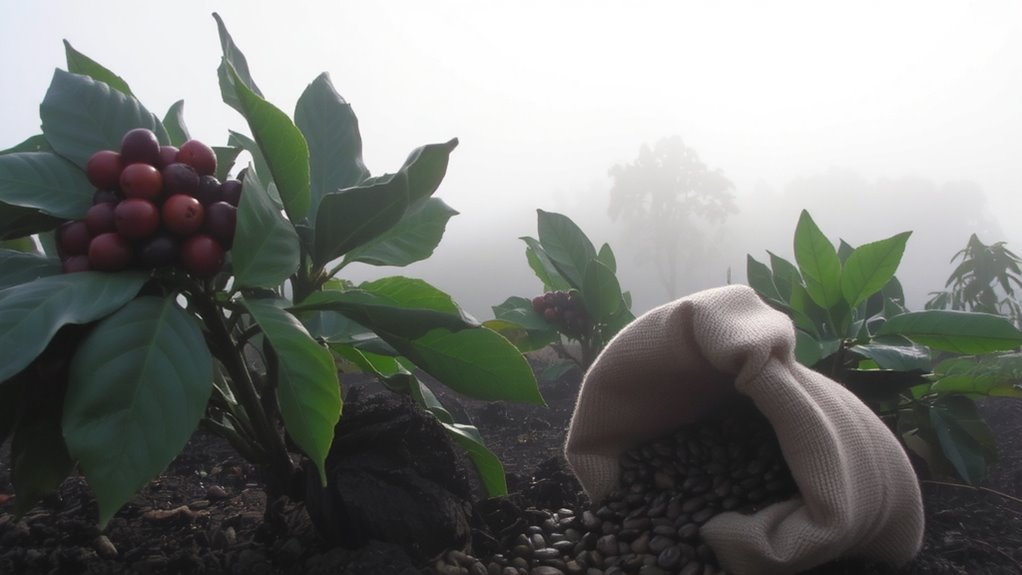
When humidity levels are managed right, they play a quiet but critical role in shaping smooth African coffees like those from the Luapula Valley. You’ll notice the results in the cup-balanced acidity and a clean finish-thanks to stable microclimate effects that support even bean development. High humidity slows cherry ripening, giving beans more time to develop sugars and aromatic compounds. This leads to increased bean density, a trait linked to higher quality and more consistent roasting. Too much moisture though? That raises mold risk and can spoil harvests. That’s why understanding local humidity patterns is essential for preserving bean integrity from farm to roast.
| Factor | Impact on Coffee |
|---|---|
| High humidity | Slows ripening, boosts sweetness |
| Stable microclimates | Encourages uniform bean density |
| Excess moisture | Raises risk of fungal damage |
| Low fluctuation | Improves bean structure |
| Proper airflow | Reduces mold, supports quality |
Traditional Farming Techniques in Luapula Valley
Though modern methods have arrived in neighboring regions, many farmers in the Luapula Valley still rely on traditional techniques passed down through generations, and for good reason. You’ll find shade growing widely practiced here-coffee thrives under native tree canopies that protect the beans and boost flavor complexity. This method reduces the need for chemical inputs and conserves soil moisture, making it a sturdy choice in variable climates. Hand harvesting remains the norm, letting pickers select only ripe cherries, which improves batch consistency. While slower than mechanical harvesting, it’s far more precise, especially on uneven terrain. These practices demand more labor, yes, but they result in higher-quality beans. If you’re sourcing beans or evaluating origin profiles, look for these signs of careful farming. They’re not just tradition-they’re practical choices that shape the cup.
Harvest and Wet Processing in the Luapula Valley
Harvesting in the Luapula Valley typically runs from April to June, timed to catch cherries at peak ripeness. You’ll need to handpick only the red, ripe fruit, as unripe or overripe cherries hurt quality. After harvest, depulp right away to avoid spoilage-most smallholders use manual pulpers like the Kenya B27 or small disc models. You then proceed to wet processing, where fermentation control is key: let it go too long, and the coffee turns sour. Ideally, you ferment for 12–36 hours in clean tanks, depending on temperature. Wash thoroughly after to stop the process. Bean sorting comes next: float off defective beans in water, then grade by density in washing channels. Proper sorting guarantees uniformity in roasting. While some skip fermentation tanks for simpler methods, controlling this step improves cup consistency. It’s labor-intensive, but the payoff is higher quality and better market prices if you sell specialty.
What Luapula Coffee Tastes Like: Caramel, Almond, and Bright Finish
While you might expect an earthy or heavy profile from coffees grown in tropical valleys, Luapula coffee surprises with a refined balance anchored by sweet, nutty notes and a clean finish. You’ll taste distinct caramel and roasted almond flavors, supported by subtle floral notes that add complexity without overwhelming. A touch of citrus hints brightens the cup, contributing to its lively, crisp aftertaste. These characteristics come through clearly when brewed using a paper filter-like in a pour-over or drip machine-since it highlights clarity and acidity. If you use a metal filter, such as in a French press, the body increases but may dull the brighter tones. For the most accurate expression of flavor, grind fresh and use water just off boiling. This profile works well as a morning drip brew or iced coffee, where its sweetness and brightness stand out without needing added sugar.
How Luapula Valley Coffee Differs From Other African Beans
Since many African coffees are known for bold fruitiness or floral intensity, Luapula Valley beans stand apart with a more balanced, nut-forward profile that’s less acidic than Ethiopian or Kenyan varieties. You’ll notice fewer bright citrus notes and more subtle sweetness, thanks to the region’s high elevation and clean water sources. Grown above 1,500 meters, the slow bean development enhances density and flavor clarity. The consistent rainfall and unpolluted streams support healthy plants without heavy reliance on added irrigation. When brewing, use a medium grind and water just off the boil-this highlights the almond and caramel notes without over-extracting. Compared to more acidic African beans, Luapula holds up well in both pour-over and French press, offering smoother results even with slightly longer brew times. It’s not flashy, but if you prefer balanced, approachable coffee without heavy processing, it’s a practical daily choice worth trying.
On a final note
You’ll get the best results with a burr grinder and pour-over if you want to highlight Luapula coffee’s sweet, nutty tones. Its alluvial soil and humidity-grown profile shines when brewed clean-think caramel and almond notes with a bright finish. Compared to heavier African roasts, it’s lighter and more balanced. Use filtered water and a gooseneck kettle for control. This bean suits clarity over boldness, so skip the French press.