A Guide to Using the SCAA Flavor Wheel: Mastering the Art of Describing Complex Flavors in Coffee Tasting Sessions
You start by smelling your coffee and picking a broad category like “fruity” or “nutty” at the center of the SCAA Flavor Wheel. Then move outward to narrow it down-say, from “fruity” to “citrus” to “lemon.” Use consistent terms from the wheel to avoid vague notes. Practice with light roasts from Ethiopia or Kenya, compare brews, and train your palate with scent jars. Stick to the wheel’s structure, and you’ll describe flavors like a pro. There’s more to fine-tuning your accuracy once you get the rhythm down.
Notable Insights
- Begin by identifying broad flavor categories like fruity or nutty when smelling brewed coffee.
- Use the SCAA Flavor Wheel’s hierarchy to narrow general impressions to specific descriptors.
- Follow connected pathways, such as floral → sweet floral → jasmine, for precise flavor identification.
- Train with blind tastings and reference samples to improve accuracy and reduce subjective bias.
- Maintain consistency by using standardized SCAA terms and documenting notes in a tasting journal.
What Is the SCAA Flavor Wheel and How Does It Work?
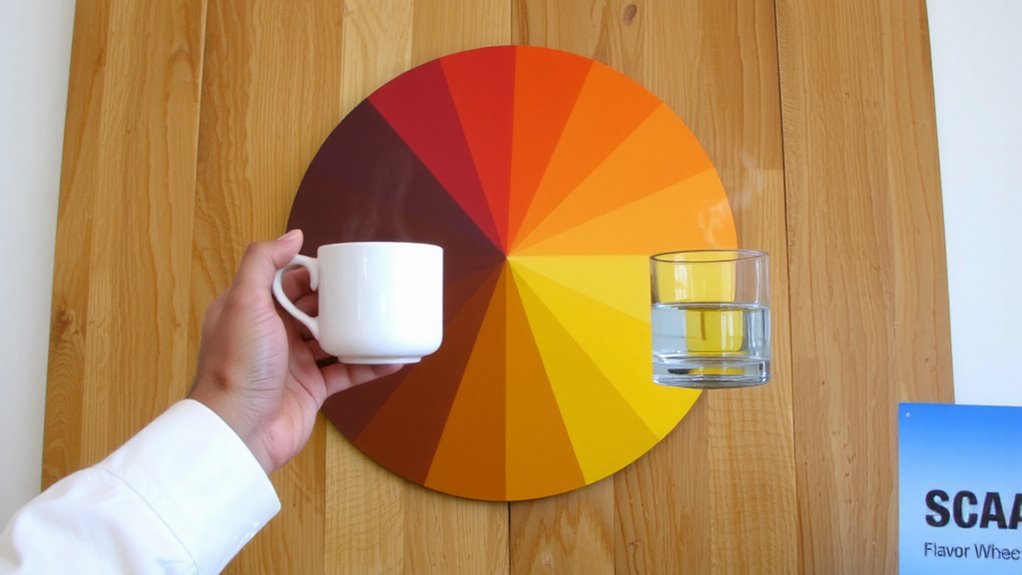
Think of the SCAA Flavor Wheel as a roadmap for your taste buds. It’s a structured tool designed to help you identify and articulate what you’re tasting in coffee. At its core, it uses flavor taxonomy-grouping tastes from broad (like “fruity”) to specific (like “blueberry”)-so you can pinpoint notes with precision. The wheel supports sensory mapping, letting you visually trace connections between similar flavors. You start at the center with general categories and move outward to more distinct descriptors. It’s practical for cuppings, quality control, or improving your brewing feedback. Unlike basic tasting notes, this system offers consistency across tasters. You don’t need special gear, just attentive tasting. While some find it detailed, it gets easier with practice. It’s best used alongside fresh samples and clean brewing equipment to avoid false impressions.
How the SCAA Flavor Wheel Maps Coffee Flavors
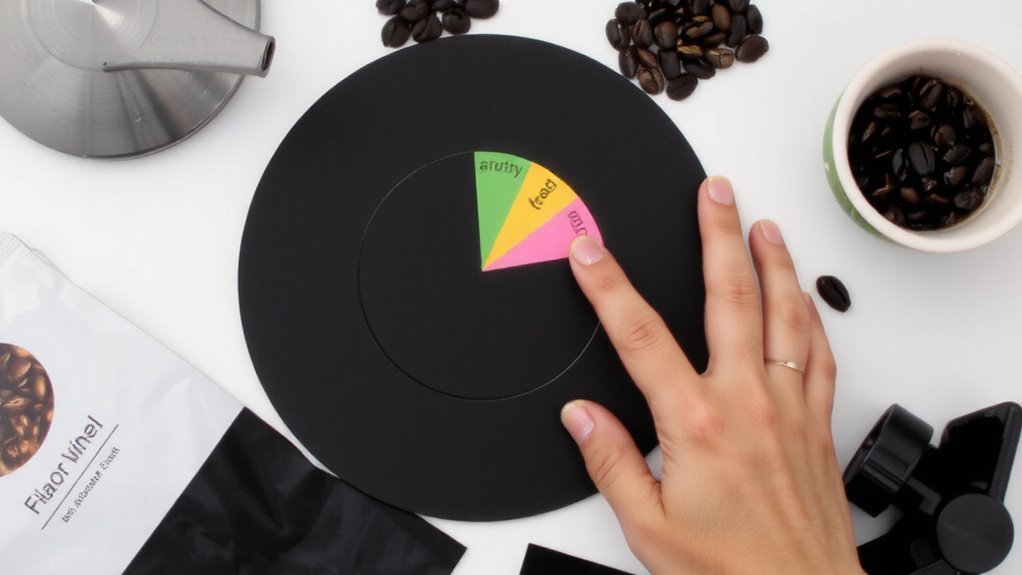
You already know the SCAA Flavor Wheel helps organize taste descriptors from general to specific, but now let’s see how it actually maps flavors in practice. The wheel uses flavor mapping to visually link related tastes, starting with broad categories like “fruity” or “nutty” at the center and expanding to specifics like “citrus” or “almond” at the edges. This structure follows a sensory hierarchy, guiding your nose and palate from general impressions to precise identification. For example, if you detect a fermented note, you move from “other” to “fermented” to “vinegar-like” or “sour.” This method helps avoid vague descriptions and improves consistency across tastings. It’s especially useful when comparing coffees side by side or calibrating with a team. The wheel doesn’t interpret flavor for you, but it gives you a shared language grounded in observable traits, making it a practical tool for accurate, repeatable analysis.
How to Use the SCAA Flavor Wheel Step by Step
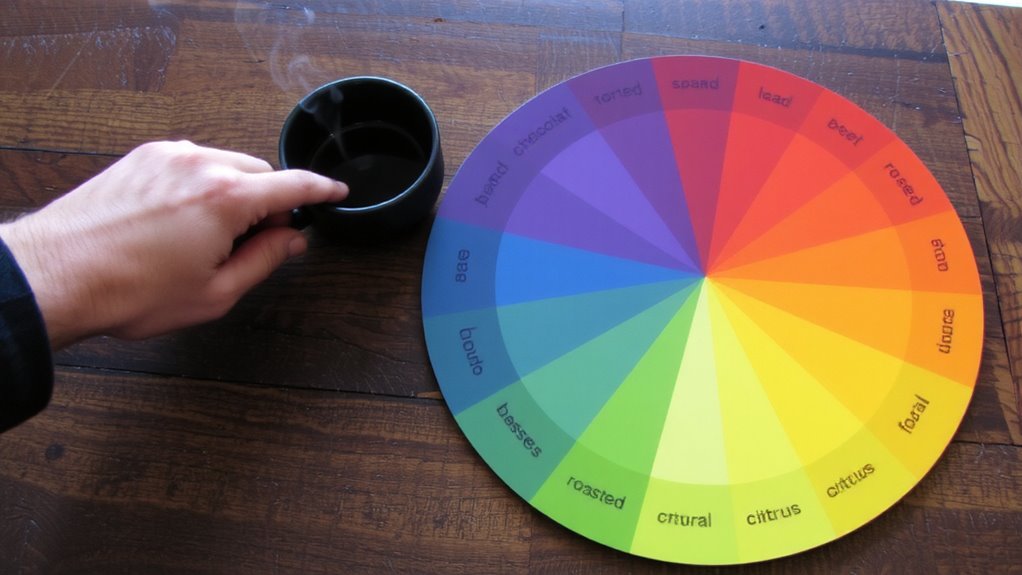
While tasting coffee might seem subjective, using the SCAA Flavor Wheel step by step can make your evaluations more accurate and consistent. Start by smelling the brewed coffee and identifying broad categories like fruity or nutty. Then, move outward from the center of the wheel to narrow down specific nuances-say, from “fruity” to “citrus” to “lemon.” This process, called flavor mapping, helps you pinpoint exact taste notes systematically. Use the wheel during sensory calibration with other tasters to align perceptions and reduce bias. Refer to the SCAA’s standardized definitions to stay consistent. Don’t rush-take notes at each level. With practice, you’ll navigate the wheel faster and communicate flavors more precisely. It’s especially useful when comparing beans or adjusting brew variables. Whether you’re a roaster, barista, or enthusiast, this structured method improves accuracy. Always use a clean palate and repeat tastings to confirm findings. For hands-on experience, consider starting with a best coffee tasting kit to explore and practice flavor identification in a guided way.
How to Practice Tasting Flavors With the SCAA Wheel
How do you train your palate to detect the subtle layers in coffee? Start with blind tasting sessions using the SCAA Flavor Wheel to remove bias. Brew three coffees, cover the bags, and taste without knowing their origin or roast. Note each flavor using the wheel’s sectors-floral, fruity, nutty, etc.-and trace from general to specific terms. This strengthens your flavor memory by forcing you to rely on sensory input, not expectations. Repeat weekly with varied beans; light roasts often reveal more nuanced notes. Compare your findings afterward to see where your guesses aligned. Use the wheel as a vocabulary builder, not just a checklist. Over time, your ability to identify and name flavors improves. Pair this practice with smelling jars of spices, fruits, or chocolates to expand reference points. Consistency builds accuracy-no shortcuts, just repetition. Consider documenting each session in a coffee tasting journal to track progress and refine your sensory evaluation skills over time.
Common Coffee Flavors on the SCAA Wheel and Where to Find Them
A quick glance at the SCAA Flavor Wheel reveals a spectrum of common coffee flavors, from caramel and citrus to herbs and chocolate, each nested within broader categories like sweet, fruity, or roasted. You’ll often spot floral notes in light-roast African beans, especially Ethiopians, where jasmine or bergamot can shine. Citrus undertones appear frequently in high-acidity coffees-think Kenyan or Colombian beans-with hints of lemon or grapefruit that stand out when brewed using pour-over methods. Central American coffees tend to offer balanced profiles, showing caramel or nutty tones. Brazilian or Sumatran beans usually express chocolate or earthy flavors, better highlighted with medium to dark roasts. If you’re using a French press, expect more body, which may mute delicate citrus undertones. Espresso can intensify sweetness but compress floral notes. Recognizing these flavors helps you match beans and brew methods more effectively.
Using the SCAA Flavor Wheel in a Coffee Tasting
You’ll often find the SCAA Flavor Wheel most useful during a structured coffee tasting, or cupping session, where identifying specific flavor notes is key. Start by smelling the coffee grounds and the brewed cup, then use the wheel to narrow down broad categories like fruity or nutty before drilling into specific descriptors. This process supports sensory training by sharpening your ability to detect subtle differences over time. When you taste multiple coffees side by side, the wheel helps with flavor pairing-comparing how chocolate in one coffee differs from nutty tones in another. It’s practical for both beginners and pros, especially when calibrating with a team. Use a printed wheel or digital app for easy reference. Regular use builds consistency in your descriptions, making your feedback more reliable and actionable during tastings.
Common Missteps When Using the SCAA Flavor Wheel
Why do some tasters struggle to get consistent results with the SCAA Flavor Wheel, even when following the steps? You might be using inconsistent terminology, choosing different words for the same flavor across sessions, which undermines accuracy. This wheel relies on precise language-swapping “citrus” for “orange” one day and “lemon” the next creates confusion. Also, overreliance on memory is a common pitfall. You can’t always recall subtle differences between sessions without notes. Relying on memory alone leads to drift in descriptors and misalignment with the wheel’s structure. Instead, document your sessions, use the wheel interactively, and taste with others to calibrate terms. Don’t assume you’ll remember how last week’s Ethiopian tasted. Practical consistency beats guesswork. Stick to the wheel’s hierarchy, train regularly, and avoid vague or shifting language to improve your results over time. For deeper insight into standardizing your tasting vocabulary, consider exploring the best coffee flavor wheels designed for enthusiast calibration.
On a final note
You now have a practical tool for identifying and describing coffee flavors more accurately. The SCAA Flavor Wheel helps you move from vague impressions to specific notes, like citrus or caramel, by guiding you from broad categories to precise terms. Use it during tastings, pair it with clean brewing methods like pour-over, and practice consistently. While it won’t replace experience, it sharpens your palate and improves communication with other tasters. Stick with it, and you’ll taste the difference.