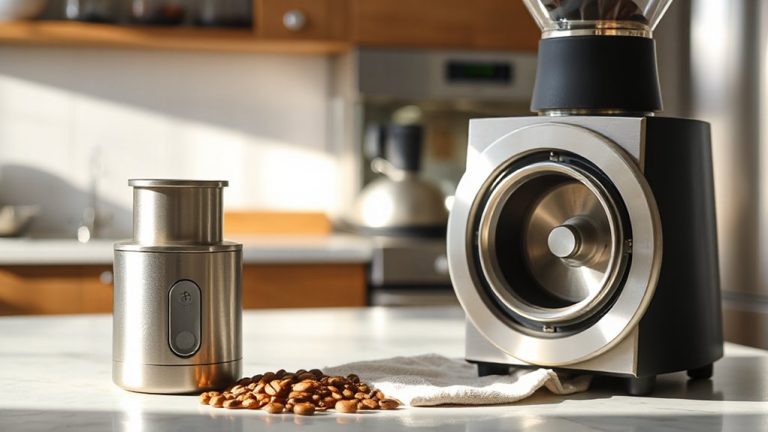
The Impact of Grinder Vibration on Grind Uniformity and Dose Accuracy
Your grinder’s vibration messes with grind consistency and dose accuracy by disrupting bean flow and scattering particles. Fines and boulders separate, retention creeps up, and your dose can swing by up to 30% even on premium grinders if it’s loose or on a shaky surface. Motor misalignment and poor balance make it worse. Heavier grinders like the Niche Zero or Mazzera Mini handle this better, especially on stable setups. There are proven ways to minimize the shake and improve shot repeatability.
Notable Insights
- Vibration disrupts bean flow into burrs, causing inconsistent particle sizes and reducing grind uniformity.
- Particle segregation occurs during vibration, with fines settling and boulders rising in the grind path.
- Shaking grounds in the chute increases retention and delays output, harming dose consistency.
- Vibrations disturb grounds exiting the chamber, leading to erratic dosing and portafilter distribution issues.
- Poor motor alignment and loose mounting amplify vibration, reducing both grind quality and dose accuracy.
How Grinder Vibration Wrecks Your Espresso
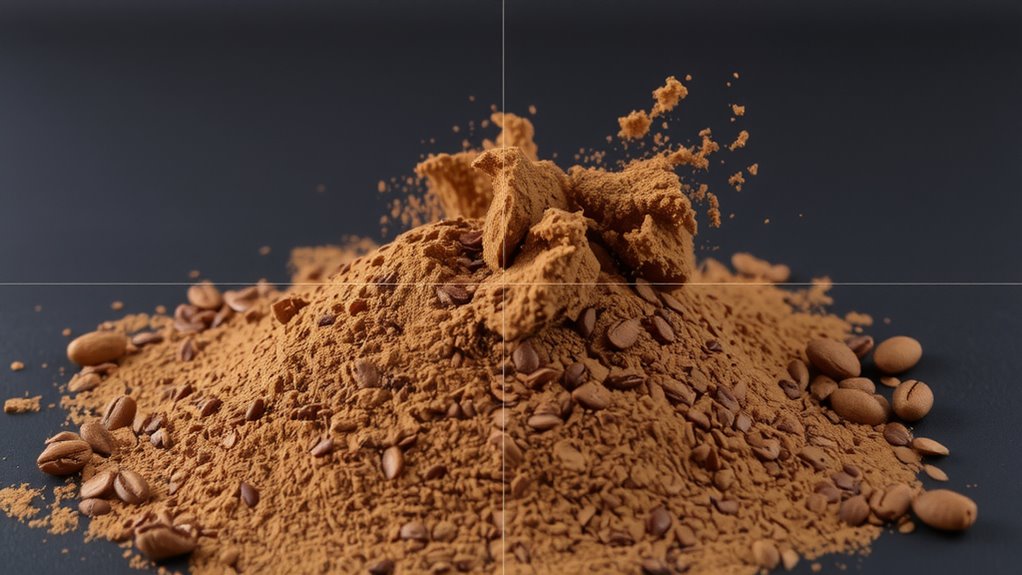
Ever wonder why your espresso shots pull unevenly, even with a high-end grinder? Vibration’s likely the culprit. When your grinder shakes during operation, it disrupts the consistent flow of beans into the burrs. Poor motor alignment causes the spinning shaft to wobble, increasing vibration and uneven wear. Over time, that affects grind quality. Likewise, improper blade balance means the burrs don’t rotate smoothly, introducing inconsistent particle sizes. You’ll notice this in shots that channel or taste off-especially with fine espresso grinds. Even premium grinders like the Eureka Mignon or Baratza Virtuoso suffer if mounted loosely or placed on unstable surfaces. The fix? Guarantee your grinder is on a solid, level platform. Check that internal components stay calibrated. Regular maintenance helps preserve motor alignment and blade balance, keeping particle distribution tight. Less vibration means better consistency-critical for dialing in reliably. Don’t overlook stability; it’s as important as grind settings.
How Shaking Breaks Grind Consistency
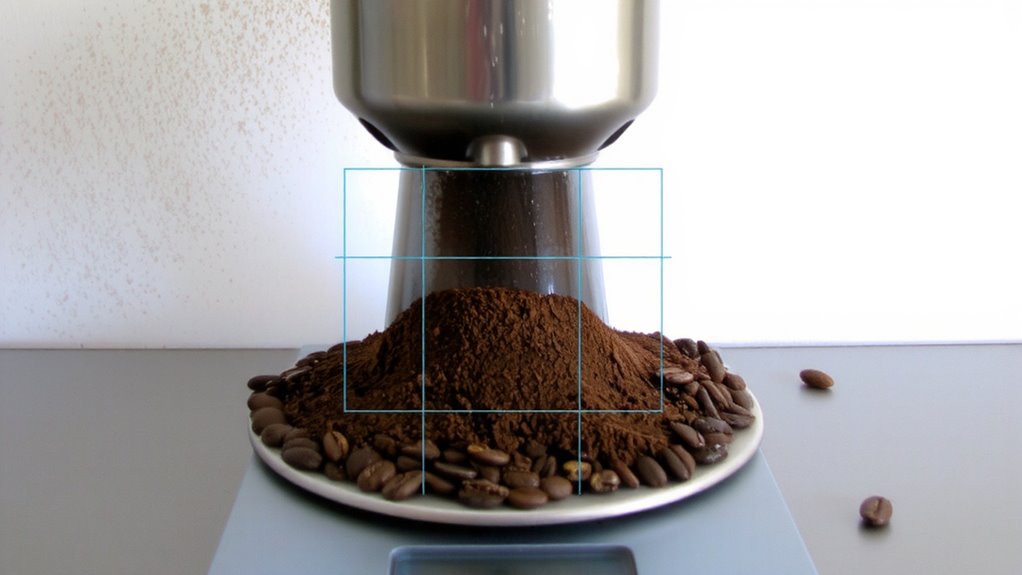
While your grinder’s burrs are designed to produce a uniform particle size, any shaking during operation throws off that precision. Vibrations jostle the grounds inside the chute, leading to particle segregation-where fines settle below and boulders rise. This disrupts flow and clogs pathways, worsening consistency. Shaking also increases grind retention, trapping particles in crevices and delaying output. Over time, this creates an uneven stream of coffee, even if your settings stay the same. Lower retention grinders, like the DF64, manage this better, but vibration still harms uniformity.
| Factor | Effect of Shaking | Result |
|---|---|---|
| Particle segregation | Fines and boulders separate | Uneven extraction |
| Grind retention | More grounds trapped | Delayed, inconsistent pour |
| Burr alignment | Subtle shifts from vibration | Wider particle spread |
Why Your Dose Gets Inconsistent
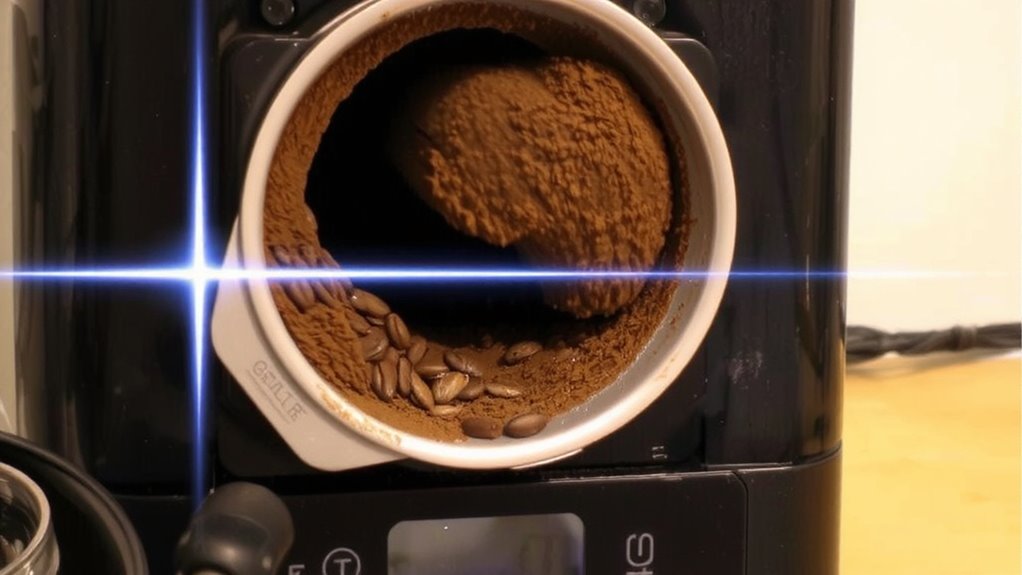
Because vibrations from grinder operation travel through the machine, they disturb the way coffee exits the grind chamber, and that directly affects how much ends up in your portafilter. You might not notice it, but each shake shifts how grounds fall, leading to uneven dosing. Vibration increases static charge, causing some particles to stick to the chute or bounce unpredictably, so what you weigh one time might differ the next. Even if your grinder produces a consistent particle size, vibration disrupts the flow, making dose accuracy harder to maintain. Machines with heavier builds or vibration-dampening feet help reduce this. Using a distribution tool or weighing shots helps counteract inconsistencies. You’ll get better results if you stabilize the grinder on a solid surface. Don’t ignore small shakes-they add up fast. For those using a best home Italian espresso machine, proper grinder placement is even more critical to maintain consistent dosing.
How Vibration Ruins Extraction Quality
If your grinder shakes during operation, it’s likely compromising your shot quality more than you realize. Vibration creates uneven particle deformation, where some grounds get crushed or stretched instead of cleanly cut. This leads to inconsistent sizes, causing parts of your puck to extract too fast while others lag. You’ll taste that imbalance-astringency or sourness-even if your dose and brew time seem right. Excessive shaking also generates excess heat, disrupting heat dispersion and warming the burrs more than intended. That heat alters the grind particle surface, further skewing extraction. These effects are worse in blade grinders or low-budget burr grinders with loose shafts. Even high-end models can suffer if not mounted securely. The result is repeatable inconsistency: you might dial in perfectly one day, only to lose that shot the next without changing settings. Stable grinding matters just as much as grind size. Investing in one of the best espresso grinders under $1000 can significantly reduce vibration and improve grind consistency.
Quick Fixes for a Shaky Grinder
How can you stabilize a grinder that wobbles during use? Start by checking if it’s sitting on a level, sturdy surface-uneven counters exaggerate vibration. Tighten all screws and feet; loose parts make shaking worse. If your grinder still trembles, inspect the motor alignment. A misaligned motor creates uneven force, increasing wobble and affecting grind consistency. Some models, like older entry-level burr grinders, suffer from poor motor alignment out of the box. You can’t fix that permanently without internal adjustments, but temporarily securing the casing might help. Also, consider the feed chute design-narrow or asymmetrical chutes can unbalance the grinder during bean flow. While you can’t alter the design, filling the chute gently and evenly may reduce disturbance. These quick fixes won’t eliminate vibration entirely, but they’ll improve stability and dose accuracy short-term. Upgrading to a burr grinder with precision-engineered components can significantly reduce vibration issues over time, especially when choosing models highlighted in expert Best Mill Grinders reviews.
Choose a Grinder That Stays Still
A solid grinder stays put during operation, and your best defense against vibration starts with choosing the right machine. You need grinder stability to maintain consistent grind size and dosing accuracy shot after shot. Models like the Niche Zero or Mazzera Mini actively resist movement, thanks to low centers of gravity and heavy-duty build. Avoid lightweight grinders that jump or walk during use-these create inconsistency and wear over time. Some grinders offer built-in mounting solutions, like threaded inserts for table bolting, which help secure the unit firmly. Rubber feet help, but they’re no substitute for weight and smart design. If you’re using a vibrating grinder on a flimsy surface, your shot quality will suffer. Choose stability first-especially if you’re using scales or grinding finely for espresso. A still grinder means better control, repeatability, and extraction. Pick wisely.
On a final note
Vibration hurts your espresso by making grinds uneven and doses unreliable. A shaky grinder throws off particle size, leading to inconsistent extraction. You’ll notice sour or bitter shots, even if you weigh everything. Tighten loose parts, bolt your grinder down, or use a model like the Niche Zero or DF64, which resist vibration. Stability means better grinds, shot after shot. Keep it still, keep it consistent.