French Press Mastery: Achieving Perfect Extraction Every Time
Use a 1:15 coffee-to-water ratio, adjusting to 1:14 for stronger or 1:16 for milder brew. Grind beans coarse, like sea salt, with a burr grinder for consistency. Heat water to 200°F-just off boiling-to avoid bitterness. Steep for exactly 4 minutes, then press down slowly over 20–30 seconds to prevent over-extraction. Clean your press right after use to stop oils from turning. Get each step right, and you’ll pull clean, balanced coffee every time-small tweaks can access even better results.
Notable Insights
- Use a 1:15 coffee-to-water ratio for balanced extraction, adjusting to 1:14 or 1:16 for stronger or milder flavor.
- Grind coffee beans coarsely, like sea salt, to prevent over-extraction and sludge in your brew.
- Heat water to 200°F-just below boiling-to optimize extraction without scalding the grounds.
- Steep coffee for exactly 4 minutes, then plunge slowly over 20–30 seconds to minimize sediment.
- Clean the French press immediately after use to prevent rancid oils from affecting future brews.
Start With a 1:15 Coffee-to-Water Ratio
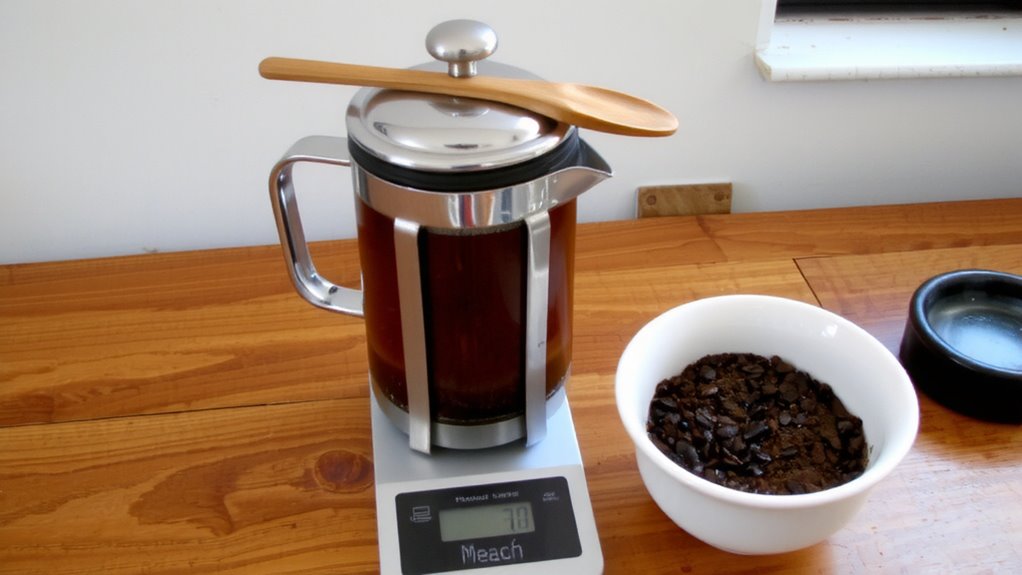
A good starting point for balanced French press coffee is using a 1:15 ratio-1 gram of coffee for every 15 grams of water. This ratio consistently delivers clean, full-bodied results without over-extraction. You can adjust slightly based on taste-1:14 for stronger, 1:16 for milder-but 1:15 works well for most beans and palates. Coffee freshness matters here: freshly roasted beans (within 2–4 weeks) produce brighter, more aromatic brews than stale ones. Pair your ratio with a 4-minute brewing time for ideal extraction-any shorter and the coffee tastes thin; any longer and it becomes gritty. Use a timer to stay consistent. Weighing both coffee and water with a digital scale guarantees accuracy. While some skip scales and guess, precision boosts repeatability. Brands like Hario and Fellow make reliable presses that maintain heat, supporting stable brewing conditions. For even better consistency, consider using one of the best coffee bean scales to ensure precise measurements every time.
Grind Beans Coarse for Smooth French Press Coffee
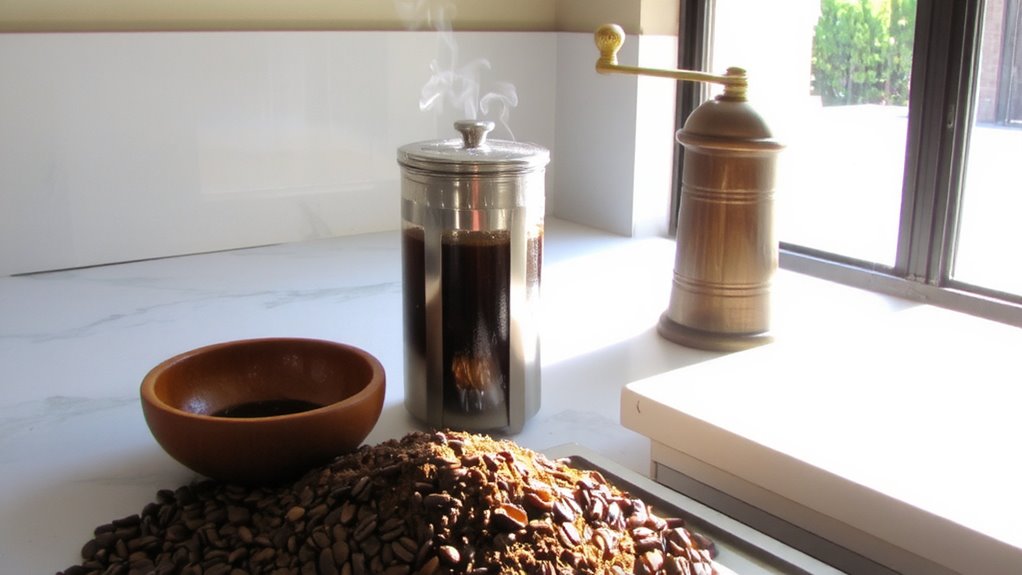
One of the most critical factors in brewing great French press coffee is using the right grind size-coarse, like sea salt, works best. If the grind’s too fine, you’ll get over-extraction and sludge; too coarse, and the coffee tastes weak. A burr grinder gives you far better grind consistency than a blade grinder, which helps extract flavors evenly. Consistent particles mean balanced coffee. Always grind your beans just before brewing-bean freshness makes a real difference in flavor and aroma. Pre-ground coffee loses gases and oils quickly, leading to flat, dull results. For French press, avoid espresso or drip grinds; those are too fine. Aim for chunks you can clearly see and touch. A coarse grind slows water flow through the grounds, preventing muddiness. This method works best with whole beans stored in an airtight container away from light. Some coffee lovers also enjoy using a portable espresso machine for travel-friendly espresso without sacrificing quality.
Heat Water to 200°F and Steep for 4 Minutes
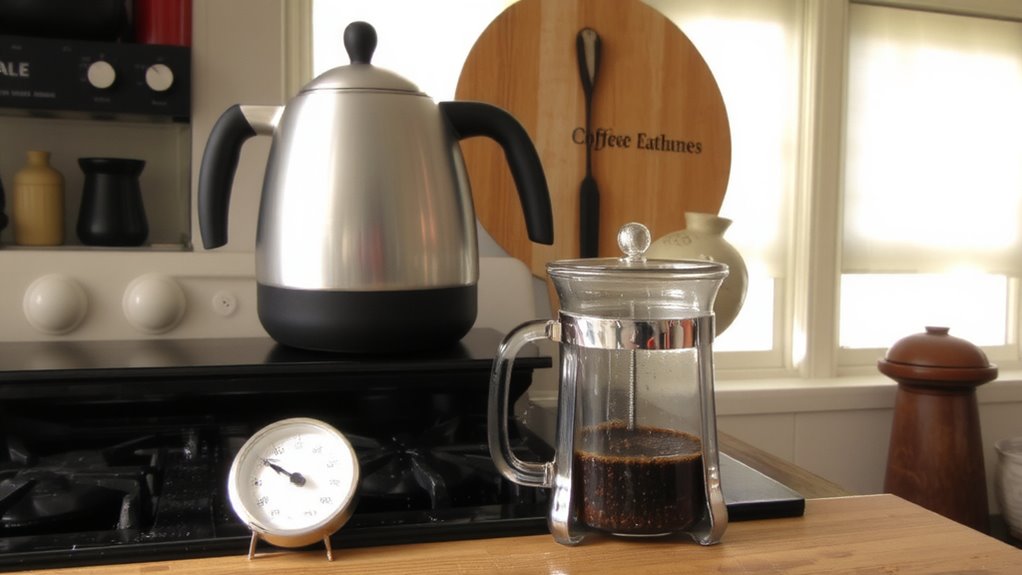
Since water that’s too hot can scorch your grounds and lead to bitter coffee, aim for 200°F-just under boiling-as the ideal water temperature. This range optimizes extraction without burning the coffee. Pair it with a consistent 4-minute steeping time for balanced flavor. Going shorter may leave your coffee under-extracted and sour; going longer can create bitterness, even at ideal heat. For precise temperature control, consider using a gooseneck electric kettle, which offers both optimal heat management and improved pour accuracy.
| Variable | Ideal Setting | Effect on Brew |
|---|---|---|
| Water Temp | 200°F | Prevents scorching |
| Steeping Time | 4 minutes | Full extraction, smooth body |
| Below 195°F | Too cool | Weak, under-extracted |
| Over 205°F | Too hot | Bitter, astringent |
| Over 5 minutes | Too long | Over-extracted, harsh |
Precision in water temperature and steeping time guarantees repeatable, great coffee. Use a gooseneck kettle with a thermometer or an electric one with temp control for best results.
Plunge Slowly to Avoid Over-Extraction
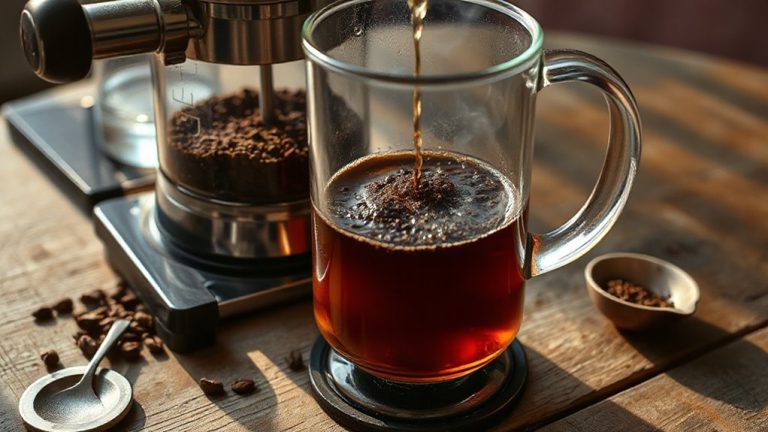
When you’re ready to immerse, do it slowly-ideally over 20 to 30 seconds-to prevent squeezing out excessive fines and over-extracted, gritty flavors. Your push technique matters: pressing too fast disrupts the coffee bed, forcing sludge and bitterness into your cup. Instead, apply steady, even pressure to maintain a smooth descent. This timing precision helps separate the clean, flavorful oils from the unwanted sediment. A slower push also reduces turbulence, which can stir up fine particles that slip through the mesh filter. Use a French press with a well-fitted plunger, like those from Fellow or Espro, for better control. Avoid cheap models with loose screens-they make consistent pushing harder. You’re not just filtering; you’re finessing the final extraction. Slow pushing isn’t about patience alone-it’s a key step in extraction balance. Get this right, and your coffee stays rich without turning harsh.
Clean Your French Press Immediately After Use
Though it’s tempting to leave the cleanup for later, rinsing your French Press right after use makes removing oily coffee residue far easier and prevents rancidity. Delaying your cleaning routine lets oils linger, encouraging residue buildup that affects flavor over time. A quick rinse with warm water immediately after depressing the plunger removes most grounds and oils. Finish a thorough wash within a few hours to maintain performance and taste.
| Step | Purpose |
|---|---|
| Rinse after use | Prevents immediate residue buildup |
| Disassemble plunger | Guarantees full access for cleaning |
| Wash with mild soap | Breaks down oily residue |
| Air dry fully | Stops bacterial growth, preserves parts |
Stick to this routine to avoid long-term stains and off-flavors. Plastic and metal parts may retain odors more than glass, so check manufacturer guidelines. Regular, prompt cleaning keeps your French Press in top condition and guarantees every brew tastes fresh.
On a final note
You’ve got the basics: use a 1:15 coffee-to-water ratio, a coarse grind, and water at 200°F. Steep for exactly 4 minutes, then press down slowly to avoid bitterness. Clean the press right after to prevent oils from building up. A good burr grinder, like the Baratza Encore, helps, but even a budget scale improves consistency. French press delivers rich, full-bodied coffee-just stay consistent, and it’ll work reliably every time.