Why Cleaning Your Tamper Daily Prevents Coffee Residue Transfer
You’re transferring stale oils and old grounds into fresh coffee every time you tamp with a dirty base. Residue creates uneven contact, leading to channeling and bitter, dull espresso. Daily cleaning with warm water and a soft brush removes buildup that dulls flavor and harms extraction. Even stainless steel holds onto old particles. A quick wipe isn’t enough over time. Keep your tamper clean, and you’ll taste the difference-especially with light or specialty roasts. There’s more to how this small step transforms your shots.
Notable Insights
- Old coffee grounds on a dirty tamper transfer stale flavors to fresh espresso shots.
- Rancid oils from residue oxidize and distort the intended taste of specialty coffee.
- Moisture trapped in crevices accelerates oil degradation and promotes bacterial growth.
- Residue buildup creates an uneven tamper surface, causing inconsistent tamping and channeling.
- Daily cleaning with water and a brush removes contaminants that dull espresso brightness.
Why Old Coffee Residue Ruins Your Espresso
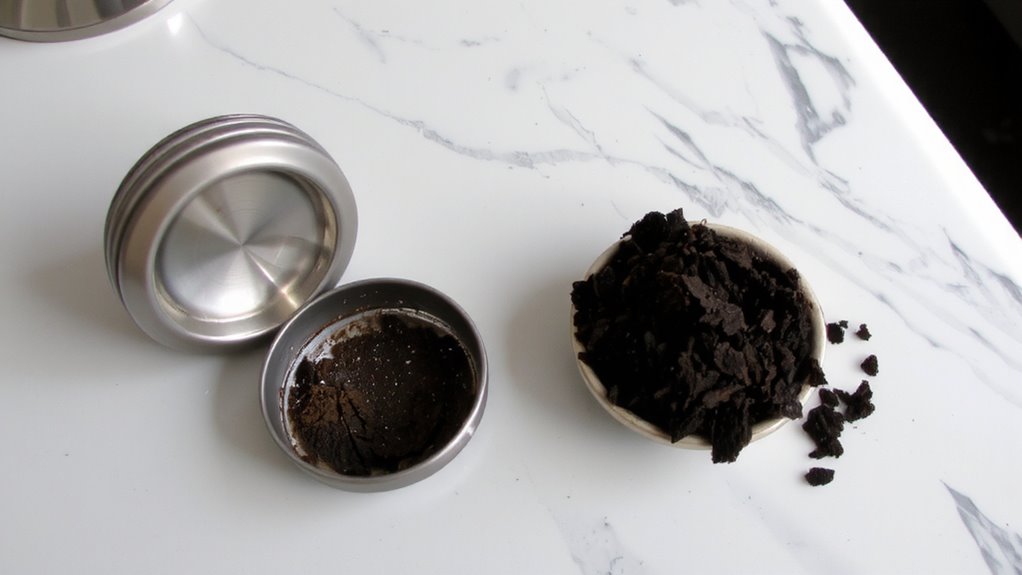
Old coffee grounds sticking to your tamper aren’t just messy-they’re a stealthy enemy of flavor. Those leftover particles carry stale aromas that mix with your fresh dose, dulling the espresso’s brightness. You might not notice at first, but over time, they contribute to a bitter aftertaste, muddying the clean finish a well-pulled shot should have. Residue builds up crevices-especially on non-flat bases or textured surfaces-where moisture traps old oils. These rancid oils oxidize, further skewing your flavor profile. Even if you wipe the base, microscopic fragments cling to the sides or rim. A quick rinse under warm water each time you finish tamping removes this build-up before it affects your next shot. No special tools needed-just water and a microfiber cloth. It’s a 10-second habit that keeps your coffee tasting intentional, not contaminated. Choosing the right best coffee tamper can also minimize residue buildup thanks to precision engineering and smooth, easy-to-clean surfaces.
How a Dirty Tamper Causes Uneven Tamping
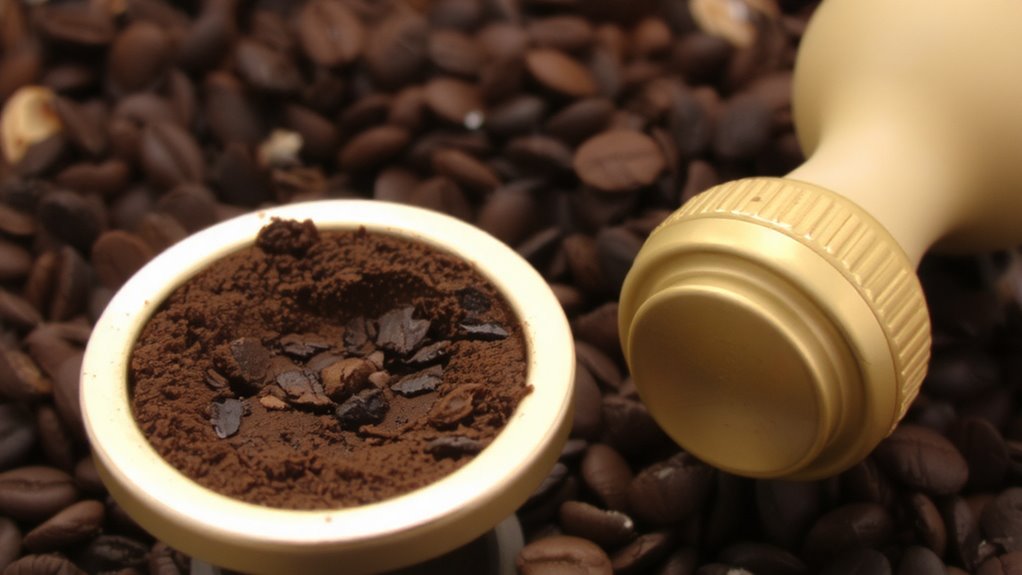
Even if you apply consistent pressure, a dirty tamper can compromise your tamp by creating an uneven surface contact between the base and the coffee bed. Coffee grounds and oils build up over time, especially around the edge and base, preventing a flush, flat compression. That means some areas of the puck get more force than others-leading to uneven pressure across the surface. When water flows during extraction, it follows the path of least resistance, channeling through weaker spots. This results in inconsistent extraction: under-extracted sour notes mix with over-extracted bitter ones, muddying your espresso’s flavor. A clean tamper guarantees full, even contact, so pressure is uniformly distributed. That uniformity supports balanced water flow and a more predictable, repeatable shot. It’s a small step-wiping your tamper after each use-but it directly impacts puck prep. Skip it, and you’re fighting poor technique despite good intentions. Clean the base, avoid the variables. Using a durable and easy-to-clean tamping mat can further help maintain tamp consistency by providing a stable, residue-free surface.
Stop Old Coffee Flavors: Clean Your Tamper Daily
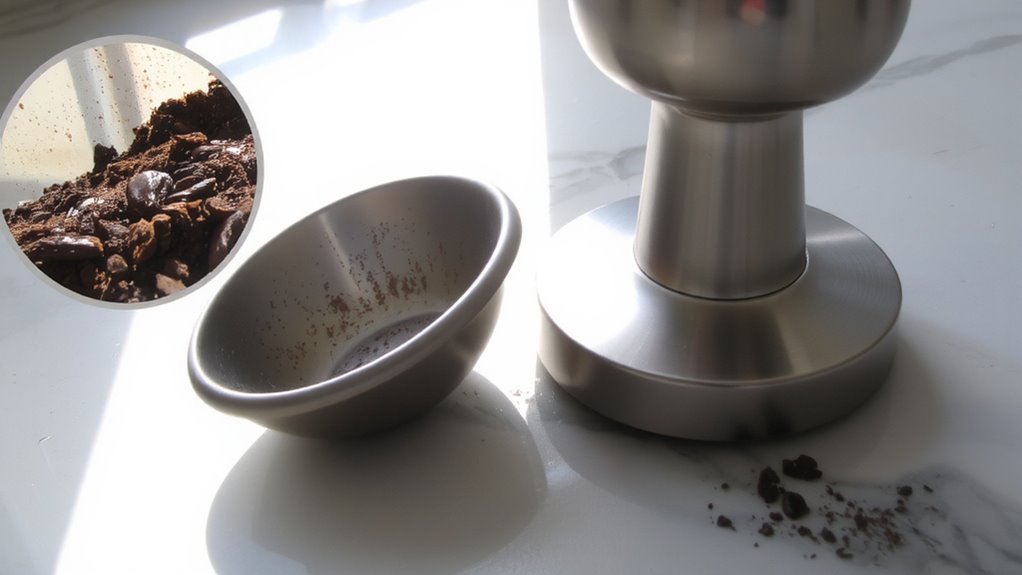
You’ll often find that leftover coffee residue on your tamper carries over stale flavors from past shots, and that buildup can quietly ruin the taste of your fresh espresso. This is a classic case of flavor carryover-old oils and fine particles cling to the tamper’s base, transferring rancid or muted notes into your next brew. If you don’t clean your tamper daily, you risk taste contamination that dulls bright, nuanced profiles in specialty beans. Stainless steel tampers may hide less grime than colored ones, but all materials retain residue over time. Even a quick wipe isn’t always enough after repeated use. Daily cleaning breaks this chain, ensuring each tamp starts fresh. It’s a simple habit with a direct impact: you’ll taste the espresso you pulled, not remnants of yesterday’s shot. Preventing flavor carryover isn’t fussy-it’s fundamental. Keep your tamper clean, and keep your coffee honest.
Tools and Tips for Fast Tamper Cleaning
Typically, cleaning your tamper takes little more than a damp cloth, a quick rinse, and a few seconds of attention-especially if you do it right after each use. For a quick rinse, simply run the base under warm water to loosen any stuck coffee grounds. If residue stays, use a soft brush scrub with a small nylon or dedicated tamper brush-avoid metal bristles that can scratch surfaces. A flat-bottomed tamper cleans faster than a concave one, since there are fewer crevices. For daily maintenance, skip soaps unless necessary; water and a brush scrub are usually enough. Microfiber cloths prevent lint and dry the base efficiently. Plastic or aluminum tampers clean faster than wooden ones, which can absorb moisture. Keep your tools-cloth, brush, water cup-within reach during brewing to encourage immediate cleaning. With this routine, you maintain consistency and avoid buildup without adding significant time to your process.
Does a Dirty Tamper Damage Your Espresso Routine?
A clean tamper isn’t just about looks-it plays a direct role in how consistently your espresso extracts. Coffee residue on your tamper can transfer to the portafilter, disrupting the puck’s surface and leading to uneven tamping. That inconsistency causes channeling, which ruins flavor and shot timing. Over time, built-up oils degrade materials, reducing tamper longevity, especially with wooden or plastic bases. Daily cleaning prevents this wear and extends tool life. There’s also a hygiene impact-old coffee grounds trap moisture and bacteria, which isn’t ideal when handling tools that touch your drink. Stainless steel tampers resist decay better but still need wiping. If you skip cleaning, even sturdy tampers face corrosion or pitting. For best results, wipe after each use and wash weekly with mild soap. Keeping your tamper clean isn’t obsessive-it’s essential for flavor, tool care, and routine reliability.
On a final note
You should clean your tamper daily to stop old coffee oils from transferring into fresh shots. Leftover residue affects flavor and can cause uneven tamping, leading to inconsistent extraction. A quick wipe with a damp cloth or soft brush takes seconds and prevents buildup. Stainless steel tampers hold less odor than wood or plastic, but all types need routine care. Skipping this step risks contaminating your espresso-cleaning isn’t optional if you want reliable, clean-tasting results.