Expert AeroPress Techniques to Elevate Your Coffee Game
Use a medium-fine grind, like table salt, with a burr grinder for even particles and better extraction. Brew between 175°F and 205°F, using a gooseneck kettle for precision. Stick to 1–2 minutes total brew time, stirring 10–15 times after pouring. Try the inverted method to control steeping and prevent leaks. Start with a 1:15 coffee-to-water ratio and adjust. Your next cup could be even sharper, cleaner, more balanced-small tweaks make the real difference.
Notable Insights
- Use a medium-fine grind like table salt for balanced extraction and avoid bitter or weak coffee.
- Brew with water between 175°F and 205°F, adjusting for roast level to preserve flavor notes.
- Stir 10–15 times after pouring water to ensure even saturation and consistent extraction.
- Use the inverted method to control steep time and prevent premature dripping during brewing.
- Start with a 1:15 coffee-to-water ratio and adjust based on roast and taste preferences.
Master Your AeroPress Grind Size
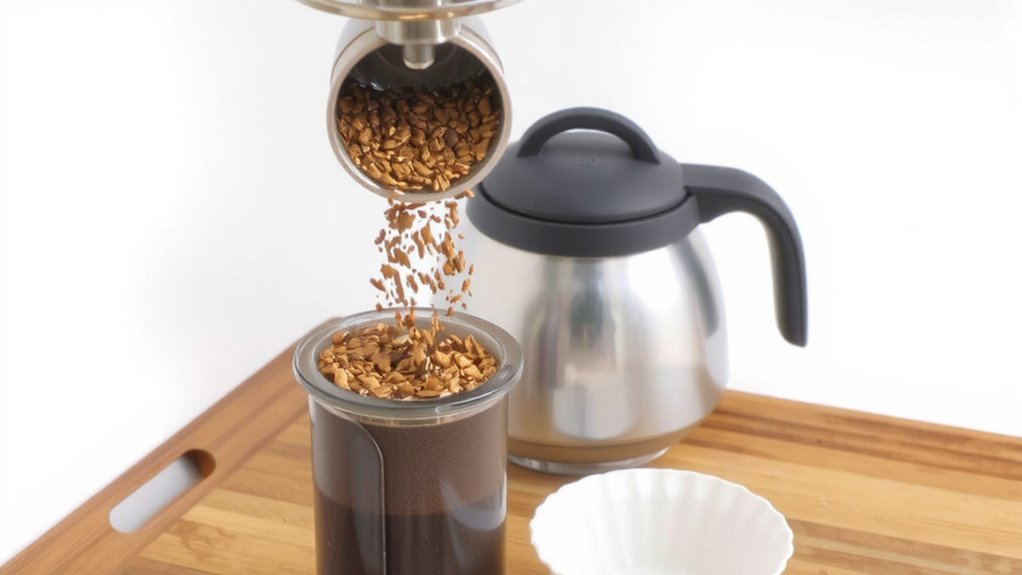
Grind size can make or break your AeroPress brew. You need a medium-fine grind, similar to table salt, for balanced extraction. Too fine and your coffee tastes bitter; too coarse and it’s weak. Grind consistency is critical-uneven particles lead to uneven extraction. A blade grinder often creates poor particle distribution, with both dust and boulders, causing some parts to over-extract and others under-extract. A good burr grinder, like the Baratza Encore or Fellow Ode, gives you uniform results. You’ll notice sweeter, cleaner cups when particle distribution is tight. For inverted brewing, slightly finer grinds work well, but only if consistency is high. Avoid pre-ground coffee-particles degrade and clump. Your grind affects mouthfeel, clarity, and flavor strength. Adjust in small steps. Always use freshly ground beans. This small change has an outsize impact on quality. For those on the go, a travel coffee grinder can deliver consistent results without sacrificing portability.
Control AeroPress Water Temperature
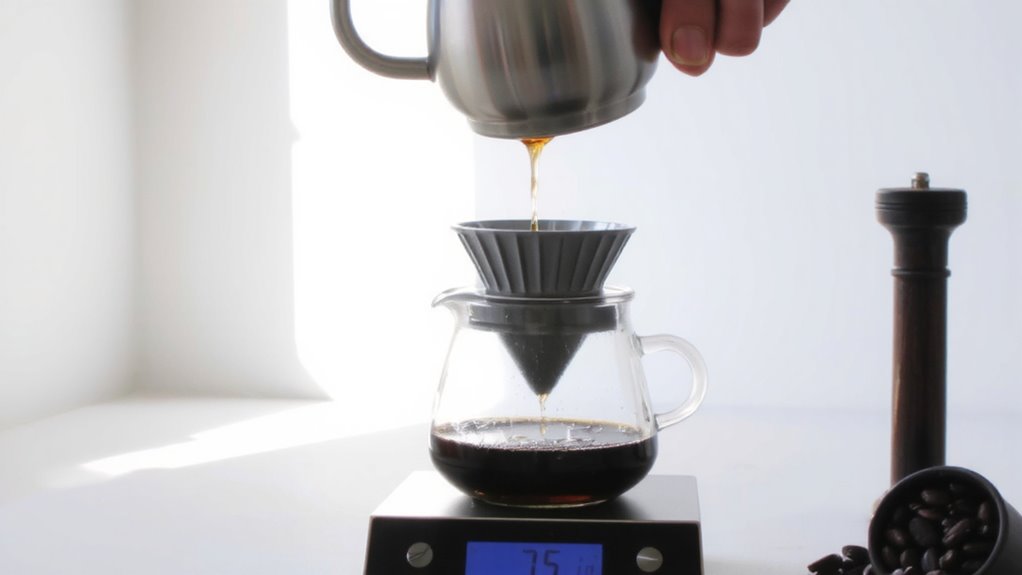
What if the key to better AeroPress coffee isn’t just technique, but temperature? You need to control water temperature because it directly affects extraction, water chemistry, and flavor. Too hot (above 205°F), and you’ll burn delicate notes; too cool (below 175°F), and the coffee tastes flat. Preheating your AeroPress improves heat retention, helping maintain stable brewing temps. Use a gooseneck kettle with a thermometer or temperature-controlled model like the Fellow Stagg EKG for accuracy. Maintaining the ideal brewing temperature ensures optimal extraction and enhances overall cup quality.
| Brew Temp (°F) | Extraction Effect | Best For |
|---|---|---|
| 175–185 | Light, tea-like | Light roasts, delicate beans |
| 185–195 | Balanced | Most filter roasts |
| 195–205 | Full, bold | Darker roasts, espresso-style |
Matching water temperature to roast level and ensuring heat retention maximizes clarity and sweetness. Water chemistry also shifts with heat-hotter water extracts minerals faster, altering taste.
Perfect Brew Time and Stirring
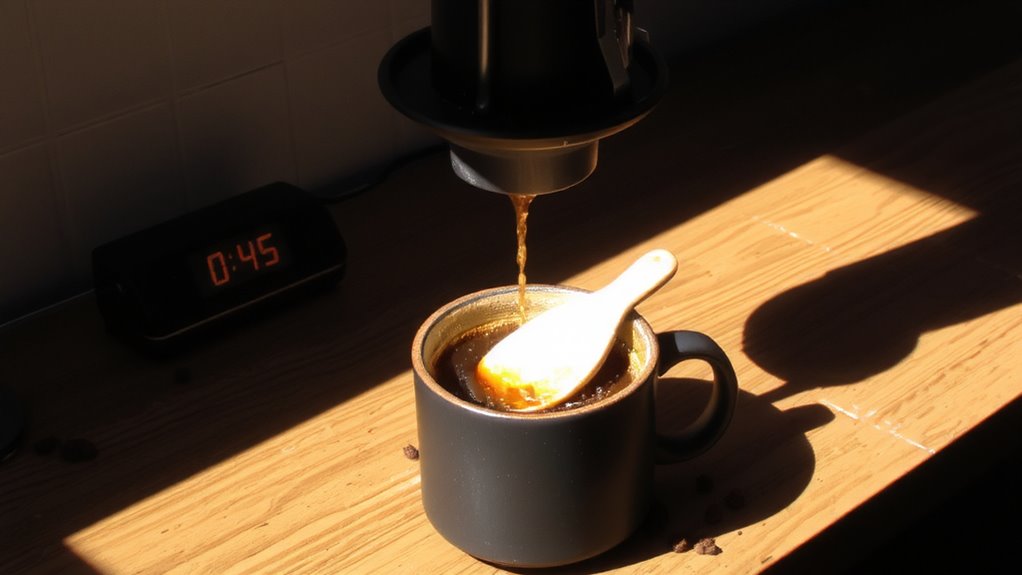
You’ve already got the water temperature dialed in, so now it’s time to focus on how long you let that water interact with the coffee and how you mix it. For best brew consistency, aim for a total brew time of 1 to 2 minutes. Start timing as soon as you finish pouring the water. Stirring matters-give it a solid 10 to 15 clockwise stirs right after the pour. This guarantees even saturation and speeds up extraction. Too little stirring leads to weak spots; over-stirring can make your coffee astringent. Use timing precision to replicate results every time. A simple timer on your phone works just fine. Keeping stirring and timing consistent helps eliminate variables, making it easier to tweak grind size or dose later. These small steps add up to better control and a cleaner, more balanced cup. Stick with this method, and you’ll notice clearer flavors and smoother outcomes from brew to brew. For even more refinement, consider exploring other manual brewing methods to deepen your understanding of extraction variables.
Use the Inverted AeroPress Method
Most baristas who use the AeroPress regularly find the inverted method cuts down on spills and gives them more control over brew time. You flip the AeroPress upside down, so the plunger is on the bottom. This setup stops premature dripping during bloom and steep. It also gives you better brew control since you start the timer the moment you add water. Just make sure your surface is flat and stable-this method won’t work on uneven counters. When steeping’s done, stir, attach the cap with a filter, then flip and press. Your plunger technique matters: press slow and steady to avoid forcing water too fast. A rushed press can over-extract and make coffee bitter. Some folks worry about leaks, but a proper seal and tight cap usually prevent messes. It’s not required, but many find the inverted way more consistent-especially for longer steeps.
Dial In Your AeroPress Coffee Ratio
A 1:15 coffee-to-water ratio is a solid starting point for AeroPress brewing, meaning 1 gram of coffee for every 15 grams of water. This balance delivers clarity and body without over-extraction. Adjust slightly based on roast level and grind size-darker roasts may prefer 1:16, while lights can go to 1:14. Your aeropress press pressure affects flow rate, so apply steady, moderate force to avoid disturbing the bed. Paper filter types influence flavor clarity; bleached filters give a cleaner cup, while unbleached add slight paper taste but are more eco-friendly. Metal filters increase body but may allow sediment. See how variables interact:
| Coffee (g) | Water (g) | Grind Size (Burr Setting) |
|---|---|---|
| 15 | 225 | Medium-Fine (4) |
| 16 | 240 | Fine (3.5) |
| 17 | 255 | Medium (4.5) |
On a final note
You’ve got the tools to improve your AeroPress coffee. Use a medium-fine grind, aim for water around 175–205°F, and stir for even extraction. The inverted method reduces spills and controls brew time. A 1:15 coffee-to-water ratio works well, but tweak it to taste. These steps are simple, repeatable, and effective-no gadgets needed. Consistency beats complexity here.