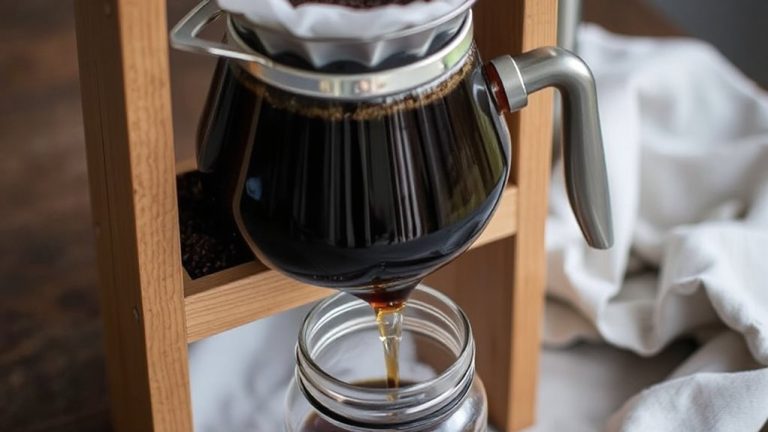
How to Prevent Over-Extraction in a Metal Filter Pour Over With Coarser Grind
Use a coarser grind to slow water flow through the metal filter and reduce extraction, preventing harsh, bitter flavors. Pair this with a gooseneck kettle for controlled, even pours-start gentle during bloom and maintain low, steady pulses. Pre-wet the filter thoroughly and guarantee it sits flat to avoid channel LinkedHashMap. Keep water between 195–205°F. You’ll do even better once you fine-tune these steps.
Notable Insights
- Use a gooseneck kettle to control pour speed and prevent excessive flow through the coarse grind.
- Pre-wet the metal filter thoroughly to ensure even seating and eliminate channeling risks.
- Maintain water temperature between 195–205°F to optimize extraction without scalding the coarse grounds.
- Adjust grind slightly finer if over-extraction occurs, as coarser settings may still extract unevenly with fast drainage.
- Apply slow, steady pulses in a spiral pattern to maximize contact time and minimize bypass.
Why Metal Filters Cause Bitter Coffee
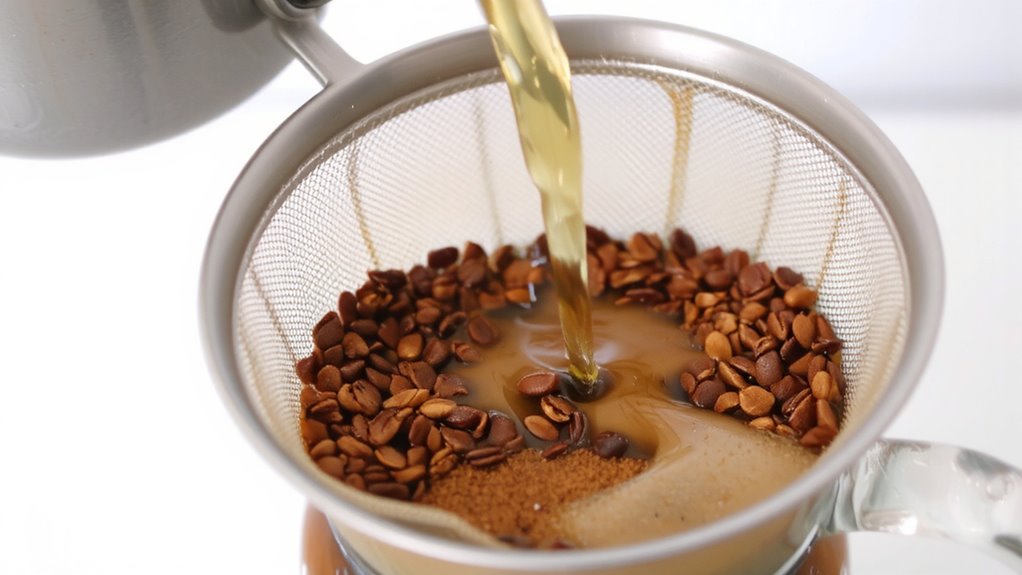
While paper filters trap most oils and fine particles, metal filters let more of them pass through, which can lead to a heavier body but also increase the risk of bitterness if the coffee’s over-extracted. You’re dealing with direct material interaction between the metal surface and water flow, which changes how compounds extract. Unlike paper, metal doesn’t absorb anything, so more sediment and oils reach your cup. That can enhance flavor complexity, but only if you control the brew. These filters also create less flow restriction, meaning water moves faster unless you adjust. Faster flow sounds good, but without the right grind or pour technique, it leads to uneven extraction-strong, bitter notes up front, weak ones at the end. You need to account for this by tweaking variables like grind size or brew time. Not all metal filters behave the same; fine-mesh ones like Able Fellow have slightly more resistance than perforated ones like Kalita’s metal disc. Choose wisely. The best coffee drippers are designed to work synergistically with your chosen filter type to optimize brew consistency.
Use a Coarser Grind to Prevent Over-Extraction
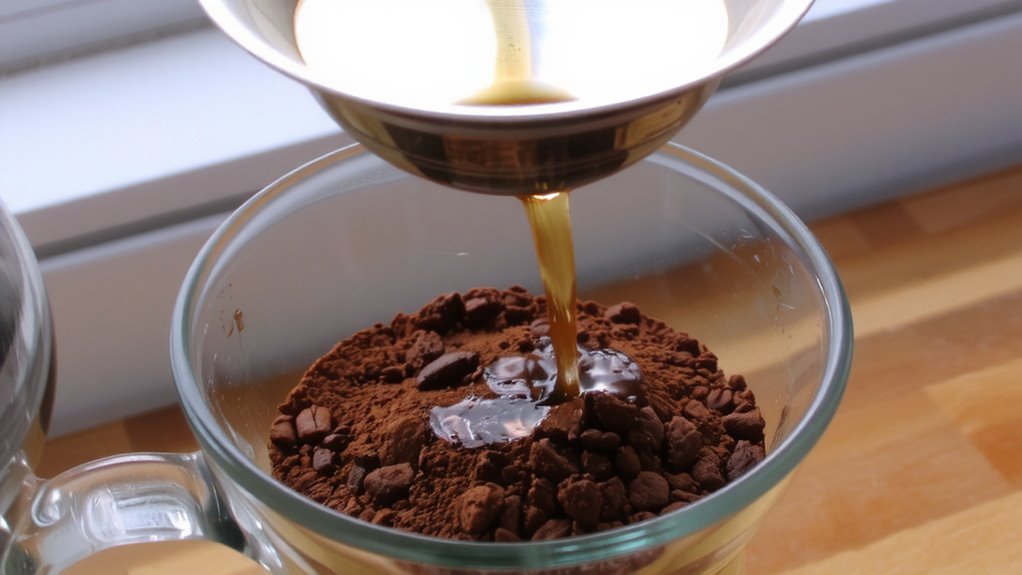
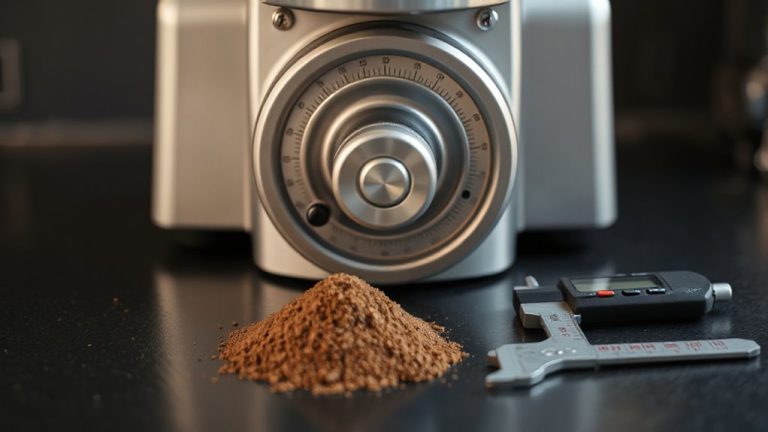
You can manage the risk of bitter coffee with a metal filter by adjusting your grind size. Metal filters let more oils and fines pass through, increasing extraction. A coarser grind slows water flow and reduces surface area, helping prevent over-extraction. Focus on grind consistency-uneven particles lead to some over-extracting while others under-extract. Use a burr grinder for uniform results. Water temperature also matters; aim for 195–205°F to balance extraction without scalding. For optimal pour-over grind size, match your grind to the filter type and brewing time to achieve balanced flavor.
| Grind Size | Flow Rate | Extraction Risk |
|---|---|---|
| Fine | Slow | High (Bitter) |
| Medium | Moderate | Medium |
| Coarse | Fast | Low (Sour) |
Adjust coarseness based on taste. If coffee tastes harsh, go coarser. Pair grind changes with stable water temperature for best control.
How to Adjust Your Pour for Metal Filters
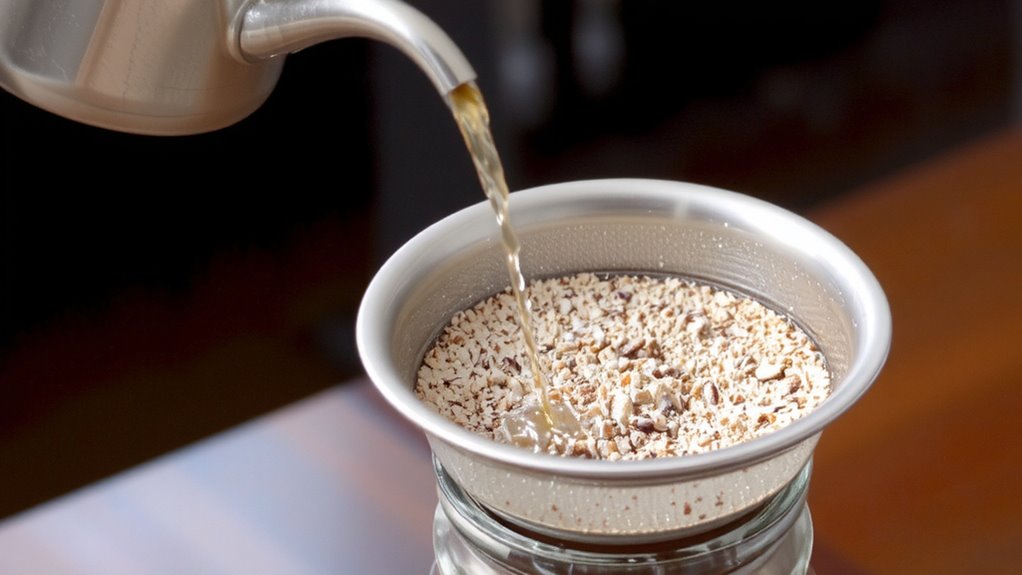
Why does your pour-over taste bitter even with the right grind? Your pour technique might be causing too much water turbulence or restricting flow rate. Metal filters drain faster than paper, so you need to adjust your pour to match. Use a gooseneck kettle for precision. Start with a gentle spiral pour during bloom to minimize agitation. After blooming, maintain steady, controlled pulses-don’t rush. A fast pour increases turbulence, which stirs fines and leads to uneven extraction. Keep the water level low and consistent to sustain even flow rate. Avoid aggressive center pours; they dig into the bed and spike extraction. Aim for a full drawdown before your next pour. A slower, smoother pour reduces channeling and over-extraction. With metal filters, it’s not just how coarse you grind-it’s how you pour. For optimal control, consider using one of the best gooseneck kettles designed specifically for precision pouring.
Fix Common Metal Filter Brewing Problems
If your metal filter brew tastes off despite a solid recipe, small tweaks to your setup can make a real difference. Poor flow control often causes uneven extraction-try slowing your pour to avoid channeling, especially with fast-dripping filters like Able Kone or Hario’s metal disc. A gooseneck kettle helps, giving you precision over water placement and speed. Your pre wetting technique matters too: rinse the filter well to remove metal taste and settle it evenly in the brewer. If it’s puckered or tilted, water flows unevenly. Check that the filter fits snugly in your dripper-gaps let water bypass the coffee. Some brewers, like the Chemex with a metal add-on, need extra attention here. Adjusting these details improves consistency without changing your grind or recipe.
Get Full-Bodied, Balanced Coffee Every Time
A well-crafted cup starts with control-over variables like grind size, water temperature, and brew time. You want full body and balance, and a metal filter with a coarser grind can deliver that-if done right. The metal filter lets more oils through compared to paper, boosting mouthfeel and richness. But go too coarse, and you lose coffee clarity; too fine, and you risk over-extraction, muddying flavor consistency. Aim for a grind like sea salt-consistent, not dusty. Use 93–96°C water and a 3:30 to 4:00 minute brew time. Rinse your metal filter first to avoid metallic notes. Brands like Able Kone or Decent Espresso SS insert work well with V60 or Kalita Wave setups. Adjust in small increments. When dialed in, you’ll get clean sweetness, low acidity, and reliable flavor from cup to cup-no guesswork needed.
On a final note
You’ll avoid over-extraction in your metal filter pour over by using a coarser grind-think sea salt-to slow flow and reduce bitterness. Pour evenly, starting with a gentle bloom and steady spiral. Metal filters let more oils through than paper, giving richer body but requiring careful grind control. If coffee tastes harsh, go coarser. With practice and small tweaks, you’ll get balanced, full-bodied results using filters like Able Kone or HiWave.