How to Prevent Fines From Clogging Filters in Fine Grind Pour Overs
Use a coarser grind to reduce fines and prevent clogs, even if you’re aiming for a fine brew. A quality burr grinder like the Baratza Encore gives consistent particles, unlike blade grinders that create fines. Pre-rinse your paper filter to remove dust and help it trap fines early. Pour slowly in expanding spirals with a gooseneck kettle to avoid disturbing the bed. Clean your grinder weekly to cut static and old coffee bits that turn into fines. More details can help fine-tune your setup.
Notable Insights
- Use a coarser grind setting to reduce fines and improve water flow, preventing clogging during pour over brewing.
- Invest in a quality burr grinder to ensure consistent particle size and minimize the production of fines.
- Pre-rinse the paper filter with hot water to remove paper taste and enhance fines trapping during brewing.
- Pour slowly and evenly with a gooseneck kettle to avoid disturbing the coffee bed and forcing fines into the filter.
- Clean your grinder regularly to reduce static and residue buildup, which can increase fines production over time.
Stop Fines From Clogging Your Pour Over
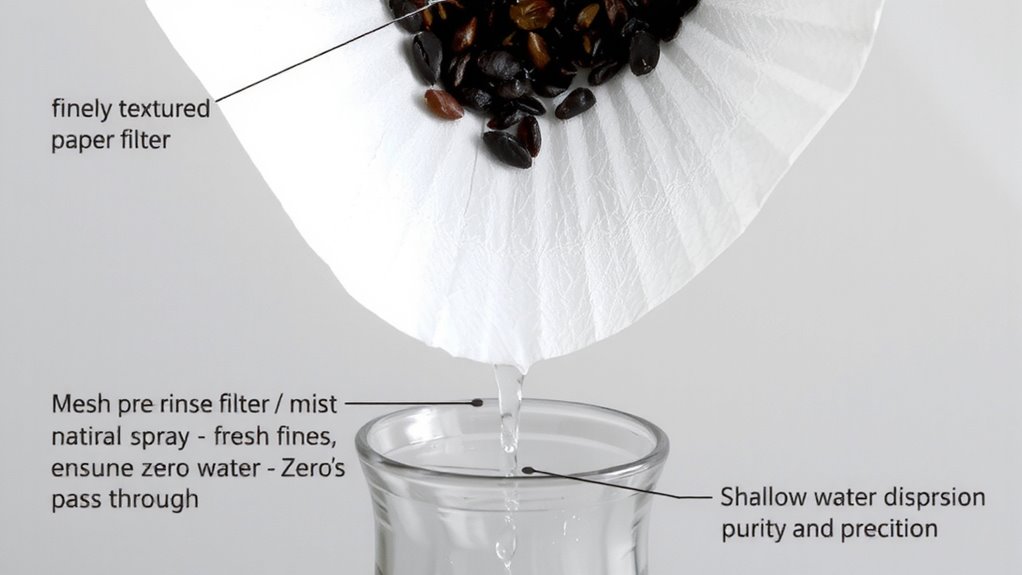
While finer particles are a natural byproduct of grinding coffee, they can quickly become a problem in pour over brewing if not managed. Fines can clog your filter, slowing drainage and leading to over-extraction. You’ll notice a longer brew time, often past 3:30, which usually means trouble. To counter this, control your water temperature-keep it between 195°F and 205°F. Too hot, and you extract too much from fines; too cool, and the flow stalls. A gooseneck kettle helps maintain even saturation without disturbing the bed. Paper filters, like those from Hario or Chemex, trap more fines than metal, reducing clogging. Pre-rinsing eliminates paper taste and preheats your brewer, stabilizing temperature. Aggressive pouring worsens clogging, so pour gently in slow spirals. With the right technique, you’ll keep brew time consistent and your coffee clean, balanced, and free of sludge. For precise control during pouring, consider using one of the best gooseneck kettles for precision pouring.
Grind Coarser to Reduce Fines
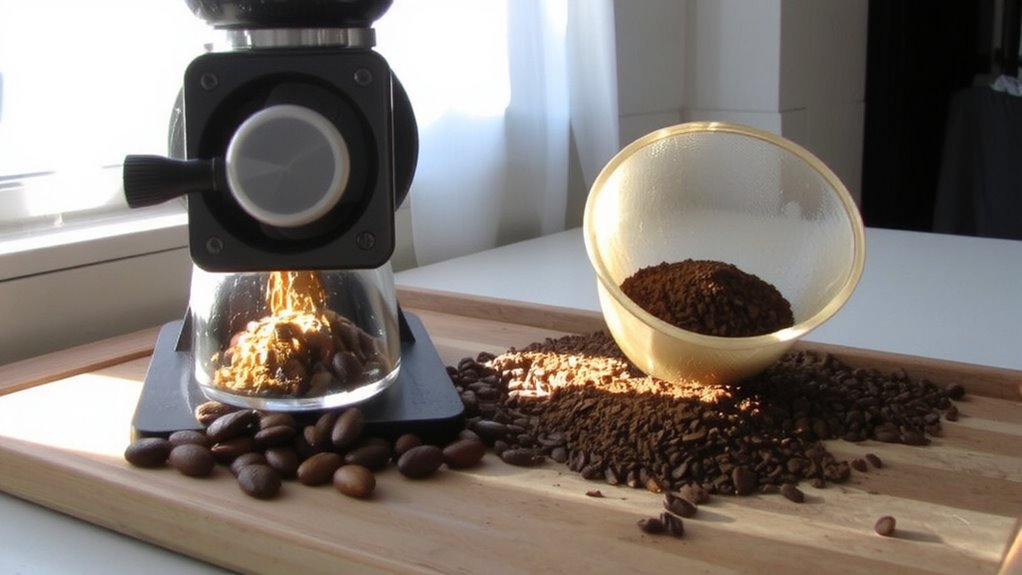
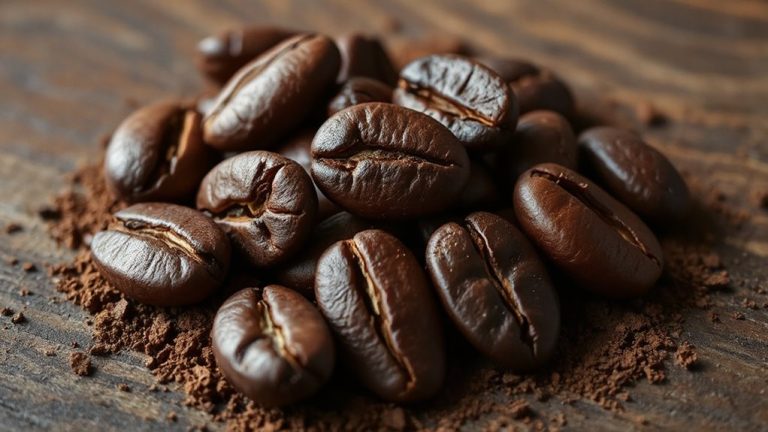
A coarser grind setting can significantly cut down on fines, which are tiny coffee particles that slip through your grinder’s settings and end up in the brew. By adjusting your grind size just a few notches wider, you reduce the amount of these ultra-fine fragments, improving flow and preventing clogs in your filter. A coarse to medium-coarse setting-like what you’d use for a Chemex-creates a more even particle distribution, meaning fewer extremes in size. That helps water pass through smoothly without getting blocked. While a fine grind may extract more flavor in theory, it often backfires when fines clump and restrict flow. Going coarser isn’t a fix-all-you might lose a bit of intensity-but it boosts consistency, especially with paper filters that clog easily. You’ll notice cleaner cups and fewer drips. Try starting at a grind size comparable to sea salt and adjust from there based on taste and brew time. For French press brewing, a consistent coarse grind is essential to avoid over-extraction and sediment in your cup.
Use a Quality Grinder for Consistent Results
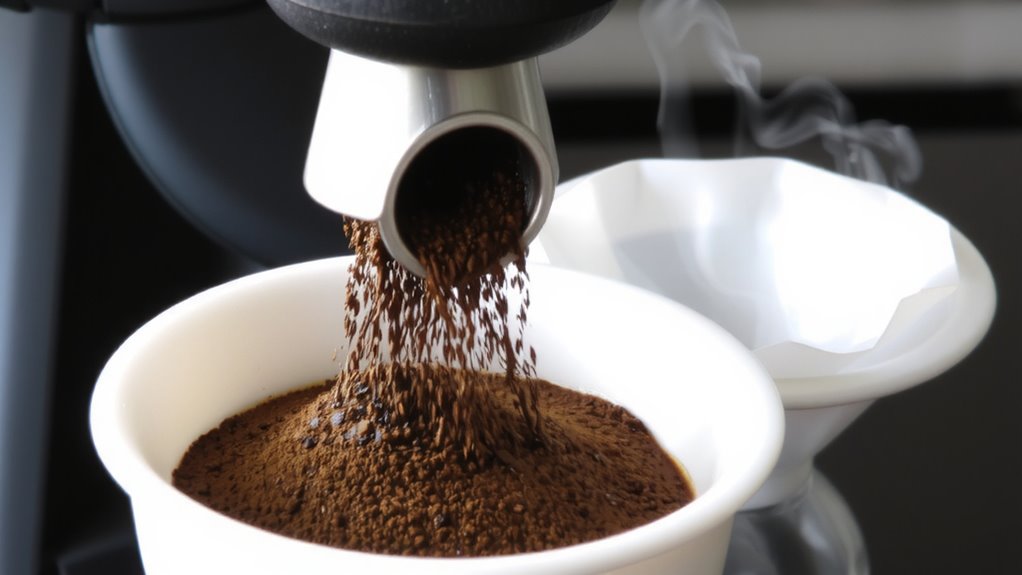
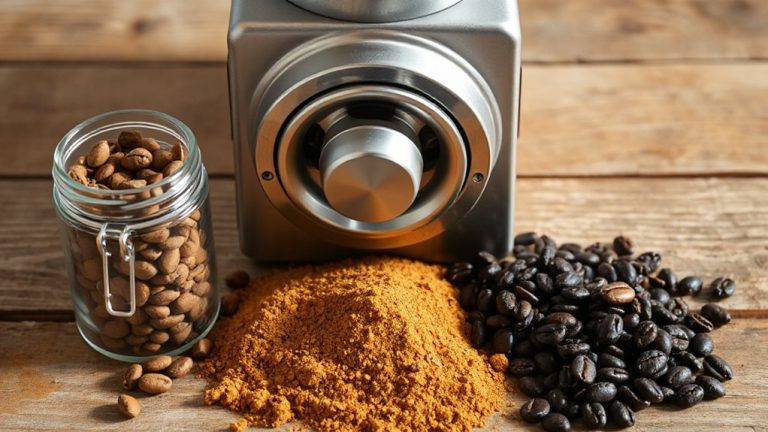
If you’re serious about reducing fines and improving your pour over, investing in a quality burr grinder makes a real difference. Blade grinders create uneven particles, increasing fines that clog filters. A good burr grinder delivers a consistent particle size, which improves extraction and flow. Precision matters-high-end grinders have better burr alignment, minimizing the chance of small misalignments that generate unwanted fines. You’ll also see lower grind retention in quality models, meaning fewer coffee grounds get stuck in the burrs or chamber. Less retention equals fewer stale particles breaking down into fines over time. Look for grinders like the Baratza Encore or Timemore C2-they balance cost and consistency. Even within mid-range options, tight burr alignment and thoughtful design reduce waste. Over time, that consistency leads to cleaner cups and fewer blockages. Skip the shortcuts; your filter-and your taste buds-will thank you. For a full overview of top performers, check out the Best Coffee Grinders.
Pre-Wet Your Filter to Trap Fines
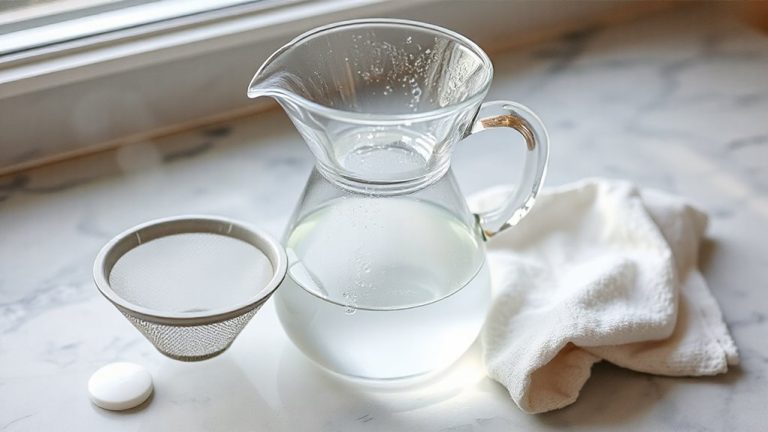
Rinsing your filter before brewing does more than just remove paper taste-it helps catch fines before they cloud your cup. When you pre-wet the filter, you start filter saturation, which primes the paper to trap tiny particles. Those fines would otherwise slip through and make your coffee gritty. Use hot water around 200°F-the same water temperature you’ll use for brewing-to guarantee consistent extraction from the start. This step also heats your brewer, stabilizing the overall temperature during the pour. Paper filters, like those from Hario or Chemex, benefit most since they’re thicker and hold more fines when wet. Cotton or metal filters don’t need this as much, but paper does. Skip this, and you risk clogging later or getting sediment in your cup. Pre-wetting takes ten seconds but improves clarity and flow. It’s a small step with a measurable impact, especially with fine grind pour overs. Just pour evenly, let it drain, and proceed.
Pour in Slow Spirals to Prevent Clogs
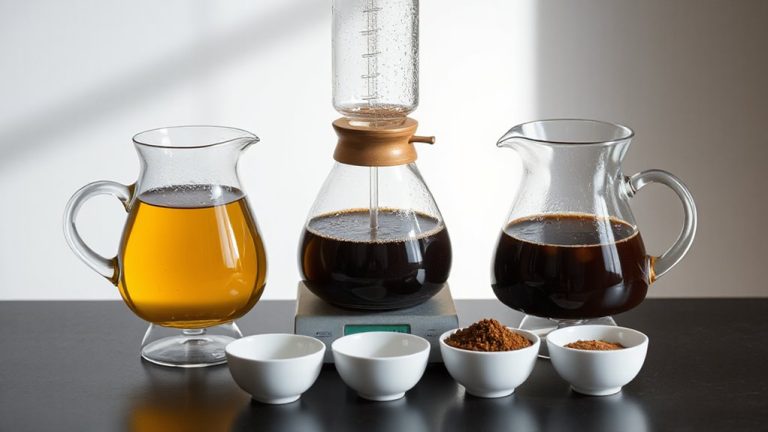
While it might be tempting to rush your pour, taking your time with slow, controlled spirals from the center outward helps maintain even water distribution and keeps fines from clumping where they can clog the filter. A steady pour technique minimizes excessive water turbulence, which can stir up fine particles and push them into the filter’s pores. Instead, aim for consistent, overlapping circles that gradually expand-starting small and widening each pass. This method promotes even saturation without forcing fines downward. Gooseneck kettles help here, giving you precise control over flow rate and direction. Pouring too fast or erratically creates chaotic turbulence, increasing clogging risk, especially with finer grinds. Keep your spiral motion smooth and deliberate, pausing slightly at the edges to prevent channeling. With practice, this technique improves extraction and flow, reducing the need to adjust grind size or restart a clogged brew. It’s a small change that makes a measurable difference in reliability and flavor.
Clean Your Grinder to Stop Fines at the Source
You’ve got your pouring technique dialed in, using slow spirals to keep fines from clogging the filter, but even the best method can’t fully compensate for a dirty grinder. Oils and coffee residue build up over time, increasing static and uneven grinding. That means more fines end up in your brew. Cleaning your grinder weekly keeps the burrs sharp and free of debris. A clean grinder improves burrs alignment, ensuring consistent particle size and reducing the excess fines that clog filters. Poor alignment creates erratic gaps, mashing beans instead of slicing them cleanly. Use brush cleaning tools or grinder tablets for quick static reduction, or disassemble the burrs monthly for a deeper clean-essential for grinders like the Baratza Encore or 1Zpresso models. Static reduction also means less cling, so grounds fall straight into the filter. A clean machine gives you control, not chaos.
On a final note
Grinding coarser and using a quality burr grinder like a Baratza Encore cuts down on fines that clog filters. Pre-wetting your paper filter seals gaps and helps trap debris. Pour slowly in small spirals to keep water moving without pooling. Clean your grinder monthly to prevent old coffee particles from mucking up your grind. These steps boost clarity and flow, giving you a smoother, grit-free pour over every time.