Moka Pot Pressure Control: Grind Size & Heat Guide
You control moka pot pressure by adjusting grind size, heat, and timing. Use a medium-fine grind, like table salt, to balance flow and avoid bitterness. Brew on medium heat-too high causes over-extraction, too low leads to sourness. Remove the pot when you hear gurgling; that’s steam pulling through, which means brewing’s done. Let it cool quickly to stop extraction. Aluminum pots heat faster than stainless steel. Your next brew will taste better if you fine-tune these steps.
Notable Insights
- Use a medium-fine grind, like table salt, to balance pressure and extraction for richer flavor.
- Remove the Moka pot from heat at the first gurgle to prevent over-extraction and bitterness.
- Ensure filtered water is used to maintain consistent extraction and avoid mineral-related off-flavors.
- Match grind size to heat level: finer for lower heat, coarser for higher heat to optimize pressure.
- Cool the base under tap water after brewing to halt extraction and preserve taste balance.
Why Your Moka Pot Makes Bitter Coffee?
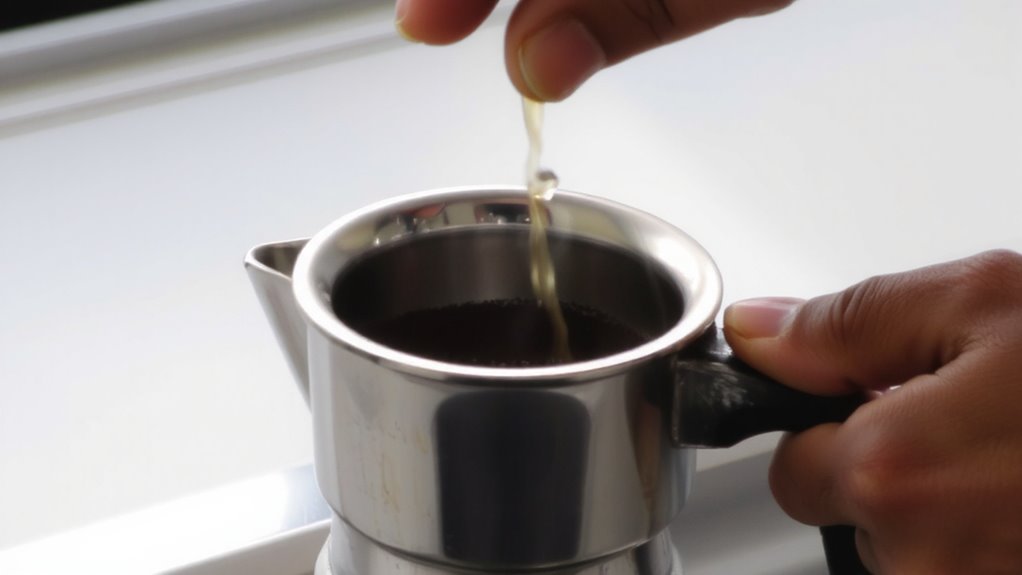
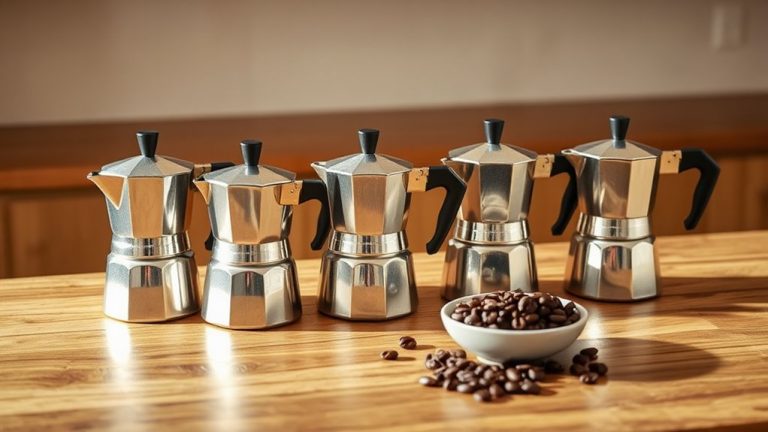
Why does your moka pot coffee sometimes taste harsh or overly bitter? The issue often comes down to two key factors: water quality and bean freshness. Hard water with high mineral content can over-extract flavors, making coffee taste sharp or unpleasant. Using filtered water helps reduce this risk and improves taste consistency. Stale beans also contribute to bitterness-oxygen exposure degrades volatile compounds, leaving flat or off flavors. For the best results, grind beans just before brewing and buy in small batches that you use within two weeks. Dark roasts are common in moka pots, but even they turn acrid if the source water is poor or the beans are old. Avoid distilled water, though-it lacks minerals needed for proper extraction. Instead, use balanced filtered water. These fixes cost little and deliver noticeably smoother, richer coffee. Choosing the right coffee matters-try best coffee for moka pot to enhance flavor and body.
How Pressure Builds in a Moka Pot (And When to Stop It)
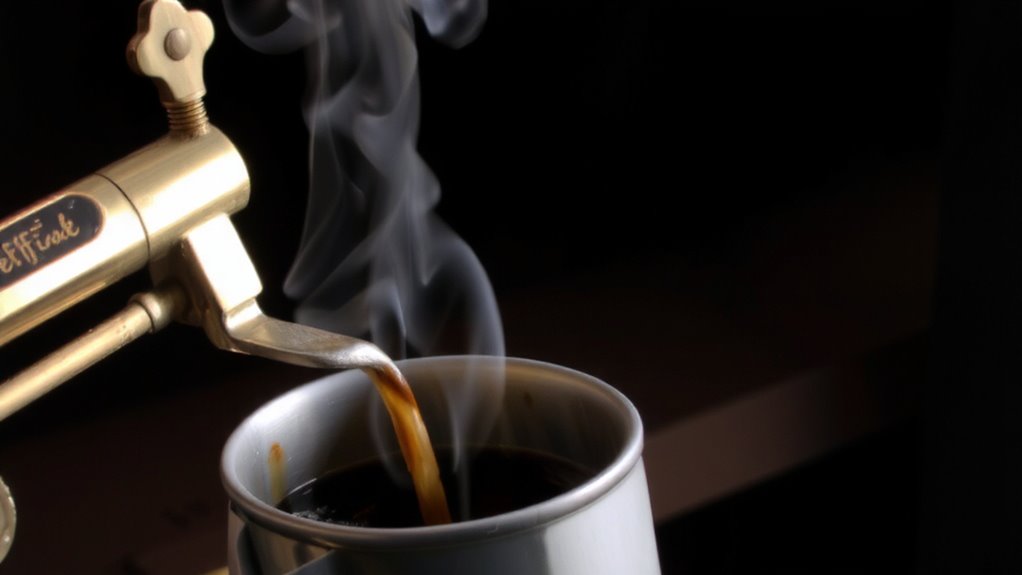
While the moka pot doesn’t use the high pressure of an espresso machine, it still relies on steam pressure to push water through coffee grounds. As you heat the water chamber, steam builds and forces hot water up through the funnel. You’ll hear a gurgling sound-that’s steam accumulation doing its job. But too much pressure is dangerous. That’s where the safety valve function comes in. It’s designed to release excess pressure automatically, preventing explosions. Watch for steady flow into the top chamber. Once you hear sputtering or hissing, remove it from heat-your coffee’s done. Letting it go too long burns the grounds and ruins flavor. Don’t wait for all water to transfer; stop just after brewing finishes. This prevents overheating and keeps extraction balanced. Using medium heat helps control steam buildup and protects the safety valve function. Timing and heat control are key-you’ve got to watch closely.
Use the Right Grind to Control Pressure
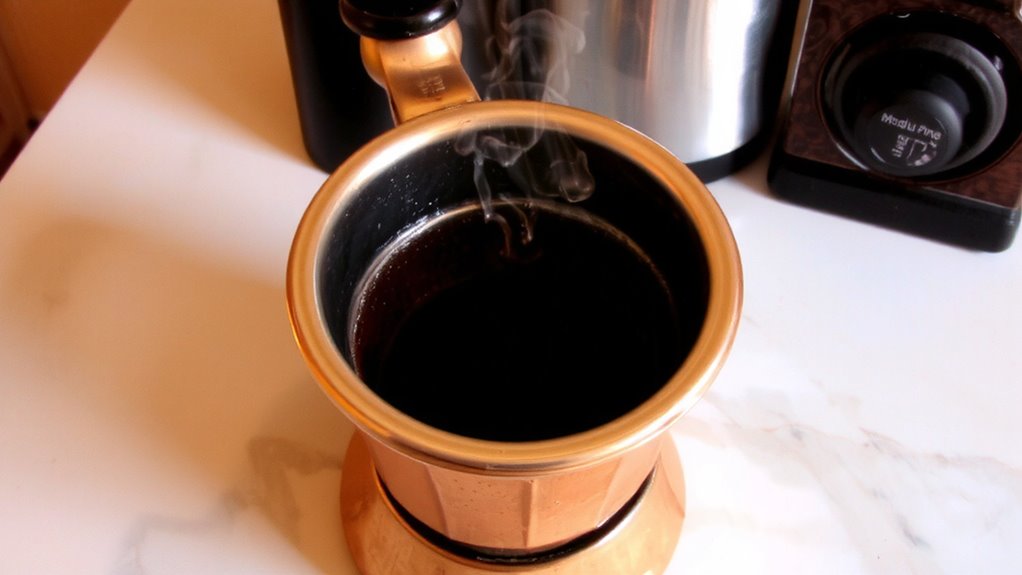
Grind size is your main lever for managing pressure and extraction in a moka pot. If your grind is too fine, you’ll restrict water flow, leading to excessive pressure buildup and possible bitterness. Too coarse, and water passes too quickly, yielding weak coffee with poor pressure regulation. For most moka pots, a medium-fine grind-like table salt-works best. This grind coarseness balances flow rate and resistance, helping maintain steady pressure. Brands like Bialetti or Alessi perform reliably when you stick to this range. Going finer may seem like a way to boost flavor, but it risks clogging and uneven brewing. A burr grinder gives consistent results; blade grinders often create uneven particles that hurt control. Adjust in small steps. If coffee tastes sour, try going slightly finer. If it’s harsh, go coarser. You’re not just grinding beans-you’re tuning pressure. For reliable performance, consider one of the best coffee grinders for Moka pot setups recommended by experts.
Remove Pot When Gurgling Starts
Pull the moka pot off the heat the moment you hear gurgling-those sputtering sounds mean the water chamber is nearly empty and steam is pushing through. That shift from liquid to steam pressure is your key cue to stop brewing. Ignoring gurgling cues leads to over-extraction, burning the coffee and flattening the flavor. Proper heat control isn’t just about the stove setting-it’s also knowing when to remove the pot. Use medium heat to bring the water up steadily, then act the second the flow slows and the sound changes. Aluminum pots heat faster than stainless steel, so respond quicker. Once you hear that first gurgle, lift the pot and place it on a cool surface or run the base under tap water to halt extraction. Timing matters: delaying even 10 seconds can ruin balance. Recognizing gurgling cues guarantees cleaner, fuller cups every time. A well-chosen best Moka pot can enhance heat response and brewing consistency.
Fix Bitter or Weak Coffee by Managing Heat and Grind
Why does your moka pot brew sometimes taste bitter or come out weak and watery? It usually comes down to heat and grind. If your water temperature climbs too high, over-extraction happens-coffee turns harsh and bitter. Use medium heat to keep things stable. Too low, and under-extraction makes weak, sour coffee. Your grind size is just as essential. Too fine? Bitter sludge. Too coarse? Watery brew. Aim for a consistency like table salt. Match your grind to your heat: finer if lowering heat, coarser if increasing. Watch the brew time-ideal is 4–5 minutes. Faster means under-extracted, slower risks burning. Use an adjustable grinder like the Baratza Encore for control. Avoid non-adjustable electric grinders-they limit precision. Manage these two factors, and you’ll pull balanced, rich shots every time.
On a final note
You can avoid bitter or weak coffee by managing heat and grind size. Use medium-fine grounds, like table salt, and remove the moka pot from the stove just as gurgling starts. That stops over-extraction and controls pressure. A steady, moderate heat works better than high flames. Stainless steel pots last longer than aluminum, but both work. Adjust one variable at a time to fine-tune flavor.