Why Gesha Village Coffee From Ethiopia Commands Premium Prices Worldwide
You’re paying top dollar for Gesha Village coffee because it’s grown in one of Ethiopia’s most remote areas, at high altitudes where yields are low and farming is tough. Its rare Gesha genetics, intense labor demands, and unique volcanic soil create unmatched floral, tea-like flavors. Limited supply meets fierce auction demand, driving prices up. Small harvests mean you’ll rarely find it-and when you do, every cup reflects an exceptional effort. There’s more to how each step shapes its value.
Notable Insights
- Grown at high altitudes in Ethiopia’s remote Bench Maji region with limited arable land and infrastructure.
- Features rare Gesha genetics known for exceptional cup quality but low yields and high disease vulnerability.
- Benefits from unique terroir with volcanic soil, misty microclimate, and slow cherry development for complex flavors.
- Requires intensive labor, including selective hand-harvesting, careful fermentation, and repeated hand sorting.
- Sold via competitive auctions where scarcity, traceability, and high scores drive prices over $100 per pound.
What Makes Gesha Village Coffee So Rare
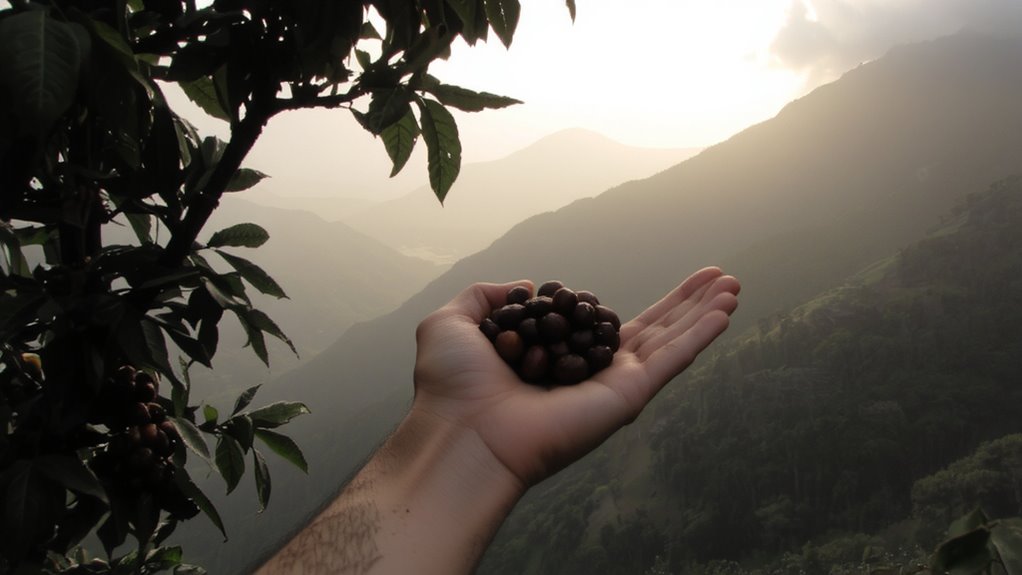
The rarity of Gesha Village Coffee starts with its origin-this coffee grows at high altitudes in Ethiopia’s remote Bench Maji region, where limited infrastructure and challenging terrain make harvesting and transportation difficult. You’re dealing with limited land, so only a small amount can be cultivated each year, restricting supply. The plants also carry unique genetics tied to the original Gesha variety, known for exceptional cup quality but low yield and high vulnerability to disease. That means farmers must invest more time and care, increasing production costs. Even with ideal gear-like a precision grinder and gooseneck kettle-your brewing success still depends on bean availability. Unlike mass-market beans, Gesha Village lots sell out fast, often through auctions or direct allocations. If you want to try it, plan ahead and budget more. You’re not just paying for flavor-you’re covering the real cost of rare, carefully grown coffee. For those seeking top-tier experiences, exploring the best Geisha coffee picks can guide informed purchasing decisions.
How Gesha Village’s Terroir Creates Floral Complexity

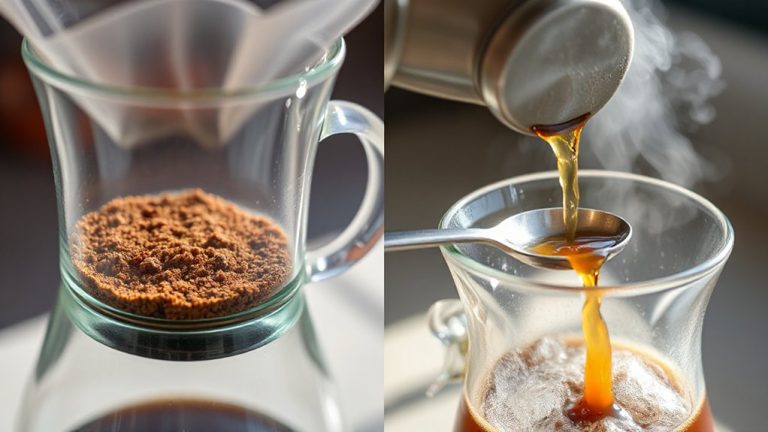
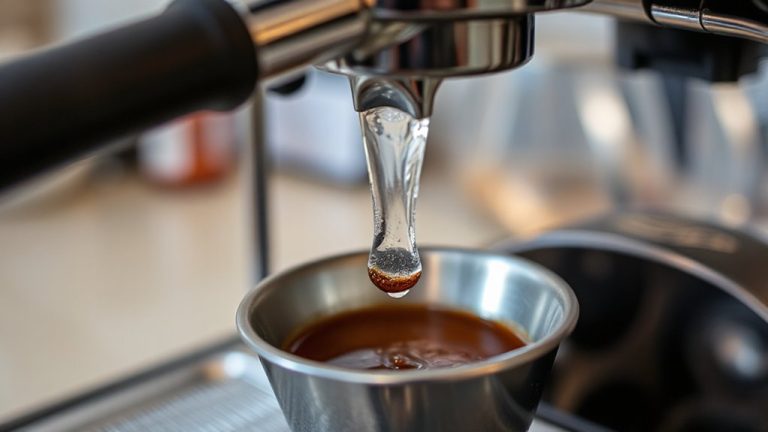
Gesha Village’s mountainous terrain and ancient soil structure give these beans a flavor profile you won’t replicate with just any brewing setup. The soil composition-rich in volcanic minerals and well-drained-supports clean, nuanced growth that highlights floral and tea-like notes. You’ll taste this best with a pour-over like a Hario V60 or Kalita Wave, where clarity matters more than body. The microclimate influence, from misty mornings and high elevation, slows cherry development, boosting sugar density and aromatic complexity. That means your grinder setting needs to be slightly finer than usual to extract those delicate compounds without overdoing bitterness. Don’t rely on a standard auto-drip; it can’t handle the precision required. If you’re using an espresso machine, expect to tweak your dose and time-these beans demand attention. Otherwise, you’ll miss what makes them distinct.
The Labor Behind Every Gesha Village Bean
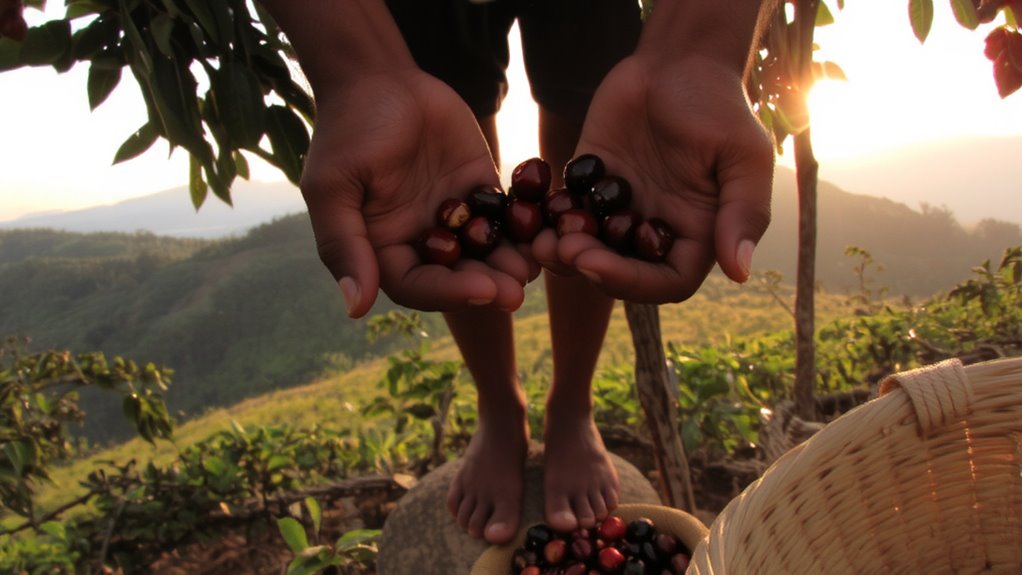
Behind every cup of Gesha Village coffee, there’s a lot more than just ideal weather and rich soil-there’s countless hours of meticulous handwork. You’ll find workers harvesting only ripe cherries, a practice that ensures quality but demands multiple passes through the fields. After picking, the beans undergo careful depulping and fermentation, followed by sun drying on raised beds. This slow, controlled process protects the delicate flavors intrinsic to Gesha. Throughout drying, workers turn the beans regularly to prevent mold and guarantee even moisture loss. Then comes hand sorting-twice, sometimes more-removing any defective beans by sight and touch. Machines can’t replicate this precision. Hand sorting guarantees uniformity, which translates to cleaner cups and better extraction. These labor-intensive steps aren’t cheap or fast, but they’re necessary to achieve the clarity and nuance prized in specialty brewing. If you’re using a pour-over or espresso setup, you’ll notice the difference in sweetness and complexity-proof that the work behind the bean matters.
How Auctions Made Gesha Village Coffee Pricey
You’ve seen how much labor goes into each Gesha Village bean, from selective harvesting to meticulous hand sorting, but that’s only part of what drives the price up. The real spike comes during auctions, where global demand meets limited supply. Auction dynamics shift quickly-roasters worldwide log in, knowing only a few lots are available. When bidding wars break out, prices skyrocket in minutes. A single lot can sell for 10 times the farm gate average, not due to hype, but because buyers compete fiercely for traceable, high-scoring coffees. These auctions are timed, transparent, and hosted online, letting specialty roasters bid with confidence. The system rewards quality and transparency but passes costs to consumers. While not every Gesha lot sells this way, the most sought-after do. You’re paying not just for care in farming, but for real-time market pressure where scarcity and demand set the final price.
Why Judges Award Gesha Village Top Scores
A judge’s scoring sheet often comes down to measurable traits, and at the core of Gesha Village’s high marks are its consistent cup quality and distinct sensory profile. You’ll notice its flavor profile features jasmine, bergamot, and tropical fruit-bright, layered, and clean. Judges reward this clarity because it stands out in blind tastings where off-notes or flatness sink other entries. Its cupping consistency is rare: lot after lot scores above 90, thanks to strict farm protocols and careful processing. You won’t get wild swings between batches like with some small farms. That reliability matters when competitions demand precision. Other Gesha farms might have flashes of brilliance, but Gesha Village delivers peak performance every season. If you’re comparing entries, that predictability gives judges confidence. It’s not just about one stunning cup-it’s about a track record. You can count on it, and in high-stakes evaluations, that counts for a lot.
Why Gesha Village’s Tiny Harvest Can’t Meet Demand
Even though demand for Gesha Village coffee keeps climbing, the farm’s output stays extremely limited because of its remote location and small-scale growing conditions. You’re dealing with a limited产量-just a few tons annually-harvested by hand at elevations over 2,000 meters, where terrain restricts mechanization. Each lot is carefully separated by micro-lot plots, increasing traceability but reducing volume. Because of this scarcity, most of the crop goes to high竞拍, where specialty roasters compete, often paying $100+ per pound. You’ll find these beans featured in brewing methods like pour-over or espresso, where clarity highlights their floral, tea-like notes. If you’re sourcing, expect tight allocations and fast sell-outs. Alternatives like other Ethiopian heirloom lots offer complexity at lower prices, but none match Gesha Village’s consistency in top-tier competitions. Plan early, buy small, and store carefully-this coffee isn’t just rare, it’s a benchmark.
On a final note
You’ll pay more for Gesha Village coffee because rarity, terroir, and labor justify the cost. Its floral notes stand out clearly when brewed with a pour over, like a Hario V60 or Kalita Wave. While cheaper beans may work in a French press, Gesha’s complexity shines best with precise water control and clean filters. If you want quality, brew it fresh, light, and intentional-otherwise, you’re wasting what makes it special.