How to Adjust Grind for a Smoother Espresso With Lower Acidity and Bitterness
If your espresso’s too bitter, your grind’s likely too fine-adjust it coarser to reduce over-extraction. If it’s sour or sharp, go finer to improve extraction and cut acidity. Aim for a consistent grind like table salt using a burr grinder. Change one setting at a time, then test with a 18g double shot. Tamp evenly with about 30 pounds of pressure. Let two shots pass before judging results-you’ll fine-tune faster with a clear pattern to follow.
Notable Insights
- Adjust grind size finer to reduce sourness caused by under-extraction and improve smoothness.
- Use a burr grinder for consistent particle size to ensure even extraction and balanced flavor.
- If espresso is bitter, grind coarser to prevent over-extraction and decrease harshness.
- Maintain a stable dose and tamp evenly to support consistent extraction after each grind change.
- Evaluate taste after two test shots post-adjustment to accurately assess reduced acidity and bitterness.
Fix Bitter or Sour Espresso by Adjusting Grind Size
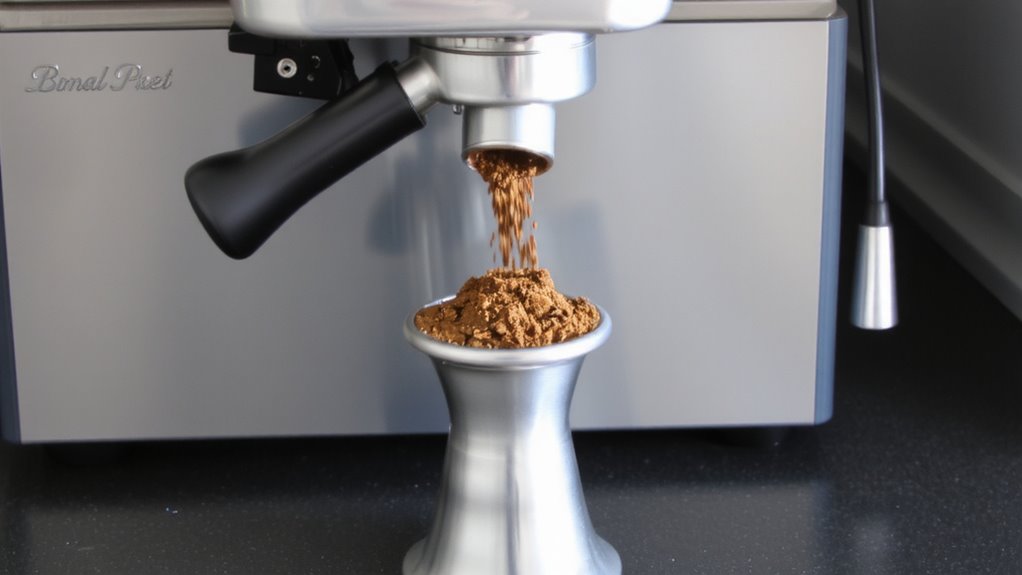
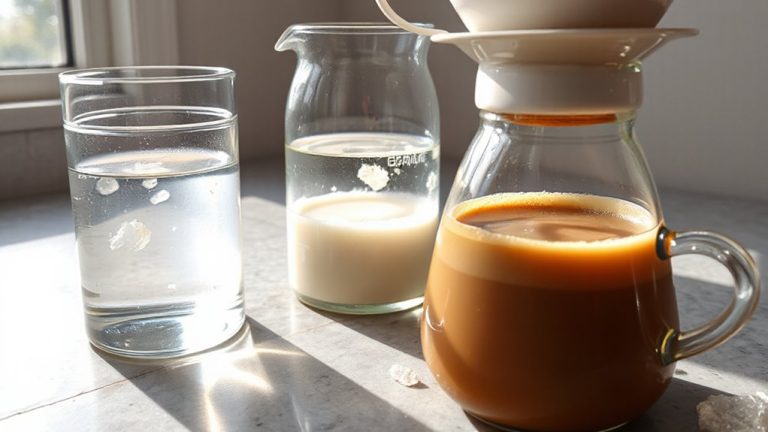
A quick tweak to your grind size can fix most issues with bitter or sour espresso-no need to overhaul your whole setup. If your shot pulls too fast and tastes sour, your grind is likely too coarse; fine-tune it finer to slow extraction and improve flavor. If it’s bitter and sluggish, go slightly coarser to reduce over-extraction. Always change one variable at a time. Water quality matters-hard water exaggerates bitterness, while soft water can make espresso taste flat. Use filtered water to stay consistent. Bean age also affects taste; freshly roasted beans (used within 2–4 weeks) extract more evenly. Stale beans under-extract easily, leading to sourness no matter the grind. A good burr grinder, like the Baratza Settle or Eureka Mignon, gives the consistency you need. Small adjustments, paired with fresh beans and clean water, solve most problems. For reliable performance, consider one of the best mill grinders recommended for espresso precision.
Bitter or Sour? How to Tell What’s Wrong With Your Shot
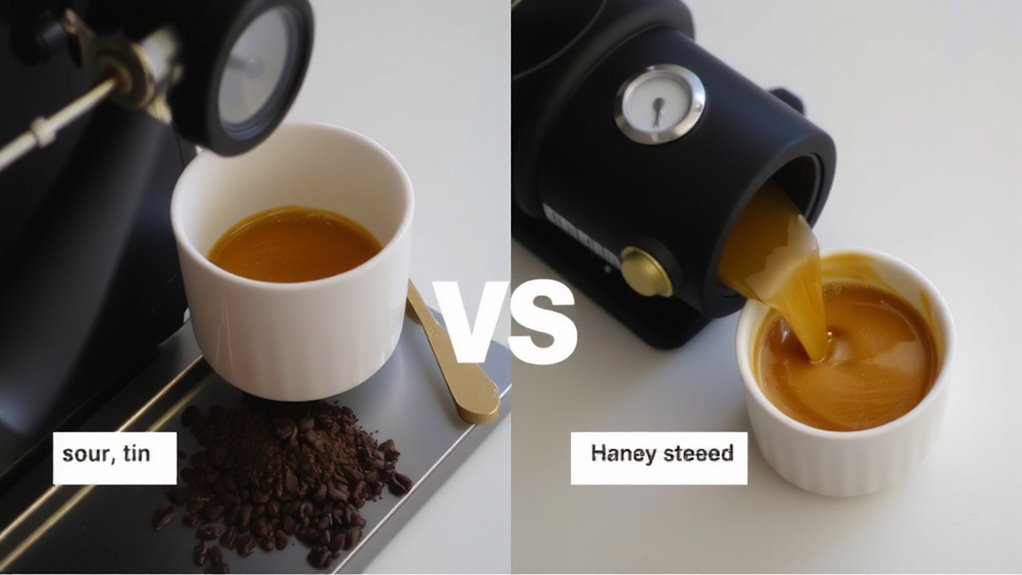
What does your espresso taste like? Bitter or sour? Pinpointing the issue starts with flavor identification and taste profiling. If your shot tastes sharp, acidic, or vinegar-like, it’s likely under-extracted-common with too coarse a grind. If it’s harsh or astringent, that’s over-extraction, often from a grind too fine. Use this table to match taste with likely cause:
| Taste | Emotion | Likely Issue |
|---|---|---|
| Sour, tangy | Discomfort, pucker | Under-extraction |
| Bitter, harsh | Grit, fatigue | Over-extraction |
| Balanced, rich | Satisfaction, calm | Proper extraction |
Taste profiling helps you diagnose issues fast. Train your palate by noting each shot’s flavor and adjusting methodically. Flavor identification isn’t about preference-it’s a diagnostic tool to guide practical fixes. Choosing the right espresso grinder can significantly improve consistency and extraction control.
Use Grind Size to Balance Extraction and Flavor
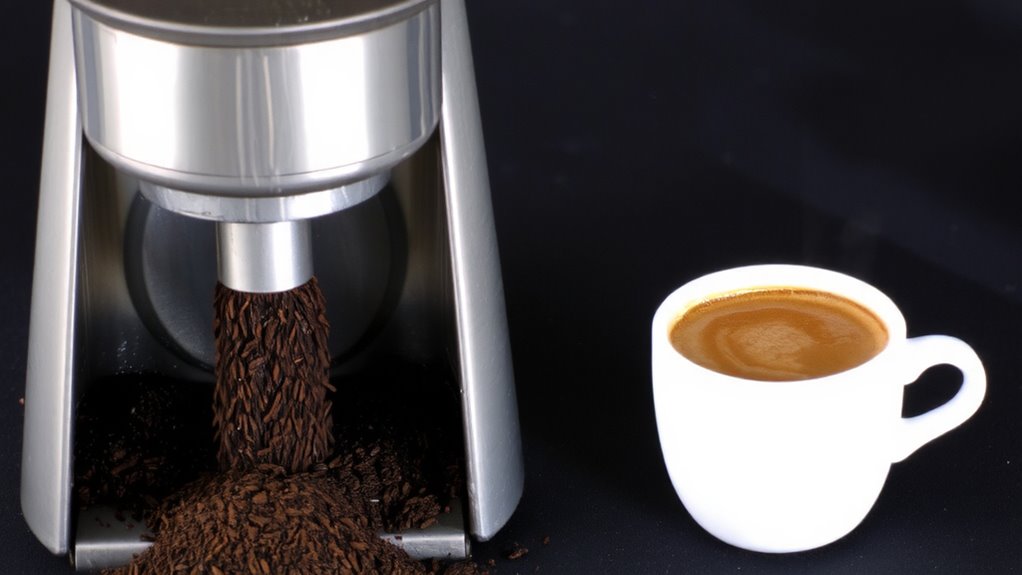
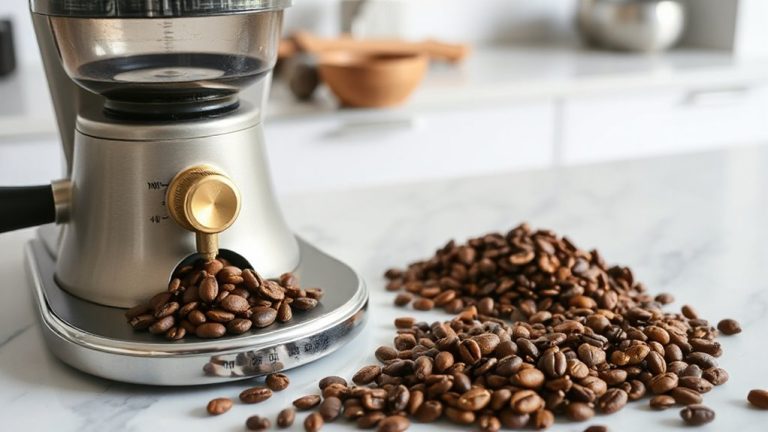
That bitter bite or sour kick? It usually comes down to your grind size. Too fine, and you risk over-extraction-bitter, harsh flavors dominate. Too coarse, and you get under-extraction-sour, weak shots. The sweet spot lies in tweaking the grind to balance flavor. A good burr grinder delivers consistent grind consistency, which is key. Uneven particle distribution leads to uneven extraction; some particles extract too much, others too little. That hurts flavor clarity. For espresso, aim for a fine, even grind-like table salt. This promotes even water flow and extraction. If your shot pulls too fast, go finer. Too slow? Coarsen it slightly. Small changes make a big difference. Monitor taste, not just time. With better grind consistency and tighter particle distribution, you’ll pull smoother, more balanced shots every time. Upgrading to one of the best espresso grinders under $500 can significantly improve grind consistency and overall shot quality.
Adjust Your Grinder for Smoother Espresso in 5 Steps
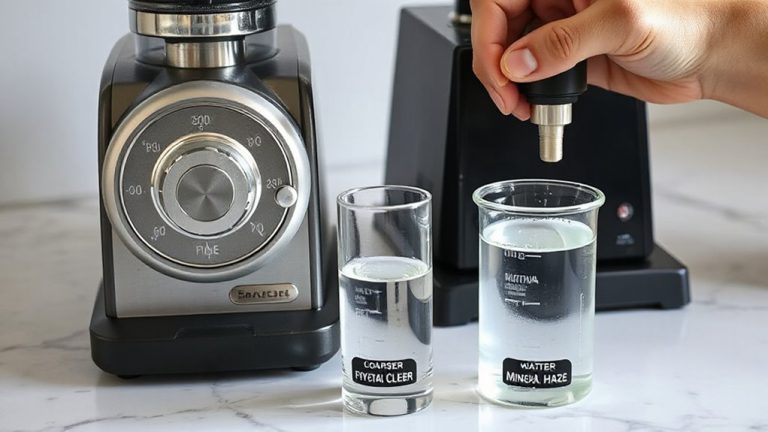
While your machine and beans play a role, the real key to smoother espresso often lies in how you set up your grinder. Start by checking burr alignment-misaligned burrs cause uneven grinding, leading to sour or bitter shots. Most high-end grinders let you adjust this; follow the manufacturer’s guide. Next, perform a grinder calibration using a scale and timer: grind 18g and check for consistency. If particles vary widely, tweak the grind setting in small increments. Clean the burrs monthly to prevent buildup that affects performance. Finally, verify dose consistency across multiple grinds. A stable baseline helps isolate variables. These steps reduce extraction imbalances tied to poor grind quality. While not all grinders allow fine adjustments, machines like the EK43 or Niche Zero offer precision that supports this process. Correct setup takes minutes but improves every shot.
Fine-Tune Your Dose and Tamp After Changing Grind
Once you’ve adjusted your grind setting, it’s time to fine-tune your dose and tamp to match, since even a small change in grind size affects how much coffee fits in the basket and how evenly it packs. If you go finer, the same dose may overfill the basket; if coarser, it might leave too much empty space. Aim for dose consistency by weighing your coffee every time-18 grams for a double shot, for example-so your starting point is reliable. Then, apply even tamp pressure-typically 30 pounds of force-straight down to avoid channeling. An uneven tamp disrupts water flow and increases bitterness. Use a calibrated tamper or practice on a scale to stay consistent. Pausing for these small tweaks guarantees your grind changes actually improve flavor instead of causing extraction issues. It’s not just about the grinder-dose consistency and tamp pressure shape every shot.
Avoid These Common Grind Mistakes in Espresso
You’ve dialed in your dose and tamp to match your grind, but even with those set, problems can still show up in the cup-often because of avoidable mistakes in how you’re adjusting the grind itself. One common error is ignoring burr alignment; misaligned burrs create uneven particle sizes, leading to inconsistent extraction and off-flavors. Even high-end grinders like the Eureka Mignon can drift over time, so checking alignment every few weeks helps maintain shot quality. Another issue is letting grind temperature rise during back-to-back shots-hotter grinds absorb moisture differently, altering flow rate. Bean oils also heat up, increasing clumping and channeling. Pre-grinding a few doses before your actual shot stabilizes temperature. Avoid making micro-adjustments too quickly; wait at least two shots to assess real changes. Finally, don’t assume finer always means better-sometimes a coarser grind reduces bitterness and balances acidity.
On a final note
You’ve adjusted your grind to balance extraction, aiming for smoother espresso with less acidity and bitterness. A finer grind can reduce sourness, while a coarser one may cut bitterness-small changes matter. Always recalibrate dose and tamp after adjusting. Avoid inconsistent grinds or static; use a quality burr grinder like a Baratza Sette or Flat Vario for precision. Clean your grinder regularly. These steps guarantee repeatable, improved shots with reliable flavor.