Why You Should Remove and Clean a Drip Coffee Maker’s Heating Element Annually
You should clean your drip coffee maker’s heating element yearly because mineral buildup from hard water insulates the element, leading to uneven brewing temps and weak, bitter coffee. Over time, gunk from oils and scale stresses the machine, especially in models like Mr. Coffee or Cuisinart. Cleaning every 3–6 months improves flavor and prevents damage. You’ll see real results after a deep clean-especially if you use tap water. There’s more to get right for long-term performance.
Notable Insights
- Mineral buildup from hard water insulates the heating element, causing inconsistent brew temperatures.
- Scale prevents the coffee maker from reaching the ideal 195–205°F range for proper extraction.
- Coffee oils and minerals combine into gunk that reduces heating efficiency and may damage components.
- Regular cleaning every 3–6 months prevents overheating and extends the machine’s lifespan.
- Deep cleaning restores flavor, aroma, and performance by removing residue that taints coffee.
Why Mineral Buildup Ruins Your Coffee Taste
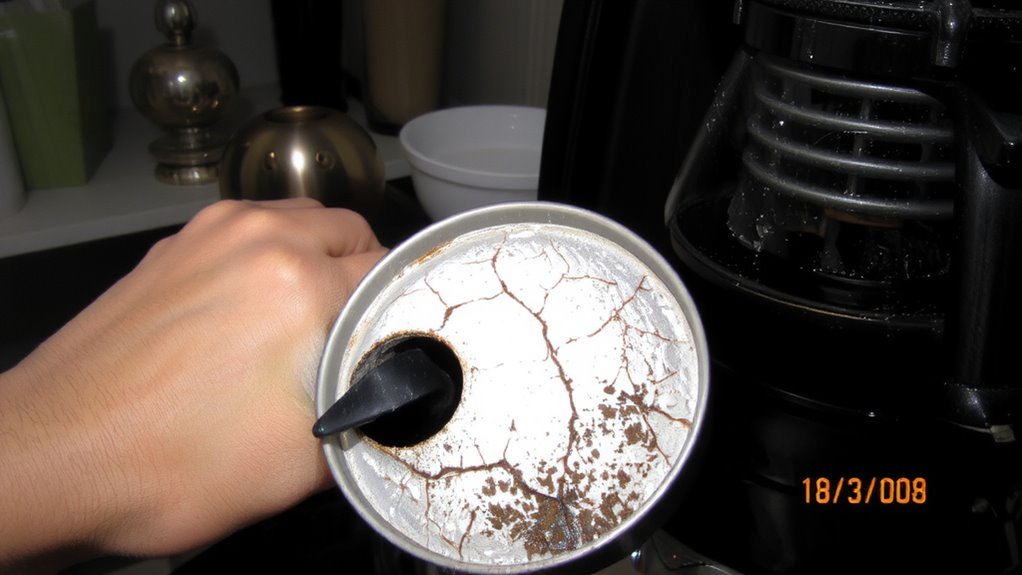
While your drip coffee maker does the work of brewing, it’s quietly vulnerable to a common but overlooked issue-mineral buildup. Hard water leaves behind calcium and magnesium deposits on the heating element over time, directly impacting water quality. This scale layer insulates the element, causing uneven heating and inconsistent brew temperatures. When water doesn’t reach the ideal range of 195–205°F, extraction suffers, leading to weak or bitter coffee. You’ll notice flavor degradation-your morning cup loses brightness, body, and complexity. Even if your beans are fresh, poor water quality undermines the entire process. Regular cleaning restores proper heat transfer and water flow, preserving taste. Using filtered water helps, but annual cleaning with a vinegar or commercial descaler solution is essential. It’s a small step that makes a measurable difference in every brew. For optimal results, consider using a Breville-approved descaler to effectively dissolve tough mineral deposits without damaging internal components.
How Gunk Wrecks Your Coffee Maker’s Lifespan
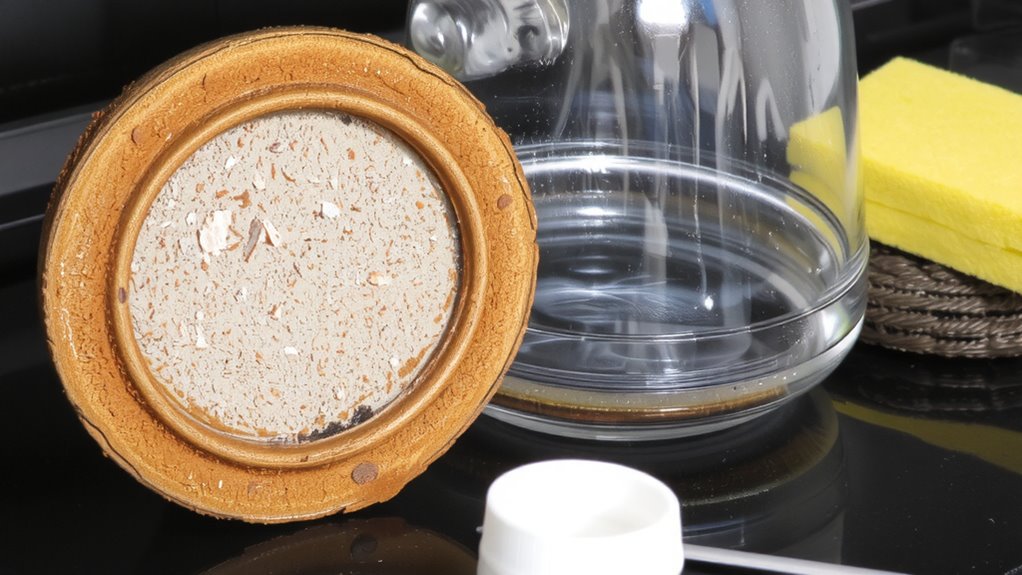
Over time, leftover oils from coffee grounds and mineral deposits combine to form a stubborn layer of gunk inside your coffee maker’s internal components. This buildup doesn’t just affect taste-it actively damages the machine. Gunk insulates the heating element, forcing it to work harder and overheat. That stress can lead to water damage or even electrical issues, especially in models like Mr. Coffee or Cuisinart. Left unchecked, these problems may result in short circuits or complete failure.
| Problem | Risk |
|---|---|
| Insulated heating element | Overheating, reduced efficiency |
| Mineral and oil buildup | Water damage, clogs |
| Overworked components | Electrical issues, system failure |
Annual cleaning prevents breakdowns, extends lifespan, and keeps your brew running smoothly. Ignoring gunk means risking costly repairs or early replacement.
How Often You Should Clean the Heating Element
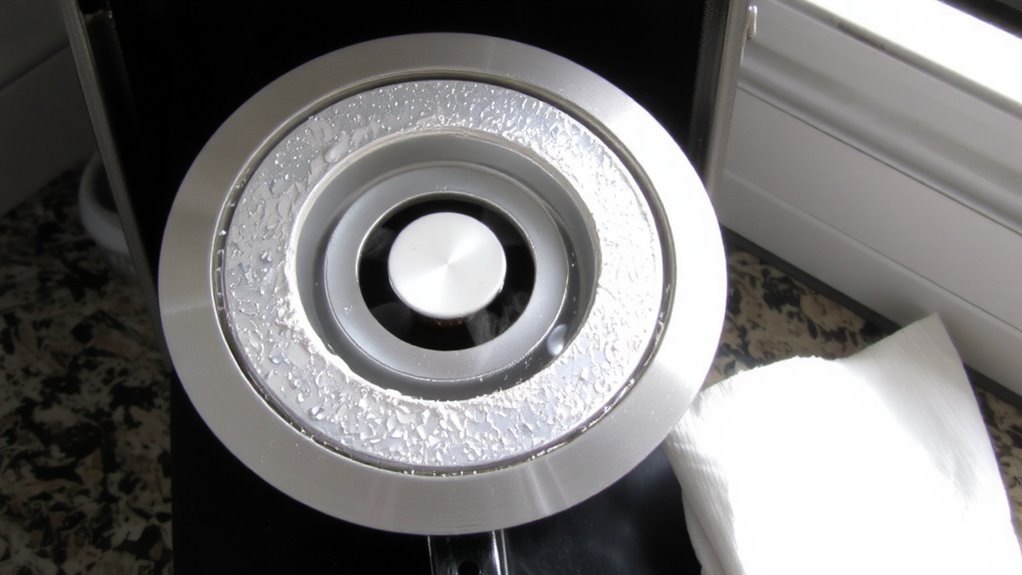
You should clean your drip coffee maker’s heating element about once every three to six months, depending on how often you brew and the hardness of your water. If you use it daily or have hard water, aim for every three months to maintain peak heating efficiency. Poor water quality leads to faster mineral buildup, which insulates the element and slows heating. Over time, that reduces performance and can shorten your machine’s lifespan. In areas with soft water or with infrequent use, every six months may suffice. Regular descaling with vinegar or a commercial solution helps, but doesn’t replace a thorough element cleaning. Ignoring it risks inconsistent brew temperatures and weak coffee. Check your model’s manual-some, like certain Hamilton Beach or Cuisinart units, allow easy access, while others may need more effort. Staying on schedule keeps your machine running efficiently and your coffee tasting fresh.
How to Remove and Clean the Heating Element
If your coffee maker’s performance has dipped and the brew isn’t as hot as it used to be, it might be time to clean the heating element directly-though not all models let you do this easily. First, unplug the machine to guarantee electrical safety. Consult your manual-some units require disassembling the base or removing a shield with screws. Once accessed, inspect the element for chalky buildup caused by water hardness. Use a soft brush and a mix of white vinegar and water to gently scrub deposits. Avoid abrasives that can damage the metal. For stubborn scale, soak the element briefly in vinegar, then rinse thoroughly. Reassemble only when completely dry. Remember, frequent deep cleaning may be needed if you have hard water. Not all coffee makers are designed for this-you may void the warranty. Consider replacing older models instead of risking damage.
What Happens to Your Coffee After a Deep Clean?
After thoroughly cleaning the heating element, you’ll likely notice a more consistent brewing temperature, which directly improves extraction and flavor in your cup. Scale and mineral buildup insulate the element, causing uneven heating-removing it restores efficiency. Once cleared, water reaches ideal brew temp faster and stays there, leading to balanced extraction. You’ll taste a fresh flavor, free from the stale or flat notes caused by old residue. The better aroma isn’t conjured; it’s the result of clean, hot water passing through coffee grounds without interference from grime. Oils and deposits trapped in the system can mute scent and taste-cleaning eliminates that barrier. For best results, reassemble properly and run a water-only cycle before brewing. This simple maintenance step boosts performance without requiring an upgrade. Your machine isn’t just cleaner-it’s working like new, delivering better coffee daily.
On a final note
You should clean your coffee maker’s heating element yearly because mineral deposits and gunk build up over time, hurting both taste and performance. A quick annual descale with vinegar or a commercial cleaner removes buildup, helping water heat evenly and flow properly. This simple step extends your machine’s life and improves coffee flavor. Ignoring it risks slower brewing, overheating, or failure. For most drip models like Mr. Coffee or Cuisinart, unplugging and wiping the element takes just minutes.