The Effect of Pressure Release Control on Flavor Development in Moka Pot Coffee
You’re losing flavor every second your moka pot stays on the heat after brewing finishes. Delayed pressure release pulls out bitter compounds, turning bright, balanced coffee flat and harsh. Removing the pot at the first gurgle stops overextraction and locks in better flavor. Fine (not powdery) grinds and medium heat help maintain steady pressure. Some tweak the lid or use perforated gaskets to release pressure sooner-but go easy, as modifications can be risky. There’s more to optimizing this small step than most realize.
Notable Insights
- Delayed pressure release causes overextraction, increasing bitter compounds like tannins and dulling bright flavor notes.
- Releasing pressure at the first gurgle minimizes heat and pressure exposure, preserving balanced, nuanced flavors.
- Sudden pressure drop after removal from heat can halt extraction, leading to sour or underdeveloped coffee.
- Fine, consistent grinds maintain necessary resistance, supporting steady pressure and even flavor development.
- Modifying lid seal or using controlled heat prevents pressure spikes, enhancing flavor clarity and reducing bitterness.
Why Pressure Release Matters in Moka Pot Brewing
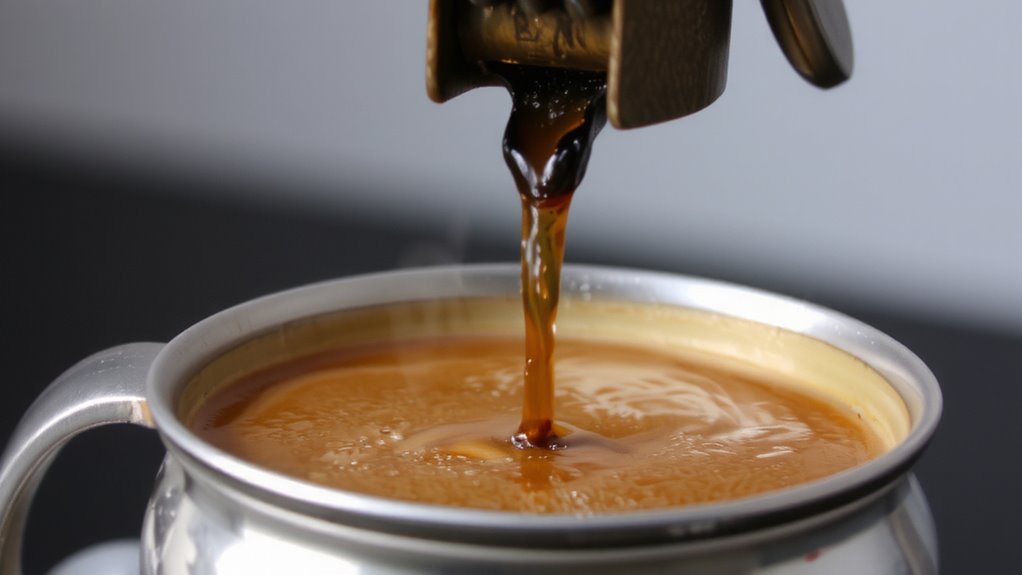
What happens the moment you lift your moka pot from the heat? Steam pressure starts dropping immediately, which affects how water moves through the coffee puck. If you don’t act fast, that sudden pressure loss can stall extraction mid-flow, leaving you with uneven flavor. The right grind texture-fine but not powdery-helps maintain resistance, letting pressure build steadily. Beans with high bean density, like Ethiopians or Colombians, respond better to this rapid change because they extract more evenly under fluctuating conditions. But if your grind’s too coarse or your beans are soft (low density), the drop hits harder, leading to sour or weak coffee. That’s why controlling pressure release matters: it preserves momentum in extraction. You’re not just stopping brew time-you’re sealing in the balance achieved seconds before. Acting quickly, using consistent grind texture, and selecting dense beans makes that difference tangible in your cup.
How Late Pressure Release Causes Bitter Coffee
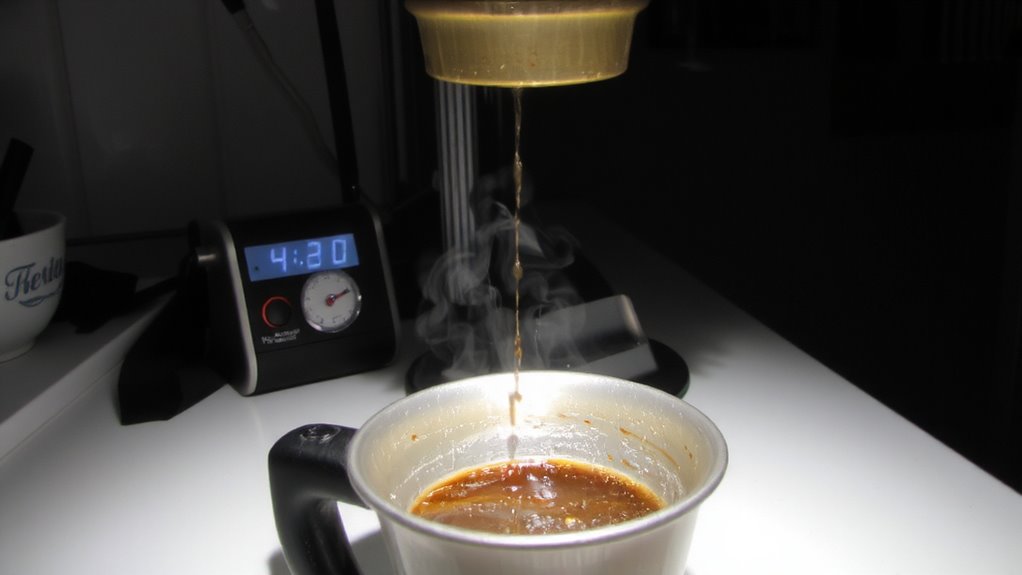
Why does your moka pot coffee sometimes turn harsh or overly bitter, even when you’ve nailed the grind and heat? It’s likely because pressure releases too late. When the brew chamber stays pressurized longer than needed, water continues extracting compounds past the sweet spot. This leads to overextraction risks, pulling out excessive bitter flavors like tannins and alkaloids. Even with good technique, lingering heat and pressure cause flavor degradation, turning bright, rich notes flat and acrid. You’re not just getting stronger coffee-you’re getting worse coffee. The ideal release happens just as the brew finishes flowing, not after gurgling or steaming empty. Delaying that moment lets heat and pressure distort the balance. To avoid this, remove the pot from heat right when the gurgle starts. That simple step limits overextraction risks and preserves flavor clarity. Timing isn’t everything-but here, it’s most of it.
Is Your Moka Pot Releasing Pressure Too Late?
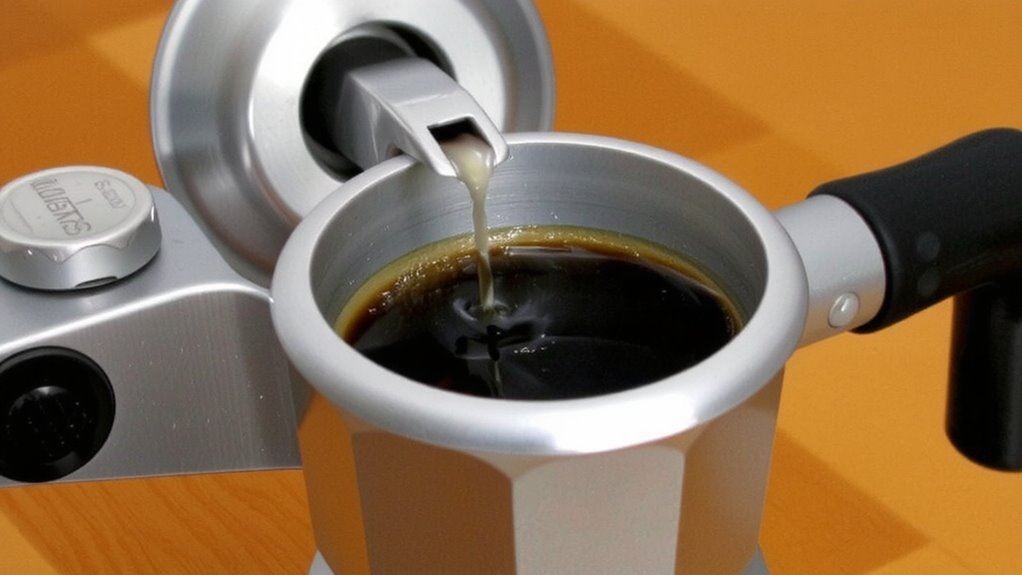
How can you tell if your moka pot is holding pressure too long? Watch for long brew times, sputtering, or bitter, ashy flavors-signs pressure released too late. Water temperature and grind consistency play big roles. Too fine a grind slows flow, increasing pressure buildup. Water that’s too hot exaggerates the effect. A consistent medium-fine grind helps control timing. Also, heat source matters-electric stoves often delay release versus gas.
| Sign | Likely Cause |
|---|---|
| Bitter taste | Over-extraction from late release |
| Long brew time | Grind too fine or temp too low |
| Sputtering in cup | Delayed pressure drop |
| Weak crema | Inconsistent grind consistency |
| Burnt notes | High water temperature prolonging heat |
Modify the Lid to Release Pressure Earlier
While some stick to standard use, modifying your moka pot’s lid can help release pressure earlier and improve flavor. You can slightly loosen the lid or use a modified gasket to allow earlier steam diffusion, reducing the time coffee spends under high pressure. This limits flavor oxidation by shortening exposure to intense heat and trapped vapors. Some users file down the safety valve seat or use aftermarket perforated lids to encourage controlled release. These changes promote a gentler brew, preserving brighter notes and reducing bitter compounds. However, altering the lid impacts safety and may void warranties, so proceed with caution. Brands like Bialetti aren’t designed for this, but third-party accessories exist for models such as the Valextra. Make certain any modification doesn’t interfere with pressure buildup entirely-balance is key. You’ll likely notice cleaner taste, especially with light-roast beans sensitive to overextraction.
Control Heat to Prevent Pressure Spikes
Because sudden heat increases can push your moka pot past its ideal pressure range, keeping the flame steady and low helps maintain a controlled, gradual rise in pressure. Good heat control prevents spikes that lead to harsh, bitter flavors. You’re better off using a low to medium flame-especially on gas stoves-so you can adjust as needed. Electric stoves retain heat longer, so turning them off early avoids lingering high temperatures. Temperature management is key: too hot, and you’ll over-extract; too cool, and the brew stalls. Avoid high heat to force faster extraction-it sacrifices flavor balance. Induction burners offer precise control, but require compatible pots. Always monitor the brew cycle: a slow, even stream from the spout means you’ve got it right. Consistent heat means consistent results. With practice, you’ll learn how your stove and pot interact, making repeatable, flavorful coffee possible every time.
How Pressure Timing Changes Flavor
Steady heat keeps pressure under control, but the timing of that pressure buildup directly shapes your coffee’s taste. If pressure rises too fast, your brew temperature spikes, extracting bitter compounds before flavors fully develop. Wait too long, and the water may not reach ideal brew temperature, leaving coffee weak and underdeveloped. The key is a gradual climb to pressure, which lets flavors extract evenly. Your grind consistency plays a big role-too fine, and pressure builds fast, risking over-extraction; too coarse, and it climbs too slowly, reducing flavor depth. A uniform medium-fine grind helps maintain ideal flow. Using a heat diffuser can smooth the ramp-up, especially on electric stoves. With gas, you can tweak the flame for more direct control. Timing matters just as much as heat or grind-you’re balancing all three for clean, rich results.
On a final note
You can improve your moka pot coffee by managing pressure release. Letting pressure drop sooner reduces bitterness caused by over-extraction. Try slightly loosening the lid or using lower heat to avoid spikes. These small changes help preserve brighter, cleaner flavors. While not a substitute for an espresso machine, a tweaked moka pot delivers better results. It’s a practical fix that balances cost, control, and flavor.